The Climate Change Chronicles: A Whirlwind Tour Through Earth's Wacky Weather History
Unraveling the Hysterical and Historical Tales of Our Ever-Changing Climate
Contents
<p>In January 1814, Londoners led an elephant across the frozen River Thames near Blackfriars Bridge. The ice was thick enough to hold not just the animal but an entire pop-up town of tents, printing presses and skittle alleys spread across the river. It was the last of the great Thames frost fairs, and it captures something we tend to forget when we talk about climate: the weather of the past was genuinely, verifiably different, and its swings shaped how people lived, ate, wrote and even amused themselves. Earth’s climate has never been a stable backdrop. It is a character in the story, and often a mischievous one.</p>
<h2 id="a-planet-that-has-always-changed-its-mind">A planet that has always changed its mind</h2><div class="ad-unit ad-in-article" aria-label="Advertisement">
<span class="ad-label">Advertisement</span>
<ins class="adsbygoogle" style="display:block;text-align:center"
data-ad-client="ca-pub-3726833845844946"
data-ad-slot="3291553914"
data-ad-format="auto"
data-full-width-responsive="true"></ins>
<script>(adsbygoogle = window.adsbygoogle || []).push({});</script>
</div>
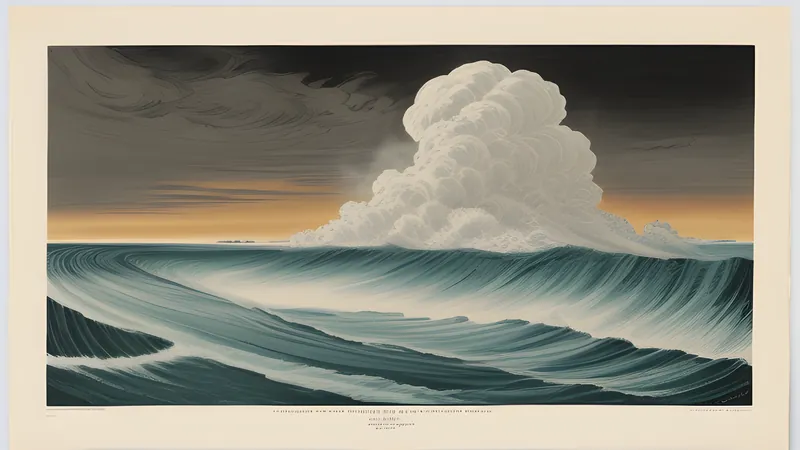
<p>Climate change, in the broadest sense, is as old as the planet. Across 4.5 billion years, Earth has swung between hothouse spells with no polar ice and deep freezes so severe that ice may have reached the equator. Geologists call the most extreme of the cold episodes “Snowball Earth,” and the best-supported of these occurred during the Cryogenian period, roughly 720 to 635 million years ago, when glacial deposits turn up in rocks that were then sitting at tropical latitudes. In the warm Cretaceous, by contrast, dinosaurs roamed a world with no permanent ice caps and forests growing near the poles. The lesson of deep time is not that today’s warming is normal, but that the climate system is powerful enough to remake the surface of the world, and has done so repeatedly.</p>
<p>What is different now is speed and cause. The natural swings of the geological past unfolded over hundreds of thousands or millions of years, driven by shifts in Earth’s orbit, the drift of continents and slow changes in atmospheric chemistry. The warming underway since the industrial revolution has happened in less than two centuries and tracks the rise of carbon dioxide released by burning fossil fuels. The planet has been hot before and cold before; it has rarely changed this fast.</p>
<h2 id="the-frost-fairs-and-the-little-ice-age">The frost fairs and the Little Ice Age</h2>
<p>The frozen Thames of 1814 was not a fluke. From roughly the fourteenth to the mid-nineteenth century, much of the Northern Hemisphere endured a prolonged cool spell now called the Little Ice Age. Winters bit harder, growing seasons shortened, and the Thames froze solid often enough that Londoners turned it into a festival. During the Great Frost of 1683 to 1684, the river stayed frozen for about two months and the ice reached some 28 centimetres thick in central London; traders set up stalls directly on it, and there was ice-skating, ox-roasting and even a form of bowling on the river.</p>
<p>The fairs died out for a mixture of climatic and human reasons. The climate warmed through the nineteenth century, but London also demolished the old, many-arched London Bridge in 1831 and replaced it with a bridge whose wider spans let the tide flow faster, and the river was gradually embanked. A faster, narrower, warmer Thames simply stopped freezing. That the modern city holds mass outdoor gatherings in spring rather than midwinter reflects, in a small way, how much the local climate has shifted. It is easy to imagine the crowds who once skated on the river standing today along the route of a very different London spectacle, <a href="/story/the-great-london-marathon-a-race-through-time/">the London Marathon, that races through the same streets</a> each spring.</p>
<h2 id="the-year-without-a-summer">The year without a summer</h2><div class="ad-unit ad-in-article" aria-label="Advertisement">
<span class="ad-label">Advertisement</span>
<ins class="adsbygoogle" style="display:block;text-align:center"
data-ad-client="ca-pub-3726833845844946"
data-ad-slot="3291553914"
data-ad-format="auto"
data-full-width-responsive="true"></ins>
<script>(adsbygoogle = window.adsbygoogle || []).push({});</script>
</div>
<p>The single strangest year in recorded climate history began with an explosion on the far side of the world. In April 1815, Mount Tambora in what is now Indonesia erupted in the largest volcanic event in some 1,800 years, hurling so much sulfur into the stratosphere that it formed a haze reflecting sunlight for two years. The consequence, felt a hemisphere away, was 1816: the “Year Without a Summer.” Killing frosts struck New England in June, July and August. Crops failed from China to Canada, food prices soared, and famine and unrest followed across Europe.</p>
<p>The gloom had a curious literary afterlife. That same wet, sunless summer, a young Mary Shelley was holidaying at the Villa Diodati beside Lake Geneva with Percy Shelley, Lord Byron and John Polidori. Trapped indoors by the endless rain, the group challenged one another to write ghost stories. Mary Shelley’s contribution grew into <em>Frankenstein</em>, and Polidori’s into <em>The Vampyre</em>, an ancestor of the modern vampire tale. Two of the defining monsters of Western literature were, in a real sense, children of a volcano. It is a reminder that climate does not only wreck harvests; it seeps into culture in ways no one plans.</p>
<p>The ripples reached further still. The failure of the oat harvest in 1816 made horse feed scarce and expensive across Europe, and one response was the invention, by the German baron Karl von Drais, of a two-wheeled “running machine” that a rider pushed along with their feet. Patented in 1817 and nicknamed the <em>Draisine</em>, it was the direct ancestor of the bicycle. It is a genuinely startling causal chain: a volcano in Indonesia helped starve the horses of Europe, and out of that shortage rolled the first bicycle. Climate history is full of these long, improbable threads connecting a single eruption to a famine, a novel and a new machine.</p>
<h2 id="when-the-weather-turns-absurd">When the weather turns absurd</h2>
<p>Not every climatic oddity is a catastrophe. On 17 October 1814, the same year as that final frost fair, a giant fermentation vat at Meux’s Horse Shoe Brewery near Tottenham Court Road burst, triggering a chain reaction that released a wave of porter estimated at well over a million litres. The flood swept through the crowded slum dwellings of the St Giles rookery, destroying a brewery wall and killing eight people, several of them mourners at a child’s wake. The inquest recorded the deaths as an act of God, so the brewery paid no compensation, and the disaster nudged the industry away from vast wooden vats toward safer lined vessels. It was not weather in the meteorological sense, but it belongs to the same catalogue of ways the world can suddenly turn strange and deadly.</p>
<p>History is full of such episodes: red rain caused by desert dust carried thousands of kilometres, hailstones the size of grapefruit, frogs and fish lifted from ponds by waterspouts and dropped on startled villages. They are the folklore of the atmosphere, and for most of human history they were read as omens rather than physics. Understanding them as the products of measurable forces, of pressure, moisture and the finite speed at which energy moves through air, is a comparatively recent achievement, of a piece with our broader effort to pin down the fundamental constants of nature, including <a href="/story/lighting-up-minds-the-speed-of-light-a-journey-through-time-and-culture/">the speed of light itself and the long human journey to measure it</a>.</p>
<h2 id="why-the-wacky-history-still-matters">Why the wacky history still matters</h2>
<p>Dwelling on frozen rivers and beer floods might seem a frivolous way to approach a serious subject, but it serves a purpose. The historical record shows, with unusual clarity, how sensitive human societies are to even modest shifts in climate. The Little Ice Age did not end civilisation, yet it strained harvests, altered trade and reshaped ordinary life across generations. A single volcanic year in 1816 caused famine on three continents. These were relatively small perturbations by geological standards, and they hurt.</p>
<p>The warming now underway is not small by those standards, and unlike Tambora’s haze it will not clear in two years. The value of the historical view is that it strips away any comforting sense that climate is a fixed stage on which human events play out. It never was. The difference today is that, for the first time, we are the volcano, steadily and knowingly, and we possess the records to see exactly what that has cost before.</p>
<h2 id="fun-facts">Fun facts</h2>
<ul>
<li>The last Thames frost fair, in 1814, featured an elephant being led across the ice below Blackfriars Bridge.</li>
<li>During the Great Frost of 1683 to 1684 the Thames stayed frozen for around two months, with ice reaching about 28 centimetres thick in London.</li>
<li>Mary Shelley’s <em>Frankenstein</em> and John Polidori’s <em>The Vampyre</em> were both conceived during the sunless, rain-soaked summer of 1816, caused by the eruption of Mount Tambora the year before.</li>
<li>The 1814 London Beer Flood released over a million litres of porter into the streets and killed eight people; the deaths were legally ruled an act of God.</li>
<li>Snowball Earth episodes during the Cryogenian, over 600 million years ago, left glacial deposits in rocks that were then sitting at the tropics.</li>
</ul>
<h2 id="a-closing-reflection">A closing reflection</h2>
<p>The frost fairs are gone, and no one will lead an elephant across the Thames again. That absence is itself a data point, a small local record of a climate that has moved on. What the odd and comic corners of weather history offer is not reassurance but perspective: proof that the atmosphere has always been capable of upending human affairs, and that even the modest wobbles of the past left marks we can still read in famines, in novels, in the disappearance of a festival on the ice. Knowing how much a little change once mattered is the surest way to grasp what a large and deliberate one might mean.</p>
Advertisement
Related Content
Advertisement
