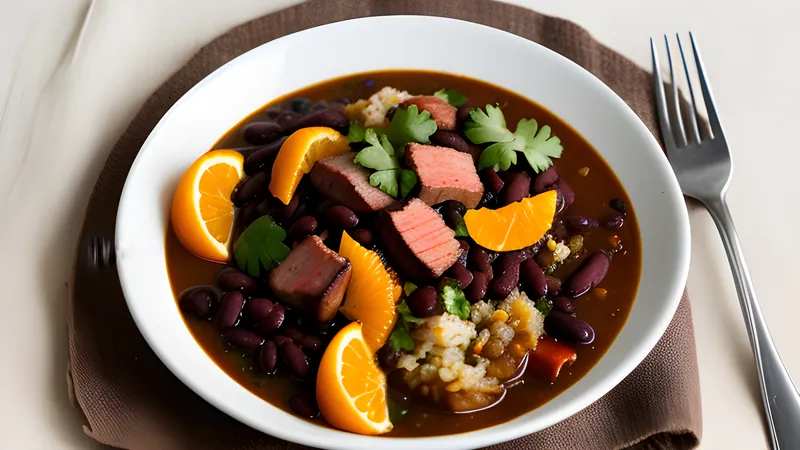
Minestrone soup
soup

Contents
↓ Jump to recipeMinestrone is not a recipe so much as a method for turning whatever is in the vegetable drawer into supper. The one I make leans on a long, patient simmer of cured ham to build a savoury base, then loads in a generous pile of chopped vegetables and beans until the pot is more solid than liquid. My small twist is to drop a rind of Parmesan into the broth as it cooks, so it releases its salt and umami into every ladleful. The result is thick, gently meaty and, like most good soups, better on the second day than the first.
The larder soup
The name comes from minestra, the Italian word for a soup you eat with a spoon, with the suffix -one meaning big: a proper, substantial soupful rather than a delicate broth. That tells you almost everything about its character. Minestrone belongs to cucina povera, the frugal cooking of rural Italy, where nothing edible was wasted and a pot of soup was the sensible destination for vegetables past their prettiest and a heel of stale bread or a scrap of ham bone. There is no canonical recipe because there never could be; the soup changed with the season and the region.
That regionality is the interesting part. In Genoa, the Ligurian version is finished with a spoonful of pesto stirred in at the table, the basil and garlic lifting the whole pot. In Tuscany, beans dominate and yesterday’s minestrone is famously reboiled with bread to make ribollita, a dish whose very name means “reboiled”. Milanese cooks add rice and, in season, fresh borlotti beans. What unites them is technique rather than a fixed list: a soffritto base, a long simmer, beans for body and a starch, whether pasta, rice or bread, to turn soup into a meal. Once you understand that skeleton you can improvise freely, which is exactly what generations of Italian home cooks have done.
There is also a seasonal logic worth honouring. A summer minestrone is lighter and brighter, heavy on courgettes, green beans, tomatoes and basil, sometimes served barely warm or at room temperature. A winter version turns hearty and dark, built on cabbage, kale, squash, potato and more beans, simmered longer and served scaldingly hot with bread. The recipe below sits comfortably in the middle and takes well to being pushed either way depending on what the season and the vegetable drawer offer.
Minestrone soup
Ingredients
- 2 litres water or vegetable stock
- 2 kg mixed vegetables (leeks, beetroot, potatoes, cauliflower, carrots, courgettes)
- 1 small onion, finely chopped
- 11 tablespoons olive oil
- 400 g borlotti beans (drained if tinned)
- 15 to 20 fresh basil leaves
- 275 g prosciutto or cured ham, roughly chopped
- 3 tomatoes, diced
- 5 tablespoons freshly grated Parmesan, plus extra to serve
- 1 Parmesan rind (optional but recommended)
- 1 teaspoon fine salt, plus more to taste
- 1/2 teaspoon freshly ground black pepper
Method
- Sauté the onion in the olive oil in a large heavy pot over medium heat for 6 to 8 minutes until soft and translucent.
- Add the water or stock, the chopped ham and the Parmesan rind, and simmer partly covered for 45 minutes.
- Chop the remaining vegetables into 1.5cm pieces and add them to the pot, except the beans and tomatoes; simmer for 25 minutes.
- Stir in the beans and diced tomatoes and cook for a further 25 minutes until thickened.
- Discard the Parmesan rind, then season with the salt, pepper, torn basil and half the Parmesan.
- Taste and adjust the seasoning, then ladle into bowls and serve sprinkled with extra cheese.
Why the base matters
The temptation with a vegetable soup is to throw everything into cold water and boil it, but the two-stage approach here is what gives the finished soup depth. Sweating the onion slowly first draws out its sugars and builds a mellow, sweet foundation; rushing it over high heat instead gives you a harsh, raw allium note that no amount of simmering removes. Then the ham and Parmesan rind get their own three-quarters of an hour in the liquid before any vegetable goes in, so the broth is already savoury and rounded by the time the vegetables arrive. That Parmesan rind is worth hoarding for exactly this: it is nearly pure concentrated umami, and it dissolves slowly into a soup, seasoning it from within.
The order in which the vegetables go in matters too. Harder, denser vegetables like carrot, potato and cauliflower need the longest, so they go in first; the tomatoes and beans come later because their acidity and softness mean they only need to warm through and lend their body. Adding acidic tomatoes too early can also stall the softening of the harder vegetables, since acid keeps them firm. Cut everything to a similar size so no single piece is raw while another has collapsed.
What can go wrong
The commonest fault is a watery, thin soup that tastes of nothing. Almost always the cause is too much liquid for the vegetables, or not enough time. Minestrone should be thick enough that a spoon nearly stands up in it, so if yours is loose, let it simmer uncovered for another fifteen minutes to reduce and concentrate. Mashing a ladleful of the beans against the side of the pot and stirring it back in is a quick way to thicken and enrich without adding anything.
The other frequent mistake is under-seasoning. A large pot of vegetables and water needs a surprising amount of salt to come to life, so season at the end, taste, and be braver than feels comfortable. If it still reads flat despite enough salt, it wants acid: a squeeze of lemon or a splash of red wine vinegar sharpens the whole bowl. And add the basil right at the end, off the heat, because prolonged cooking turns it dull and drab rather than fragrant.
Overcooked, collapsing vegetables are the third pitfall, and they matter more than people admit. A minestrone should still show distinct pieces of vegetable, tender but holding their shape, not a uniform khaki mush. That is why the harder vegetables and the softer ones go in at different stages, and why the whole pot rarely needs more than the timings given here once the base is made. If you are reheating leftovers the next day the vegetables will have softened further, which is fine and even welcome, but you do not want to reach that stage on the first day. Taste a piece of potato and carrot before you call it done: just yielding is right, falling apart is a stage too far.
Substitutions, storage and make-ahead
Almost any vegetable works, so treat the list as a suggestion and use what needs eating: green beans, celery, savoy cabbage, chard, fennel and squash are all excellent. For a vegan version, leave out the ham and Parmesan, use vegetable stock, and lean on the beans and a good glug of olive oil at the end for richness. A vegan-friendly trick for the missing umami is a spoonful of white miso or a teaspoon of soy stirred in at the end, which stands in surprisingly well for the savoury depth the ham and cheese rind would otherwise give. Cannellini or chickpeas stand in happily for borlotti. To make it a fuller meal, stir a handful of small pasta such as ditalini into the pot for the last ten minutes, adding a little extra liquid, since the pasta drinks it up.
Minestrone keeps in the fridge for up to four days and genuinely improves; the flavours settle and the broth thickens overnight. Reheat gently and loosen with a splash of water. It freezes well for up to three months, though if you have added pasta it is better to freeze the soup without it and cook fresh pasta on reheating, as it goes soft on defrosting. Serve with crusty bread and extra grated Parmesan, or with a spoonful of pesto swirled in at the table, Ligurian-style.
For another slow-built vegetable bowl, the Tuscan white bean and cavolo nero soup works on the same principles of beans, greens and a long simmer, and if you want something velvety rather than chunky, the spiced carrot and ginger soup sits at the opposite, smooth end of the same repertoire. Whichever you make, the lesson of minestrone is the useful one: a good soup is built, not boiled, and a little patience at the base rewards you in every bowl. Keep a bag of Parmesan rinds in the freezer, treat the vegetable drawer as your ingredients list, and you will never be far from a pot of it.
Related Content