We Swallow Eight Spiders a Year: A Myth About Myths
The famous statistic was allegedly invented to prove people believe anything printed. Then it proved it.
Contents
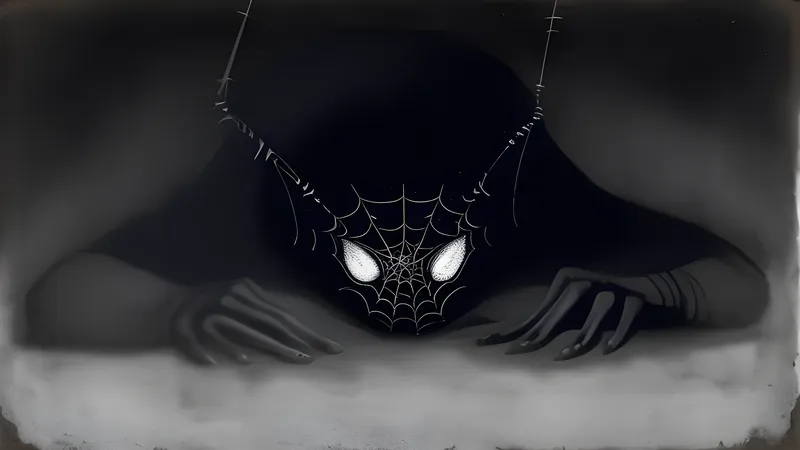
You have almost certainly heard it, probably as a child, probably from someone who delivered it with a small shudder of relish: in the course of a year, the average person swallows about eight spiders in their sleep. The number is oddly specific, which is part of why it sticks — eight, not “some,” not “a few,” a precise figure that sounds as if it came from a study. It did not come from a study. There is no research anywhere that measured the annual spider intake of sleeping humans, because the claim is false at every level, and its own back-story is said to be a deliberate demonstration of how easily a fabricated fact can travel. This is a myth about myths, which makes it the ideal specimen for taking the machinery apart while it runs.
The claim, and why it is nonsense on its face
Take the statistic seriously for a moment, because dismantling it teaches more than simply waving it away. For the average person to swallow eight spiders a year, spiders would have to be routinely crawling into open human mouths during sleep and being ingested — and almost everything we know about both spiders and sleep argues against it. Spiders are not drawn to sleeping humans. A person in bed is, from a spider’s sensory world, a catastrophe of hazards: a giant warm mass giving off carbon dioxide in great rhythmic gusts, radiating heat, vibrating with a beating heart and moving unpredictably. Spiders navigate largely by vibration, and they treat vibration as the signature of either predator or prey — something to flee or to cautiously investigate, not something to climb into. A mouth exhaling every few seconds is a vibrating cavern of warm wind. There is no reason for a spider to enter it and every reason to stay away.
Then there is the matter of frequency. Eight a year is more than one every seven weeks. Most people do not wake with spiders in their mouths ever, across entire lifetimes; the experience is rare enough that on the vanishing occasions it might happen it becomes a story told for years. A genuine rate of eight annually would make it a routine domestic nuisance, discussed like mosquito bites. The claim fails the simplest possible test: it describes a common event that essentially no one actually experiences. And no arachnologist endorses it — spider biologists have been swatting the statistic down for years precisely because it maligns animals that are, overwhelmingly, quietly beneficial housemates.
The origin story that is almost too neat
Here the tale takes its famous turn, and honesty requires flagging that the turn itself has become folklore. The widely repeated account holds that in 1993 a PC Professional columnist named Lisa Holst wrote a piece about the gullibility of the early internet, in which she listed a series of preposterous “facts” circulating in email and on message boards to demonstrate how readily people would believe and forward absurd claims. Among her deliberately ridiculous examples, the story goes, was the spider statistic — invented on the spot to prove the point — and the irony was total: readers plucked the fabricated fact out of an article whose entire purpose was to warn against believing fabricated facts, and sent it hurtling around the world as gospel. The debunk became the thing it was debunking.
It is a beautiful story, and it should be treated with exactly the caution it recommends. Investigators who have gone looking for the original Lisa Holst article and the magazine PC Professional have struggled to verify either, and the neatness of the anecdote — a myth that is secretly a lesson about myths — is itself the kind of too-perfect narrative that tends to be constructed after the fact. So we are left in a genuinely instructive position: the spider claim is definitely false, and the popular explanation of where it came from may itself be a second myth grown to explain the first. The honest statement is that the statistic has no scientific source and its tidy origin legend is unconfirmed. If that feels unsatisfying, sit with the discomfort, because that discomfort is the whole lesson. We crave a clean origin so badly that we will accept an unverified one rather than tolerate “we don’t fully know.”
The machinery: why this particular claim travels
Set aside where it came from and look at what makes it move, because the spider statistic is an almost perfect engine and every part of it is doing a job. First, the specific number. “Eight spiders a year” carries a false precision that mimics the texture of real data. Vague claims invite doubt; a precise figure implies that somewhere a measurement was taken, and the mind extends credit to specificity it would never extend to “lots of spiders.” Con artists and rumour alike know that the decimal points do the persuading.
Second, disgust. The claim targets one of the most reliable emotional buttons we have. Disgust evolved to make us recoil from contamination, and few images trip it as cleanly as swallowing a live spider while helpless and unconscious. A fact that makes you shudder is a fact you will remember, and a fact you remember is a fact you will repeat. Emotion is the fuel of transmission; the claims that spread are rarely the most true but reliably the most feeling. This one runs on pure revulsion, and revulsion is a renewable resource.
Third, unfalsifiability from the sleeper’s point of view. The event supposedly happens while you are unconscious, which means you cannot personally refute it — you have no memory either way, and “you wouldn’t remember” is baked in. A claim that can never be checked against your own experience floats free of the ordinary friction that grinds down false beliefs. This is the same architecture that keeps grander conspiracy theories aloft, the Finland-doesn’t-exist logic in miniature: build the claim so that the absence of evidence is explained in advance, and no amount of not-experiencing-it can dislodge it.
Fourth, low stakes and high shareability. Believing you swallow spiders costs you nothing and changes no behaviour, so there is no motivation to investigate. But it is a delightful thing to tell someone — it earns a reaction, a shudder, a laugh — so there is every motivation to pass it on. A claim that is cheap to hold and rewarding to share is optimised for spread in the same way a virus that doesn’t kill its host too quickly is optimised for contagion. The spider statistic never made anyone ill; it just made everyone talk.
Why debunking sometimes feeds it
There is a cruel wrinkle in the way this myth propagates, and it explains why simply telling people the truth so often fails. To debunk the spider claim you must first restate it — “you know that thing about swallowing eight spiders a year? It’s not true” — and in restating it you hand the listener the vivid, disgusting image all over again. Memory is not tidy about attaching the correction to the claim. Weeks later, what tends to survive is the picture of the spider and the number eight; the little “not true” flag detaches and drifts off, a phenomenon psychologists have documented as the continued-influence effect, where the retraction fades faster than the misinformation it was meant to cancel. This is why the spider statistic has proved almost immune to correction: every debunking is also, functionally, an advertisement. The people warning against it are among its most effective carriers, which is exactly the ironic loop the claim’s supposed origin story describes — and it happens whether or not that origin story is true, because the mechanism does not need a Lisa Holst to run. The claim spreads itself by being memorable and repeats itself through the very act of denial.
The practical upshot, for anyone who wants to correct a false belief without amplifying it, is to lead with the truth and let the falsehood stay small — to spend most of the breath on what is real (spiders avoid sleeping humans; the animals are quiet, beneficial housemates) rather than on a ringing repetition of the vivid wrong thing. It is a hard discipline, because the wrong thing is always the more exciting sentence, and excitement is what travels.
Round numbers and the authority of print
There is a deeper cognitive habit underneath all of this, and it is the one worth taking home. We are extraordinarily willing to accept a fact that arrives already dressed in the clothes of authority — a number, a source, a printed page, a confident teller — without asking who measured it and how. The spider claim wears a number; that is nearly enough. The Great Wall visible from space wears the authority of the schoolbook; the notion that we only use ten percent of our brains wears the authority of a round, tidy percentage. In each case a claim that no one ever verified inherited its credibility from its packaging rather than its content, and each was passed hand to hand by people who assumed, reasonably enough, that someone earlier in the chain must have checked. Almost no one ever does. The chain is made entirely of people trusting the previous link.
The correction, when you learn to make it, is a small mental gesture that pays off far beyond spiders. When a fact arrives suspiciously round, suspiciously specific, or suspiciously satisfying — when it makes you shudder or nod or feel confirmed — that emotional click is precisely the moment to ask the boring question: who counted this, and how would they even have counted it? For the spider claim, the answer to “how would you measure annual human spider ingestion” is that you essentially couldn’t without an absurd study no one has run, and once you notice that the measurement is impossible, the statistic collapses.
What the spider was really carrying
The spider statistic is trivial, harmless, faintly funny, and that is exactly why it is such a good teacher — the stakes are low enough that you can watch the mechanism clearly without the noise of anything mattering. The same engine that pushes eight harmless spiders down a sleeping throat also drives the claims that do matter, the health scares and financial rumours and political fabrications that share the identical parts: a precise-sounding number, an emotional trigger, an unfalsifiable structure, a satisfying shape, and a long chain of people who assumed someone else had done the checking. Learn to see the engine in the spider, where nothing is at risk, and you will recognise it later when something is.
So no, you are not swallowing spiders in your sleep, and you probably never have. What you have almost certainly done — everyone has — is swallow the statistic, whole and unexamined, and pass it along with a shudder. The spider was never the point. The eagerness to believe it was, and still is, the only thing the story was ever really measuring.
Related Content