The War of the Worlds Panic That Mostly Didn't Happen
The 1938 broadcast is famous for a mass hysteria the evidence can barely find
Contents
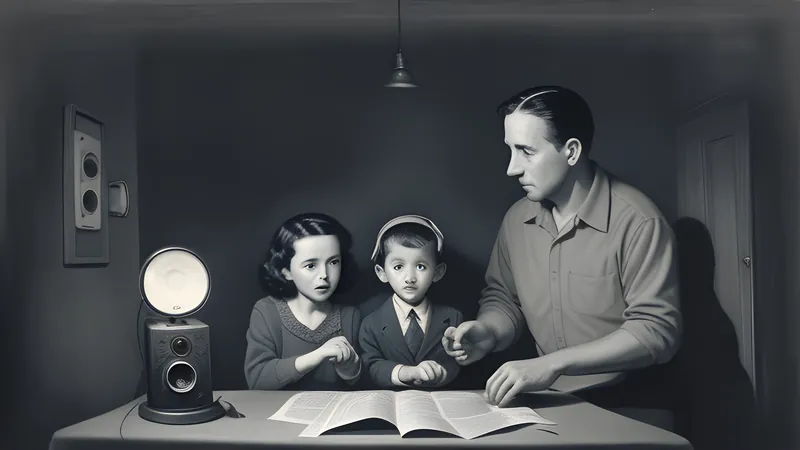
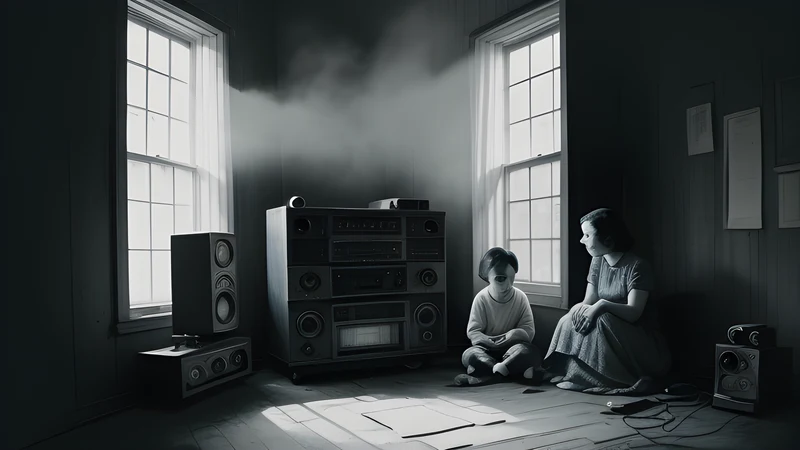
The story is one of the founding legends of the media age. On the evening of 30 October 1938, the day before Halloween, the Columbia Broadcasting System aired a radio drama that convinced much of America that Martians had landed in New Jersey and were advancing on New York with heat rays and poison gas. The programme, an adaptation of H. G. Wells’s novel The War of the Worlds, was framed as a series of increasingly frantic news bulletins interrupting an ordinary evening of dance music, and it was so realistic, the legend goes, that a nation panicked. People fled their homes, clogged the roads, wrapped their faces against the gas, prayed in the streets, and in some tellings took their own lives in despair. A young Orson Welles, at twenty-three, had accidentally proved that radio could hypnotise a country into mass hysteria.
It is a wonderful story, endlessly retold in textbooks and documentaries as a parable about the power of mass media. There is only one problem with it. When you go looking for the panic in the contemporary evidence, it is remarkably hard to find. The broadcast happened, and it was indeed a brilliant piece of realistic radio drama, but the nationwide hysteria it supposedly triggered appears to have been, for the most part, an invention of the days that followed. The kernel is real and the legend grew far beyond it, and the gap between them is one of the most instructive in the history of how we talk about media.
The broadcast that really aired
Everything about the drama itself is well documented and genuinely clever. It was produced by the Mercury Theatre on the Air, Welles’s company, and adapted chiefly by the writer Howard Koch. The novel’s Victorian England was transposed to contemporary America, with the Martian cylinders landing at a real and ordinary place, Grover’s Mill, New Jersey, chosen more or less at random from a map. The programme’s most inspired choice was its form: after a brief introduction, it unfolded as a sequence of simulated news flashes breaking into a programme of live dance music, complete with an on-the-scene reporter whose commentary rose from curiosity to horror as the Martians emerged, and a studio announcer struggling to keep his composure. To a listener who tuned in a few minutes late and missed the framing, the effect could be startlingly convincing.
So the raw material of the legend is real. The broadcast was designed to sound like breaking news, and it did. Some listeners were undoubtedly frightened, at least briefly, and some telephoned their local stations, newspapers or police to ask what was happening. None of this is in dispute, and it is the seed from which the whole story grew. The question is how many people that “some” actually was, and whether anything resembling a mass panic followed.
What the audience numbers show
The first crack in the legend is the size of the audience. The Mercury Theatre on the Air was a prestige programme with a modest following, and it was scheduled opposite one of the most popular shows on American radio, The Chase and Sanborn Hour on NBC, built around the ventriloquist Edgar Bergen and his dummy Charlie McCarthy. On any given Sunday evening the great majority of the listening public was tuned to Bergen. The audience-measurement service of the day, the C. E. Hooper ratings, telephoned thousands of households during the broadcast to ask what they were listening to. Only a small percentage named the CBS programme at all, and of those who did, some described it as a play. The number of people actually listening to the Mercury drama at the moment of the supposed panic was a fraction of the national audience.
A comparatively small listenership sharply limits how large any panic could have been. You cannot have millions fleeing a broadcast that only a modest number of households were hearing. The arithmetic alone should have made the legend suspect, yet the legend took hold precisely because almost no one checked the arithmetic against the story. The image of a terrified nation was simply more compelling than a ratings table, and the ratings table was quietly ignored.
Where the panic came from
If the audience was small and the panic slight, where did the towering legend come from? The answer is the newspapers of 31 October and the days after, which reported a nationwide fright in lurid and confident terms. Front pages across the country described crowds in the streets, jammed switchboards, people fleeing in cars, and the general collapse of public order, often with little more sourcing than a handful of telephone calls and a great deal of imaginative extrapolation. The press, in other words, largely manufactured the scale of the reaction it claimed to be describing.
Two media historians, Jefferson Pooley and Michael Socolow, laid this out in detail in a 2013 article, arguing that the newspaper industry had motive as well as opportunity. Radio was the newspapers’ great commercial rival, a younger medium siphoning off advertising revenue during the Depression and increasingly trusted as a source of news. A story in which radio recklessly terrified the public was, for the newspapers, an attractive one, casting the upstart as irresponsible and dangerous and implicitly reminding readers that print was the sober, reliable medium. The dramatic panic narrative served the interests of the very institutions reporting it, and it spread far faster and lasted far longer than the fright itself.
Even the most-cited piece of academic evidence for the panic turns out to be shakier than its fame suggests. In 1940 a Princeton psychologist, Hadley Cantril, published a study, The Invasion from Mars, which estimated that of some six million listeners, well over a million had been frightened. Those figures have been repeated ever since as if they were hard measurement, but the methodology drew heavily on interviews conducted weeks later and on the newspaper accounts themselves, so that a study meant to gauge the panic partly absorbed the exaggeration it was measuring. The much-repeated tally of a frightened multitude rests on far softer ground than its constant citation implies, and no verified wave of suicides or deaths from the broadcast has ever been documented.
The real reactions, kept in proportion
None of this means the evening passed without incident, and honesty requires holding onto the genuine fragments even while deflating the legend. Some listeners really were frightened, and a scatter of documented reactions survives. Local newspapers recorded telephone switchboards lighting up at police stations and radio stations as anxious listeners rang to ask whether the reports were true. There are accounts of individuals who packed the car, or telephoned relatives to say goodbye, or gathered the family in genuine fear during the minutes before they grasped that it was a play.
The little town of Grover’s Mill, named on air as the Martian landing site, has its own cherished anecdote. As the story goes, a local resident, seeing a shape looming in the darkness that his rattled imagination turned into a Martian war machine, fired a shotgun at a water tower. Whether the tale is precisely true or has been burnished in the retelling, the town later embraced its accidental fame and eventually erected a monument to the broadcast, which tells you something about how a community metabolises a brush with legend.
The point of listing these is to keep them in proportion rather than to erase them. A handful of frightened listeners across a country of a hundred and thirty million is exactly what you would expect from a realistic drama that some people tuned into late, and it is a very long way from a nation in flight. The reactions were real, local, and few; the panic was national, sweeping, and largely printed after the fact. The honest account has room for both the man with the shotgun and the ratings table, and it is the newspapers that lost sight of the second in their rush to dramatise the first.
There is a further irony worth noting. The broadcast had opened with a clear announcement that it was a dramatisation, and it was interrupted partway through for a station identification that reminded listeners they were hearing the Mercury Theatre. A listener who caught the whole hour had ample warning. The frightened minority were overwhelmingly those who arrived late, having twirled the dial away from Edgar Bergen during a musical number, and landed in the middle of what sounded like the end of the world. Their fright was reasonable given what they heard; the legend’s error was to multiply that reasonable, momentary fright by the whole population and call the result history.
Why the legend was too good to check
The deeper question is why a story so weakly supported became one of the most durable anecdotes of the twentieth century, taught to schoolchildren as settled fact for generations. The answer lies in what the legend allowed people to believe about the new medium and about their neighbours. In 1938 radio was still young, its reach into the home unprecedented, and it stirred a genuine anxiety about the power of a disembodied voice to reach millions at once. A story in which that voice could send a nation running into the night gave shape to a fear people already felt about the technology transforming their lives.
There was also a flattering distance in it. To believe in the panic was to believe that other people, the credulous masses, could be stampeded by a radio play, while the person telling the story was of course too sensible to be fooled. Media-panic legends almost always work this way, locating gullibility safely in the crowd and never in oneself. The same architecture underlies more modern frights, from the moral panics built on the flimsiest of evidence to the way a nineteenth-century newspaper spun a whole imaginary civilisation on the moon and watched the public accept it. In each case the story we tell about mass gullibility is more revealing about our anxieties than about any actual crowd.
What is left when the panic recedes
Peel away the exaggeration and what remains is quieter and, in its way, more interesting than the myth. A gifted young theatre company made an ingenious piece of radio drama that briefly alarmed a portion of its modest audience, and a rival industry, with commercial reasons of its own, inflated that ripple into a tidal wave and printed it as history. The lasting hysteria happened in the retelling, and it has proved far more powerful than the broadcast ever was, because a story about a panic can frighten and instruct long after the panic itself would have been forgotten.
The people who believe in the great panic were taught it as fact by trusted sources, over and over, for the better part of a century. The genuine lesson of the night sits one level beneath the familiar one. The broadcast is remembered as proof that the media can make a crowd believe almost anything, and the way the panic legend itself was manufactured and swallowed is the sharper demonstration of exactly that. The company that carried the story forward, and the man at its centre, understood the value of a good legend very well, which is a matter worth following into the newspaper motives and the making of the Orson Welles legend. The Martians never landed. The more durable invasion was the story of the invasion, and it colonised the century.
Related Content