The Systembolaget Rumours: The Poison That Wasn't in the Bottle
Sweden's temperance state really did poison alcohol. The bottles on the monopoly shelf were the one place it never happened.
Contents
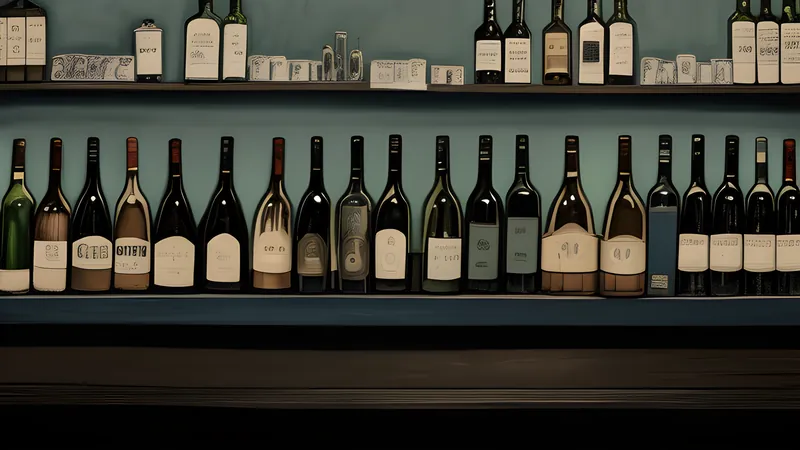
Somewhere in Sweden, in a queue that only forms on a Friday afternoon, a man leans towards the person beside him and says the quiet thing. You know they put something in it, he says. Nodding at the shelves of the Systembolaget, the state-owned shop that is the only legal place in the country to buy a bottle of wine stronger than a light beer. They doctor the cheap stuff. They add a chemical so you can’t drink too much of it. My uncle knew a man who worked there. The claim changes shape depending on who is telling it — sometimes it is an emetic to make you sick, sometimes a preservative that gives you a headache by the second glass, sometimes simply “something” — but the shape of the belief underneath is always the same. The state that sells you drink does not want you to enjoy it, and it has reached into the bottle to make sure.
It is a small rumour, the kind that never makes a newspaper, and it would be easy to file it as ordinary grumbling about a monopoly nobody chose. But it is more interesting than that, because it is a folk belief that sits directly on top of a true story. The Swedish state really did poison alcohol. It killed people doing it. The temperance apparatus that built the Systembolaget was, in living memory, engaged in exactly the thing the rumour accuses it of — with one precise and load-bearing exception. The one place the poison never went was the bottle on the shop shelf. To understand why the rumour survives, you have to understand the true thing it grew from, and then find the exact seam where the two part company.
The suspicion, told straight
Start with the belief at its most persuasive, because it is not stupid. A Swede who suspects the Systembolaget of tampering is reasoning from a set of facts that are all, individually, correct.
The shop is owned by the government. It makes a virtue of not wanting to sell you very much — short opening hours, no chilled bottles by the till, no cheerful marketing, staff trained to talk you gently towards moderation. Its own official purpose, printed on its own materials, is to limit the harm that alcohol does to Swedish society. So here is a retailer whose stated goal is for you to buy less of its product, run by a state with a century-long history of treating drink as a public menace. If you already believe that this institution disapproves of your Friday evening, the leap to “and it has done something to the wine” is a short one. The premise is sound. Only the conclusion is wrong.
The rumour also travels well because it is unfalsifiable in the way of all good folklore. Nobody who repeats it has tested the wine. The proof is always at one remove — the uncle, the friend who worked a summer in the warehouse, the man in the next queue. And there is a satisfying logic to it that resists correction: if you say you have never felt poisoned, the answer is that they only do it to the cheap stuff, or that the dose is subtle, or that of course they would deny it. The belief is built so that experience cannot dislodge it.
The kernel: the state really was a poisoner
Here is the part that earns the suspicion, and it deserves to be told at full strength.
For most of the twentieth century, in Sweden as across the industrial world, there existed two kinds of alcohol. There was the drink you bought to drink, taxed and controlled. And there was industrial alcohol — the ethanol used for cleaning, for solvents, for fuel and lamps and laboratories — which for tax reasons had to be made deliberately undrinkable. This is called denaturing, and it is not a metaphor. To denature alcohol is to add substances that make it foul, bitter, and toxic, so that nobody will drink it and nobody can quietly divert it from the workshop to the glass.
In Sweden the everyday form of this was T-sprit, or T-röd — denatured spirit, dyed a warning red, adulterated with methanol and pyridine and other agents chosen precisely because they taste vile and, in the case of methanol, blind and kill. Methanol, wood alcohol, does its damage a day or two after you drink it: the body converts it to formic acid, which attacks the optic nerve and then the brain. People went blind. People died. And people drank it anyway, because addiction and poverty are stronger than a warning label, and the red spirit was cheap and legal to buy for cleaning. The Swedish word for the desperate end of drinking, the man reduced to swallowing methylated spirits, carried the memory of it. The state had made a poison, sold it openly, and watched a certain kind of drinker die from it. That is not rumour. That is documented public-health history.
And Sweden was mild compared with the American case, which is the clearest instance on record of a government poisoning its own citizens through their drink. During Prohibition, the United States required industrial alcohol to be denatured, and bootleggers responded by stealing it and re-distilling it back into something drinkable. So, from 1926, the federal government ordered the formulas made deadlier — more methanol, plus benzene, kerosene, mercury salts, and other poisons — specifically to punish the re-distillers and deter the trade. The chemists knew it would kill. The New York City medical examiner Charles Norris said so publicly and furiously, calling it “our national experiment in extermination.” By the time Prohibition ended in 1933, the poisoned industrial supply is estimated to have killed around ten thousand people. The historian Deborah Blum laid the whole grim episode out in The Poisoner’s Handbook; it has come to be called the chemist’s war on alcohol.
So when a Swede says the state poisons the alcohol, he is standing on a true foundation. Governments genuinely reasoned that if people would insist on drinking things they were not meant to, the drink could be made lethal enough to stop them. It is one of the coldest ideas the modern administrative state ever put into practice, and it is exactly the sort of thing that, once done, is never fully forgotten. The distrust is earned. This is the same mechanism that runs beneath the Tuskegee syphilis study, where a real institutional betrayal made every later suspicion of the medical establishment feel reasonable — and beneath the long afterlife of MKUltra, where a genuine programme of covert drugging taught a generation that the paranoid guess was sometimes simply correct.
The fork: where the true thing turns into the false one
The rumour and the record run side by side up to a single point, and then they separate cleanly.
Everything above is about denatured alcohol — the industrial supply, deliberately spoiled so it would not be drunk as a beverage and would not escape the tax. The poison was the point. It was there to make the liquid undrinkable, announced by the red dye and the reek. The state was never hiding it; the toxicity was the mechanism, worn on the outside.
The Systembolaget bottle is the exact inverse. It is the beverage supply — the taxed, regulated, meant-to-be-drunk product. Its entire regulatory reason for existing is that it is the safe, controlled channel, the alternative to the poisoned margins. A monopoly built to reduce the harm from alcohol has no conceivable interest in adulterating the one supply it can fully vouch for; doing so would defeat the whole design, and it would be a chemical crime that a single laboratory test could expose in an afternoon. Swedish alcohol is among the most measured and inspected consumer goods in the country. The wine on the shelf is the thing the poison existed to replace.
So the fork is this. The state poisoned alcohol — the industrial kind, on purpose, in the open, to keep it out of your glass. The rumour takes that true fact and slides it one shelf over, onto the bottle that was the safe harbour all along. It keeps the emotional truth — the state’s willingness to reach into the drink — and attaches it to the precise object where it never happened. That slide, from a real poison in a real place to an imagined poison in the wrong place, is the whole life of the legend.
The journey: a hundred years of a disapproving state
The rumour did not need to be invented. It was the natural sediment of a very particular history, and Sweden’s is unusually rich soil.
The Swedish temperance movement was one of the strongest in Europe, a mass movement with hundreds of thousands of members, tangled up with the labour movement, the free churches and the drive for respectability. Its high-water mark came in 1922, when Sweden held a national referendum on total prohibition and only narrowly voted it down — the drys lost by a margin of a few percentage points, and for a moment the country stood at the edge of going the way of the United States. Instead it chose control. The architect of that control was the physician Ivan Bratt, who designed a rationing system meant to squeeze the drinking of the poor and the “unworthy” while leaving the respectable their measured allowance.
That system was the motbok, the ration book, and it governed Swedish drinking from around 1919 until 1955. Every qualifying adult had a book; the state recorded and capped how much spirit you could buy each month; the allowance depended on your sex, your income, your marital status and your standing. Women were granted little or nothing. A man judged disorderly could have his allowance cut or cancelled. The state sat in judgement over each citizen’s thirst, in writing, by name. When the motbok was finally abolished on 1 October 1955, Swedes bought so much on the first free day that the papers wrote about it, and the modern Systembolaget — a single national monopoly, no ration book, but the same guiding philosophy — took over the counter.
Live for a century under a system like that and you internalise a certain relationship with the shop. It is the place that used to write down your name and decide whether you had earned your bottle. It is the institution built by people who thought your drinking was a problem to be managed. The suspicion that it might tamper with the goods is not really a hypothesis about chemistry. It is the folk memory of the motbok wearing a new costume. The rumour is what a hundred years of being rationed and morally supervised feels like, translated into a story simple enough to tell in a queue.
What it is really about
Every durable legend answers a need, and this one answers the peculiar discomfort of buying a thing from someone who wishes you would not.
The Systembolaget is a genuinely strange institution to stand inside if you did not grow up with it. It sells you wine while radiating the conviction that wine is a hazard. It is efficient, well stocked, staffed by people who know their Rioja, and it is animated by a purpose that runs against its own tills. That contradiction has to go somewhere. For most Swedes it goes into a shrug and a joke. For some it condenses into the rumour, which is a way of naming the unease out loud — of saying, this relationship is not normal, the seller does not want me to have the goods, and something about that feels like a hand on the bottle.
And the rumour keeps a real warning alive, even while getting the facts wrong. It remembers that the state was capable of poisoning drink, because the state was. It carries forward, in garbled form, a true lesson about denatured spirit and the chemist’s war and the coldness of a bureaucracy that decided some deaths were an acceptable price for compliance. The believer has the moral of the story exactly right. He has only misfiled the evidence, moving the poison from the red industrial can where it really lived to the sealed retail bottle where it never did.
That is the quiet mercy owed to the man in the queue. He is not a fool for suspecting the state of poisoning the drink; his own country’s history taught him precisely that lesson, in methanol and ration books, and it taught it well. What he has lost track of is the boundary — the single shelf’s width between the supply the state spoiled on purpose and the supply it exists to keep clean. The poison was real. It was simply never in the bottle he is pointing at. And the fact that he cannot quite believe that, a lifetime after the motbok was burned, tells you how long a state’s disapproval lingers in the people it once measured by the glass.
Related Content