The South Sea Bubble: The Original Financial Conspiracy and Cover-Up
In 1720 a company that traded almost nothing became worth more than a kingdom, and when it fell it took a government's honesty down with it

Contents
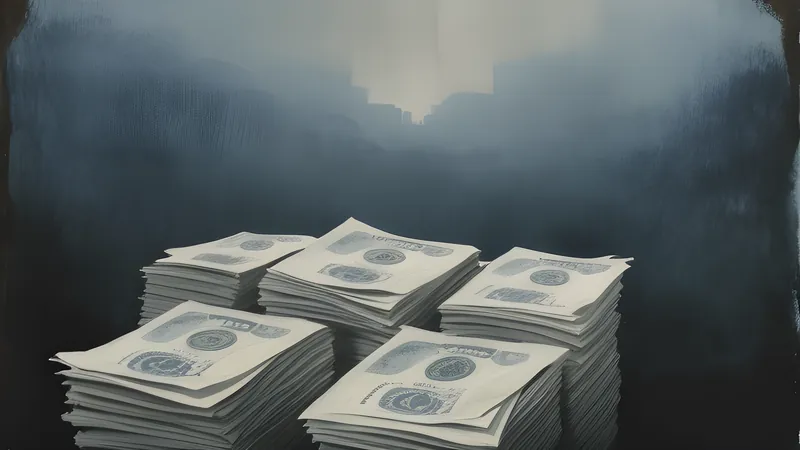
In the first days of 1720, a share in the South Sea Company could be had for about £128. By the end of June it was changing hands for something near £1,000. Then, over the autumn, it fell back below £200, and a nation discovered that a very large part of its wealth had been imaginary. Fortunes made on paper in the spring were annihilated by Christmas. Members of Parliament were ruined; so were duchesses, clergymen, and thousands of ordinary people who had mortgaged real property to buy into a company whose actual business was close to nonexistent. When the wreckage was examined, it turned out the collapse was not merely a mania that had run its course. The company’s rise had been engineered, its books manipulated, and its passage through Parliament greased with bribes that reached into the Cabinet and, some believed, the royal court itself. The South Sea Bubble is often remembered as the first great stock-market crash. It was also the first great financial cover-up, and the way Britain handled the aftermath set precedents that outlived everyone involved.
A company that barely traded
The South Sea Company was founded in 1711 with a grand-sounding monopoly: the exclusive right to British trade with the Spanish colonies of South America. The trouble was that Spain controlled those colonies and had no intention of opening them, so the actual commerce — a limited slave-trading contract, the asiento, and a single annual trading ship — was meagre and frequently interrupted by war. The company’s real function was financial. It existed to hold and manage a large slice of the British government’s national debt, taking on government debt in exchange for shares and a guaranteed interest payment. Its trading monopoly was mostly decoration, a romantic story of El Dorado profits pinned to what was in truth a debt-conversion scheme.
In 1720 the company’s directors proposed something audacious: to take over the entire national debt. Holders of government bonds would be persuaded to swap their secure, low-yielding debt for South Sea shares. The scheme’s genius — and its rot — lay in a simple mechanism. The higher the company’s share price rose, the fewer shares it had to issue for each pound of debt it absorbed, and the more surplus stock the directors had left over to sell for cash or hand out as inducements. The company therefore had an overwhelming interest in driving its own share price to the moon, and it set about doing exactly that.
The engineering of the boom
What followed was an orchestrated campaign. The directors spread optimistic rumours of fabulous trade about to open in the South Seas. They devised a scheme by which investors could buy shares on credit, paying only a fraction down, which let far more people bid and pushed prices higher still. Most consequentially, they distributed shares — fictitious shares, in some cases, that no one had actually paid for — to people whose support they needed. Politicians received allocations at the current low price with the understanding they could “sell back” later at the inflated price and pocket the difference, a bribe disguised as an investment. The recipients reportedly included ministers, members of Parliament, and figures connected to the court of King George I; the king’s mistresses were among those said to have benefited, and the king himself was the company’s governor.
The share price obeyed. Through the spring and early summer of 1720 it climbed with a violence that pulled the whole of London into speculation. A rash of imitator companies sprang up — the so-called “bubble companies”, promising everything from perpetual-motion wheels to, in the most famous possibly-apocryphal example, “a company for carrying on an undertaking of great advantage, but nobody to know what it is.” Parliament, at the South Sea Company’s urging, passed the Bubble Act in June 1720 to suppress these rivals, a move that helped puncture confidence across the market. By late summer the tide turned. As insiders quietly sold, the price cracked, credit-buyers were unable to meet their payments, and the descent became a rout. By September the company was in freefall, and the paper wealth of a summer had turned to debt.
The cover-up and its unravelling
The genuinely interesting part of the South Sea story — the part that makes it the ancestor of every modern financial scandal — is what happened when Parliament tried to investigate itself. In late 1720 a Committee of Secrecy was appointed to examine the company’s books. It quickly discovered that the accounts had been falsified and that a second, hidden ledger recorded the fictitious stock handed to politicians. The company’s cashier, Robert Knight, who kept the incriminating “green book” listing exactly who had been bribed, fled the country in January 1721, slipping across to the Continent with the evidence. He was arrested in the Austrian Netherlands, but the British authorities’ efforts to extradite him were, to put it delicately, half-hearted — because a great many powerful men did not want the green book read aloud. Knight was quietly allowed to escape again and remained abroad for years. The most complete record of the corruption was thus made to disappear by the very establishment it implicated.
Even without Knight, the investigation reached high. Several directors of the company had their estates confiscated to compensate the ruined. The Chancellor of the Exchequer, John Aislabie, who had championed the scheme, was found guilty of the “most notorious, dangerous and infamous corruption”, expelled from the House of Commons, and briefly imprisoned in the Tower of London. James Craggs the Elder, the Postmaster General, died — possibly by his own hand — as the inquiry closed in. And the man who emerged to manage the wreckage, restore some order to the finances, and, crucially, protect the king and the ministry from the full blast of exposure was Robert Walpole. His skill at “screening” the most senior figures from ruin earned him the nickname “the Screenmaster-General”, and it carried him to the top; he is generally reckoned Britain’s first Prime Minister. The cover-up, in other words, did not merely conceal a crime. It launched a career.
The fork: where the legend outruns the ledger
The South Sea Bubble has been retold so often that a few durable exaggerations have hardened into fact, and the honest version is more instructive than the legend.
The first is the idea that everyone was a helpless dupe swept up in collective madness. The image is seductive — a whole nation losing its mind at once — and it flatters later generations who imagine they would have known better. But the record shows the boom was structured and steered by insiders who understood precisely what they were doing and who mostly got out before the fall. The mania was real; it was also cultivated. To call it pure crowd psychology lets the architects off the hook, exactly as the “mastermind” and “everyone was fooled” framings do in modern scandals.
The second involves Isaac Newton. The story that the great physicist lost a fortune in the Bubble and lamented that he “could calculate the motions of the heavenly bodies, but not the madness of people” is beloved and endlessly repeated. There is decent evidence Newton did invest in South Sea stock and did lose a substantial sum — figures around £20,000 are cited — but the famous quotation itself surfaces only much later, second-hand, and cannot be reliably traced to him. It is the kind of too-perfect line that attaches itself to a story because we want it to be true. The loss may be real; the epigram is folklore.
The third and most important correction concerns the scale of the collapse. Popular memory imagines Britain economically flattened, a catastrophe on the order of a national ruin. The human damage among individual investors was severe and real. But the British financial system as a whole absorbed the shock and recovered within a few years; the national debt was restructured, the company itself limped on for another century in a diminished form. The Bubble was a disaster for those caught in it and a scandal for the government, and it was survivable for the state. Overstating the macroeconomic devastation obscures the sharper point, which is that the people running the market had rigged the rules and then protected each other from the consequences.
What it was really about
Underneath the share prices, the South Sea Bubble is a story about the collusion of finance and government, and about a public asked to trust an institution that was quietly serving the people who ran it. Ordinary Britons bought South Sea stock because Parliament had blessed the scheme, because the king was its governor, because the whole apparatus of respectable authority stood behind it. That trust was the raw material of the fraud. The directors did not need to persuade a sceptical public of an El Dorado; they needed only to borrow the credibility of the state, and the state, for a price, lent it.
This is the enduring template. A company hides its real condition behind a story; the watchdogs are compromised because they are inside the deal; the collapse ruins the trusting and spares the connected; and the reckoning, when it comes, protects the most powerful and punishes a sacrificial few while the crucial evidence goes conveniently missing. Every element recurs. It is the same pattern that ruined France’s small savers in the Panama Canal bribery scandal a century and a half later, the same collusion of finance and secrecy that surfaced when the Panama Papers exposed the modern machinery of hidden wealth. The instruments change; the human arrangement does not.
What remains
The person who looks at the financial system and concludes that its rules are written to protect insiders is often told they are cynical, or worse, that they are a conspiracy theorist. The South Sea Bubble is a reminder, three centuries deep, that this suspicion has an old and well-documented pedigree. In 1720, the rules genuinely were written to protect insiders; the bribes genuinely reached the Cabinet; the key evidence genuinely was allowed to vanish; and the man who shielded the guilty genuinely rose to lead the country. None of that was paranoia. It was the parliamentary record.
What the Bubble teaches is not that finance is a swindle — most of it, most of the time, is ordinary and dull. It teaches how to read the specific moment when an institution’s story diverges from its books, and who benefits from keeping the two apart. The green book that Robert Knight carried out of England held the names of everyone who had been paid. It never surfaced. And the fact that it never surfaced tells you more about how power protects itself than any confession ever could.
Related Content