The Somerton Man: A Body, a Code, and a Torn Page
For seventy-four years the well-dressed corpse found on an Adelaide beach in 1948 had no name, only a scrap of paper torn from a rare book and five lines of code nobody could break
Contents
On the morning of 1 December 1948, a man out for an early swim found a body slumped against the sea wall at Somerton Park beach, near Adelaide, South Australia, dressed smartly in a suit, tie, and polished shoes, as if he had sat down to rest and simply not got up again. He had no wallet, no identification of any kind, and every label had been carefully cut out of his clothing. In his fob pocket, tucked so deep it was missed at the initial post-mortem, investigators eventually found a tightly rolled scrap of paper torn from the final page of a book, printed with two words in an elegant script: “Tamam Shud” — Persian for “ended” or “finished,” the traditional closing phrase of an edition of the Rubaiyat of Omar Khayyam. Cause of death was never established with confidence. No poison was conclusively identified. For seventy-four years, nobody knew who he was.
That gap — a real body, a real torn page, and no name to attach to either — is precisely the kind of vacuum conspiracy invariably fills, and around the Somerton Man it filled fast: theories of Cold War espionage, undetectable Soviet poisons, a spy ring operating near the top-secret Woomera rocket range a few hundred kilometres away. What makes this case worth telling as a kernel story rather than a folklore story is that, unusually, the identity part of the mystery has actually been solved, recently, by name, with a paper trail anyone can check — and the solving throws the parts that remain genuinely unresolved into much sharper relief.
What the police actually found
The South Australian police investigation, led at the time by Detective Sergeant Lionel Leane, catalogued the physical facts with more care than most cold cases of that era receive. The man appeared to be in his forties, in excellent physical condition, with unusually developed calf muscles that led one examining doctor to guess at a dancer or athlete. His stomach contents suggested his last meal was a pasty, eaten some hours before death. The post-mortem found the body in a state consistent with poisoning, but toxicology in 1948 could not identify a specific substance, an entirely plausible gap given how limited forensic toxicology was at the time, particularly for compounds that break down quickly in the body. A public appeal for identification went nationwide and produced nothing usable.
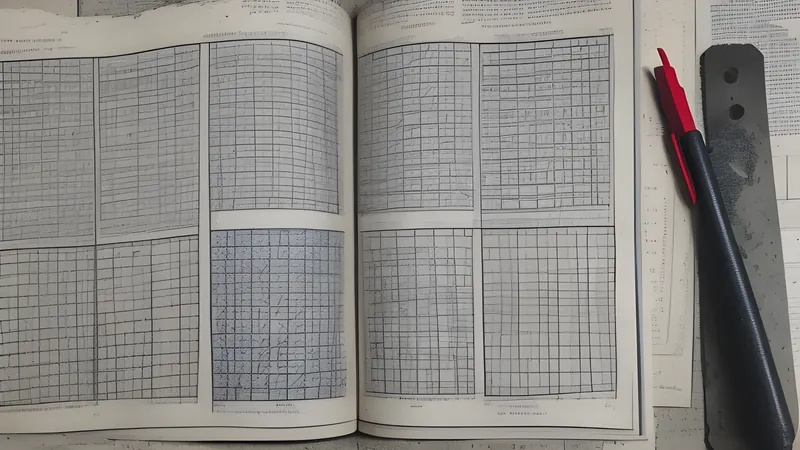
Months after the body had already been buried, in a pauper’s grave with a plaster cast made of his face and torso for future reference, police traced the specific edition of the Rubaiyat the torn page had come from: a copy left in the back seat of an unlocked car parked near the beach on the night the man died. Inside the book’s back cover, in pencil, was a sequence of five lines of capital letters, apparently random, that has never been definitively decoded, along with a local telephone number. That number led detectives to a young nurse living nearby, referred to in the press for decades only by the pseudonym “Jestyn” to protect her identity, who owned a copy of the same edition of the Rubaiyat — one with its final page missing.
The fork: how a real mystery grew a spy story
Here is precisely where the documented case and the popular myth start to diverge. What is actually confirmed: an unidentified man, a torn page, an uncracked five-line code, a nurse with a matching book, and a death that pre-1950s forensic science genuinely could not explain. What is not confirmed, and never was: that any of this had anything to do with espionage. The Cold War framing attached itself almost immediately, helped along by Woomera’s real proximity and real secrecy, and by the coincidence that the Soviet Union had, a few years later, been shown to use undetectable poisons in political assassinations — a genuine capability, just not one anyone ever produced evidence connecting to this particular body on this particular beach.
The nurse herself became a magnet for speculation for the rest of her life, her daughter later saying publicly that she believed her mother had known the dead man’s identity and had lied to protect it, possibly connected to a child, or to a wartime secret she never fully disclosed. That is suggestive, human, and completely unproven testimony about someone’s private life decades after the fact — the sort of private grief a family carries quietly, unrelated to intelligence work of any kind. The five-line code has been attacked by professional and amateur cryptographers for over seventy years using every plausible cipher method available, and the most defensible conclusion cryptanalysts have reached is that the sample is simply too short to decode with confidence one way or another — it may be a genuine cipher, a set of initials or personal notes, or nothing systematic at all. Short of new information, that is likely where the code stays: unbroken, and just as plausibly an ordinary man’s private scrawl as a genuine cipher.
The journey: seventy years of failed leads
Before genetic genealogy made identification possible, the case ran through decades of near-misses that read, in retrospect, like a catalogue of how badly an unsolved death wants a name attached to it. In the 1950s alone, several men were tentatively proposed and then ruled out, including a missing local labourer and, briefly, a Swedish sailor, none of whom matched the physical description or the dental records well enough to hold up. Books on the case multiplied from the 1970s onward, several proposing that the man’s unusually developed calf muscles pointed to a background in ballet or gymnastics rather than espionage, a detail that fed theories almost as freely as the Cold War angle did — one popular version cast him as a former dancer whose profession, rather than his nationality, explained the physique investigators had puzzled over. True-crime documentary crews revisited the case repeatedly through the 2000s and 2010s, and the unsolved cipher became something of a recurring cryptography-community challenge, discussed on amateur codebreaking forums for years with no submitted solution ever gaining consensus acceptance.
One thread deserves its own space, because it briefly threatened to resolve the case in a completely different direction before collapsing into a dead end that turned out to matter anyway. In 1949 a former army lieutenant named Alfred Boxall came forward to Sydney police holding his own copy of the same edition of the Rubaiyat, inscribed inside the cover by the same nurse the papers would later call “Jestyn.” For a brief, tantalising stretch detectives believed they had their man, since Boxall’s book matched the dead man’s edition down to the publisher and print run — until Boxall himself turned up alive and well, working in Sydney, his own copy still in his possession with no page torn from its back. The Boxall detour did real work for the case despite its dead end: it confirmed that the nurse had given at least one other man an identical copy of the same book during the war years, which meant the dead man’s matching Rubaiyat, however suggestive, could not by itself prove any particular relationship between the two of them, only that both had somehow crossed paths with a volume she was evidently in the habit of giving away.
The identification, seventy-four years later
The part of the case that did get solved is the part that mattered most and drew the least conspiratorial attention, because it turned out to be almost defiantly unglamorous. In 2021, South Australian police, under pressure from independent researchers who had spent years pushing for exhumation, agreed to dig up the body from its Adelaide cemetery grave to extract a usable DNA sample. A team led by the University of Adelaide’s Professor Derek Abbott, working with genetic genealogists, had already spent years attempting to identify the man using DNA recovered from hair embedded in the original 1948 plaster cast of his head, built a family tree by matching that DNA against public genealogy databases the way police genetic genealogy units had begun successfully using to crack decades-old American cold cases, and in July 2022 announced a name: Charles Webb, born in 1905 in Footscray, Victoria, an electrical engineer.
South Australian authorities treated the announcement cautiously until the 2021 exhumation produced a direct sample, and in 2024 the state coroner formally confirmed the identification, closing the identity question with an official finding rather than a research team’s private conclusion. Webb, as it turned out, had no known connection to intelligence work of any kind. Public records showed a troubled personal history — an engineer whose marriage had broken down years earlier, with a wife who had reportedly told relatives she wished him dead, and a man who seems to have drifted out of contact with his family well before 1948. Nothing in the confirmed biography supports espionage. It supports, if anything, a much sadder and far more ordinary explanation: a man in genuine personal crisis, alone in a city far from his family, whose death by an undetermined agent may have been self-inflicted, and whose meticulous effort to strip every label from his own clothing looks less like tradecraft and more like a final, deliberate act of anonymity.
Part of what kept the case alive for so long was that its physical evidence never disappeared the way most old cold-case evidence quietly does. The 1948 plaster cast of the man’s head and shoulders survived and remains on display at the South Australian Police Museum in Adelaide, giving visitors an actual face to look at rather than a description in a file, and the original Rubaiyat itself, along with the torn page, was preserved by police rather than lost to decades of evidence-room churn. A mystery with a face you can stand in front of and a physical page you can still photograph invites a kind of ongoing, hands-on amateur investigation that a case reduced to paperwork alone rarely sustains, and that accessibility is a large part of why unofficial codebreakers kept returning to the five lines of letters long after professional cryptanalysts had moved on.
What the two halves of this case teach
Line the identification up against the code and the shape of the whole affair becomes clear. Genetic genealogy — real, dated, methodologically transparent, checkable by anyone who wants to examine the published family tree — closed the question that seventy-four years of rumour had insisted required a spy story to explain. The cipher, by contrast, remains open for a much plainer reason: five short lines of letters are not enough raw material for any decoding method, however clever, to distinguish a genuine solution from an equally plausible false one — precisely the trap that swallows every attempted reading of the Voynich Manuscript and every claimed crack of the Zodiac’s ciphers: a short or ambiguous text lets a determined solver find whatever they came looking for.
The honest position, three-quarters of a century on, holds both facts at once without discomfort. Charles Webb has a name, a birthplace, a family tree, and a coroner’s finding. His code does not have a solution, and it may never get one, because the mystery that remains was never actually about espionage in the first place — it was about how much more comfortable a lone man’s quiet, undocumented despair becomes once you dress it in the plausible costume of a secret worth keeping.
Related Content