The Snallygaster: Maryland's Dragon-Bird Hoax
Two Maryland newspapermen invented a monster in 1909 to sell papers — and accidentally preserved a real German folk-belief
Contents
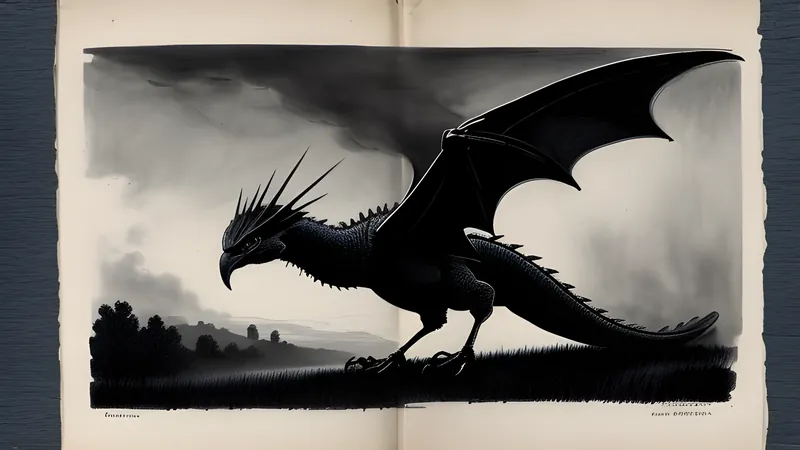
In February and March of 1909, the newspapers of Middletown Valley in western Maryland began reporting that a monster was abroad in the hills. It was a vast winged thing with a metallic beak, a single central eye, tentacle-like appendages and the screech of a locomotive whistle; it swooped from the sky, seized its victims, and drank their blood. It had, the papers said, carried off a man near Emmitsburg. President Theodore Roosevelt was reported to be considering postponing an African safari to come and hunt it. The Smithsonian was said to have offered a reward for its hide. For a few weeks the Snallygaster terrified, or entertained, a stretch of rural Maryland — and every word of the monster’s rampage was invented by two local newspapermen who needed to sell papers in a slow news winter.
The Snallygaster is one of the most honestly documented hoaxes in American folklore, a case where we can name the men, the papers and the motive. But it is a mistake to file it away as merely a fraud, because the hoaxers did not invent their monster from nothing. They reached for something that was genuinely already there — a real folk-belief carried to Maryland by German-speaking settlers a century and a half before — and the fake story they built on that real foundation ended up preserving the true thing better than the truth had preserved itself. This is a kernel story: the fabrication is obvious, and the buried reality underneath it is the part worth digging up.
The real thing underneath: the Schneller Geist
Before the newspapers, before 1909, there was a word. The German-speaking settlers who moved into the Maryland hill country in the eighteenth century — part of the broad Pennsylvania-German migration, the people mislabelled “Pennsylvania Dutch” — brought their language, their farming, their hex signs and their folklore with them into Frederick and Washington counties. Among the beliefs they carried was a fear of a night-spirit sometimes rendered as the Schneller Geist, the “quick spirit” or “quick ghost,” a swift and malevolent thing of the dark. Anglicised over generations by neighbours who did not speak German, Schneller Geist wore down in the mouth into “Snallygaster.”
That is the documented kernel, and it matters because it means the name was not coined by a copywriter in 1909. It was already in the hills, already old, already attached to a genuine tradition of German-American folk-belief about a dangerous flying spirit of the night. The nineteenth-century settlers really did tell their children about it; the word really did descend, softened and misheard, through the local dialect. When the newspapermen of 1909 went looking for a monster, they did not have to invent a name or a shape from scratch — the community had been quietly keeping both for a hundred and fifty years. The hoax’s genius, if hoaxes can have genius, was to pick up something the audience half-recognised and turn the volume up.
The fork: where 1909 leaves the folklore behind
Here is the precise point where the fabrication departs from the real thing, and it is worth marking exactly, because conceding the real Schneller Geist is what earns the right to call the rest invented. The genuine folk-belief was vague, oral, and modest in the way real folklore usually is — a name, a fear, a swift dark presence, the kind of thing a grandmother warns about without ever describing in detail. What appeared in the Middletown Valley Register and other local papers in 1909 was something else entirely: a specific, journalistically detailed monster with a single eye, a metallic beak, tentacles, a whistle-scream and a taste for blood, complete with named victims, a presidential reaction, and a Smithsonian bounty.
Those details are the fork. The single central eye, the blood-drinking, the Roosevelt anecdote, the reward — none of that belonged to the old Schneller Geist. It was manufactured, week by week, by editors escalating a story that was selling. The men generally credited with driving the 1909 outbreak were newspapermen in the Middletown and Frederick area — the Register’s people among them — writing in a period when a good invented sensation was a legitimate commercial tool for a country weekly, and the surrounding papers happily amplified it. The monster grew more elaborate with each issue precisely because elaboration sold copies, which is the surest fingerprint of a hoax rather than a folk tradition: real folklore accretes slowly over generations, while a newspaper hoax balloons over weeks because someone is being paid by the reader.
The Prohibition sequel and the admission
The Snallygaster’s second life makes the commercial machinery even clearer. It was revived in 1932, during Prohibition, when the same regional papers ran fresh Snallygaster stories — this time with the twist that the creature had been found dead, overcome by the fumes of a giant vat of illegal moonshine into which it had tumbled. The image is pure Prohibition-era comedy: the ancient German night-demon of the Maryland hills, felled at last by two thousand gallons of bootleg liquor, with never a hunter’s rifle raised against it. Nobody printing that in 1932 imagined it would be believed as fact. It was folklore-as-entertainment, the community and its papers playing with a monster they all knew by then to be a shared local joke.
And the record is admirably honest about what the whole thing was. The Snallygaster’s newspaper origin, its use as a circulation-builder, and its embellishment by named local editors are well established in Maryland’s own folklore scholarship; this is not a monster whose hoax had to be exposed by a sceptic decades later against resistance, like the carved feet behind Bigfoot. The people of the Middletown Valley have largely always known their dragon-bird was a newspaper creation dressed over an old family word. That knowingness is part of why the Snallygaster is remembered with affection rather than fervour — it is a monster the region is in on, not one it is fooled by.
Why a fake monster was worth keeping
A hoax that everyone eventually knows is a hoax usually dies. The Snallygaster did not, and the reason it survived is the reason it is worth taking seriously. The fabricated 1909 monster, for all its invented tentacles and presidential cameos, did something the genuine oral tradition was failing to do on its own: it wrote the Schneller Geist down. By the early twentieth century the German dialect of the Maryland hills was fading, the old settlers’ folk-beliefs were thinning with each English-speaking generation, and the quick night-spirit was on its way to being forgotten entirely, as most oral folk-belief quietly is. The newspaper hoax, cynical and commercial, seized the dying word at the last moment and blasted it into print, into the archive, into permanence.
That is the strange gift buried in the fraud. Middletown’s newspapermen were not trying to preserve their community’s German heritage; they were trying to sell papers in February. But by reaching for a name the community still half-remembered and building a sensation on it, they anchored the Schneller Geist in the written record forever, at exactly the moment the living tradition that had carried it was expiring. The fake monster became the vessel that saved the real one. The town of Frederick now embraces the Snallygaster openly — it lends its name to a local festival and a brewery — and in doing so keeps alive, without most people realising it, a genuine fragment of eighteenth-century Pennsylvania-German folk-belief that would otherwise have vanished with the last dialect speakers.
The monster’s mortal enemy
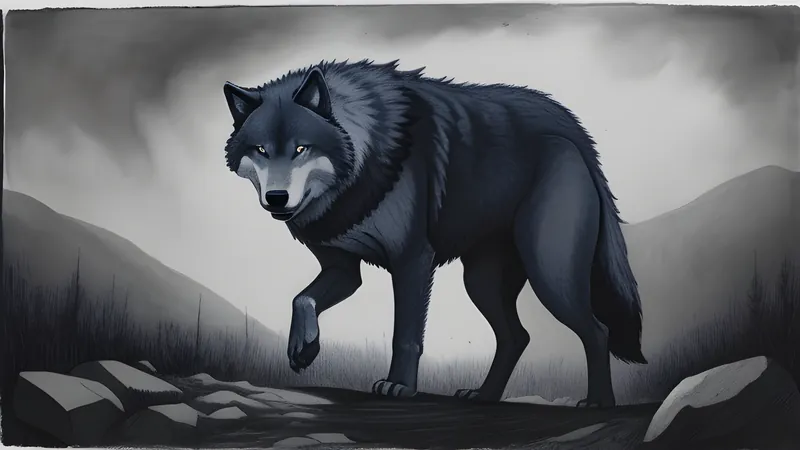
The Snallygaster did not stay the only creature in the Maryland hills, and its later folkloric partner shows the tradition still breeding as recently as the 1960s. In November 1965 the Frederick News-Post ran a series of reports about the “Dwayyo,” a wolf-like, bipedal creature said to be roaming the same Frederick County countryside; a resident, identified in the paper under the name John Becker, described a night encounter with a screaming animal that walked on its hind legs. In the folklore that grew up around the two, the Dwayyo is cast as the Snallygaster’s mortal enemy — the mammalian, ground-bound rival to the reptilian, sky-borne dragon-bird, the two of them locked in the kind of eternal antagonism that folk traditions love to invent between their monsters.
The Dwayyo scare of 1965 followed the Snallygaster’s own template almost exactly: a local newspaper, a named witness, a creature that arrives, terrifies and then evaporates, and a community half-frightened and half-delighted to have a monster of its own. Whether the 1965 reports were a sincere misidentification, a piece of newspaper mischief in the Snallygaster’s own tradition, or some blend of the two, they demonstrate that the machinery Middletown’s editors switched on in 1909 never really switched off. Frederick County had learned that it could grow monsters, and it kept doing so.
Between them, the Snallygaster and the Dwayyo turned a stretch of western Maryland into a small, self-contained mythology, with a dragon of the air, a wolf of the ground, and a genuine old German night-spirit buried at the root of the elder of the two. That is how a living folklore behaves: it accretes, it pairs its creatures off, it invents rivalries and histories, and it keeps a community supplied with things to argue about over a bar. The hoax of 1909 did not close the story. It opened a workshop.
What the dragon-bird really tells us
The lesson of the Snallygaster is not the easy one about gullible country people and unscrupulous editors, because the country people were rarely fooled and the editors were doing an ordinary job of their trade. The real lesson is subtler and kinder: that the line between a hoax and a folk tradition is far thinner than we like to think, and that a fabrication built on a genuine cultural memory can end up doing the memory’s preservation for it. The same retroactive, community-shaping process that gave Detroit the Nain Rouge — an old imported spirit reshaped by later hands into a civic story — worked on the Snallygaster too, only with a newspaper’s printing press instead of a Victorian antiquarian’s pen.
Somewhere behind the metallic beak and the single eye and the moonshine vat, there is a real thing: a frightened word that German farmers carried across an ocean and whispered to their children in the Maryland hills, a Schneller Geist that meant the swift dark danger of the night. Two newspapermen in 1909 dressed that word in scales and sold it for a penny. It was a hoax, and it was also, entirely by accident, an act of preservation. The dragon-bird never flew. The fear it was cut from is the oldest and most genuine thing in the whole story, and thanks to the men who faked the rest, we still have its name.
Related Content