The Sinking of the Lusitania: Munitions, Propaganda and a Century of Doubt
The ship really was carrying war cargo. That single true fact has been asked to carry a much larger accusation.
Contents
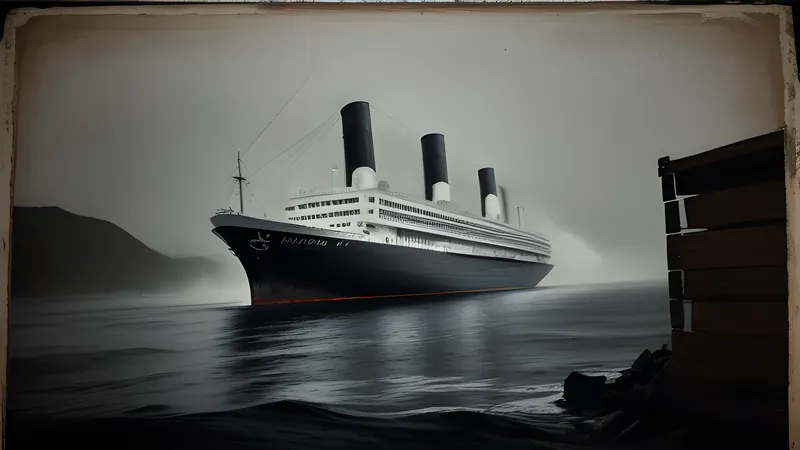
At two minutes past two on the afternoon of 7 May 1915, eleven miles off the Old Head of Kinsale on the southern coast of Ireland, a single torpedo from the German submarine U-20 struck the starboard side of the RMS Lusitania below the bridge. Kapitänleutnant Walther Schwieger, watching through his periscope, recorded in his war diary an “unusually heavy detonation” followed by a second, larger blast. The great Cunard liner — 787 feet long, the fastest passenger ship afloat when she was launched — listed hard to starboard, drove forward under her own momentum, and sank in eighteen minutes. Of the 1,962 people aboard, 1,198 died, among them 128 American citizens. The wireless operator was still tapping out distress calls when the water reached him. On the New York piers, families who had waved the ship off six days earlier read the news off boards chalked with the names of the saved and the missing.
What the manifest actually listed
The seductive core of every Lusitania conspiracy is a fact that is entirely true and entirely undisputed: the ship was carrying war materiel. This was not a rumour then and it is not a rumour now. Her supplementary cargo manifest, filed with US customs and long since public, lists 4,200 cases of Remington .303 rifle cartridges — roughly four million rounds — along with 1,250 cases of shrapnel shells and a quantity of unfilled fuses. She was a British ship in wartime crossing to a nation at war, and she carried the small-arms ammunition that the Western Front devoured by the trainload.
Germany knew it, or suspected it. The Imperial German Embassy in Washington had taken out an advertisement in fifty American newspapers, timed to appear beside Cunard’s own sailing notices, warning that vessels flying the British flag in the war zone around the British Isles were “liable to destruction” and that travellers sailing in them did so at their own risk. Most passengers read it as sabre-rattling. The Lusitania was faster than any submarine and was widely believed to be untouchable.
Germany’s legal position rested on more than the cargo. The Admiralty in London, under the direction of the First Lord, Winston Churchill, had issued instructions to merchant captains to ram submarines that surfaced to challenge them under the old “cruiser rules” — the courtesy by which a warship stopped a merchantman, allowed the crew to take to the boats, and then sank the vessel. Armed merchantmen and ramming orders had made those rules suicidal for a surfaced U-boat. The German response was to abandon them and torpedo without warning. The Lusitania was sunk inside a declared war zone, by a navy that had announced it would sink first. None of that was hidden. It was printed in the papers.
The second explosion
The single detail that turned a wartime sinking into a century of suspicion is Schwieger’s second blast. One torpedo should not sink an 18-knot liner in eighteen minutes. Something inside the ship went up after the torpedo struck, and the argument over what it was has never entirely stopped.
The conspiratorial reading is simple and dramatic: the ship was a floating magazine, secretly packed with high explosive far beyond the declared cargo, and the torpedo set it off. If that were so, then Cunard and the Admiralty had knowingly sent 1,900 civilians across the Atlantic sitting on a bomb, and the German claim that the ship was a legitimate military target would be vindicated by the very blast that killed them.
The trouble is that the declared cargo does not support it. Rifle cartridges of the .303 type are packed in sealed cases and do not mass-detonate; you can throw them in a fire and they crack and pop rather than explode as a unit. The shrapnel shells were shipped unfilled — casings without their bursting charge. Naval historians who have modelled the sinking, including the team around the 1993 expedition led by Robert Ballard, the oceanographer who found the Titanic, favour more mundane culprits. The likeliest is a coal-dust explosion: the ship’s near-empty starboard coal bunkers, holding a fine flammable dust, ruptured by the torpedo and ignited into a fuel-air blast. A ruptured main steam line, flashing the boiler water to steam, is another candidate. Ballard’s divers surveyed the wreck and found no evidence of the great secret magazine the theory requires. Later dives have brought up the rifle cartridges — confirming the manifest exactly, with nothing found beyond what it declared.
The wreck itself has fed the suspicion rather than settled it, and here the conspiracists have a fair grievance. Over the decades the Lusitania has been treated strangely for an ordinary casualty of war. Divers reported that the site appeared to have been depth-charged, its hull further broken by explosions that could not be accounted for by the sinking alone, and the Royal Navy was rumoured to have used it for anti-submarine practice. The American businessman Gregg Bemis, who acquired salvage rights to the wreck and fought a long legal battle with the British and Irish governments for access, argued for years that officialdom was oddly determined to keep people away from it. His 2008 expedition recovered large quantities of the .303 rifle ammunition — vindicating the manifest — but the very difficulty of getting to the wreck, and the unexplained additional damage, kept the question of a hidden cargo alive long after the science had pointed elsewhere. When a government makes a site hard to examine, it teaches even careful people to wonder what is being kept from them.
There is a genuine open question buried here, and it deserves to be held honestly. The exact mechanism of the second explosion is still debated by serious people, because the wreck lies at 300 feet in cold, poor-visibility water, is badly collapsed, and has been depth-charged and salvaged over the decades in ways that muddied the evidence. Not knowing precisely what blew is a real gap. It is a long way from that gap to a deliberate bomb ship.
How negligence got promoted to plot
The most durable version of the conspiracy names Churchill directly: that he engineered the Lusitania’s exposure to draw the United States into the war, ordering her escort withdrawn and steering her into U-20’s path. It is the shape a betrayal takes when you go looking for an author.
The documented record shows something more ordinary and, in its way, more damning: institutional carelessness that no one was punished for. The Admiralty knew U-20 was operating off the Irish coast — it had sunk ships there in the preceding days, and British naval intelligence in Room 40 was reading German naval signals. The warnings passed to the Lusitania were vague and generic. Her captain, William Turner, had shut down one of her four boiler rooms to save coal, cutting her top speed from 25 knots to around 18 and stripping away the margin that made her hard to hit. He was steaming a straight, predictable course close inshore rather than zig-zagging. No naval escort met her. Whether that was negligence, a shortage of escorts, or a decision made somewhere above Turner’s head has never been fully resolved, and the Admiralty’s own instinct afterwards was to make the captain the scapegoat.
The first official inquiry, chaired by Lord Mersey in 1915, exonerated Turner and laid the blame squarely on Germany — which was true, and also convenient, because it closed off any examination of the Admiralty’s own choices. Mersey resigned from the case afterwards and privately called it “a damned dirty business,” a phrase that has fed suspicion ever since. What he seems to have meant is that he had been steered toward a conclusion, that awkward questions about escorts and warnings were kept off the table. That is a cover-up of embarrassment, the reflex of a bureaucracy protecting itself. It is not the same as sending a ship to be sacrificed.
The jump from the second to the first is where the myth lives. The pattern recurs across the confirmed scandals of the century — the machinery for hiding an institution’s failures looks, from the outside, exactly like the machinery for executing a plan. The reader who has learned to distrust official inquiries, and there is a great deal in the record of the twentieth century to teach that lesson, fills the silence with intention.
The propaganda that came after
If the sinking itself was not staged, the use of it very nearly was. The Lusitania became one of the most effective atrocity images of the war, and the British government worked it hard. A medal — struck privately in Germany by the satirist Karl Goetz to mock Cunard for sailing a ship into a war zone — was seized upon, copied in its thousands by the British, and distributed in a presentation box with a leaflet, recast as proof that Germany had celebrated the killing. Recruitment posters carried the ship’s name. In neutral America the dead, and especially the drowned children and the American names among them, were pressed into service by a public that increasingly saw the war as a moral cause.
And yet the tidiest part of the legend is false: the Lusitania did not bring the United States into the war. President Woodrow Wilson answered with a stiff diplomatic note and went no further toward war; his Secretary of State, William Jennings Bryan, resigned rather than sign a second note he thought too warlike. America stayed out for nearly two more years, entering only in April 1917 after Germany resumed unrestricted submarine warfare and the Zimmermann Telegram exposed a German offer of alliance to Mexico. The Lusitania was a wound the propagandists kept open, and it made 1917 easier to sell. It did not, by itself, do the thing the myth credits it with.
Why the doubt outlived the answer
You can feel why this one refuses to settle. The plain account asks the reader to hold two uncomfortable truths at once: that Germany deliberately torpedoed a passenger liner full of civilians and that the British authorities were carrying war cargo among those civilians, gave them thin protection, and then arranged an inquiry to keep their own conduct out of view. Neither side of that is clean. The conspiracy theory offers relief from the discomfort by making one party wholly the villain and the deaths wholly deliberate — a legible story with an author and a motive, which is easier to carry than a story about a war zone, a coal bunker, and a bureaucracy covering its own back.
The instinct is honourable even when the conclusion is wrong. It is the same instinct that, applied to genuinely staged deceptions like the Nayirah testimony, turns out to be exactly right, and the same one that, applied to a real military deception dressed up for the public in the Doolittle raid cover story, sits somewhere in between. Governments do lie a nation into war, and they do dress the truth for the public; a reader who has watched them do it has earned the right to ask hard questions of a chalkboard full of names.
What the Lusitania actually leaves us is a texture in place of a verdict. A real ship, real munitions, a real submarine acting on a real declaration, a real second explosion whose cause we still argue about, and a real inquiry that flinched from its own government’s failures. The cargo was true. The exposure was careless. The propaganda was deliberate. The grand plot was assembled afterwards, out on the piers of New York, by people who could not accept that 1,198 lives had been ended by something as banal as coal dust and a coward’s inch of margin cut to save fuel.
Related Content