The Pope Lick Monster: The Goatman on the Trestle
A Kentucky railroad bridge, a 1988 short film, and the real deaths hiding inside a story about a half-goat man
Contents
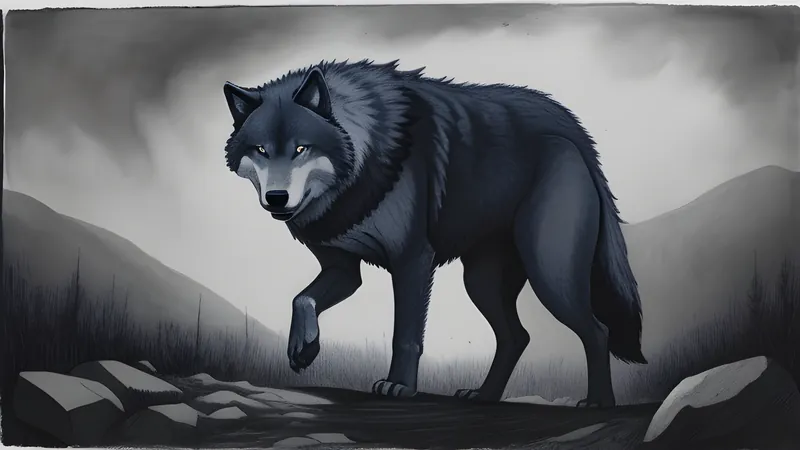
There is a railroad trestle in the Fisherville neighbourhood on the eastern edge of Louisville, Kentucky, where an active line crosses high over Pope Lick Creek. It is a tall, exposed, still-used bridge, and the story goes that a creature lives beneath it — a Goatman, part man and part goat, with fur-covered legs, short horns rising from a pale human face, and a talent for luring people up onto the tracks. In the tellings, he mimics a voice you trust, or a cry for help, or he simply hypnotises you, and he draws you out onto the trestle until a train comes. Some versions have him leaping onto the roofs of cars on the road below. Some give him a blood-stained axe. The Pope Lick Monster is one of the best-known Goatman legends in America, and it is worth understanding carefully, because unlike almost any other creature in this desk, this one has a body count — and the body count is the part that is completely real.
The many origins of a made creature
The first thing you notice about the Pope Lick Monster, reading around its origins, is that it does not have one origin. It has a dozen, and they contradict each other, which is itself the signature of a genuine folk legend rather than a single authored hoax. In one account the Goatman is a circus freak who was mistreated and swore revenge. In another he is the sole survivor of a circus train that derailed at the trestle, seeking vengeance on the people who mocked him. In another he is a farmer who sacrificed his goats in a Satanic bargain for dark powers and was transformed. In another he is simply a deformed hermit who lived under the bridge and terrified anyone who came near. There is no canonical version, no first witness, no founding date. The story exists in many mouths at once, each teller reaching for whatever backstory makes the horror land — and that multiplicity is exactly how oral folklore behaves. A hoax has an author and a version. A legend has a hundred authors and no fixed text.
That shapelessness places the Pope Lick Monster in one of the oldest folk families there is. The half-human, half-goat figure runs straight back through the satyrs and fauns of the classical world to Pan himself, the horned god of wild places and sudden terror — the very word “panic” descends from him. Rural America has produced Goatmen in several states, roadside horned bogeys attached to lonely bridges and dark lanes. Maryland has its own well-known Goatman, a broadly similar horned figure tied to back roads and lovers’ lanes. The horned man at the threshold of the wild is a template the culture keeps reaching for, and Pope Lick is Louisville’s local instance of a very old shape, much as the Jersey Devil is the New Jersey Pine Barrens’ local body for an old dread.
The trestle that came first
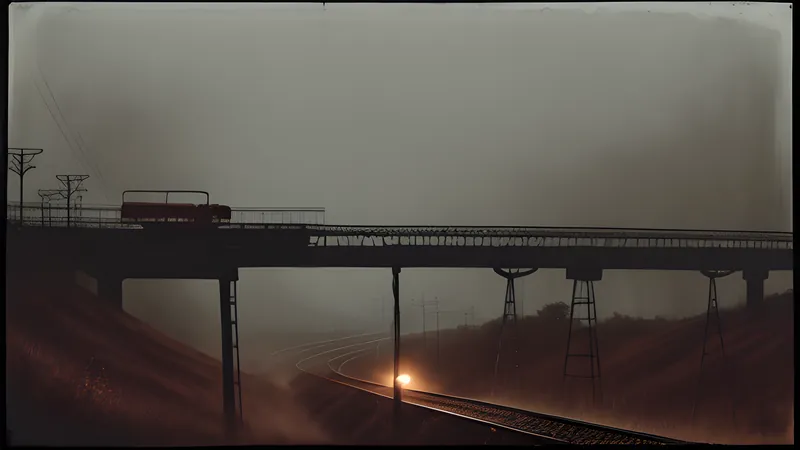
Here is the detail that reorders the whole story once you notice it: the specifics of the Pope Lick legend are organised entirely around a real and genuinely dangerous piece of infrastructure. The Goatman does not haunt a generic wood or a vague crossroads. He haunts a particular high, active railway trestle, and everything he supposedly does is a way of getting you onto that trestle when a train is coming. Strip the fur and the horns away and the functional content of the legend is a single, accurate, life-saving instruction: do not walk out onto that bridge, because you can die there.
And people do. The trestle has a documented history of death and injury stretching across decades, despite fencing and warning signs meant to keep thrill-seekers off. In 1988 a seventeen-year-old, Jack Charles Bahm II, was struck and killed by a train on the trestle. In 1994 a man died after his all-terrain vehicle overturned on the tracks and trapped him as a train came. In 2000 a nineteen-year-old fell to his death after encountering a train partway across. Over the years an eight-foot fence went up to keep people out, and people kept climbing it, drawn by exactly the legend that is supposed to warn them off. The bridge is high enough that a fall alone can be fatal, and the line is live. The danger the story dresses in goat fur is not metaphorical in the slightest.
The fork: when the film made the myth famous
Every widespread legend has a moment where it stops being local murmur and becomes a name that travels, and for the Pope Lick Monster that moment is unusually easy to date. In 1988, a Louisville filmmaker named Ron Schildknecht made a short film, The Legend of the Pope Lick Monster — a sixteen-minute production reportedly made for around six thousand dollars, which premiered on 29 December 1988 at the city’s Uptown Theater. Schildknecht, an artist working with the local visual-arts community, has said he was moved to make it by the string of real deaths on the trestle in the mid-1980s. The film dramatised a teenager drawn to cross the bridge on a dare tied to the legend.
The film did not invent the Goatman — Schildknecht himself maintained that the legend had circulated locally for generations before he filmed it, a shared story handed down over three generations of Louisville kids. What the film did was give the legend distribution and a spike of publicity. It drew press attention, provoked concern from the railroad, and pushed Louisville’s Goatman far past the local reach of any of America’s other Goatmen. This is the fork worth marking. The myth was born somewhere nobody can now locate; what can be dated is the moment an old, diffuse local story acquired a piece of media that carried it outward and made it durable. The legend was folk; its fame was authored. And the fame arrived, painfully, precisely because real teenagers were already dying on the real bridge.
What the Goatman is really for
The uncomfortable, clarifying truth about the Pope Lick Monster is that the story and the danger feed each other. The legend draws legend-trippers — mostly teenagers, doing what teenagers have always done, seeking out the haunted place at night to test their nerve against it. Going to the trestle because of the Goatman is the entire ritual, and the ritual puts young people on a live rail bridge in the dark, which is how the legend keeps supplying itself with new deaths, which keep the legend potent. The monster that supposedly lures people onto the tracks does, in the most literal sociological sense, lure people onto the tracks. The mechanism is real even though the goat is not.
Read that way, the Pope Lick Monster is doing what a great deal of frightening folklore has always done: encoding a genuine hazard in a form vivid enough to be remembered and repeated. “There’s a monster under the bridge that will kill you” is, functionally, a more transmissible version of “that bridge will kill you.” Folklorists have long noticed that the scariest legends tend to cluster around genuinely dangerous places — deep water, cliff edges, lonely roads, live railways — as though a community’s fears settle, over generations, onto the spots that actually deserve them. The horror is a wrapper around a warning. The tragedy is that for this particular legend, the wrapper is so seductive that it drives some of the very people it should protect toward the danger it describes.
The bridge that keeps its danger
The trestle itself is worth describing precisely, because its physical character is the engine of the whole legend. The bridge carries the Norfolk Southern line — long operated through the region by predecessor railroads before the 1982 merger that created Norfolk Southern — roughly 90 feet above Pope Lick Creek and stretches something like 700 feet across the ravine. It has no walkway, no railing, and no refuge: a person caught partway across when a train appears has nowhere to go. That is the detail the legend keeps circling. The stories about hypnosis and mimicked voices are ways of dramatising a fact that needs no dramatising, which is that the crossing takes long enough on foot that a train can appear before you reach the far side, and the structure gives you no way to survive the meeting.
The deaths did not stop when the twentieth-century cases faded from memory. In April 2016 a 26-year-old woman from Dayton, Ohio, Roquel Bain, was struck and killed on the trestle within hours of arriving in Louisville specifically to visit the site as a piece of legend-tripping; her companion survived by hanging from the edge of the bridge as the train passed above him. A few weeks later, in May 2016, another visitor was seriously injured in a similar way. Those recent cases are the clearest possible evidence that the loop the legend describes is still turning, and that a story more than three generations old still draws strangers from other states onto a live bridge. After the 2016 deaths, the Norfolk Southern and local authorities again reinforced fencing and signage, and again it proved no match for the pull of the story.
There is a formal name for what happens at Pope Lick: legend-tripping, a term folklorists including Bill Ellis and Kenneth Thigpen used from the 1980s onward to describe the ritual, most common among adolescents, of travelling to a site marked by a scary legend in order to test the story and one’s own nerve against it. Haunted houses, cemeteries, abandoned asylums and lonely bridges are the usual stages. What sets Pope Lick apart from the ordinary run of legend-trip destinations is lethality: most legend-trip sites are frightening and harmless, a dark building or an empty graveyard where the only real risk is a twisted ankle or a trespassing citation. The Pope Lick trestle is a legend-trip site where the central prop of the legend, the deadly crossing, is entirely real, which turns a normally safe adolescent ritual into a genuinely fatal one.
Living with the legend
Louisville has never resolved this, because it cannot be resolved by disproof. You can explain, correctly, that there is no half-goat man beneath the Pope Lick trestle, and it changes nothing, because the story was never really sustained by anyone’s literal belief in a horned creature. It is sustained by the trestle’s genuine menace, by the pull of a dare, by the deep old appeal of the horned figure at the edge of the wild, and now by the small permanent fame a 1988 short film gave it. Debunk the Goatman and the bridge is still high, still live, still there, still calling to the next group of teenagers who want to prove something in the dark.
So the honest place to end is not with a verdict on whether the monster exists, which is beside the point, but with the thing the legend has always been quietly pointing at. The Pope Lick Monster is a story a city tells about a place that kills people, and the story has become one of the reasons people keep going there to be killed. That is a genuinely tragic loop, and it deserves to be understood as a loop rather than a joke. The Goatman is folklore, as old as Pan and as local as one Kentucky creek. The trestle is not folklore. The names and the dates of the people who have died on it are in the record, and the surest way to honour the legend’s original, buried instruction is the least glamorous one imaginable: stay off the bridge.
Related Content