The Piltdown Man: Science's Most Famous Hoax and Its Forty Year Run
A stained skull, an orangutan's jaw, and the missing link England wanted to own
Contents
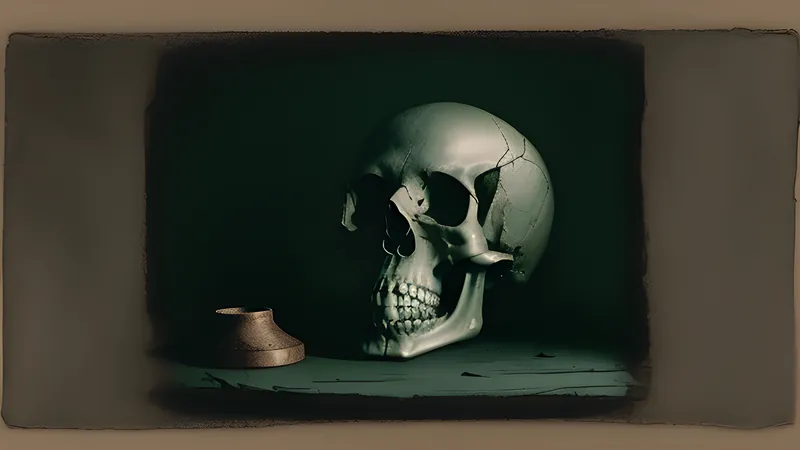
On 18 December 1912 the Geological Society of London gathered to hear that the earliest Englishman had been found. In a gravel pit near the Sussex village of Piltdown, an amateur antiquarian named Charles Dawson and Arthur Smith Woodward of the Natural History Museum announced fragments of a skull and jaw that seemed to combine a large, modern-looking human braincase with a distinctly ape-like lower jaw. Here, apparently, was the missing link the age had been waiting for — and it was British. The creature was given the Latin name Eoanthropus dawsoni, “Dawson’s dawn-man”. It would sit in the textbooks, on the museum shelves and in the imagination of British science for the next four decades. It was a fraud, assembled from a medieval human skull and the jaw of an orangutan, chemically stained to look ancient and filed down where the pieces would not otherwise fit.
What the gravel pit actually held
Strip away the interpretation and the physical objects were mundane. The braincase came from a genuinely old but entirely human skull, probably medieval, of the kind that turns up in England without ceremony. The jaw was that of an orangutan, an animal from Borneo and Sumatra with no business in a Sussex river terrace. The teeth in that jaw had been filed to flatten their cusps into a more human wear pattern — under a microscope the file marks are visible, scratches no natural chewing would leave. The bones and the associated “tools” and animal fossils had been stained a matching reddish-brown with chemicals, iron and chromium compounds among them, to mimic the colour that long burial in the ironstone gravels would produce. Someone had gathered this kit, treated it, broken the pieces in the right places, and salted them into the pit for the finders to find.
That is the kernel, and it is worth stating plainly because the hoax is often described as if it were a marvel of craftsmanship. It was not, really. The forgery was competent but crude. The file marks were there from the beginning for anyone who looked with the right question in mind. The jaw and skull did not articulate — the very joint that would have shown whether ape jaw and human skull belonged together was conveniently missing or broken. The problem was never that the fake was undetectable. The problem was that, for a long time, almost nobody was trying to detect it.
The link an empire was waiting for
To understand why Piltdown lasted, you have to understand what people in 1912 wanted a human ancestor to look like. The dominant expectation was that the human line had led with its brain — that our ancestors had grown big heads first and only later acquired an upright, human body and small ape-like faces. Piltdown fitted that picture perfectly: a big brain married to a primitive jaw. It confirmed a theory that many leading anatomists already held, and confirmation of what you expect is the easiest thing in the world to accept.
There was a national dimension too. France had its Neanderthals and its cave art; Germany had the original Neanderthal specimen and a formidable tradition in the young science of human origins. Britain, embarrassingly, had produced no early hominin of its own. Piltdown filled that gap with something even better than a Neanderthal — an ancestor older and, by the reasoning of the day, more advanced, because he already had the big British brain. The find flattered a scientific establishment and a nation at once. When a discovery tells the people examining it that they were right all along, and that their country is first, the appetite for scepticism thins.
The specimen was also guarded in a way that made independent scrutiny difficult. The original fossils were kept at the Natural History Museum and researchers were often shown plaster casts rather than the bones themselves. A cast preserves shape but not chemistry; you cannot smell a stain or spot a fresh file scratch on a plaster copy. As with the Hitler diaries decades later, restricted access to the physical object let a fake survive long past the point where a proper examination would have killed it. The people who could have tested the bones were, for the most part, kept a polite arm’s length away.
Forty years of quiet inconvenience
Piltdown did not go entirely unchallenged. From the start there were dissenters — anatomists who suspected the ape jaw and human skull simply belonged to two different animals that had ended up in the same gravel by accident. But the momentum of the establishment carried it. As the twentieth century went on, though, the fossil grew steadily more awkward. Discoveries in Africa and Asia — Australopithecus in South Africa in the 1920s, the Peking Man finds, later work in East Africa — pointed to exactly the opposite story: our ancestors had walked upright and had small, human-shaped jaws and teeth long before their brains enlarged. Piltdown, with its big brain and ape jaw, pointed the wrong way. Rather than overturn Piltdown, science mostly set it quietly aside as a puzzling anomaly, an odd side-branch that did not fit. It became an embarrassment that was easier to ignore than to confront.
That is a revealing response in itself. A fraud can survive for reasons that have nothing to do with belief: dislodging it would cost more than tolerating it. Reputations were attached. Careers had been built partly on Piltdown. To declare it a hoax was to accuse — of fraud or of gross incompetence — some of the most eminent names in British palaeontology. It was more comfortable to let dawn-man gather dust than to ask, out loud, how he had got into the museum in the first place.
The fluorine test that finally asked the question
The undoing came from a method that had not existed in 1912. Bones buried in the ground gradually absorb fluorine from groundwater, and the amount they take up rises with the time they spend in the earth. In the late 1940s the technique was refined enough to apply as a relative dating tool, and in 1949 Kenneth Oakley of the Natural History Museum tested the Piltdown bones. The result was the first crack: the fluorine content was far too low for the great antiquity claimed. The remains were much younger than Eoanthropus dawsoni was supposed to be.
That opened the door to a full re-examination. In 1953 a team led by Oakley, together with the anatomist Wilfrid Le Gros Clark and the physical anthropologist Joseph Weiner, took the specimen apart with the deliberate intent of testing whether it was genuine. Now the crudeness of the forgery came into focus. The jaw’s teeth showed clear file marks. The staining was artificial and only skin-deep — scrape the surface and fresh bone appeared beneath. The braincase was human and not especially old; the jaw was an ape’s. Chemical and microscopic analysis, the kind nobody had insisted on for forty years, dismantled the fossil in a matter of months. In November 1953 the Natural History Museum announced that Piltdown Man was a deliberate fake.
What makes the timing so pointed is that the technique that killed Piltdown had existed for years before anyone turned it on the fossil. Fluorine testing was not exotic by the late 1940s, and radiocarbon dating, which later confirmed the medieval age of the skull and the modern age of the orangutan jaw, was becoming available in the same period. The barrier to exposing the hoax was never technological after about 1950. It was the willingness to point the instrument at a specimen the establishment had built part of its story around. Weiner, an outsider to the museum hierarchy, seems to have been the one who could look at dawn-man and ask the flat, undeferential question — could this simply be an ape jaw and a human skull thrown together? — without the reflexive loyalty that had protected the fossil for a generation. The tools were ready. The question was what had been missing.
Who did it, and why we still argue
The identity of the forger has never been settled, and the guessing game has become almost as durable as the hoax itself. Charles Dawson, the man on the spot who “found” nearly every piece, is the natural first suspect, and modern analysis has strengthened the case against him — the various Piltdown fakes appear to share a common method, consistent with a single hand, and Dawson is now known to have faked other antiquarian “discoveries” during his career. Over the years the finger has also been pointed at figures ranging from the anatomist Arthur Keith to the palaeontologist and Jesuit Pierre Teilhard de Chardin, who was present at the site, and even, in a mischievous theory, at Sir Arthur Conan Doyle, who lived nearby. The evidence that has accumulated points most strongly and most simply at Dawson, an ambitious amateur hungry for the fellowship of the Royal Society and the recognition of the scientific world he stood just outside of.
The endless who-dunnit is itself part of the story’s afterlife, and it is where popular retelling tends to drift from the record. Piltdown gets narrated as a locked-room mystery with a hidden genius at its centre, which makes the science look more helpless than it was and the forger cleverer than he needed to be. The plainer reading is that the hoax was mediocre and succeeded anyway, because it told the right people the story they wanted about brains, ancestry and national pride, and because for four decades no one with access insisted on the tests that would have exposed it.
The flattery in the fossil
What makes Piltdown genuinely instructive is that it did not fool cranks. It fooled the professionals, the museums, the fellows of learned societies — the very people whose job was to doubt. Cleverness had little to do with it; it fooled them by being flattering. It handed British science a first-place trophy and confirmed a theory its leading figures already favoured. Bias did not make them stupid; it made them incurious about a particular question, the one question that would have unravelled everything.
The reassuring version of this tale is that science is self-correcting, that the fraud was found out in the end, and that the system worked. That is true as far as it goes, and it is also worth sitting with how long “the end” took. The correction arrived forty years late, and it arrived only when a new technique made the awkward question cheap to ask and hard to dodge. The lesson the case keeps offering, alongside those of the Turin Shroud and other contested relics, is not that experts are gullible. It is that expertise is most vulnerable precisely where a finding confirms what the experts already believe, and where the object that could disprove it is kept just out of reach. Dawn-man lasted because he was the ancestor an age wished for. The gravel pit gave England what it wanted, and for forty years that was enough.
Related Content