The Piltdown Man Forgery
How a stained skull fooled British science for forty years
Contents
On the afternoon of 18 December 1912, a solicitor and an anatomist stood in front of the Geological Society of London and announced that England had found its earliest ancestor. Charles Dawson, an amateur antiquarian from Uckfield in Sussex, described how workmen digging gravel at Barkham Manor near the village of Piltdown had turned up fragments of a thick human skull. Over several seasons Dawson had recovered more pieces, and alongside them a jawbone. Arthur Smith Woodward, keeper of geology at the Natural History Museum, had reconstructed the two together into a single creature and given it a Latin name that flattered the finder: Eoanthropus dawsoni, Dawson’s dawn-man.
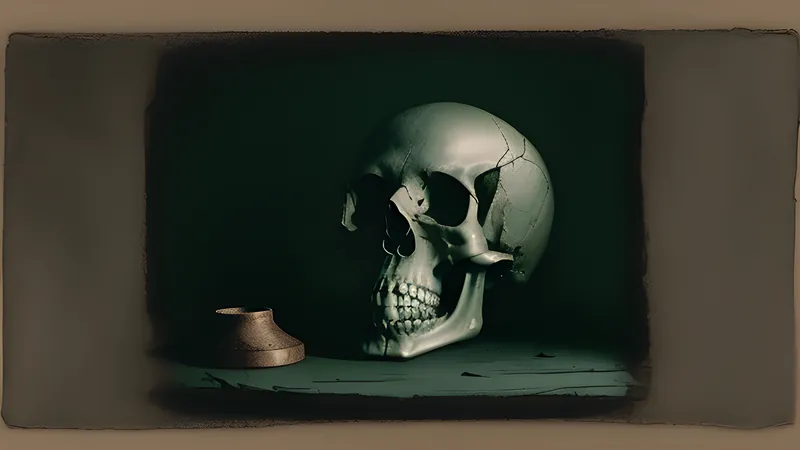
The skull was the seductive part. Its braincase was large and rounded, close to a modern human’s, while the jaw was heavy and simian, with molars worn flat in a way that looked almost human. Here, it seemed, was the missing link the age had been waiting for: a being with a great brain already swelling inside an ape’s face. It confirmed the most cherished assumption of Edwardian science — that the human story began with intelligence, and that the body caught up afterwards. The room believed it because it wanted to. Within months the reconstruction was on display, plaster casts were shipped to museums across Europe and America, and the leading anatomists of the day were arguing over how many cubic centimetres its brain had held, the creature’s reality already settled in their minds.
What the era actually needed
To understand why a filed-down orang-utan jaw could be mistaken for a national treasure, you have to take the science of 1912 seriously on its own terms, because most of it was real. Human palaeontology genuinely was young and thin. France had its Neanderthals from the Dordogne and the Cro-Magnon skeletons from Les Eyzies. Germany had the Heidelberg jaw, found in 1907. Belgium had Spy. Every serious rival on the Continent had produced an ancient human of its own, and Britain, which regarded itself as the intellectual centre of the empire, had produced almost nothing older than a handful of stone tools. The hunger for an English ancestor was not a paranoid fantasy invented after the fact. It ran through the correspondence and the after-dinner speeches of the period, and Piltdown answered it precisely, down to the county.
The theoretical hunger was just as concrete. The leading model of human origins held that the brain led the way — that our ancestors became clever before they lost their ape-like teeth and jaws. Piltdown fitted this “brain first” picture as if it had been designed to, which of course it had. When Pierre Teilhard de Chardin, a young Jesuit and trained geologist working alongside Dawson, found a canine tooth in the gravel in 1913 that matched the theory’s predictions almost exactly, the case seemed sealed. In 1915 Dawson reported a second site a couple of miles away, Piltdown II, that produced more of the same kind of material. Two independent finds were much harder to dismiss than one, and it was the second site that converted several remaining sceptics. The specimen went into the textbooks, and it stayed there for a generation of students who learned human ancestry with a fake at its head.
Where the record forked from the fossil
The damage Piltdown did was slow and specific, and it is worth naming because it is the part that conspiracy-minded readers usually get right. In 1924 the Australian anatomist Raymond Dart, working in Johannesburg, described a fossil skull from a limeworks at Taung in South Africa: a young child with a small, ape-sized brain but strikingly human teeth and, from the position of the opening for the spinal cord, an upright posture. He called it Australopithecus africanus, the southern ape of Africa. Taung was the genuine article, an early member of our own lineage, and it pointed the opposite way to Piltdown — teeth and gait becoming human while the brain stayed small.
British authorities largely brushed Dart aside. Sir Arthur Keith, the most powerful anatomist in the country, and others found the Taung child hard to accept partly because it contradicted the brain-first story that Piltdown had seemed to confirm, and partly because a nursery-aged ape from Africa was less flattering than a philosopher from Sussex. For roughly two decades the real ancestor was treated as a sideshow and the fake as the main event. Nationalism, deference to famous men, and a beautiful theory combined to keep a schoolboy’s forgery at the centre of the field while the true fossils accumulated in the wrong drawers. That is an accurate account of institutional failure, and it is why the story still carries a charge a century later.
The chemistry that undid it
The unravelling was patient and unglamorous. In 1949 Kenneth Oakley of the Natural History Museum applied a fluorine absorption test to the Piltdown bones. Buried bone slowly takes up fluorine from groundwater, so older bones hold more of it; the Piltdown fragments held far too little to be the half-million years old they were supposed to be. The result was quiet at first, treated as a puzzle about how young the specimen might be. Oakley then teamed with the anatomist Wilfrid Le Gros Clark and the physical anthropologist Joseph Weiner, who had been struck by how neatly the molars were worn, and in 1953 the three published the verdict that ended the affair.
The dawn-man was a manufactured object. The cranium was a genuine but essentially medieval human skull. The jaw belonged to an orang-utan, its condyle snapped off so it could never be articulated and tested against the human skull it was paired with. The teeth had been filed down with an abrasive to fake human wear, and under low magnification the flat file marks ran the wrong way for any natural chewing. Every piece had been stained with a mixture including iron and chromic acid to give it the deep brown of true fossil bone. The canine that Teilhard had found was painted, its coating a shade that no burial could have produced. The associated flints and bone tools were doctored too, one of them whittled into the unmistakable shape of a cricket bat, which later commentators read as the forger’s private joke about the most English of games. Piltdown was a collage, aged in a kitchen and dressed for a nation.
Who filed the teeth
The question of authorship has run for seventy years and has swept in some famous names. Arthur Conan Doyle, the creator of Sherlock Holmes, lived a few miles away and played golf near the site, and enthusiasts have tried to cast him as a hoaxer taking revenge on scientists who had mocked his spiritualism. Teilhard de Chardin, present for several key finds, has been accused by others of youthful mischief that got out of hand. In the 1970s a trunk belonging to Martin Hinton, a museum zoologist with a documented taste for practical jokes, was found in the Natural History Museum’s attic containing bones stained with a chemical signature close to Piltdown’s, which put him in the frame as at least an accomplice or a rival prankster.
The evidence has always pointed hardest at Dawson himself. In 2016 a team led by Isabelle De Groote published a forensic study in Royal Society Open Science that used ancient DNA and CT scanning to show the jaw and the isolated teeth came from a single orang-utan, probably from Borneo, and that the same recipe of gravel filling, putty and staining ran through every specimen at both sites. One hand had made them all, and it had access to only one ape. The archaeologist Miles Russell had already catalogued around three dozen other Dawson “discoveries” — a supposed ancient boat, a strange reptile-mammal fossil, a cast-iron statuette, a set of hafted tools — that turned out to be fakes or salted finds. Dawson wanted a fellowship of the Royal Society he never received, and the pattern of his career suggests a man who kept building the credential he felt he was owed. He died in 1916, before anyone thought to test his masterpiece, and after his death the Piltdown pits, mysteriously, stopped producing anything at all.
Salting a gravel pit
The physical staging deserves a moment, because it explains how one forger held a whole discipline at arm’s length for so long. Barkham Manor sat on a bed of flinty gravel that genuinely did contain scattered ancient animal remains — fragments of elephant and hippopotamus teeth washed in from older deposits — so a salted find would arrive in plausible company. Dawson did not have to invent the site’s antiquity; he only had to add to it. The excavations were casual by any modern standard, conducted by a handful of gentlemen with trowels and no controlled recording of exactly where each piece emerged. Smith Woodward, a cautious and honest man, was often not the first to touch the crucial fragments; they tended to turn up when Dawson was on the spot and Woodward’s back was turned or his visit was over.
That amateur culture was the real vulnerability. Edwardian palaeontology still ran on the word of respectable men, and Dawson was a respectable man — a fellow of the Geological Society, a solicitor, a local historian trusted enough that few thought to doubt his gravel. The controls that would have caught him, systematic stratigraphy, independent supervision of the digging, early chemical testing, either did not exist yet or were not applied to a specimen everyone was desperate to keep. The forgery worked as much through social trust as through clever staining, and the two reinforced each other: the more eminent the believers, the less anyone wanted to be the person who questioned them.
The lesson people take, and the one that fits
Piltdown is a favourite of anyone arguing that human evolution is a house of cards. If the experts swallowed a painted orang-utan jaw for forty years, the argument goes, why trust anything they say about our origins at all? This is the fork worth marking carefully, because the first half of the sentence is true and the second does not follow from it.
Piltdown was exposed by the same discipline that was fooled by it. Fluorine dating, comparative anatomy and eventually molecular biology are what dismantled the fraud, and each was a tool the original forger could not have anticipated or defeated. The genuine fossils kept accumulating in the meantime — Taung, then a long procession of australopithecines and early Homo from East and southern Africa, catalogued by teams who had every incentive to check each other’s work — and they told a consistent story that Piltdown had briefly obscured, one in which upright walking and changing teeth came long before the large brain. A field that could be embarrassed by a hoax turned out to be a field that could also correct the hoax, publicly and permanently, and then explain in print exactly how it had been fooled.
There is something almost tender in why the fraud worked, and it is the same thing that makes people cite it today. Piltdown succeeded because it told a national scientific community exactly what it already believed about itself: that Britain must have been present at the dawn, that the mind came first, that the flattering version of the past was the true one. The forger never had to overcome the experts’ scepticism so much as borrow their pride. Every generation has its own version of the story it is waiting to be told, and the enduring value of a stained skull in a Sussex gravel pit is the reminder of how good it feels, and how expensive it can become, when someone hands you the evidence you were already hoping for.
For more on how a single faked artefact can anchor a whole belief, see the Cardiff Giant and the Cottingley fairies, and for a forgery that survived by matching a nation’s mood, the Loch Ness surgeon’s photo.
Related Content