The Philadelphia Experiment: The Ship That Vanished on Paper
A destroyer said to have turned invisible in 1943 owes its whole legend to one lonely man's letters and a book he scribbled in the margins of
Contents
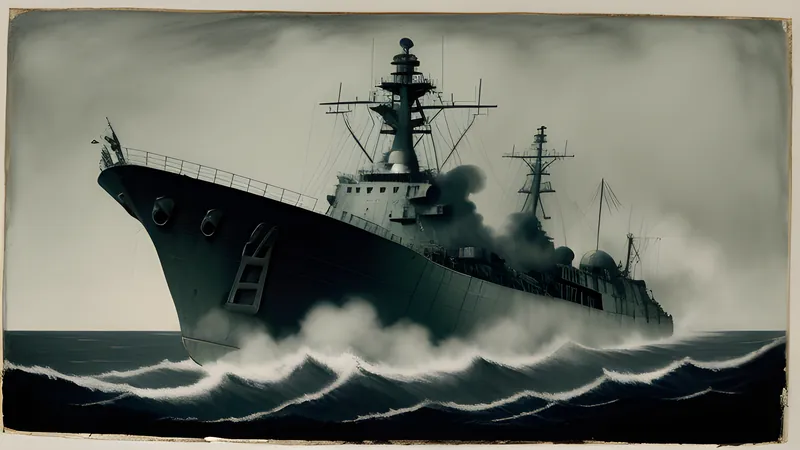
The story is told in the flat, awful register of something a sailor saw and could never unsee. In October 1943, at the Philadelphia Naval Shipyard, the United States Navy is said to have carried out a secret experiment aboard a destroyer escort, the USS Eldridge. Using equipment based on Albert Einstein’s unfinished theory of the forces of nature, they wrapped the ship in a powerful electromagnetic field, and the ship disappeared. It was gone from Philadelphia and, for a few minutes, present in the water off Norfolk, Virginia, hundreds of miles away, before returning. When it came back, the horror began. Some of the crew were embedded in the steel of the deck, part flesh and part hull, still alive and screaming. Others had gone mad. Some would, in the years that followed, simply flicker out of existence in front of witnesses, or burst into flame that could not be put out. The Navy, it is said, buried all of it, discharged the survivors as insane, and denies to this day that any of it ever happened.
The whole legend rests on one man
Peel the story back and something remarkable appears, which is that this entire vast and gruesome mythology, retold in books and films and across the whole of the paranormal internet, traces to a single source: the letters of one man, written more than a decade after the event he claimed to describe.
In 1955 an astronomer and writer named Morris K. Jessup published The Case for the UFO, a speculative book arguing that unidentified flying objects might be explained by a mastery of gravity and electromagnetism that mainstream science had missed. Sometime after, Jessup began receiving letters from a correspondent who signed himself Carlos Miguel Allende, and sometimes Carl M. Allen. The letters were strange, rambling, written in several colours of ink, and they told Jessup that the Navy had already achieved what he was theorising about. Allende said he had personally witnessed the Eldridge vanish in 1943, watched from the deck of a nearby merchant ship, the SS Andrew Furuseth. He described the field, the disappearance, the men fused into the metal, the madness. He warned Jessup that this was dangerous knowledge and urged him not to pursue it, while pursuing it relentlessly himself.
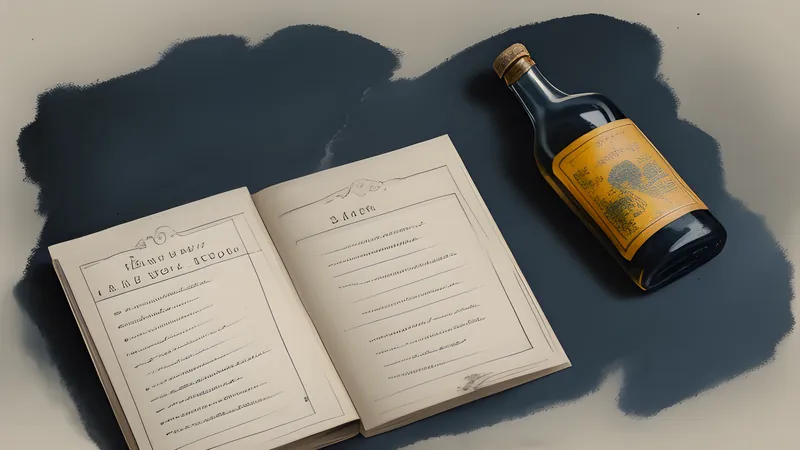
Then came the object that turned a correspondence into a legend. A copy of Jessup’s own book was mailed to the Office of Naval Research in Washington, its margins densely annotated in three different colours of ink by what appeared to be three different people, though the handwriting and obsessions point to Allende. The annotations glossed the text with insider commentary about alien races, gravity control, and the disappearing ship. For reasons that remain a little baffling, two officers at the Office of Naval Research were intrigued enough to have this annotated copy reprinted in a small run by a company called Varo, and this “Varo edition” circulated among the curious for years. A self-published book, scribbled in by a mysterious stranger and then, bizarrely, reprinted by naval officers, became the founding scripture of the Philadelphia Experiment. There was no leaked document, no whistle-blowing sailor on the record, no wreck or photograph. There was a man named Allende, his coloured inks, and the margins of a book.
The kernel: the Navy really did make ships disappear
The legend did not grow from nothing, and the true thing at its root is genuinely worth knowing, because it explains why the story could sound plausible to people who were there.
During the Second World War, magnetic naval mines and torpedoes posed a lethal problem. They were triggered by the change a steel ship makes in the local magnetic field as it passes. In response, the navies of the Allied powers developed a technique called degaussing: they wrapped a ship’s hull in large electrical cables and ran current through them to neutralise its magnetic signature, so that a mine sitting on the seabed would not sense the vessel passing overhead. A degaussed ship was, in a precise and literal sense, made invisible, invisible to magnetic mines. Sailors of the era knew the word, knew ships were wired up and had current run through them, and knew that the point of the exercise was to make the vessel undetectable. Every ingredient of the legend is there in mundane form: powerful electrical fields, cables around the hull, the deliberate goal of invisibility. Someone who half-heard about degaussing, or who wanted to embroider it, had a ready-made vocabulary of secret experiments and unseen ships to draw on.
There is a second kernel, in the person of Einstein. He really did spend the last decades of his life working, without success, on a unified field theory meant to bring gravity and electromagnetism into one framework, and he really did do some consulting work for the US Navy during the war, on ordnance and explosives, nothing remotely to do with invisibility. But the two facts, floating near each other, were easy to fuse: the world’s most famous scientist, working for the Navy, chasing a theory of gravity and electromagnetism, at the very moment the Navy was wrapping ships in electrical cables. Nothing connects those threads except proximity, and proximity was enough.
The fork: where the record simply says no
Set the legend against the paper trail of the ship itself, and it comes apart at a specific and checkable point.
The USS Eldridge was a real destroyer escort, and her movements are documented in the ordinary naval way, in commissioning records and deck logs. She was commissioned on 27 August 1943, in New York, and her records place her nowhere near Philadelphia during the October window when the experiment is supposed to have occurred; her early service ran through the Atlantic and Mediterranean on convoy duty, all of it logged. Crucially, sailors who actually served aboard the Eldridge have spoken about it. In 1999 a group of her wartime crew, by then old men, attended a reunion and were asked about the famous experiment. They were bemused. Nothing of the kind had happened. Their ship had done convoy escort work, unremarkable and dangerous and entirely ordinary, and the first any of them had heard of the Philadelphia Experiment was long after the war, from the books. The Office of Naval Research, for its part, has stated repeatedly and on the record that it conducted no such experiment, that it knows of no invisibility research of this kind, and that the whole thing rests on the Allende letters.
And Allende himself, the sole eyewitness, unravels on inspection. Investigators who eventually identified him found a drifter named Carl Allen, a man given to elaborate stories, and even his account has him watching the event not from the Eldridge but from another ship entirely, at a distance, the classic position of a witness who cannot be checked against the record because he was never formally part of it. At various points the story of his own testimony wobbled and was partly recanted. The fork, then, is unusually clean. On one side sits the documented life of a real warship and the memories of the men who crewed her. On the other sits one eccentric correspondent’s letters. The legend lives entirely on the second side of that line.
The journey: how marginalia became a movie
A story needs carriers to travel, and the Philadelphia Experiment found excellent ones.
Morris Jessup, the man who started it by writing the book Allende annotated, died in 1959, by his own hand, in his car in a Florida park. To a story already about suppressed dangerous knowledge, a death like that was rocket fuel. It was quickly folded into the legend as a silencing, the fate of a man who had learned too much, and the fact that Jessup had been in poor spirits and difficult circumstances was brushed aside in favour of the darker reading. A martyr sealed the myth.
Then, in 1979, the writers William Moore and Charles Berlitz published The Philadelphia Experiment: Project Invisibility, a full-length treatment that gathered the Allende letters, the degaussing rumours, the Einstein connection and the fused-sailor horrors into a single narrative and sold it to a mass audience. Berlitz was the great popular myth-maker of the era, already famous for a bestseller on the Bermuda Triangle, and he knew how to make a legend feel weighed and considered. The book was followed in 1984 by a Hollywood film, and film is where a legend stops being a claim and becomes a shared image: after the film, millions who had never heard of Carl Allende could picture the vanishing ship. In the 1990s a man named Alfred Bielek came forward claiming to have been aboard the Eldridge and to have travelled through time as a result, welding the Philadelphia Experiment onto another emerging mythology, the Montauk Project, so that the two stories now feed one another. Each carrier added a layer, and each layer made the thing heavier and harder to lift off the record beneath it.
What the legend is really about
Ask what need the story serves, and the answer sits in its date. It is a legend of 1943 that took shape in the 1950s, in the first decade of the atomic age, when a single wartime programme had just demonstrated that governments could assemble physicists in secret and, out of pure theory, produce a weapon that unmade cities. After the Manhattan Project, the idea that the Navy might quietly bend the laws of nature in a shipyard was not absurd on its face. The public had just watched the impossible be made real behind a wall of secrecy, and had learned, too, that they would only be told afterwards, if at all. The Philadelphia Experiment is the shadow that discovery cast: if they could hide the bomb, what else are they hiding, and might it be even stranger? It belongs to the same postwar suspicion that credible secret programmes, such as the CIA’s real mind-control research, later proved was not always paranoid, and that made every lurid rumour feel like it might, this time, be the true one they were denying.
There is a smaller, sadder human thread as well, running through Jessup and Allende both. These were lonely men, out at the edges of the respectable world, hungry for the sense that the universe was larger and more secret than the plodding official account allowed, and that they, of all people, had been let in on it. Allende’s coloured inks and warnings, Jessup’s speculative books, the whole apparatus of hinted-at forbidden knowledge, are recognisably the productions of people who wanted the world to be enchanted and themselves to be among the few who knew. That wanting is not ridiculous. It is close to the root of a great deal of human curiosity.
The legend endures, finally, for the same structural reason that keeps John Titor alive: its evidence is built out of absence. The documents were suppressed, so their non-appearance proves the cover-up. The sailors deny it, so they were sworn to secrecy or driven mad. The one witness cannot be pinned down, so he was a hunted man. Every place the record says nothing happened, the legend hears a silence being kept. A story assembled that way can never be finished off, because each missing piece of proof is reinterpreted as proof of suppression. The Eldridge never vanished from Philadelphia. She sailed her convoys and was eventually handed to the Greek navy and served for decades more, an entirely ordinary ship. The only place she ever disappeared was on paper, in the margins of a book, in three colours of ink, written by a man who wanted the world to be stranger than it was.
Related Content