The Orson Welles Legend and Newspaper Motives
How a rival industry and a young showman together built the myth of the night radio broke America

Contents
There is a famous piece of newsreel footage from 31 October 1938. A young man, tall and boyish, faces a scrum of reporters and photographers the morning after his radio play about a Martian invasion has supposedly thrown America into panic. He looks, by turns, contrite and stunned, spreading his hands, insisting he had no idea the broadcast would be taken for real, wondering aloud whether he might be in serious trouble. The young man is Orson Welles, twenty-three years old, and the performance he gives that morning is one of the finest of his early career. Whether he believed a word of his own contrition is a question that goes to the heart of how the legend of The War of the Worlds was made, because the myth of the great panic had two authors working in unwitting collaboration, and Welles was the more calculating of the pair.
The other author was the American newspaper industry, and to understand why the story of the panic grew so far beyond the modest reality, you have to understand what the newspapers wanted from it. The tale that has come down to us, of a nation terrorised by a radio play, was shaped in the interests of the people telling it, and Welles, once he grasped its usefulness, spent the rest of his long life declining to let the truth get in its way.
The war between print and radio
By 1938 the newspaper industry was frightened, and it had reason to be. Radio had arrived in American homes with astonishing speed through the 1920s and 1930s, and it was taking from the newspapers two things they could not afford to lose: advertising revenue and the public’s trust as the first source of news. In the depths of the Depression, with advertising budgets shrinking, every dollar that flowed to a radio network was a dollar that did not buy a column inch. Worse, radio was proving itself as a news medium in its own right, delivering bulletins from a Europe sliding toward war faster than any morning edition could. The press watched the younger medium with the particular resentment of an incumbent losing ground to an upstart.
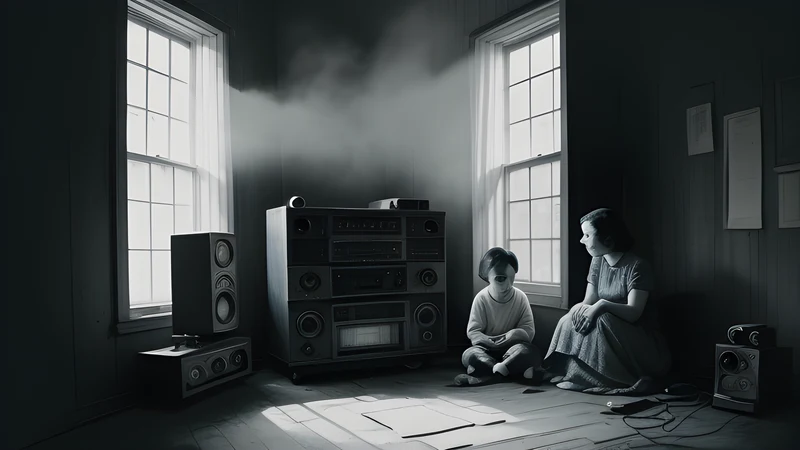
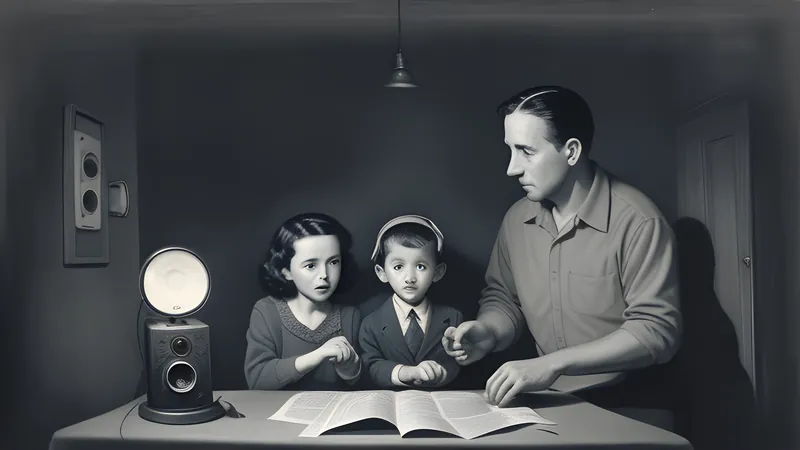
The Mercury Theatre broadcast handed the newspapers a gift. Here was radio, caught in the act of doing exactly what its critics accused it of: behaving recklessly, blurring the line between drama and news, and, so the story could be told, endangering the public through its irresponsibility. The morning after, editors across the country ran the panic on their front pages in the most dramatic language they could muster, describing terrified crowds and jammed roads on the strength of a scattering of phone calls and a great deal of willing imagination. Editorials followed, gravely questioning whether a medium capable of such mischief could be trusted with the public airwaves, and calling for tighter control. The subtext was seldom far from the surface: this is why you should rely on newspapers, the responsible medium, rather than this dangerous toy.
The self-interest was rarely stated outright, but it shaped the coverage at every turn. A story that portrayed radio as a menace and print as the sober alternative was worth printing whether or not the panic had been large, and the incentive to exaggerate pointed all in one direction. The media historians Jefferson Pooley and Michael Socolow, revisiting the episode in 2013, made this rivalry central to their account, arguing that the newspapers effectively created the legend of the panic as a weapon in a commercial war, and that the legend outlived the reasons for making it.
The showman who kept the story alive
Welles could have spent the following decades gently correcting the record, pointing out that his audience had been small and the panic slight. He did the opposite. He understood, with the instinct of a born showman, that being the man who panicked America was infinitely more valuable than being the man who made a clever radio play that a few people took too seriously, and he tended the legend accordingly for the rest of his life.
At that first press conference, his display of innocent astonishment was a piece of theatre in its own right. He had, in fact, worked hard to make the broadcast sound convincing, and the framing as a sequence of news bulletins was a deliberate artistic choice; the surprise he professed at its effect was, at the very least, heavily performed. In the days that followed he allowed the story to build, and over the years he embellished it, telling and retelling the tale of the night he frightened a nation with a relish that grew rather than diminished. The legend made him famous overnight, and fame was the currency he needed. Within two years the notoriety had helped carry him to Hollywood and to the contract with RKO that gave him almost unheard-of creative freedom, the freedom out of which came Citizen Kane in 1941. The panic that mostly did not happen helped make the career that unquestionably did.
There is a neat irony in the fact that Citizen Kane, Welles’s masterpiece, is itself a portrait of a newspaper magnate who manufactures reality to suit himself, printing the story that serves his purposes and calling it truth. Welles knew exactly how the press built and bent public perception, having been both its subject and its beneficiary, and he turned that knowledge into art. The man who understood the machinery of the legend better than anyone was the man it had made.
The official reaction and the soft landing
The aftermath is often misremembered as a brush with disaster for Welles and CBS, and here too the record is milder than the legend. The Federal Communications Commission, prompted by the newspaper outcry and by complaints from members of Congress, looked into the broadcast. The network expressed regret and undertook to be more careful in future about the dramatic use of simulated news formats, a promise the industry broadly kept. But no serious sanction followed. Welles was not fined or banned, CBS was not punished, and within a very short time the affair had done the careers of everyone involved far more good than harm.
That soft landing is itself telling. If the broadcast had truly driven a nation into the streets and cost lives, as the wilder versions of the legend claim, the regulatory and legal consequences would surely have been severe. The mildness of the official response is quiet corroboration that the authorities, close to the events, understood the reaction to have been limited. The disproportion runs the other way from the legend: minor real consequences, gigantic mythic reputation. The record and the reputation have been pulling apart ever since, with the reputation winning easily, because a good story travels and a ratings footnote does not.
The remakes that really did frighten
There is a complication that an honest account has to sit with, because it cuts against the tidy deflation of the 1938 story. The format Welles used, the invasion told as breaking news, was adapted for radio in other countries in the years that followed, and at least twice it produced panics far more genuine and more serious than anything that happened in New Jersey.
In November 1944 a Chilean station in Santiago broadcast its own localised version, moving the Martian landing to nearby towns, and frightened listeners spilled into the streets; in some accounts the provincial authorities mobilised in response to reports of an invasion before the hoax was understood. Far worse was the case of Quito, Ecuador, in February 1949, where a station called Radio Quito staged an adaptation set in the local landscape, complete with impersonations of real public figures and place names the audience knew. When listeners realised they had been deceived, the fright curdled into fury. A crowd gathered and set fire to the building housing the radio station and the newspaper that shared its premises, and people died in the blaze, with contemporary reports putting the toll at several and some accounts higher. The army was called out to restore order.
These episodes matter to the Welles story in two directions at once. They show that the news-bulletin format was genuinely capable of causing panic, which lends a retrospective plausibility to the American legend and helps explain why it was so readily believed. Yet they also throw the original into sharper relief, because the contrast is instructive: where the Quito broadcast left a burned building and a body count that entered the official record, the 1938 American broadcast left ratings figures showing a small audience and an FCC that imposed no penalty. The difference lies in what actually followed rather than in the format, and the actual following in the United States was slight.
The comparison also underlines how much the local conditions shaped the outcome. The Quito production ran without the repeated dramatisation announcements, leaned on impersonations of trusted local voices, and reached a community with its own particular tensions, and the result was tragedy. The American version carried its warnings, competed against a far larger rival programme, and reached an audience that mostly missed it, and the result was a scattering of phone calls that a rival press inflated into history. The same idea, dropped into different ground, grew into very different things, and only one of them earned the legend that the other kept.
Why we needed the legend to be true
The legend endured because it served needs that outlasted the newspaper wars that first fed it. For the generation that lived through it, the story of the panic gave a shape to a genuine unease about radio’s power to reach into every home at once with a single voice. For every generation since, it has offered a tidy parable about media and mass credulity, endlessly useful in classrooms and cautionary essays, and a parable does not much care whether its founding event happened as described. The story was too instructive to fact-check, and so it was passed down intact.
Deliberate media hoaxes have always drawn their power from the trust an audience places in a familiar form, and the people who make them understand that trust intimately. The realistic news-bulletin format that made the Mercury broadcast so convincing works on exactly the same principle as the trusted broadcaster’s deadpan report of a Swiss spaghetti harvest, and it belongs to the same long tradition as the newspaper that conjured an entire civilisation on the moon in 1835. What made the War of the Worlds affair unusual was the way its aftermath was shaped by an industry with a direct commercial interest in the story being as alarming as possible, which is a matter explored further in the panic that mostly did not happen.
The collaboration nobody planned
What the episode finally reveals is a kind of unplanned partnership. The newspapers wanted a story that made radio look dangerous, and they built it. Welles wanted a story that made him legendary, and he tended it. Their interests, opposed in every other respect, converged perfectly on a single myth, and each party had every reason to let the other’s exaggeration stand. Between them they produced a legend so complete and so useful that it survived every later attempt to correct it, and it survives still.
The believer who repeats the tale of the night radio panicked America is holding a story that two very different sets of interested parties spent decades polishing. There is no gullibility in accepting it; it was engineered to be accepted, by professionals who understood persuasion better than almost anyone alive. Welles spent his life smiling at the legend because he understood its worth, and the newspapers printed it because it flattered their trade. The most enduring thing the broadcast produced was a demonstration of how a story gets made and kept when everyone who could correct it would rather it stayed exactly as it is.
Related Content