The Orang Pendek of Sumatra
The steelman for a hidden ape, from credible witnesses to a real-life hobbit
Contents
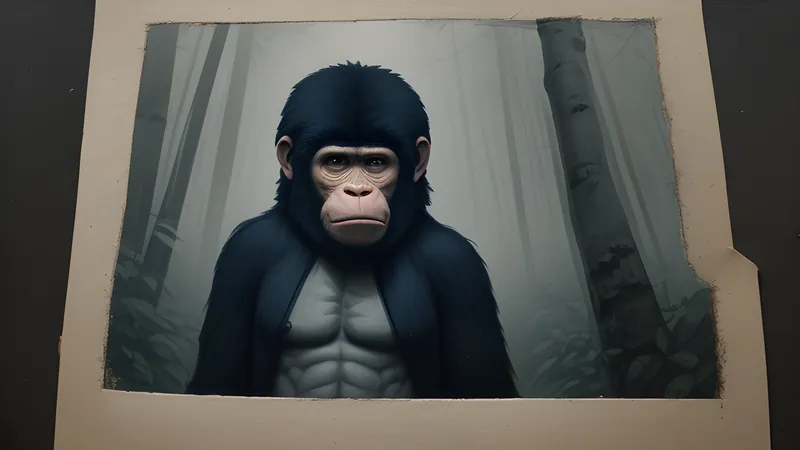
Of all the world’s hidden-ape legends, the Orang Pendek of Sumatra deserves to be argued at its strongest before anything is said against it, because it is the one that sober, careful people have found hardest to dismiss. The name means “short person” in Indonesian, and the creature it describes is modest and specific: an upright, ground-dwelling ape roughly a metre to a metre and a half tall, covered in short dark hair, powerfully built, walking on two legs through the rainforests of central Sumatra, above all in the vast Kerinci Seblat National Park. There are no glowing eyes, no supernatural menace, no impossible size. It is a plausible-sounding animal in one of the last great wildernesses on Earth, and the case for it is better than the case for almost any of its famous cousins.
This is a story worth telling as a steelman: laying out the strongest, most good-faith version first, taking it seriously on its own terms, and only then walking through the places where it strains. The charity is the point. To wave the Orang Pendek away as more Bigfoot nonsense would be to misunderstand both the quality of the witnesses and the genuine biology of the island. Let the best case be made properly, and it turns out to be a case a scientist can respect, even while doubting.
The case at its strongest
Begin with the witnesses, because they are the heart of it. The Orang Pendek has been reported by the indigenous peoples of Sumatra, including forest-dwelling communities, for centuries, as a known if elusive inhabitant of the deep jungle. During the colonial era, Dutch settlers and officials recorded their own encounters; the most famous is that of the planter Van Herwaarden, who in 1923 described a remarkably close and detailed sighting of a small, hair-covered, upright creature in a tree, an account notable for its specificity and its evident reluctance to claim too much.
What lifts the Orang Pendek above the ordinary run of cryptids, though, is the calibre of its modern Western witnesses. Debbie Martyr, a British journalist who travelled to Sumatra in the late 1980s and stayed to become a respected conservationist and the head of a tiger-protection programme in Kerinci Seblat, reported seeing the creature herself on more than one occasion, and spent decades soberly documenting reports. The wildlife photographer Jeremy Holden worked alongside her, deploying camera traps across the forest in a patient, methodical search. These are field naturalists with reputations to lose, not fantasists chasing a thrill, who concluded that something unexplained was worth looking for. Reputable organisations, including Fauna & Flora International, took the search seriously enough to support fieldwork. Footprint casts were collected, and hair samples were gathered and sent for analysis.
Then there is the biology, which is the strongest card of all. Sumatra is one of the most biodiverse places on the planet, its rainforests so dense and rugged that they still conceal large animals; the critically endangered Sumatran rhinoceros and the Sumatran tiger both persist there, and new species continue to be described from the region. The island already hosts a great ape, the Sumatran orangutan, so the presence of another primate is not fantastical on its face. And in 2003 came the discovery that transformed the whole conversation: on the neighbouring island of Flores, archaeologists unearthed Homo floresiensis, a genuinely small, archaic human, nicknamed the “hobbit”, that stood roughly a metre tall and survived until surprisingly recent times. Island Southeast Asia, it turned out, really had been home to a small, upright hominin within the span of modern human existence. Suddenly the Orang Pendek did not sound like a fairy tale at all; it sounded like a hypothesis.
Conceding the strength
It is worth pausing to admit how good that case is, because the admission is what makes the rest honest. The Orang Pendek is described consistently across centuries and across cultures, by people with nothing to gain and, in the case of the modern conservationists, professional credibility to protect. It is a modest, biologically plausible creature in a region that demonstrably hides large fauna and demonstrably keeps yielding new species. The Homo floresiensis discovery established, beyond argument, that small hominins lived in exactly this corner of the world in the geologically recent past. If a reasonable person were going to believe in one undiscovered hairy hominid anywhere on Earth, the rainforests of Sumatra would be the rational place to put their faith. This is the strongest steelman in cryptozoology, and it should be granted its full weight.
Where the case begins to strain
And yet, walked carefully forward, the argument runs into difficulties that its own strengths make sharper. The first is the most stubborn: after decades of dedicated effort by exactly the right people, there is still no specimen, no body, no bones, and no unambiguous photograph. Holden and Martyr ran camera traps across Kerinci Seblat for years, precisely to capture the animal that so many had reported, and the traps recorded the forest’s known wildlife in abundance while never delivering a clear, indisputable image of an Orang Pendek. Camera traps are relentless and patient in a way human observers cannot be, and their long silence on this one animal is telling. The better the search, the louder the absence of a photograph becomes.
The physical evidence, examined closely, has tended to resolve into the mundane. Hair samples recovered over the years and subjected to analysis have generally returned known animals, and no sample has yielded confirmed DNA from a novel primate species. Footprints are genuinely ambiguous: the Sumatran forest is home to the sun bear, an animal that sometimes walks bipedally and whose overlapping hind and fore prints can produce startlingly human-like or ape-like impressions, and to orangutans and other apes whose tracks and fleeting forms can be misread by an excited or exhausted observer. A brief glimpse of a known animal in poor jungle light, filtered through the expectation of the legend, can readily become an Orang Pendek in the retelling, without anyone being dishonest.
The Homo floresiensis argument, so persuasive at first, also weakens under pressure. The Flores hobbit is currently understood to have died out roughly fifty thousand years ago, an immense gulf of time, and it lived on a different island. To move from “a small hominin existed in this region in the distant past” to “a population of small hominins survives, unphotographed, in Sumatra today” is a substantial leap that the fossil evidence supports far less than it first appears. The discovery proves that such a creature was possible once; it does not show that one is breathing in the forest now.
The precedent that cuts both ways
Believers lean, reasonably, on the roll-call of animals that science once filed under native legend and later escorted into the museum, and the roll-call is real. The mountain gorilla was a rumour to Europeans until 1902. The okapi, a forest giraffe known to the peoples of the Congo, astonished zoologists when it was confirmed in the early twentieth century. The coelacanth, a fish presumed extinct for millions of years, was hauled up alive off South Africa in 1938. The Sumatran and Bornean forests themselves keep yielding new mammals, birds and amphibians to properly equipped surveys. The lesson the believer draws is fair: absence of a specimen today is not proof of absence forever, and the confident dismissal of local testimony has a poor historical record.
But the precedent cuts both ways, and this is where a careful advocate has to be honest. Every one of those animals was eventually resolved by the ordinary machinery of biology: a body, a skin, a skeleton, a confirmed specimen that ended the argument. The okapi did not remain a matter of eyewitness testimony for a century; it produced a hide. The Orang Pendek has been searched for with modern intensity, by capable people using camera traps and DNA analysis, and has so far declined to produce the single thing every one of those rediscovered animals eventually produced. The precedent tells us that legends can be real. It also tells us how they get confirmed, and that confirmation is exactly what remains missing here.
The DNA story is instructive in its own right. When hairs and other samples attributed to the Orang Pendek have been analysed, the results have pointed to known animals rather than to any new primate, echoing the pattern seen when hairs attributed to the Yeti were genetically tested and traced largely to Himalayan bears and other familiar species. Genetic analysis has become the great disenchanter of cryptozoology, quietly resolving one prize sample after another into something already in the textbooks. That it has not yet produced a novel hominin from Sumatra settles nothing on its own, though it counts as real data, and it points the same way as the empty camera traps.
What the strongest case is really about
Here the steelman lands somewhere more interesting than a verdict. The Orang Pendek is the cryptid a careful person can most respect believing in, and understanding why illuminates the pull of the whole genre. Part of it is the sheer credibility of the witnesses, who remind us that intelligent, honest, expert people can have vivid experiences they cannot explain, and that testimony is evidence even when it is not proof. Part of it is the genuine incompleteness of our knowledge: the Sumatran forest really is under-explored, species really are still being found there, and the history of zoology is studded with animals, the mountain gorilla, the okapi, the giant squid, once dismissed as native legend and later brought into the museum. The believer in the Orang Pendek is standing in that tradition, and it is not a foolish place to stand.
But the deepest pull is something more tender. The Orang Pendek offers the hope that we are not, after all, the last of our kind; that somewhere in the green dark there is still a smaller, older cousin, a hominin relative sharing the planet with us in the present tense. Human beings once shared the world with several other kinds of human, the Neanderthals, the Denisovans, the Flores hobbit, and we are, in evolutionary terms, freshly and strangely alone. A living Orang Pendek would undo that solitude. The longing underneath the legend is a longing for company at the top of the tree of life, for a world not yet fully mapped and not yet emptied of our kin. That is a serious and moving thing to want, and it explains why the best minds who have looked have found it so hard to let go.
So the argument comes to rest on an understanding rather than a stamp. The evidence, weighed honestly, has yet to deliver the animal, and the long silence of the camera traps sits heavily against it. And still the case is strong enough, the island wild enough, and the wish human enough that no one need feel foolish for hoping. The forests of Kerinci Seblat keep their secrets, and the people who have walked them longest come away certain they have shared them with something. For the relatives that fare less well under the same scrutiny, see how Bigfoot’s footprint walked into America and how Yeti footprints traced back to a Himalayan bear; for the Australian branch of the family, the Yowie and the antipodean Bigfoot; and for another Asian wild man argued at length, the Yeren of China.
Related Content