The Momo Monster: Missouri's 1972 Panic
Two boys, a dead dog, and the summer a river town on Marzolf Hill armed itself against a smell in the woods
Contents
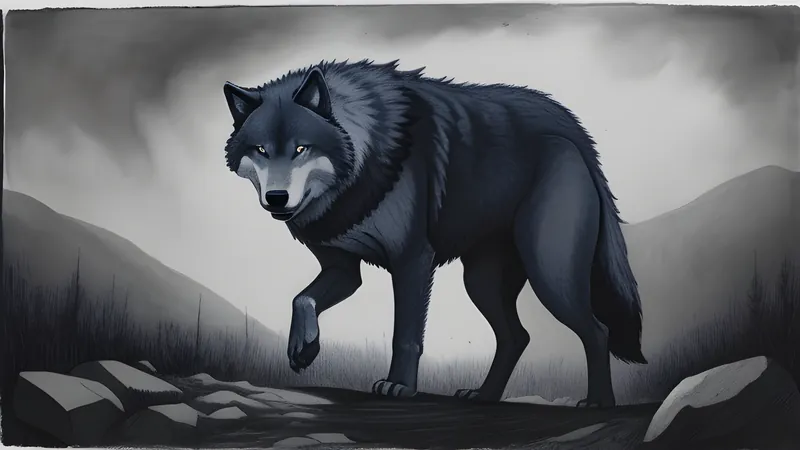
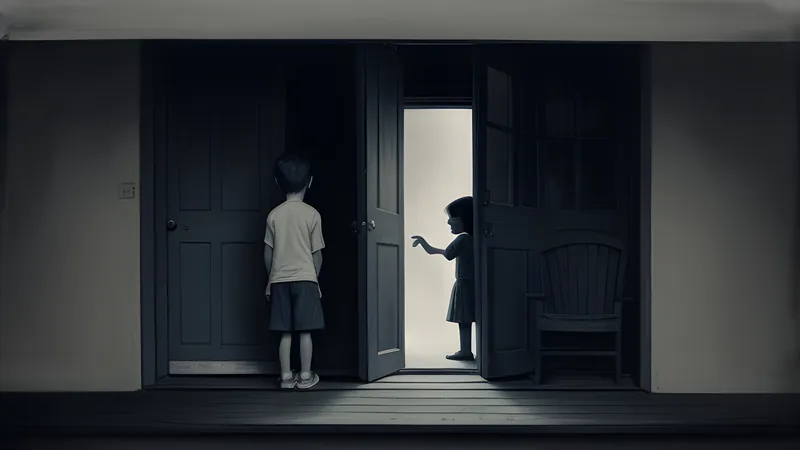
On 11 July 1972, in the small river town of Louisiana, Missouri, two boys were playing with their dog at the wooded edge of their yard at the foot of Marzolf Hill. Eight-year-old Terry Harrison and his five-year-old brother Wiley suddenly began screaming. Their fifteen-year-old sister Doris, hearing them from inside the house, looked out through the bathroom window and saw something standing by a tree: a figure six or seven feet tall, black and covered in hair, standing upright but not, she was certain, a man. It had no visible neck. Its whole face was hidden behind matted hair. And it appeared to be flecked with blood, because tucked under one arm it was carrying a dead dog. Within days the creature had a name — Momo, from “Missouri Monster” — a posse, national newspaper coverage, and a town that had, briefly and genuinely, frightened itself half to death. The monster is the least interesting thing about that summer. The panic is the thing worth studying.
The week the reports multiplied
What began with the Harrison children did not stay with them. Through July of 1972, more Louisiana residents reported encounters with a tall, dark, foul-smelling, bipedal thing in the hills above town. The smell was a recurring detail — a heavy, rotten, sulphurous stench that hung where the creature had supposedly been, the same wet-rot signature that attaches to hairy-hominid reports across the American map. Edgar Harrison, the children’s father, became a central figure, gathering accounts, taking reporters up Marzolf Hill, and making plaster casts of unusual tracks found on the slope. One cast recorded a print about ten inches long and five wide; another was a stranger, five-inch, curved impression with three toe-like marks that did not match anything obvious.
The reports had the texture that mass sightings always take on once a story is loose: a scatter of encounters, each slightly different, each reinforcing the last. Something moving at the treeline. Lights and sounds on the hill at night. Animals behaving oddly. Once a community has been told there is a monster on Marzolf Hill, every unexplained noise in the dark becomes evidence, and the volume of evidence becomes, in a circular way, the proof. This is the engine of every localised monster panic, and Louisiana in July 1972 is one of the cleaner specimens of it on record.
The posse and the plaster casts
The town’s response tells you how seriously it took the thing. Local authorities and armed residents assembled a search party — roughly twenty people, including Edgar Harrison and a state conservation officer — who worked over Marzolf Hill and the surrounding woods with two-way radios, hunting a creature they half-believed was carrying off dogs and might come for something larger. They found nothing they could shoot or capture. Meanwhile the plaster casts drew outside interest: Hayden Hewes, who ran a UFO-research bureau out of Oklahoma City, examined the prints and was impressed enough to take them seriously, folding Momo into the wider 1970s tangle of Bigfoot reports and UFO lore that a certain kind of investigator was busy weaving together at the time.
And the coverage fed on itself. National press picked up the story of the Missouri town under siege by a monster, and Louisiana filled with sightseers — people driving in from neighbouring states hoping to glimpse the beast, turning a genuine local fright into what one account fairly called a three-ring circus. That escalation is a crucial part of the mechanism. The arrival of outsiders and cameras does not calm a panic; it validates it. If strangers are driving hundreds of miles to see your monster, the monster must be worth seeing. The crowd becomes its own kind of evidence.
The fork: bears, boys, and a summer that ended
Here is where the record and the legend part company, and the parting is undramatic, which is exactly why it rarely gets told. The Momo sightings stopped almost as abruptly as they started, tailing off through the late summer of 1972, and no creature was ever produced. Two mundane explanations account for most of what happened, and they are not mutually exclusive.
The first is misidentification, most plausibly of a black bear. A bear standing on its hind legs at the edge of dark woods is tall, black, hairy, foul when it wants to be, and can look disturbingly upright and man-like for the second or two a frightened person watches it. Tellingly, one of the few Momo witnesses to be tracked down and interviewed years later, Richard Alan Murry, conceded that what he had seen could well have been nothing more exotic than a bear. That is an unusually honest thing for a witness to say decades on, and it points at how much of the panic was ordinary animals seen through an extraordinary frame.
The second is more human. Skeptical accounts of the affair have pointed toward a hoax element — with local recollections implicating a group of teenage boys who fabricated or embroidered sightings to stir up excitement in a quiet rural town during a long, hot summer. A retired area teacher reportedly claimed a group of boys orchestrated the early reports, and that exaggeration and staged evidence did the rest. Whether or not that specific claim is complete, it fits the pattern: a real startling encounter at the Harrison house, a name and a story supplied by the press, and then a period in which the excitement itself became the point, with some people amplifying it for the sheer charge of it. When the summer ended and the sightseers left, the monster left with them, because the monster had largely been made of collective attention.
A summer of company on the hill
It helps to remember what else was moving through the American imagination that year. The Patterson–Gimlin film of a supposed Bigfoot, shot in northern California in 1967, had spent five years hardening into the central image of a whole amateur field, and 1972 was a high-water mark for the genre — the same summer that Charles B. Pierce’s low-budget docudrama The Legend of Boggy Creek, about the Fouke Monster of Arkansas, was playing drive-ins across the South and Midwest and quietly becoming one of the most profitable independent films of the decade. A Missouri family that had just watched something frightening at the treeline was reaching for a template the culture had spent five years handing them. The word “Momo” itself, coined for headline convenience from “Missouri Monster,” slots neatly beside “Bigfoot” and “Sasquatch” — a name built for a newspaper, easy to set in a two-column headline and easy to repeat.
The plaster casts deserve a closer look for what they show about how evidence behaves in a panic. Edgar Harrison’s tracks were examined by Lawrence Curtis, then director of the Oklahoma City Zoo, who reportedly judged that they did not match any animal he could confidently name — the kind of measured non-answer that a frightened public reliably hears as confirmation. A print that “doesn’t match a known animal” is not evidence of an unknown one; it is far more often a partial impression in soft ground, distorted by moisture and overlaid by a second track, which resists clean identification for entirely mundane reasons. But in July 1972, on Marzolf Hill, with the newspapers already printing the word Momo, an inconclusive cast read as a monster’s footprint, because that was the frame everyone had already agreed to look through.
There was even a UFO layer, which is easy to forget now that Momo is filed under Bigfoot-style cryptids. Residents that summer reported strange lights and sounds on the hill, and Hayden Hewes of the International UFO Bureau folded the case into the wider “flap” mentality of the early 1970s, when Bigfoot reports, unexplained lights, and cattle mutilations were routinely braided together by investigators into a single sense that something uncanny was loose in rural America. Momo arrived at the exact moment when a hairy giant, a bad smell, odd tracks, and lights in the sky could all be gathered under one roof without anyone finding the combination strange. That permissive climate is part of why one family’s fright at the foot of a hill could recruit a whole town so quickly.
What the panic was really about
I don’t think the people of Louisiana were foolish, and the whole affair is misread if you treat it as a town being silly. Look at the timing and the geography. This is 1972, in a period thick with Bigfoot reports and UFO stories, in a small Mississippi River town where the woods came right up to the back gardens and a fifteen-year-old genuinely watched something frightening carry a dead dog past a tree. The initial fear was real. What the town did with it — the name, the posse, the casts, the circus — was the community metabolising a fright the only way communities know how, by turning a private terror into a shared story that everyone could hold and repeat and, crucially, participate in.
That participatory quality is the heart of a panic. A distant, solitary monster is frightening but lonely. A monster on the hill above your town, that your neighbours have seen, that your fathers went out with rifles to hunt, is something else: it is a collective event, a thing that briefly bound the town together against a common dark. The smell, the tracks, the radios crackling on Marzolf Hill — these were the props of a community doing something together, and the doing was as much the point as the creature. Compare the way the Beast of Busco turned a whole Indiana town into monster-hunters for a summer, or how Mothman gripped Point Pleasant. The creature is the occasion. The gathering is the substance.
After the monster left
Momo did not become a lasting national cryptid on the scale of Bigfoot, and that is part of what makes it such a good specimen. It was a genuine, contained, documentable mass panic with a beginning, a peak, and an end all inside a single summer, and it faded when the conditions that fed it faded. Today Louisiana, Missouri remembers Momo more with affection than fear — a piece of local heritage, a story the town tells about the summer it lost its head, half embarrassed and half proud. That softening is its own tell. A creature that was ever truly believed to be a dog-killing menace does not become a friendly civic mascot fifty years later. A shared community fright, survived together and remembered fondly, does.
Something startled the Harrison children at the foot of Marzolf Hill in July 1972, and it may well have been a bear with a dead dog in its jaws — grim, but ordinary. What happened next was the interesting thing, and it had nothing to do with zoology. A town took one real fright and, over a few weeks, built it into a monster large enough to hold the whole community’s attention, and then let it dissolve when the summer ended and the strangers went home. Momo was never really the point. The summer everyone spent believing in him together was.
Related Content