The Momo Challenge: A Moral Panic With No Victims
The anatomy of a scare that terrified millions of parents and harmed, so far as anyone can prove, no one
Contents
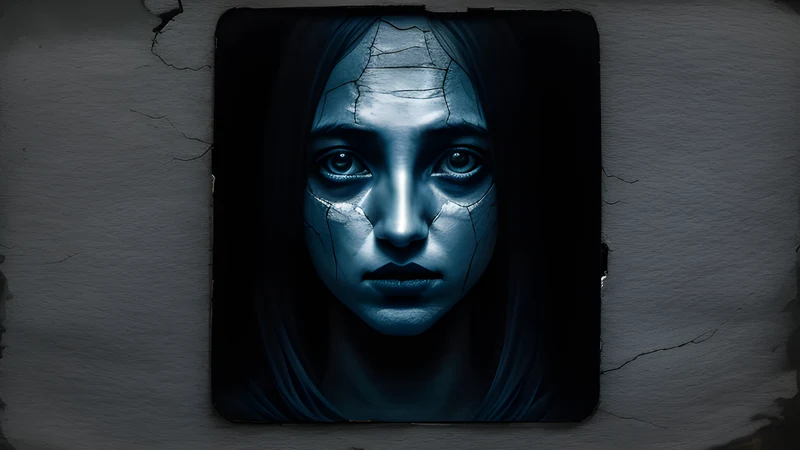
In the early spring of 2019 a face went round the world. It had bulging eyes set too wide, a strained grin stretched across a pointed chin, and a mane of black hair, and it was said to be reaching through children’s phones to instruct them, step by escalating step, toward self-harm and finally suicide. Parents were told the face was called Momo, that it lurked in the messaging app WhatsApp and spliced itself into videos on YouTube Kids, that it whispered tasks and threatened families who refused. Schools sent letters home. Police forces issued warnings. Celebrities amplified the alarm to tens of millions of followers. And when the dust settled, investigators searching for a single child actually harmed by the Momo Challenge came back with nothing. The scare had swept the planet, and its casualty list was empty. The panic is worth studying precisely because it is so clean a specimen: a fear with no underlying event, whose entire damage was manufactured by the warning against it.
The face was a sculpture
Begin with the image, because the image was real and had an innocent history. The bulging-eyed creature was a sculpture titled Mother Bird, made by a Japanese special-effects artist named Keisuke Aiso for the company Link Factory. It was displayed in 2016 at the Vanilla Gallery in Tokyo, a venue specialising in the macabre, where it was photographed by visitors and posted online. It was latex and had a fish’s body below the alarming head; it was designed to unsettle gallery- goers, which is the ordinary work of horror art. The sculpture had rotted and been thrown away long before its picture became a global boogeyman. Aiso, when the panic broke, was bemused to find his decayed prop blamed for terrorising the world’s children, and he told reporters the creature was “dead” and that children could rest easy.
The image had already been drifting through internet culture for a couple of years, attached to creepypasta and to a genuine but minor phenomenon of prank “Momo” accounts on WhatsApp that would send unsettling images to anyone who messaged them. There was, in other words, a small real thing: strangers using a scary picture to frighten people who contacted an account, the digital equivalent of a crank phone call. That kernel mattered, because a panic almost always needs some scrap of reality to catch on, and this one had its scrap. The distance between that scrap and the story that eventually circled the globe is the whole subject of this piece.
How the machine assembles a scare
A moral panic is not a lie so much as a mechanism, and the Momo Challenge lets us watch every gear turn. The first gear is a parent’s specific dread. By 2019 an entire generation of children was spending hours inside YouTube and messaging apps that their parents did not use, could not fully see into, and did not trust. That opacity is the same fuel that powered the fear of a fantasy game a generation earlier, and it was primed and waiting. Into that dread dropped a warning, apparently specific, apparently urgent, apparently about the exact thing parents already feared: that the unseen world inside the phone was reaching for their child.
The second gear is amplification without verification. A warning about children’s safety is almost impossible to ignore and socially costly to question. To share it is to be a caring parent; to pause and ask for evidence is to look as though you are gambling with a child’s life. So the warning propagates through the channels built for exactly this, the school newsletter, the local police Facebook page, the morning television segment, each relay lending it the borrowed authority of the last. When Kim Kardashian West posted the warning to her enormous following, and when British tabloids ran it as fact, the story acquired a reach no rumour of that thinness could otherwise command. Nobody in the chain had confirmed a single case, because confirmation was never the point; propagation was.
The third gear is the self-sealing quality of the claim. The Momo Challenge was constructed, like most such stories, so that its absence proved nothing. If your child had not been contacted by Momo, the danger was still out there, still coming. If no local case could be found, that only meant the families were too ashamed to speak. The story could not be disproved by the ordinary evidence of a quiet, unharmed child, because it had folded that quiet into itself as the calm before the strike. This is the same architecture that keeps other panics self-perpetuating, from the blade-in-the-sweet legends to the Blue Whale scare that ran on precisely this feedback loop.
The harm that was real
To call the Momo Challenge a hoax with no victims is accurate about its supposed mechanism and wrong about its effects, because the panic did real harm, and all of the harm came from the warning. Charities that support young people found themselves fielding frightened calls. The Samaritans and the UK Safer Internet Centre both stated plainly that there was no evidence of the challenge causing harm, and warned that the frenzy of coverage was the actual danger, because telling large numbers of children in vivid detail about a game that instructs them to hurt themselves is a way of planting the very idea you claim to be fighting. Guidance on suicide prevention is built around this exact risk: sensational, detailed, widely broadcast description can seed contagion. The Momo coverage broke every rule in that guidance in the name of protecting the children it frightened.
There was harm to trust as well. A child who was solemnly warned by a teacher about a monster in the phone, and who then discovered the monster was a discarded Japanese sculpture and a chain of adult overreaction, learned a lesson about the reliability of adult warnings that no one intended to teach. Every false alarm spends a little of the credibility that a true one will someday need. And there was the ordinary waste of it: police hours, school assemblies, column inches, and parental sleep, all poured into defending against a threat that the defending itself had inflated from a crank account into a planetary emergency.
The video that was never there
At the centre of the Momo Challenge sat a claim precise enough to sound checkable and slippery enough never to be checked: that the bulging face had been edited into children’s videos on YouTube and YouTube Kids, surfacing partway through cartoons to deliver its instructions when no adult was watching. This was the detail that gave the scare its particular grip, because it located the danger inside the one activity parents had come to treat as a safe pause, the child parked in front of a familiar programme. If the poison was in the cartoons themselves, then no amount of vigilance was enough.
YouTube stated flatly that it had found no evidence of any such videos on its platform, and independent searches by journalists produced the same emptiness. A handful of opportunists did, in the wake of the coverage, splice the now-famous face into uploads precisely because the panic had made it notorious, which created the strange loop in which the warning generated the very thing it warned about. The image became genuinely findable only after millions of adults had insisted it was everywhere. This is a recurring signature of the mechanism: the alarm does not merely describe a threat, it manufactures a small quantity of the threat as a by-product of its own spread, and that manufactured trace is then held up as vindication.
There is a telling asymmetry in how the two halves of the story travelled. The frightening claim moved at the speed of a shared post, reaching millions in days. The correction, when the safeguarding charities and fact-checkers issued it, moved at the speed of a considered statement, and reached a fraction of the original audience. A great many parents who received the warning never received the news that it was baseless, which means that for them the Momo Challenge remains, to this day, a real thing that was going around. This is the ordinary fate of a retraction, and it is one of the reasons a debunked panic leaves a residue long after the evidence has evaporated.
The scares before it and the scares to come
The Momo Challenge inherited its shape almost part for part from a lineage of phone-and-screen panics that stretches back decades and forward into whatever comes next. The chain-letter of the 1990s threatened misfortune to anyone who broke the sequence; the email hoaxes of the 2000s warned of viruses and abductors with the same breathless urgency; the Blue Whale scare that preceded Momo by two years supplied the exact template of an anonymous curator assigning escalating tasks that end in death. Momo borrowed that template wholesale and simply attached a more frightening face. Each iteration teaches the next how to travel.
What changes across the generations is only the medium and the mask. The underlying story is always the same: a hidden malevolent stranger, reaching through a channel the adults do not control, to take a child by degrees. It is one of the oldest anxieties the species has, the fear of the abductor at the edge of the settlement, rewired for whatever technology currently carries the young out of their parents’ sight. Recognising the template is the first defence, because a parent who has seen the shape once can feel the next instance clicking into position and can pause on the threshold that the mechanism most needs them to cross without thinking, the moment of the frightened share.
What the empty casualty list tells us
The most revealing fact about the Momo Challenge is the one that gets least attention: that after all of it, the diligent search for a harmed child found no one. Fact-checkers, journalists and safeguarding organisations looked hard, because a confirmed case would have been a major story, and the confirmed case never came. A panic that produces no victims is the purest possible demonstration that the fear was doing its own work, generating its own momentum, requiring no external event to sustain it. The face on the screen was a mirror, and what it reflected was a specific twenty-first-century terror: that the device in a child’s hand is a door to a world the parent cannot enter, patrol or understand.
That terror is legitimate, and this is the part worth sitting with rather than mocking. The parents who shared the Momo warning were people responsible for children in a media environment that genuinely did move faster than their ability to supervise it, and the story offered them a concrete enemy in place of a diffuse and honest anxiety. It is far easier to warn your child against a named monster than to admit you do not fully know what they encounter online, and the Momo Challenge handed a formless worry a face it could point at. The mechanism succeeds because it gives real fear a false object, and the false object is a relief precisely because it can be named, feared, and warned against.
Panics of this kind recur because the conditions that generate them do not go away. There will be another face, another challenge, another chain of well-meant warnings racing ahead of the evidence, for as long as adults are responsible for children in a world the children navigate more fluently than they do. The Momo Challenge is valuable as a case precisely because it was so pure, a fright that harmed people entirely through the act of being spread. Understanding how its gears meshed is the nearest thing we have to an inoculation, a way of recognising the next empty-handed monster while it is still assembling itself out of our own willingness to be afraid on our children’s behalf.
Related Content