The Michigan Dogman: A DJ's Joke That Grew Teeth
A 1987 April Fools' song invented a century of sightings — and Michigan believed every decade of it
Contents
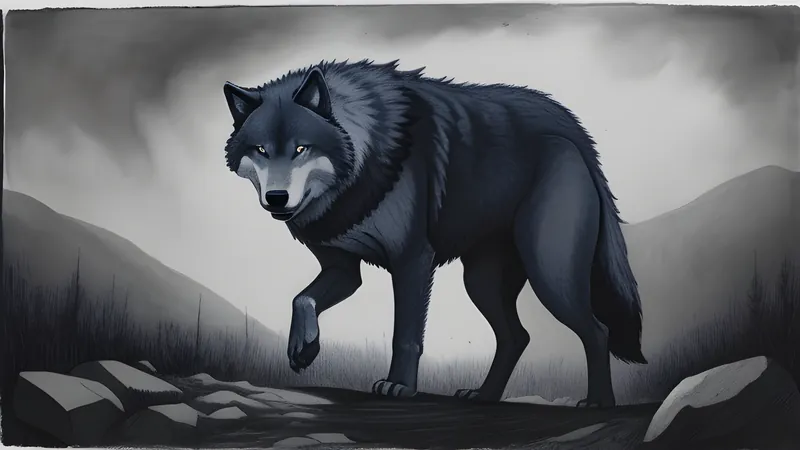
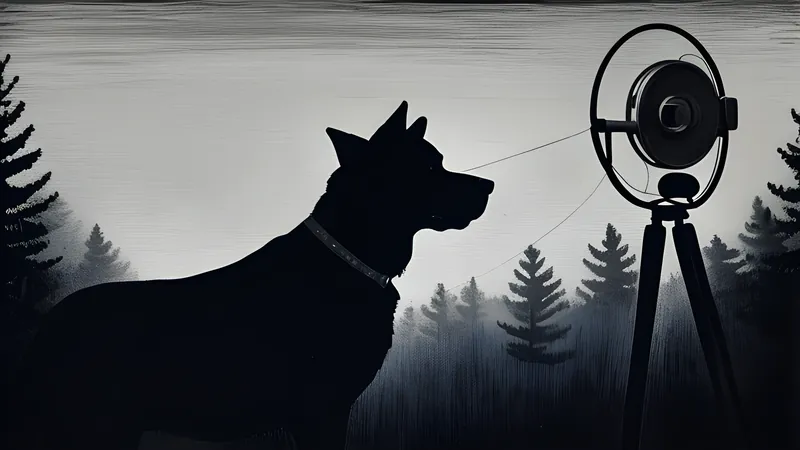
On the morning of 31 March 1987, a radio DJ named Steve Cook sat down in the studio of WTCM-FM in Traverse City, Michigan, and recorded two minutes and thirty seconds of synthesizer, wolf howls, and a sung warning about a creature that walked like a man and hunted like a dog. He called it “The Legend,” and he built its lyrics around a pattern he made up on the spot: sightings clustering in years ending in seven, once a decade, going back a century — 1887, 1897, 1907, all the way to 1987 itself. He aired it the day before April Fools’, as a joke aimed squarely at his own listeners. Nobody was supposed to take it seriously for longer than a day.
They are still taking it seriously. Michigan’s Dogman is now a fixture of American cryptid folklore, with its own festival merchandise, its own shelf of self-published sighting compendiums, and a viral 2007 video that a generation of internet users watched with the sound turned up. None of it happened the way people now believe it happened, and the gap between what Steve Cook actually did in that studio and what Michigan now tells itself about 1887 is the whole story.
The song and the ten-year pattern
Cook’s premise was deliberately, almost mathematically fake. He invented a string of dates — 1887, 1897, 1907, 1917, and onward — and slotted a Dogman sighting into each one, giving the song the rhythmic inevitability of a nursery rhyme. There was no research behind those years. There were no archived newspaper reports he was drawing on. He picked a pattern that was easy to sing and easy to remember, the same instinct that makes “in fourteen hundred ninety-two” scan. WTCM’s phone lines lit up anyway. Listeners called in describing their own encounters with a large, upright, canine creature in the woods near Cross Village, near Luther, near the Manistee National Forest — accounts that predated the song and had nothing to do with Cook’s fictional timeline, except that his song was now the peg they hung themselves on.
That response is the hinge of the whole legend. Cook had not discovered a hidden pattern in Michigan folklore; he had handed scattered, pre-existing testimony a catchy container. People who had quietly told family and neighbours about a strange encounter in 1967 or 1978 now had a name, a tune, and a public forum. The song did not manufacture belief from nothing. It manufactured the shape belief would take from then on — a monster with a schedule, checking in every ten years like a returning comet.
What Cook actually admitted
Cook has been open about the gag for decades, in interviews with regional papers and later with cryptozoology podcasts: the song was satire, a local media prank riffing on Bigfoot fever and B-movie werewolf tropes, tuned to April Fools’ Day. He did not claim eyewitness status, did not claim to have researched Michigan county archives, and has expressed mild bemusement that “The Legend” outgrew its joke so completely that fans now cite 1887 as a documented date rather than a rhyme he needed to fit a decade cycle. This is the fork in the record, plainly stated: the ten-year pattern that gives the Michigan Dogman its eerie, almost ritual credibility is fiction, written for a radio bit, by a man who will tell you so himself if you ask.
What is not fiction is that upright canine encounters were already part of the region’s oral tradition before 1987, scattered and unconnected the way most rural folklore is until someone gives it a spine. Reports researchers later dug up from the 1930s in Wexford County and from loggers’ recollections around Cross Village describe a “wolf-man” or “dog-headed man” moving on two legs at the treeline — the same basic silhouette Cook’s song would later formalise. Cook did not invent the sighting type. He invented the calendar.
The Gable Film and the internet’s second wave
The legend’s second, larger wave arrived twenty years later and owed nothing to radio. In March 2007, footage began circulating online purporting to be security-camera video from a backyard in Bay County, Michigan, showing a large, dark, dog-headed figure lunging at the camera. It spread fast — forwarded, embedded, dissected frame by frame on cryptozoology forums that treated it as the best physical evidence a Bigfoot-adjacent creature had ever produced. The clip became known as the Gable Film, after the name attached to the property.
It was a promotional hoax. An independent filmmaker, Mike Agrusa, had produced the footage to market his low-budget horror project, and the “security camera” framing was a marketing device, not a found artefact. Agrusa eventually confirmed as much publicly, but by then the footage had already done its work: it fused the folk figure that Cook’s song had named twenty years earlier to a piece of moving, visual evidence, the exact currency cryptid belief runs on in the YouTube era. A song can be dismissed as a joke. Video footage, however staged, plants itself differently in the eye.
Two hoaxes, two decades apart, one shared appetite
What makes the Michigan Dogman worth pausing on, rather than filing next to a thousand other regional monsters, is that it has two separate, well-documented, publicly acknowledged fabrications in its founding record — the 1987 song and the 2007 video — and believers absorbed both without much friction. That reflects how badly the underlying appetite wanted a shape to attach to. Northern Michigan is genuinely enormous, forested, and thinly populated outside its resort towns; the Manistee and Huron-Manistee National Forests cover more than nine hundred thousand acres between them, plenty of ground for a story to feel plausible in even when its specific artefacts are fake.
Compare the pattern to how the Nain Rouge took a documented, decades-old civic legend and kept finding new disasters to retroactively attach itself to — belief doing the work of connecting dots that were never actually related. The Dogman legend runs the same machinery in reverse: instead of an old story absorbing new events, a fabricated modern frame absorbed old, real, unconnected testimony and gave it retroactive order.
What the ten-year cycle is really doing
A monster with a schedule is more comforting than a monster without one, which sounds backwards until you think about what randomness does to fear. An unpredictable threat is one you can never stop watching for. A threat that surfaces on a fixed cycle lets you know which years to be careful in, and by extension you know the other nine years are safe. Cook’s invented decade pattern gave Michigan’s Dogman believers something Bigfoot sightings, scattered across no calendar at all, never quite offer: the comfort of a countdown. It is the same psychological trick a lot of seasonal folklore performs, from harvest ghosts to solstice hauntings — fear rendered bearable by putting it on a schedule, even a fake one.
There is also a plainer, more local thing going on. Rural northern Michigan’s economy leans hard on tourism, hunting, and snowmobiling traffic through small towns that would otherwise draw little outside attention. A local monster with a song, a viral video, and a growing shelf of self-published lore books is free publicity that costs the region nothing and asks nothing of its residents except a willingness to keep telling the story. Cook has said as much himself, half-joking, when asked why he has never disowned the legend his prank grew into: it is good for Traverse City, and it costs him nothing to let people believe what they want.
The very old idea of the dog-headed man
The reason a dog-headed man lands so easily in the imagination is that he has been there for millennia. The figure of the cynocephalus — the dog-headed human — runs deep through ancient and medieval tradition. Herodotus, writing in the fifth century BC, passed on reports of dog-headed people living in the mountains of Libya. Marco Polo, in the thirteenth century, described cynocephali he placed on the Andaman Islands. Medieval bestiaries and maps populated the edges of the known world with dog-headed races, and Eastern Orthodox iconography, remarkably, sometimes depicted Saint Christopher himself with the head of a dog, drawn from a legend that the martyr came from a land of cynocephali.
Steve Cook did not know or need any of this when he sat down at WTCM in 1987, and the point is precisely that he did not need to. The dog-headed figure is one of the oldest and most portable images in human storytelling — the creature that stands upright like us and looks back at us with the face of a predator, holding the exact border between the human and the animal that every culture polices. A werewolf is the same anxiety wearing fur. When Cook gave northern Michigan a canine that walks like a man, he was tapping, unawares, into a template already carved into the deepest layers of European and Mediterranean folklore, which is a large part of why it felt so instantly familiar to the people who called in. They were not learning a new monster. They were recognising a very old one, handed to them with a Michigan address and a decade cycle attached.
That deep familiarity is what a good local legend borrows without paying for. The specifics — Cross Village, the year 1887, the Manistee timber — are local dressing on an ancient armature, and the armature is what makes the dressing stick.
Where that leaves the sightings
None of this requires calling every person who has reported an upright canine in the Michigan woods a liar. Genuine misidentification is easy in dense forest at dusk — a bear standing at an odd angle, a large dog, a coyote catching light strangely, the same everyday misreadings that put a monster in Lake Champlain — and some of the testimony that predates 1987 is sincere and unresolved on its own terms, independent of Cook’s invented dates. What the record does not support is the specific, oft-repeated claim that Michigan has documented Dogman sightings running back to 1887 on a reliable ten-year cycle. That claim has a known author, a known date of composition, and a known motive: he needed a hook that would scan in a radio jingle two days before April Fools'.
The most interesting thing about the Michigan Dogman, in the end, is not whether something four-legged occasionally stands up in the Huron-Manistee forest. It is how cleanly a piece of scheduled dread, built entirely from a DJ’s sense of rhythm, slotted into a landscape that was already primed to receive it — and how a viral hoax video, twenty years later, found the same appetite waiting and fed it all over again. The believers were reading a real hunger accurately. They only mistook a song for its source.
Related Content