The Melon Heads: Three States, One Deformed-Family Legend
The same story of hidden, deformed families haunts back roads in Michigan, Ohio and Connecticut. Why?
Contents
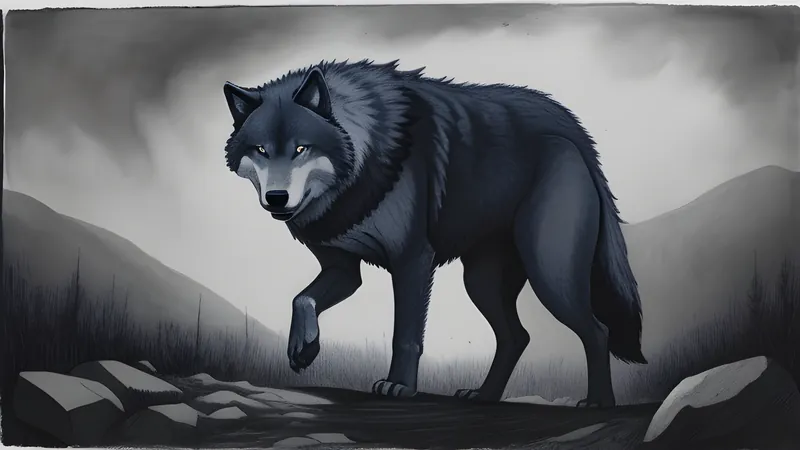
Drive the wrong back road after dark in the right part of Michigan, or Ohio, or Connecticut, and — so the local teenagers will tell you — small figures may come out of the trees. They have swollen, bulbous heads far too large for their bodies, spindly limbs, and a feral hostility toward anyone who trespasses on their patch of woods. They are the Melon Heads, and they are said to be the last remnants of a hidden family: inbred, deformed, escaped from an asylum, or the abandoned subjects of a doctor’s experiments gone wrong. They live in the forest, and they do not want you there.
What makes the Melon Heads worth an evening’s attention is not any one of these tales. It is that there are three of them, in three separate states, hundreds of miles apart, each community entirely convinced their Melon Heads are local and true. The same monster, with the same swollen head and the same asylum backstory, has taken root independently in Michigan, Ohio and Connecticut. That triple occurrence is the real mystery, and it tells you something precise about how a legend is built and what it is for.
Three woods, three families
Begin with the local specifics, because each community insists on them.
In Michigan, the Melon Heads haunt the woods around Saugatuck and Douglas, in Allegan County near the Lake Michigan shore. The standard story attaches them to the Junction Insane Asylum, said to have housed children with hydrocephalus — a real medical condition in which fluid swells the skull. In the telling, these children were mistreated, driven mad, and either escaped or were released into the surrounding forest, where they turned feral and bred among themselves. Felt Mansion, a genuine local landmark, often gets pulled into the story as a site of sightings.
In Ohio, they belong to the affluent suburbs and back lanes around Kirtland, north-east of Cleveland in Lake County. Here the villain is usually a Dr Crow — sometimes Crowe, sometimes Melonhead — a physician said to have cared for hydrocephalic orphans and then experimented on them, injecting fluid into their skulls, until they rose up, killed him, burned down his home, and vanished into the woods along Wisner Road and the Chagrin River valley.
In Connecticut, the Melon Heads roam the wooded, moneyed towns of Fairfield County — Shelton, Trumbull, Milford, around Dracula Drive and Zion Hill and Saw Mill City Road. The Connecticut version reaches for the deepest past: some tellings trace the family to a colonial-era group banished from town after being accused of witchcraft in the 15th or 18th century, cut off from society for so long that generations of inbreeding produced the deformities. Others use the familiar asylum-fire-and-escape structure.
Three states, three origin stories, one creature. And each is told as strictly local knowledge — the Michigan teenager has never heard of the Ohio version, and would tell you, if asked, that theirs is the real one.
The kernel each legend grew around
None of these stories is true in the sense the tellers mean. There is no verified colony of deformed forest-dwellers in any of the three states, no documented Dr Crow, no confirmed release of hydrocephalic children into the woods of Allegan County. But each legend has grown around a real thing, and identifying that real thing is how you understand the whole.
The recurring anchor is the asylum. All three versions, in their most common forms, reach for an institution that housed the disabled or the mentally ill. This is not an accident of these particular woods; it is a pattern that repeats across American local legend, because the institutions were real and their history is genuinely dark. The era of large, isolated asylums — built deliberately far from towns, on the theory that rural quiet was therapeutic — left a physical and moral residue across the American landscape. Many were sites of real mistreatment, real overcrowding, real neglect that later reporting exposed. A community that lived near such a place inherited a real unease about it, and unease of that kind does not stay abstract. It grows a story.
Hydrocephalus supplies the second kernel. It is a real condition, historically stigmatised, that does produce a visibly enlarged head — and in an age when the affected were often institutionalised and hidden from public view, the condition existed for most people only as rumour and glimpse. A legend about swollen-headed forest children is a folk memory of real disabled people who were real, and were really hidden away, and were really the subject of whispered horror by a public that never saw them treated as human.
The Connecticut witchcraft variant reaches for a different but equally real anchor: the colonial history of banishment, of casting the accused out of the community into the wilderness. New England genuinely did expel people it feared. The legend simply keeps them out there, breeding, for three hundred years.
The fork, and why it runs the same way three times
Here is where the myth departs the record, and the departure is identical in all three states — which is the point.
The real history is one of institutions doing harm to vulnerable people who were locked away from society. The legend inverts the moral direction entirely. In the real history, the disabled and the outcast are the victims — hidden, neglected, experimented upon. In the legend, they become the monsters: feral, violent, lurking in the trees to attack the innocent teenager who wanders too close. The fork, in every version, is the same swap. The victim becomes the threat.
That inversion is doing psychological work, and it is not flattering. A community that lived beside an asylum, or near the grounds where the outcast were sent, carries a low collective guilt about what was done to those people. Turning them into forest monsters resolves that guilt by reversing it. If the swollen-headed children are dangerous predators, then keeping them locked away — or driving them into the woods — was self-defence rather than cruelty. The legend launders an uncomfortable history into an adventure. The teenagers who drive out to Wisner Road to be scared are, without knowing it, re-enacting the original act of exclusion, going to the edge of the safe world to confirm that the people cast out of it are indeed monstrous and belong out there.
Why the same fork in three separate places? Because the same conditions produced it independently. Each of these three regions had the raw materials — a real or rumoured institution, the folk memory of hydrocephalus, wooded land at the edge of a comfortable town, and teenagers with cars looking for somewhere to be frightened. Given those ingredients, the story almost has to assemble itself the same way, the way similar riverbeds cut similar meanders. This is what folklorists call polygenesis: a legend arising independently in more than one place because the same needs, meeting the same materials, build the same thing. The Melon Heads are less a story that spread than a story the American landscape kept regrowing wherever the soil was right.
What the woods are really for
The deeper you go into the Melon Heads, the clearer it becomes that they are a legend about geography as much as monsters — specifically, about the line between the town and the trees.
All three versions share a striking demographic detail: the Melon Heads haunt the woods bordering prosperous, settled communities. Kirtland and Fairfield County are affluent. The story places the monster exactly at the boundary of comfort, in the dark wooded margin that a well-off suburb would rather not think about. The Melon Heads are what lives just past the edge of the lawn, in the part of the map the porch light does not reach. They give a shape to the unease every settled community feels about its own outskirts — the sense that the order of the town is thin, and that something older and wilder presses against it from the treeline. They belong to the same family of drivable American frights as the phantom hitchhiker of a Chicago roadside — local, specific, tied to a place you can actually go.
They are also, transparently, a coming-of-age ritual. The Melon Head story exists to be tested. Its whole function is to send teenagers out at night, down the named road — Wisner, Saw Mill City, the specific local lane everyone knows — to dare the woods and come back. This is how a community’s young people rehearse fear in a controlled dose, together, with a steering wheel and a way home. The specificity of the roads matters more than the plausibility of the monster; a legend needs a real place you can actually drive to for it to do this work. The horror is a pretext for the pilgrimage.
And underneath all of it sits the oldest function of the deformed-family legend, which is to mark the boundary of who counts as one of us. The Melon Heads share DNA — narratively — with a long American tradition of hidden-inbred-family horror, the same anxious material that surfaces in tales like the Bunny Man of a Virginia bridge, where an escaped-asylum figure haunts a specific, drivable local landmark. In every case the monster is someone excluded — mad, deformed, cast out, kept apart — and the story’s quiet argument is that the exclusion was justified because look what they became. It is a legend that flatters the people inside the town at the expense of everyone the town decided did not belong in it.
The three that never met
The most honest way to leave the Melon Heads is with the fact that started us: three states, three woods, one monster, and no evidence any of the three legends knows the others exist. That independence is the whole revelation. It means the Melon Heads were not carried from place to place like a chain letter. They were grown, three separate times, out of the same American ingredients — the isolated asylum and its real cruelties, the hidden reality of disability, the affluent town nervous about its own dark margin, and the teenagers who needed somewhere to be brave.
There is no colony in the trees. There never was. What is really out there on Wisner Road, and in the Allegan woods, and along the wooded lanes of Fairfield County, is a community’s memory of the people it hid away, transformed into something it is allowed to fear instead of something it might have to answer for. The swollen head, so grotesque in the telling, belonged to real children who were real, and were treated as horror while they lived. The legend keeps them in the woods because it is easier than keeping them in the conscience.
Related Content