The Mary Celeste: The Empty Ship and the Story Machine
A seaworthy ship was found sailing herself across the Atlantic with no one aboard, and the world has been filling the empty deck ever since
Contents
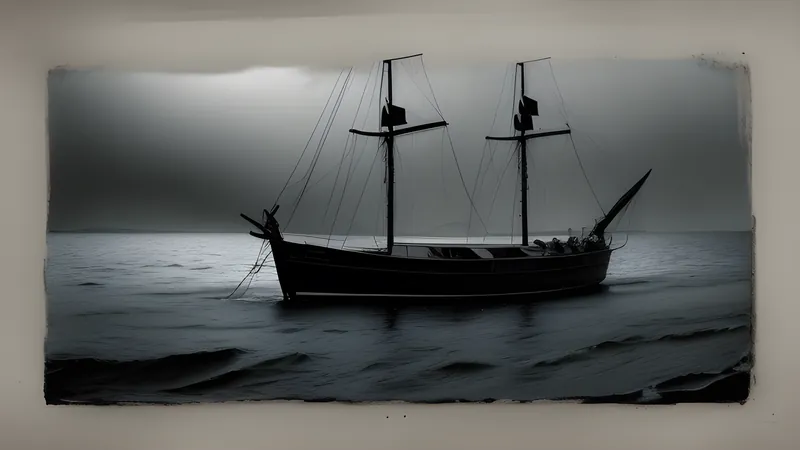
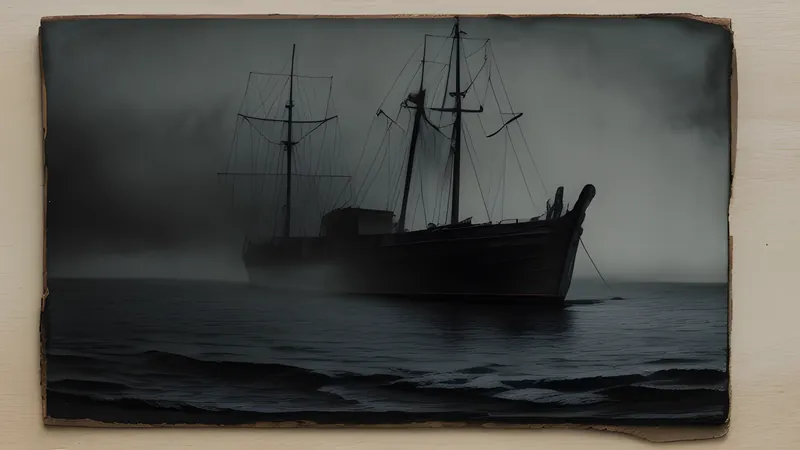
On the afternoon of 4 December 1872, the crew of the Canadian brigantine Dei Gratia, midway across the Atlantic between the Azores and the coast of Portugal, sighted another vessel yawing strangely in the swell, her sails set but poorly trimmed, no one at her wheel. Captain David Morehouse sent a boarding party across. They found the Mary Celeste deserted. There was no one at the helm, no one in the cabins, no one anywhere aboard. And yet the ship was in no obvious distress. Her cargo sat largely intact in the hold, there was ample food and fresh water for months, the crew’s personal possessions, oilskins and pipes and sea chests, were where they had been left, and the vessel was still under sail and making way across the ocean, carrying nobody at all.
What was actually found
The facts of the case are unusually well recorded, because the Dei Gratia brought the Mary Celeste into Gibraltar as salvage and the whole matter went before a Vice-Admiralty court, which took sworn testimony and inventoried the ship in detail. So we are not, at the start, dealing with legend. We are dealing with a court record.
The Mary Celeste had sailed from New York on 7 November 1872, bound for Genoa with a cargo of 1,701 barrels of denatured industrial alcohol, the kind used for fortifying wine and for lamps. Her master was Benjamin Spooner Briggs, an experienced and by all accounts sober and capable New England captain, a man who did not drink and who read his Bible. He had brought with him his wife, Sarah, and their two-year-old daughter, Sophia Matilda. The crew numbered seven, giving ten souls aboard in all. They were, as far as the records show, an unremarkable and respectable company: four of the sailors were German, several from the Frisian islands, and the mate, Albert Richardson, was a New Englander whom Briggs knew and trusted. There is no hint in any document of a violent man among them, no grievance, no drink; Briggs had specifically chosen a temperate crew. That ordinariness matters, because so many of the later theories require a monster or a murderer to have been aboard, and the people who were actually on the Mary Celeste were, by every surviving trace, exactly the sort who would sensibly climb into a lifeboat when they believed the ship beneath them was about to catch fire. The last entry on the ship’s log slate was dated 25 November and placed her near the island of Santa Maria in the Azores. She was found some ten days later, several hundred miles further on, still sailing. The ship herself had a chequered past that the later legend would enlist as an omen. She had been built in 1861 on Spencer’s Island in Nova Scotia and launched under the name Amazon; her first captain died within days of taking command, and she suffered a run of ordinary misfortunes and ownership changes before being sold to American buyers, refitted, and rechristened Mary Celeste around 1868. Sailors are superstitious about renamed ships, and a vessel that had already shed one name and one unlucky captain was, in hindsight, easy to cast as doomed from the keel up. At the time, though, she was simply a serviceable working brig with an experienced master and a full cargo, engaged in the wholly routine business of carrying alcohol to Italy.
The boarding party’s inventory is the heart of the mystery, because it refuses to point in any single direction. The ship’s single lifeboat, a yawl that had been carried across the main hatch, was gone, and a length of rope was found trailing from the stern into the sea. One of the two pumps had been taken apart. There was perhaps a metre of water in the hold, a serious amount but well within what such a ship could survive, and the cargo hatches were off, lying on the deck. Of the 1,701 barrels of alcohol, nine were later found to be empty. A sounding rod for measuring the water in the bilge lay on the deck. The chronometer and sextant and the ship’s papers were missing, exactly what a departing captain would take. And the story, sharpened in the retelling, would add a still-warm breakfast and a half-drunk cup of tea, though those details do not appear in the sober record.
The kernel points one way
Put the real evidence together and it tells a coherent, if unprovable, story, and it is worth telling because the sober version is dramatic enough without any help. Everything the boarders found is consistent with a controlled, deliberate, and ultimately fatal decision to abandon a ship that her captain wrongly believed was about to blow up or go down.
The cargo is the likeliest villain. Denatured alcohol is volatile, and nine of the barrels were made of red oak, more porous than the white oak of the rest, so they would have leaked vapour. A cold passage followed by a warmer spell near the Azores could have caused the alcohol to expand and vent, and the sudden escape of fumes through the hold — perhaps with a frightening rumble, or even a flash of flame that scorched nothing but terrified everyone — would explain why the hatches were found off: someone had thrown them open to air the hold. Faced with a cargo of over seventeen hundred barrels of what he had every reason to think was about to explode beneath his sleeping daughter, Briggs may have made the classic and understandable error. He ordered everyone into the yawl, keeping the small boat tethered to the ship by that trailing rope, meaning to stand off at a safe distance until the danger passed and then return.
And then the sea killed them, quietly and without witnesses. A squall, a parted line, a boat that could not row back to a ship still under sail and drawing away — and ten people were left in an open yawl in the mid-Atlantic while the Mary Celeste, lightened and unharmed, sailed on without them. It is a small and terrible domestic tragedy of misjudgement, and it fits every physical fact on the court’s inventory. It is also, being undramatic and requiring no villain and no monster, almost completely unsatisfying to the human appetite for a story. Which is where the myth begins.
The fork: a magazine, a young doctor
The name most responsible for what the Mary Celeste became is not a sailor’s at all. It belongs to a struggling young physician in Southsea named Arthur Conan Doyle, a decade before he would invent Sherlock Holmes. In January 1884 the Cornhill Magazine published, anonymously, a short story of his called “J. Habakkuk Jephson’s Statement”, a first-person tale of a ship found abandoned in exactly the Mary Celeste’s circumstances. Doyle’s fiction supplied everything the true story withheld: a surviving narrator, a vengeful murderer aboard, a racial revenge plot, and a resolution. He also, carelessly or deliberately, renamed the vessel the Marie Celeste, and altered the details — moving the abandonment, adding the untouched meals laid out on the table, the captain’s watch still ticking.
The story was good enough that many readers took it for fact, or half-fact, and the misspelled “Marie Celeste” and the invented breakfast entered the record and never left. From then on the two ships ran side by side: the real Mary Celeste, a brig abandoned in a fright over her cargo, and the legendary Marie Celeste, a ghost ship whose crew had vanished from a set table in the middle of a meal, into thin air, leaving no trace and no explanation. It is the second ship that the world remembers, and she was built in a magazine.
The story machine at work
What happened next is a case study in how a maritime mystery grows, and it followed the same route that would later turn ordinary shipping losses into a triangle of sea that eats vessels. Each retelling added a layer and pruned away the caveats. Writers supplied ever more untouched details — the warm stove, the sewing left mid-stitch, the cat asleep on a locker, the food steaming on the plates — precisely because those details make the absence of the crew feel supernatural. A ship abandoned in a panic over exploding cargo is a tragedy of the sea. A ship whose crew evaporated between one spoonful and the next is something else, and the something else is what sells.
The vacuum then filled with explanations grander than the drab truth could ever be. The Mary Celeste was claimed by waterspouts and rogue waves, by mutiny and piracy and insurance conspiracy, by a giant squid that plucked the crew one by one from the deck in the manner that legend has always been happy to grant to the great squid of the deep, by sea monsters, by madness, by aliens, by the timeless dread of the ocean itself. At the Gibraltar salvage hearing, the attorney general, Frederick Solly Flood, had already gone looking for a crime, convinced the empty ship concealed murder or fraud and finding, in the end, nothing to charge. Flood’s suspicion is the ancestor of all the others. An empty ship is an accusation without a defendant, and the human mind hates to leave the dock empty.
The ship’s own later end sealed her reputation. After Gibraltar she passed through a succession of owners and never prospered, and in 1885 her last captain, Gilman Parker, ran her deliberately onto a reef off Haiti in a crude attempt at insurance fraud, loading her with a worthless cargo insured as valuable. The scheme was exposed, Parker was ruined and died soon after, and the wreck of the Mary Celeste rotted on the Rochelois Bank. To a public already primed to see the ship as cursed, a career that ended in fraud and disgrace looked like the confirmation of a doom that had begun with the empty deck of 1872. The plain reading — that a run-down brig came to a run-down brig’s end at the hands of a dishonest master — had no chance against a story that wanted an omen.
The empty deck as a mirror
The enduring power of the Mary Celeste is precisely that she gives you a stage with the actors removed and invites you to write the missing scene. Ten people, one of them a two-year-old girl, walked or were taken off a sound ship in the middle of the ocean and were never seen again, and there is no living witness and no recoverable proof. That gap can never be closed, and so it stays permanently open, a doorway each reader walks through carrying whatever they most fear about the sea.
The sober reconstruction — venting alcohol, a panicked abandonment, a parted line, an open boat — is very probably close to what happened, and it is a genuinely harrowing thing to sit with: an experienced captain making one reasonable decision that turned out to be fatal, his family drowning within sight of the ship that would have saved them, the Mary Celeste sailing serenely on to be found days later with the table still set from breakfast. That is dread enough. What the legend does is refuse the domestic scale of it, because a family lost to a bad guess is unbearable in a way that a supernatural ghost ship, thrillingly, is not. To make the horror abstract is to make it survivable. The world kept the vanished crew of the Marie Celeste, spelled wrong and stepped out of a fiction, in large part because it could not quite bear to keep the real, small, human death of the Mary Celeste, whose deck was never haunted by anything worse than an ordinary and terrible mistake at sea.
Related Content