The Loch Ness Surgeon's Photo Confession
The most famous monster picture ever taken was a toy on a clockwork submarine
Contents
Almost everyone can picture it, even people who have never given the Loch Ness monster a second thought. A slender neck curves up out of flat grey water, a small head tilted at the top, the surface around it rippling outward as though something large has just risen. The image is grainy and cropped tight, which only makes it feel more like a snatched glimpse of something shy. It ran in the Daily Mail on 21 April 1934 under the byline of a respectable London doctor, and for sixty years it was the single most persuasive piece of evidence that something lived in the loch. It became the picture the world meant when it said Nessie.
The neck in the photograph is about the height of a garden gnome. It is a plastic head and a strip of moulded wood, mounted on a toy submarine bought from a chain store, floated in a quiet bay and photographed from the shore. That is the whole monster. Understanding how a toy became an icon means taking the loch, and the people who loved it, seriously — because the legend around the photograph is real history, even though the photograph is a fake.
The year the monster was born
The modern story of Loch Ness begins with a road. In 1933 the route along the northern shore, today the A82, was widened and improved, clearing trees and opening long stretches of open sightline across the water for the first time. More traffic meant more eyes on the loch, and the loch is a strange thing to watch: twenty-three miles of cold, peat-dark water, deep enough to hide most of a mountain, prone to sudden wakes and standing waves called seiches that roll along its surface with no obvious cause.
On 2 May 1933 the Inverness Courier ran a report, filed by the water bailiff Alex Campbell, of a local hotel manager, Aldie Mackay, who had seen something large rolling and disturbing the water. Campbell used the word “monster”, and the word did the rest. Through that summer the sightings multiplied and the national press arrived. There was even an older thread to pull on: Adomnán’s seventh-century Life of St Columba describes the saint, around the year 565, driving off a water beast that had menaced a swimmer in the River Ness. Whether or not the two are related, the 1933 legend inherited a sense that this water had always held something.
None of this was invented by hoaxers. The road was real, the sightings were sincerely reported, and the loch genuinely does play tricks — swimming red deer, otters running in line, floating logs and boat wakes have all fooled careful observers. The raw material of the legend was a real place doing real, ambiguous things. What it lacked, by early 1934, was a face.
The hunter who was humiliated
Into that gap walked Marmaduke Wetherell, a big-game hunter, actor and self-promoter whom the Daily Mail hired in December 1933 to find the monster and sell newspapers. Within days Wetherell announced success: he had found large four-toed footprints along the shore, fresh spoor of the beast itself. Casts were sent to the Natural History Museum in London for examination.
The verdict, delivered early in 1934, was humiliating. The prints had all been made by the same foot, a dried hippopotamus foot of the kind mounted as an umbrella stand or ashtray, pressed into the mud. Wetherell had either been hoaxed himself or had faked the evidence, and the Mail, having built him up, dropped him hard. He came away from the loch a laughing stock, a hired expert publicly caught out, and the resentment of that failure is the engine of everything that followed. A man who has been made ridiculous will sometimes go to great lengths to be the one laughing last.
The revenge, built to be believed
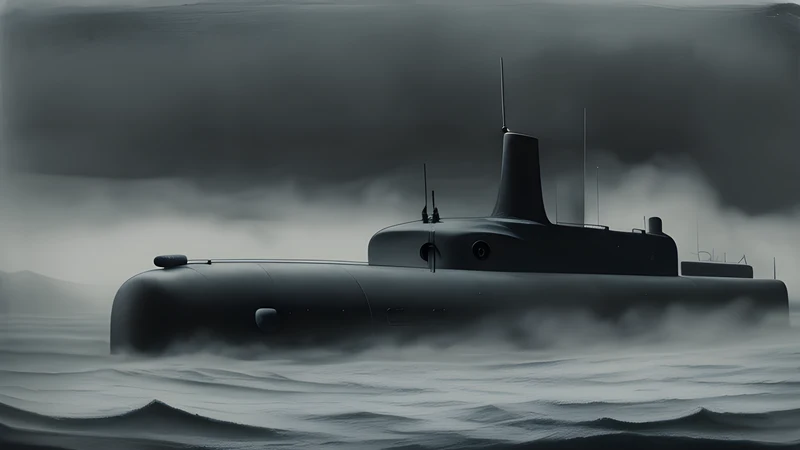
The plot that produced the surgeon’s photograph was, on the confession that eventually surfaced, a piece of theatre aimed straight at the newspaper that had shamed him. Wetherell recruited his own family and circle: his son Ian Wetherell, his stepson Christian Spurling, who was a sculptor and modelmaker by trade, and an insurance agent named Maurice Chambers. Spurling built the monster. He took a toy submarine, a clockwork model roughly a foot long bought from Woolworths, and fitted it with a head and neck sculpted from plastic wood, weighting the keel with a strip of lead so it would sit upright and low in the water. It was floated in a sheltered corner of the loch and photographed.
The final, decisive touch was the name attached to it. A revenge hoax by a disgraced hunter would have been dismissed on sight, so the conspirators needed respectability, and they bought it. Robert Kenneth Wilson, a Harley Street gynaecologist — the “surgeon” of the legend, though the title was loose — agreed to have the pictures presented as his, taken while he happened to be watching the loch. A gentleman doctor with no obvious motive and a reputation to protect was exactly the witness the story required. Wilson took the plates to be developed, the Daily Mail published, and the toy passed into history as the beast.
Sixty years of a well-kept secret
What is remarkable is how long it held. The photograph survived every wave of scepticism from the 1930s to the 1990s. Analysts pored over it, argued about the scale of the ripples and the length of the neck, and tried to reconcile it with sonar surveys and expensive expeditions. Believers treasured it; doubters could pick at it but never quite dismantle it, because the one thing that would settle the matter — an admission from inside the plot — stayed locked up while the conspirators lived.
It came loose only at the very end. In the early 1990s the researchers David Martin and Alastair Boyd tracked down the surviving thread of the story to Christian Spurling, by then an old man. Spurling confessed the whole scheme before his death in 1993, describing the toy submarine, the plastic-wood neck, Wetherell’s fury and the borrowing of Wilson’s name. Martin and Boyd published the account in 1994 and later in a book, Nessie: The Surgeon’s Photograph Exposed. The detail that gives the confession its ring of truth is small and specific: the model was so light that it capsized during the shoot and had to be recovered and re-floated, which is exactly the kind of nuisance a real conspirator remembers and an inventor would not think to add.
The cropped frame and the other pictures
Two details from the photograph itself deserve attention, because they were visible long before Spurling ever spoke. The famous image is a tight crop. The full negative shows far more of the loch’s surface, and once the surroundings are restored the “neck” is plainly small and close to the shore, its scale betrayed by the tiny ripples around it rather than the ocean swell a large animal would throw. A second, much rarer image from the same session — showing the object lower in the water, mid-dive — was published at the time and then largely forgotten, precisely because it looked less like a monster and more like a floating toy losing its balance. The plot’s best picture was the one that hid the most.
The surgeon’s photograph also sat at the head of a long line of later evidence that followed the same arc of promise and deflation. Tim Dinsdale shot cine film of a moving hump in 1960 that enthusiasts still debate. In 1972 and 1975 Robert Rines and a team from the Academy of Applied Science took underwater flash photographs that were promoted as showing a flipper and even a body, and which later image enhancement suggested owed more to processing and hope than to anatomy. In 1987 Operation Deepscan swept the loch with a curtain of sonar boats and turned up a few unexplained contacts and a great deal of nothing. Each new claim borrowed some of its credibility from the surgeon’s photograph, and each in turn propped the photograph up, until the whole edifice rested on an image that its own makers knew was a strip of plastic wood.
A legend that paid its way
It helps to remember how much the monster was worth by 1934, because money shaped the story as much as belief did. The Daily Mail’s circulation war with its rivals made a Highland monster a genuinely valuable property, and the paper had already spent real effort and prestige on Wetherell’s expedition. A dramatic photograph sold papers; a confirmed monster would have sold them for years. That commercial appetite is why a disgraced hunter could be confident his revenge would find a willing publisher, and why so little scrutiny was applied to a picture that arrived, conveniently, through a respectable intermediary. The loch had become an industry before it had become a mystery, and the industry wanted the mystery kept open.
The village of Drumnadrochit and the shores of the loch have lived off that openness ever since, with visitor centres, boat tours and a steady stream of watchers who come hoping. This is not a cynical observation about the locals so much as a recognition that a legend, once established, acquires a constituency with reasons to keep it alive that have nothing to do with zoology. The surgeon’s photograph seeded an economy of wonder, and economies are slow to give up their founding image even after its maker’s stepson has explained precisely how it was built.
Where the loch and the legend part
This is the fork worth marking, and it is a delicate one. To debunk the surgeon’s photograph is to remove one object from the case. It is not to explain away the loch, the sightings, or the sincerity of the people who report them. Alastair Boyd, one of the two men who exposed the photograph, is himself a Loch Ness enthusiast who says he once saw something large in the water that he cannot account for. He did not set out to kill the monster; he set out to clear away a lie that had been getting in the way of honest inquiry. That is the folklorist’s distinction in its cleanest form. The photograph was a fraud. The question of what people see in a deep, cold, tricking lake is a different question, and a more interesting one.
The genuine explanations for most sightings are unglamorous and well documented — deer and otters, birds and boat wakes, seiches and floating debris, and the powerful human tendency to read a shape into ambiguous water and then remember it as sharper than it was. The loch has been surveyed with sonar and, more recently, with environmental DNA sampling that found plenty of eel but no reptile and no unknown giant. The evidence for a monster has thinned steadily. The devotion to the idea has not, and that gap is the real subject.
What the neck was really for
The surgeon’s photograph worked because it supplied a shy, plausible, almost modest image at exactly the moment the legend needed a face. It did not show a rampaging dragon; it showed a small, cautious head, glimpsed and gone, which is precisely how people wanted the monster to behave. Wetherell understood, better than the newspaper that fired him, what the public was hungry to believe, and he gave it to them in a form calibrated to their expectations. The hoax succeeded because it flattered a wish, and the same wish is why the picture outlived its makers.
Underneath the wish is something worth respecting rather than mocking. A monster in a Highland loch is a way of insisting that the map is not finished, that the modern, surveyed, tarmacked world still keeps a secret in its deep water. People do not hold onto Nessie because they are foolish about zoology; they hold onto it because it is a doorway kept ajar, a promise that wonder has not been entirely paved over. Wetherell’s toy exploited that longing for the length of a revenge, and the longing was real enough to carry a clockwork submarine for sixty years. The confession closes the case on the photograph and leaves the longing exactly where it was, which is why the loch is as watched today as it was the summer the road opened.
For related stories of a single image carrying a whole belief, see the Loch Ness monster’s long history, the Cottingley fairies and the Piltdown forgery; for the wider hunger that keeps lake monsters alive, see Champ of Lake Champlain and the basking-shark carcass problem.
Related Content