The Koch Brothers Network: Real Influence Versus Cabal Mythology
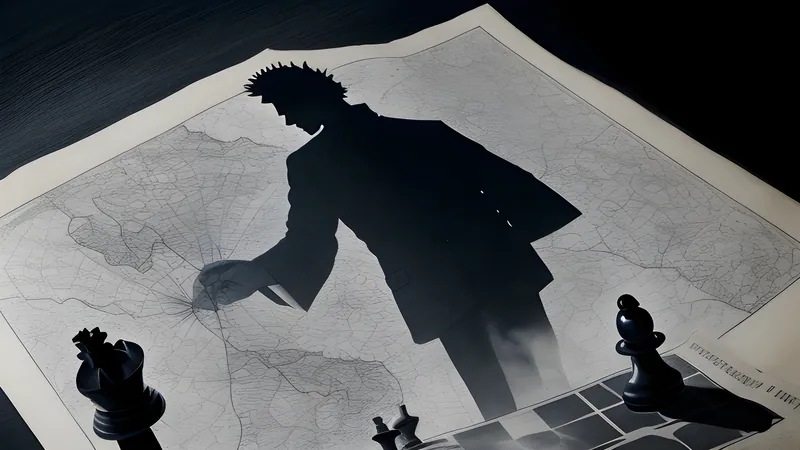
Two billionaires really did build a machine to move American politics. Then the machine became a monster in other people's imaginations.
Contents
In June 2010, at the St Regis Resort in Aspen, Colorado, a few hundred wealthy conservatives gathered for a seminar that was not on any public schedule. The host was Charles Koch, chairman of Koch Industries, the second-largest privately held company in America. An invitation letter, leaked to the press months later, laid out the purpose in plain language: to review “strategies for combating the multitude of public policies that threaten to destroy America as we know it.” Attendees were asked not to discuss the meeting afterwards. When journalists eventually named some of the guests — judges, media figures, elected officials, other billionaires — the gathering acquired an aura it has never fully lost. Here, it seemed, was the room where America was actually decided.
The machine that was really built
The temptation with a story like this is to assume it has been inflated for effect. In its documented outline, it has not. Charles and David Koch spent the better part of forty years constructing one of the most sophisticated private political operations in the history of the United States, and most of what we know about it comes from the network’s own leaked documents, tax filings, and the reporting that pieced them together.
The financial spine is a matter of record. Koch Industries, headquartered in Wichita, Kansas, is a sprawling conglomerate — oil refining, pipelines, chemicals, fertiliser, paper products (Georgia-Pacific, Dixie cups, Brawny towels), commodities trading. Its revenues run to well over a hundred billion dollars a year. Charles and David each held roughly 42 per cent of the firm, which made them, for years, among the richest men on earth. That private ownership mattered: with no shareholders to answer to and no quarterly earnings calls, the brothers could direct the company’s resources with a freedom that publicly traded rivals did not have.
What they directed a great deal of it toward was politics, and the ambition long predated 2010. Charles Koch’s ideological formation was libertarian and deliberate. In 1974 he gave a speech laying out a strategy to advance free-market ideas through a long “structure” of institutions built to outlast any single election. In 1977 he helped found and fund the Cato Institute, the libertarian think tank in Washington. David Koch ran for vice-president on the Libertarian Party ticket in 1980, on a platform that called for abolishing most of the federal government — a campaign that taught the brothers, by their own later account, that building institutions was more effective than running for office.
Then came the machinery. Americans for Prosperity, founded in 2004, became the network’s grassroots arm, eventually claiming staff and volunteers across dozens of states — a genuine field operation with paid organisers on the ground, well beyond a chequebook written from afar. Behind it sat a web of foundations and funds with anodyne names: the Charles Koch Foundation, Freedom Partners, TC4 Trust, the Center to Protect Patient Rights. Twice a year the brothers convened donor “seminars” — Aspen, Rancho Mirage, Indian Wells — at which invited millionaires and billionaires pledged money into pooled funds that were then distributed to allied groups. By the 2016 cycle the network was reportedly aiming to spend in the region of 750 to 900 million dollars, a sum that rivalled the budgets of the formal political parties themselves. Jane Mayer’s 2016 book Dark Money traced much of this architecture in detail, and the network never seriously disputed the outline of it.
None of that is myth. Two private citizens assembled a parallel political infrastructure — think tanks to produce ideas, academic programmes to train adherents, advocacy groups to mobilise voters, and a donor consortium to pay for all of it — and they used it, with considerable success, to pull American economic policy in the direction they favoured. The influence was real, it was intentional, and much of it was deliberately kept out of public view. Conceding that is where any honest account has to start.
Dark money and the vanishing donor
The phrase that came to define the network was “dark money,” and it, too, points at something concrete. The vehicles the Kochs favoured were often organised under section 501(c)(4) of the US tax code as “social welfare” non-profits. The legal advantage of that structure is that such groups can spend on politics while keeping their donors secret. Trace a Koch-aligned advertisement back toward its source and you would frequently hit a non-profit with a reassuring name and no obligation to say who had funded it.
This was not an accident of paperwork. Secrecy was a design goal, and the 2010 Aspen invitation’s request for discretion was of a piece with it. The Federal Reserve has drawn a century of suspicion partly because a handful of its formative decisions were taken in private; the Koch network invited the same reflex by choosing opacity where it could have chosen daylight. When people cannot see who is paying, they will fill the silence with the largest explanation available. A network that hides its donors should not be surprised when the public imagines those donors as more numerous, more coordinated and more omnipotent than they are.
The documented reach was substantial. Americans for Prosperity is widely credited with helping to organise and channel the early Tea Party energy after 2009. The network invested heavily in state legislatures, judicial races and ballot initiatives, arenas where relatively small sums buy outsized leverage. It funded university economics programmes, sometimes with strings attached to hiring. It ran one of the most detailed private voter databases in the country, a company called i360 that at times rivalled the Republican Party’s own data operation. This is influence at industrial scale, and it is on the record.
Where the picture tips into the cabal
Here is the fork. Everything above is sourced and largely uncontested. The mythology begins where a real, powerful, self-interested political operation gets promoted into an omnipotent hidden government — the hand behind every event, the puppeteer whose strings run to every politician, the secret cause of outcomes that in fact had many causes.
Watch what happens to the language. “The Kochs funded groups that opposed climate legislation” is documented and true. “The Kochs control the Republican Party” is an overstatement that the 2016 primaries alone should have dispelled — the network conspicuously withheld support from the eventual nominee, spent much of that year at odds with him, and did not get the candidate it wanted. A machine that genuinely controlled the party could not have been so publicly overruled by its own voters. “Nothing happens in American politics that the Kochs did not arrange” has stopped being analysis and taken the shape of a conspiracy theory, and it behaves exactly like the ones this desk keeps meeting. It explains everything, and therefore explains nothing. It is unfalsifiable: a policy the network wanted is proof of its power, and a policy it failed to get is proof of its cunning misdirection.
The tell is that the Koch story does not need the exaggeration. The real ledger — hundreds of millions of dollars, a donor consortium operating in deliberate secrecy, a grassroots army, a data company, decades of patient institution-building — is already a serious account of how concentrated wealth shapes a democracy. When people reach past that for the puppet-master version, they are usually reaching for something the documents cannot give them: a single face to blame, a villain simple enough to hate cleanly.
How two brothers became a folk-devil
The mythologising did not happen in a vacuum, and it did not stay on one side of the aisle. On the left, “the Koch brothers” became shorthand for everything wrong with money in politics — a name deployed the way earlier generations invoked the trusts or the robber barons. The phrase did real rhetorical work: it turned a diffuse anxiety about oligarchy into two nameable men you could put on a placard. That the Kochs were genuinely spending genuinely enormous sums made the shorthand feel earned, which is precisely how a real fact hardens into a caricature.
On the right, and in the wider conspiracy ecosystem, the same raw material got assembled into something older and darker. A pair of secretive billionaires funding a hidden network is, structurally, the same story the century has told about the Rothschilds and about George Soros — the wealthy hand moving the world from behind a curtain. It is the template of the New World Order, poured into a new mould. The names are interchangeable because the need is constant: someone to hold responsible for a world that feels rigged.
There is a bitter symmetry worth noticing. The people most likely to see Soros as a puppet-master often waved away the Koch network as ordinary free enterprise; the people most alarmed by the Kochs frequently dismissed the Soros theories as paranoid smears. Both financiers were, in fact, real donors funding real advocacy. The difference in how their influence was described often had less to do with the size of the cheque than with whose side the cheque was on. That asymmetry is the human fingerprint on the whole subject: we call it philanthropy when we like the cause and conspiracy when we don’t.
What the network really tells us
David Koch died in 2019; Charles Koch has since spoken, in interviews and in a 2020 book, with something like regret about the partisanship his own money helped inflame. The network endures under the banner of Americans for Prosperity and a rebranded umbrella, still spending, still influential, no longer quite the bogeyman it was at its peak. Some of the heat has gone out of the name simply because the political weather moved on and found new villains.
What the episode leaves behind is a lesson about scale and about sight. Concentrated private wealth can, demonstrably, build institutions that shift the direction of a democracy, and it can do so largely in the dark if the law permits. That is a real problem, and it deserves the clear-eyed scrutiny that leaked invitations and tax filings and dogged reporting have supplied. But the same darkness that hides a donor’s identity also feeds the imagination, and the imagination does not stop at the edge of the evidence. It keeps going, past the documented network of foundations and field offices, into the fantasy of a single omnipotent hand — because a hand you can name is easier to bear than a system with a thousand contributors and no centre.
The Koch network was powerful enough to be studied and secret enough to be mythologised, and it is the gap between those two facts that is worth sitting with. The truth was a machine built by men with a plan and a fortune. The myth was a puppet-master who never had to answer for losing, because a puppet-master, by definition, never really loses. Understanding the difference is how you keep your eye on the real ledger — which was startling enough — instead of the phantom one, which will always, obligingly, explain whatever you already feared.
Related Content