The Kidney Heist Legend
The traveller, the ice-filled bathtub, and a chain email that taught a generation to fear the hotel minibar
Contents
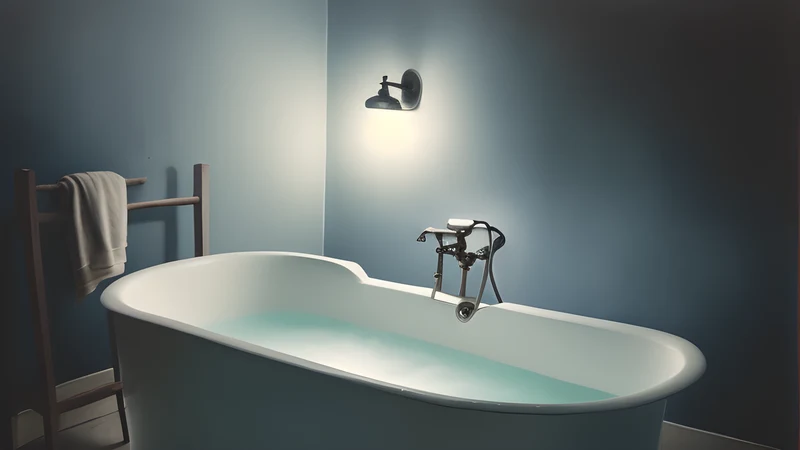
You are away from home on business, in a city you do not know, and you stop for a drink at the hotel bar. A charming stranger buys you the next one. The evening goes warm and blurred, and then there is a gap, and then you are waking, groggy and freezing, in a bathtub full of ice. There is a mobile phone balanced on the rim within reach, and a note written in an unfamiliar hand: do not move, call the emergency number now, your life depends on it. When the operator answers, she asks, as though she already knows, whether there is a tube protruding from your lower back. There is. She tells you, very calmly, that your kidney has been surgically removed, that you are one of many, and that an ambulance is on its way. It is a perfect little horror, and in the late 1990s it arrived in millions of email inboxes as a warning that all of this was really happening, right now, to travellers like you.
The email that went everywhere
The kidney heist is one of the first great legends of the internet age, and its vehicle was the chain email. Sometime around 1996 and 1997 a message began circulating under headers like “Travelers Beware”, written in the urgent register of an official alert and often claiming to come from a police department or a company’s travel-security office. It described the bathtub, the ice, the phone, the note, and it urged recipients to forward it to everyone they knew, which of course they did, because the request to spread the warning was built into the warning itself. The story frequently named a specific city, very often New Orleans, and sometimes attached a fabricated case number or the name of a real-sounding organisation to lend it weight.
This was folklore adopting a new set of legs. The tale itself was older, told at dinner tables and repeated as something that happened to a friend of a friend, but email let it leap across the world in days and dressed it in the authority of the printed word. A story forwarded by your own colleague, under a subject line that looked official, carried a credibility that a spoken rumour never could. The recipients acted reasonably; they were people doing the sensible-seeming thing, passing on a safety warning to the people they cared about, and the legend exploited that decency to propagate itself with terrific efficiency.
What the authorities actually found
Because the email named real places and real-sounding institutions, real institutions eventually had to answer it, and their answers are the closest thing the legend has to a verdict. The New Orleans Police Department, exasperated by the volume of enquiries, stated plainly that it had never received a single report of anyone being drugged and relieved of a kidney in the manner described, in that city or any other. The National Kidney Foundation went further and publicly appealed for anyone who had genuinely been a victim of such a crime to come forward. Nobody did. In the years since, across every jurisdiction where the story has circulated, no verified case has ever surfaced of a traveller ambushed, anaesthetised, and surgically harvested by an organ-theft ring operating out of a hotel.
The medical reality makes the scenario even less plausible than the empty police files suggest. A transplantable kidney cannot simply be cut out and sold to whoever wants one. The organ has to be tissue-matched to a specific recipient, removed under sterile surgical conditions, preserved and transported within a tight window of hours, and transplanted into a patient who will need a lifetime of immunosuppressant drugs and specialist care. The idea of a criminal gang performing clean nephrectomies in hotel bathrooms and then locating compatible buyers overnight collapses under the weight of its own logistics. This is a story that requires you not to think about how transplantation actually works, and told well, in the dark, it makes sure you do not.
The grain of truth it grows around
None of this means the underlying anxiety is baseless, and here the legend earns a measure of its power, because organ trafficking is a real and documented crime. It looks nothing like the bathtub, and it is real. Around the world there are confirmed cases of impoverished people being paid or coerced into selling a kidney to a wealthier recipient through corrupt clinics and brokers, in a black and grey market that has operated in parts of South Asia, the Middle East and Eastern Europe. There have been prosecuted scandals involving clinics that arranged such transactions. The trade in human organs is genuine, and it is exploitative, and it preys on the poor.
The legend takes that real horror and inverts its victim. In the documented trade the person who loses a kidney is almost always poor, often desperate, sometimes deceived about the terms, and the beneficiary is wealthy. In the legend the victim is a prosperous business traveller, and the crime is a random ambush that could happen to anyone with a hotel reservation. The story lifts the reality of organ trafficking out of the slums and clinics where it actually occurs and relocates it to the minibar and the conference-town bar, transforming a crime of poverty into a threat aimed squarely at the comfortable people most likely to be reading the email. That relocation is the whole tell of a folk legend at work, taking a distant and structural evil and reshaping it into a personal danger that stalks the listener directly.
Why the body is the perfect target
The kidney heist belongs to a family of legends that folklorists have long grouped together, the tales in which the body itself is stolen, invaded or commodified, and it shares that unsettling territory with older stories of grave robbers and resurrection men who supplied anatomists with corpses. What gives the modern version its charge is the sense that in a global market everything, including your own organs, has a price and a buyer somewhere, and that you might be worth more disassembled than whole. It speaks to a late-twentieth-century unease about commerce reaching all the way into the flesh, about being reduced from a person to a set of harvestable parts.
There is also the specific violation of waking up altered. The victim does not die; the victim survives to discover that something has been taken from inside them while they were unconscious and helpless, that their body was opened and closed without their knowledge or consent. That is a primal dread, the loss of control over the one thing that is supposed to be inalienably yours, and it is close kin to the anxieties that animate legends of the operating table and the anaesthetic. Anaesthesia is genuinely a small surrender of the self, an hour of trust in which you hand your unconscious body to strangers, and the kidney heist takes that ordinary vulnerability and imagines it betrayed in the worst way.
The fear of the unfamiliar city
Look at the setting the legend almost always chooses, and its real subject comes into focus. The victim is a traveller, away from the protections of home, in a city whose rules and dangers they do not know, trusting hotels and bars and strangers because travel requires it. The charming person at the bar, the accepted drink, the lowered guard: the story punishes the small trusts that make travel possible, and it is especially pointed about the trust extended to an attractive stranger, laced through with an old suspicion of desire as a trap. To travel is to be temporarily without your usual defences, and the legend fastens on exactly that exposure.
Told at the height of the business-travel boom, when more ordinary people than ever were flying to unfamiliar cities and staying in anonymous hotels among strangers, the kidney heist gave that new and slightly disorienting way of life a monster of its own. It sits alongside other legends of the vulnerable traveller and the predatory road, sharing a nervous system with tales like the killer hidden in the back seat of the car and, in its bathtub-and-ice imagery, with the parallel retelling of the same story as the bathtub full of ice. All of them worry at the same nerve, the danger of being alone and unguarded in motion, far from anyone who knows your name.
From dinner table to cinema screen
The kidney heist arrived in the email era already well worn; it had been circulating orally for years before it found its way into anyone’s inbox, and its passage through popular culture helped fix its shape. The folklorist Jan Harold Brunvand, who has done more than anyone to catalogue modern legends, tracked the organ-theft story as it moved through the rumour circuit, noting the tell-tale signs of a folk narrative: the friend-of-a-friend victim, the shifting but always specific location, the way each teller swore the events were recent and local. It carried the same fingerprints as every legend in his collections, and it behaved exactly as folklore behaves, growing more vivid and more circumstantial with each retelling even as it grew no more true.
Screen and television then loaned the story their glamour and their apparent authority. Plots turning on stolen organs appeared in films and in episodes of crime dramas through the 1990s, and the 1998 horror film built entirely around campus folklore gave the tub of ice a place in the era’s shared vocabulary of scares. Once a legend has been dramatised by professional storytellers, it acquires a strange second life: viewers half-remember the scenario as something they heard was real, the fictional treatment and the forwarded warning blurring together in memory until nobody can say where they first encountered it. The cinema did not invent the kidney heist, but it burnished it, and a burnished legend is a durable one.
The chain email then supplied the final ingredient, which was scale. Where an oral legend spread at the speed of conversation and a film reached whoever bought a ticket, the forwarded warning could cross the planet in a weekend and arrive wearing the borrowed uniform of officialdom. Every element of the classic chain message was present: the claim of an authoritative source, the vivid and specific danger, the moral pressure to protect others by passing it on, and the absence of any way for the recipient to check. It was, in effect, a self-replicating unit of fear, optimised by countless small edits along the way to be maximally alarming and maximally shareable, and it prefigured the viral misinformation that would later travel the same way through social media.
What it leaves behind
The kidney heist has faded from the inbox as the chain email itself has faded, but it never fully disappears; it resurfaces periodically in new wrappers, a viral post, a warning shared on social media, a plot device in a film, because the fears it serves have not gone anywhere. We still travel among strangers. The organ trade is still real, still exploitative, still mostly invisible to the people the legend frightens. And the body is still, in an age that can price and transplant its parts, an object of a particular modern unease about where the market ends.
To trace the legend is to see how a story can be entirely false in its facts and entirely honest about its feelings. There is no bathtub, no ambush, no ring of surgeons harvesting tourists, and the police files are empty and will stay empty. But the dread the story carries, of a world in which your unguarded body might be worth more in pieces, of the small betrayals that trust makes possible, of waking to find that something has been taken while you slept, is real and old and human. The kidney heist survives because it gives that dread a shape you can hold, a note on the rim of a bathtub, and once you have heard it you cannot quite check into a strange hotel again without the story checking in beside you.
Related Content