The Jersey Devil: How a Colonial Grudge Grew Wings
Before it had wings and a horse's head, the devil of the Pine Barrens was a slandered almanac-maker and the enemies who wanted him damned
Contents
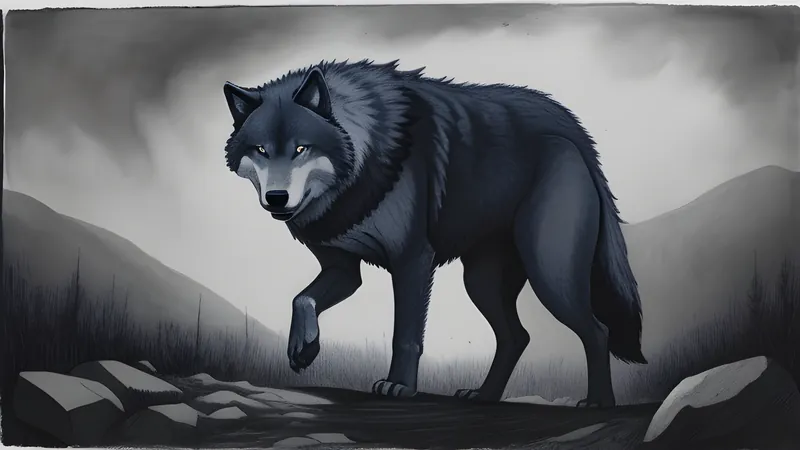
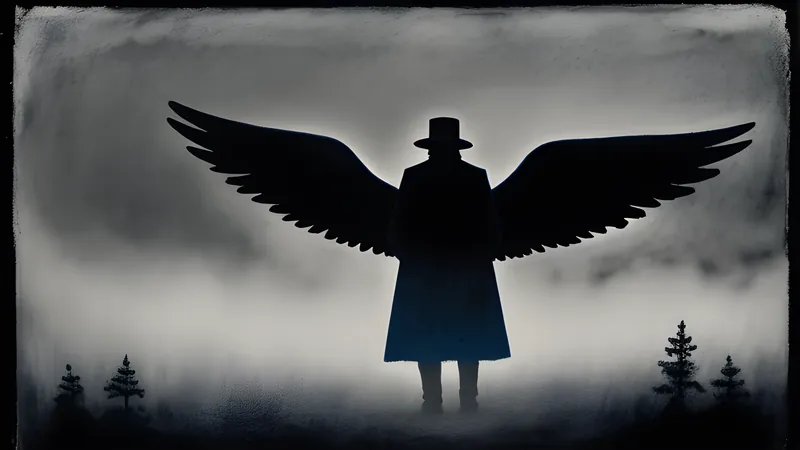
The story that survives has a shape you could carve on a tavern sign. A woman known only as Mother Leeds, living deep in the New Jersey Pine Barrens sometime around 1735, learns she is pregnant with her thirteenth child. Worn down by the twelve already at her skirts, she curses the coming baby aloud: let this one be a devil. The child is born ordinary enough, and then, in the space of a few breaths, it changes. It grows a horse’s long face, leathery wings, cloven hooves and a forked tail. It shrieks, beats its wings, kills or maims the midwives, and vanishes up the chimney into the pines, where it has haunted the sandy forest and its scattered villages ever since.
It is a good story, told well for close to three centuries, and almost none of it happened. What did happen was slower, meaner and more human than a birth-night transformation. The creature that New Jersey now sells on beer labels and hockey jerseys began as a piece of colonial character assassination, aimed at a real family with a real surname, by neighbours who genuinely believed the man they were attacking kept company with the Devil. Trace the legend back far enough and the wings fall away, and what is left is a printer, an almanac and a grudge that outlived everyone who held it.
The man they called Satan’s harbinger
Daniel Leeds arrived in the Province of West Jersey around 1677, a Quaker from England who settled in Burlington County and took up surveying and, before long, publishing. In 1687 he brought out one of the earliest almanacs printed in the American colonies, and that almanac is where his troubles started. Leeds filled it with the ordinary furniture of the genre, tide tables and planting dates, but also with Christian astrology, the influences of the planets and a good deal of cosmological and angelic speculation drawn from his reading of Renaissance occult philosophy.
To the strict Quaker meeting at Philadelphia, this was intolerable. The Society of Friends of that generation distrusted astrology as a species of pagan divination, an attempt to read fates that belonged to God alone. The meeting condemned the almanac and had unsold copies suppressed. Leeds, humiliated, did not fold. He turned on his former community with the energy of a convert in reverse, publishing pamphlets that attacked leading Quakers by name, mocking their theology and their politics, and aligning himself with the Anglican and proprietary factions who were the meeting’s rivals for control of the colony.
The Quakers answered in kind. In print they branded Daniel Leeds a blasphemer and an apostate, and one of their writers gave him the epithet that would matter most: “Satan’s harbinger.” Here is the detail the historian Brian Regal, who reconstructed this history with Frank J. Esposito in their 2018 book The Secret History of the Jersey Devil, fixes on. The association between a Leeds and the Devil was manufactured deliberately, in pamphlets, by educated men who used the language of damnation as a weapon. The family name and the word “devil” were welded together in the public mind of the Delaware Valley long before anything with wings was ever reported over the pines.
There was one more gift the family unwittingly handed its enemies. The Leeds coat of arms carried three wyverns, the winged, two-legged dragons of English heraldry. A slandered family whose very crest displayed winged demons offered its accusers an image that all but drew itself.
When a printer became a ghost
The younger generation inherited the feud along with the printing press. Titan Leeds, Daniel’s son, kept the family almanac going into the 1730s, and in doing so ran headlong into a rival newcomer who understood the theatre of print better than almost anyone alive. Benjamin Franklin launched Poor Richard’s Almanack in 1732, and to clear the field of competitors he decided to have some fun at Titan Leeds’s expense.
Borrowing the astrological posturing the Leeds almanacs traded in, Franklin, writing as Poor Richard, solemnly predicted that Titan Leeds would die at a precise hour on 17 October 1733. Leeds, very much alive, printed a furious rebuttal calling Franklin a fool and a liar. Franklin’s response was a small masterpiece of comic cruelty. The real Titan Leeds, he insisted, must indeed have died on schedule, because the courteous man he had known would never have written anything so rude; therefore the almanac now appearing under the Leeds name was plainly the work of an imposter, or of Leeds’s own ghost, still scribbling from beyond the grave. Franklin kept the joke running for years.
The practical effect went beyond selling almanacs. A second Leeds had now been publicly turned into an unquiet spirit in the most widely read pamphlets in the colonies, by the most famous printer in America. The family name, already yoked to Satan by the Quakers, was now yoked to a phantom by Franklin. Two separate campaigns of ridicule, decades apart, had done the imaginative groundwork. All that remained was for folklore to give the accumulated slander a body.
The devil the pines needed
The Pine Barrens made a natural home for it. This is a stretch of well over a million acres of sandy, acidic pine forest covering much of southern New Jersey, too poor for good farming and long avoided by the prosperous towns on its edges. Its people worked bog-iron furnaces, burned charcoal and gathered cranberries, and to outsiders they were an object of suspicion and contempt, dismissed with the sneering label “pineys.” A remote, poor, half-mapped forest full of people the coastal gentry looked down on was exactly the sort of place a settled community likes to populate with monsters, because the monster does the work of the prejudice.
Regal’s research suggests that the semi-legendary Mother Leeds may trace to a real Deborah Leeds of Leeds Point, in the Barrens, whose husband Japhet’s 1736 will names the twelve children she bore him. Add a folkloric thirteenth, a stormy night and a curse, and the “Leeds Devil” is complete: a name already meaning damnation, attached to a real family in the exact landscape people already feared. For most of the eighteenth and nineteenth centuries that is what it was called, the Leeds Devil, a local bogey known chiefly in the counties around the Barrens.
The name we use now, and much of the modern legend, hardened in a single extraordinary week. Between roughly 16 and 23 January 1909, a wave of sightings swept the Delaware Valley across New Jersey, Pennsylvania and Delaware. Newspapers reported strange hoofed tracks in the snow, crossing fences and rooftops in defiance of ordinary anatomy, and hundreds of people claimed to glimpse a flying, hoofed, screaming thing. Some mills and schools closed. Armed men patrolled trolley lines. The Philadelphia press ran the story hard, and it was in this frenzy that “Leeds Devil” gave way to the broader, catchier “Jersey Devil.”
The panic was also, in part, worked. A Philadelphia dime-museum press agent named Norman Jefferies saw an opportunity and seized it. Together with an associate he procured a kangaroo, fitted it with fake wings and brass-tipped claws, painted it up, and exhibited the creature as a captured Jersey Devil at the Arch Street Museum, drawing paying crowds. Jefferies later cheerfully confessed the whole thing. The 1909 wave, which did more than any other event to fix the creature in the American imagination, was thus a genuine mass fright with a costumed marsupial standing in for its climax.
What the story was really carrying
Strip the legend to its load-bearing parts and it turns out to have been carrying people’s contempt for one another the whole time. The Quakers used the Devil to damn a religious apostate who had embarrassed them in print. Franklin used a ghost to bury a business rival for a laugh. And the wider society of the Delaware Valley used the finished monster to explain, and to look down on, a poor forest and the people who lived in it.
That last function outlived the colonial quarrel by generations. In the early twentieth century the Barrens became a target of the era’s ugly enthusiasm for eugenics. Fieldworker Elizabeth Kite produced a 1913 report, The Pineys, portraying the forest’s inhabitants as degenerate and feeble-minded, and Henry Goddard’s notorious study of the pseudonymous “Kallikak” family drew on the same region to argue that poverty and vice were bred in the blood. The Jersey Devil and the piney libel grew up together and reinforced each other. Both told comfortable outsiders the same reassuring thing: something is wrong out there in the pines, and it is not our doing.
Seen that way, the creature belongs to a recognisable family of stories in which a place or a people gets a monster attached to it by those who fear or resent them. It shares that lineage with the Flatwoods Monster, another rural American fright shaped as much by who was watching as by what was there, and with the winged omen of Mothman, whose appearance a whole town read as a warning about itself. The wings and the horse’s head are the least interesting thing about any of them. What matters is the anxiety they were built to carry, and in the Jersey Devil’s case that anxiety has a paper trail running straight back to a Burlington County print shop and a Quaker meeting that wanted a rival damned. For a fuller sense of how a genuinely unknown regional creature gathers reports without ever resolving into a body, the parallel with Cornwall’s Owlman of Mawnan is worth following.
The grudge that grew wings
There is a temptation, having taken the story apart, to feel that something has been spoiled, that a fine old monster has been reduced to a footnote in the history of colonial pamphlet wars. I would put it the other way round. The Jersey Devil is more interesting once you can see the human machinery inside it, because that machinery is still running. Communities still turn their neighbours into demons with words, still attach the resulting monsters to the places they would rather not understand, and still find a costumed kangaroo, in some form, to sell tickets to the fear.
Daniel Leeds died in 1720, decades before any curse was supposed to have been uttered over a thirteenth child. He never knew that the insult flung at him by the Philadelphia meeting would take flight, gather a horse’s skull and a forked tail, and outlast his almanacs, his pamphlets, his surveying and his name in every honest sense. The devil of the Pine Barrens is his monument, built by his enemies out of nothing more supernatural than resentment, print and the human need to point at the dark trees and say that whatever is wrong began over there.
Related Content