The Jersey Devil and the Leeds Family
How a colonial almanac feud grew wings over the Pine Barrens
Contents
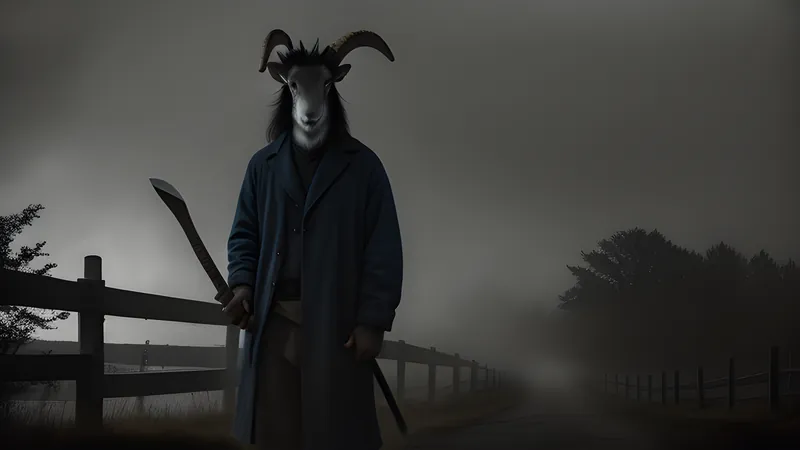
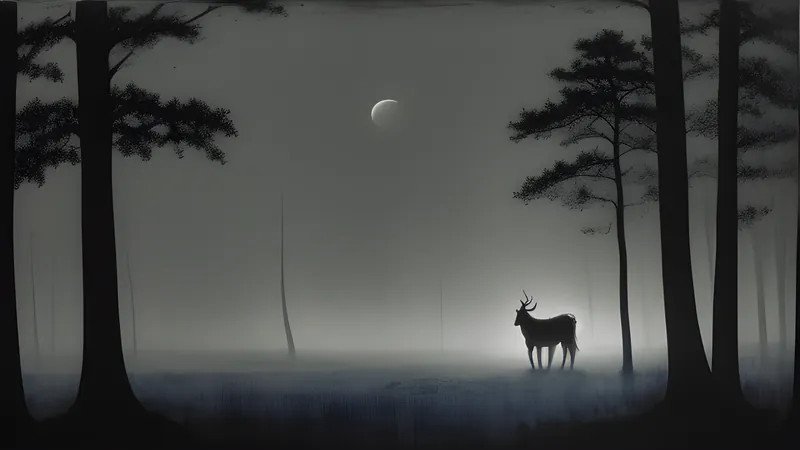
The story, at its best, is told at a kitchen table with the wind up in the pines. In 1735, on a farm deep in the New Jersey Pine Barrens, a woman known only as Mother Leeds was pregnant with her thirteenth child. Twelve had already worn her out. On a storm-lashed night, exhausted and cursing, she cried that this one could be the Devil for all she cared. The child was born ordinary, and then it changed: the body lengthened, leathery wings unfolded, the face stretched into a horse’s head, the feet hardened into cloven hooves. It let out a scream, beat its wings, and flew up the chimney and out over the cedar swamps, where it has haunted the Barrens ever since.
It is a very good horror story, complete in a single breath. What makes it more interesting than most is that a real family, a real feud, and a real almanac lie underneath it, and the outline of the monster fits them with unsettling neatness. Most Barrens households could once name the farm where Mother Leeds was supposed to have laboured, and could argue about whether the thirteenth child was the fault of the mother’s curse or of a passing clergyman’s. The specificity is part of the spell. A monster with an address is far harder to dismiss than one that merely lurks.
The family that was actually there
There genuinely were Leedses in the Pine Barrens, and their name sits on the map to this day. Leeds Point, in what is now Atlantic County, takes its name from Daniel Leeds, an English Quaker who arrived in the colony of West Jersey in 1677 and acquired a substantial tract of land. Daniel was a surveyor, a landowner, and above all a printer, and it was the printing that made him notorious.
In 1687 Leeds began publishing an almanac, the standard general-purpose book of the American colonies, carrying calendars, tide tables, weather guesses and, crucially, astrological content. To predict the year by the position of the planets was routine almanac fare, but Leeds was a Quaker in a Quaker-governed colony, and the Society of Friends took a dim view of astrology as dabbling in the occult. His own community forced the first almanac to be suppressed and its unsold copies collected and destroyed. Leeds, stung, doubled down. Over the following years he drifted toward the Church of England, wrote furious pamphlets against his former co-religionists, and picked up a nickname among the Quakers he had scorned: an evil man, an agent of darkness, a friend of the Devil. One Quaker rebuttal reportedly branded him “Satan’s Harbinger”, a phrase that would have felt cheap at the time and prophetic in hindsight.
By the standards of colonial religious politics this was ordinary invective. But Daniel Leeds had also chosen a family emblem that would haunt his descendants. The Leeds crest carried a wyvern, a heraldic dragon with wings and clawed feet, and it appeared on the almanacs themselves. A printer accused of consorting with the Devil, publishing a book stamped with a winged dragon: the ingredients of a legend were already sitting on the same page. The heraldry mattered because almanacs were among the few printed objects a rural family might actually own, read aloud, and keep. Whatever image sat on the cover travelled into thousands of homes and lodged there.
The feud that Franklin sharpened
The almanac passed to Daniel’s son Titan Leeds, and here a far more famous printer enters the story. In the 1730s Benjamin Franklin launched Poor Richard’s Almanack in Philadelphia, straight into competition with the established Leeds almanac across the river. Franklin, always happy to sell copies through mischief, ran a satirical hoax: he used mock-astrology to predict the exact date and hour of Titan Leeds’s death, presenting it as a sad but scientific inevitability.
When the date passed and Titan Leeds carried on living and, worse, carried on publishing angry rebuttals, Franklin refused to concede. Poor Richard mournfully explained that his dear friend must indeed have died on schedule, and that the person still printing under the Leeds name was therefore an impostor, or a ghost, a spirit refusing to accept its own demise. For years Franklin publicly treated a living rival as a revenant. To a reading public already primed by decades of Quaker pamphlets calling the Leeds family diabolical, the printer of New Jersey was now, in the pages of the most popular almanac in America, a walking dead man.
This is the case laid out most fully by the historian Brian Regal of Kean University, who spent years excavating the Leeds paper trail. His argument is that the monster we call the Jersey Devil began as a slur. The “Leeds Devil” was a political and religious insult aimed at a real dynasty of printers, and only much later did the insult sprout wings, hooves and a chimney to fly out of. Regal traces how the family, once prominent, dwindled in local standing over the eighteenth century, until the name Leeds carried more menace than money. When a surname decays from respectable to sinister, the folklore that clings to it curdles in the same direction.
Where the record ends and the wings begin
The fork is easy to see once the family history is in front of you. Daniel and Titan Leeds were flesh-and-blood colonial figures with land, presses and enemies. There is no Mother Leeds in any parish register, no cursed thirteenth birth, no creature in a contemporary court record or diary from 1735. The date attached to the birth is suspiciously tidy, and the number thirteen does the obvious folkloric work of marking the child as damned before it draws breath. Some tellings even name the father as a British soldier or the child’s deformity as punishment for the mother’s supposed Tory sympathies, which slides the curse conveniently onto whichever outsiders the teller most disliked.
What happened between the real Leeds feud of the early 1700s and the fully formed monster is a slow accretion. The “Leeds Devil” survived as a piece of regional lore through the eighteenth and nineteenth centuries, the sort of thing Barrens families told to frighten children away from the bogs. The name gradually shifted from a specific family to the whole of the state, and the creature acquired its now-standard anatomy: kangaroo-like body, horse’s head, bat wings, forked tail, blood-curdling cry. The folklorist Charles Skinner recorded versions of the tale in his American Myths and Legends in 1903, by which point it was firmly a supernatural beast rather than a maligned neighbour. Even Joseph Bonaparte, the exiled elder brother of Napoleon who kept an estate near Bordentown, was later woven into the legend as a witness, the kind of celebrity endorsement a good story attracts long after the fact.
The week the whole valley saw it
Then came January 1909, the single event that turned a local bogey into a household name across the Delaware Valley. Over roughly a week, newspapers in Philadelphia, Camden, Trenton and the surrounding towns filled with reports of a winged creature. People described strange hoofprints in the snow crossing rooftops and fields, prints that stopped and started as if the thing had taken flight. Trolley cars were said to have been buzzed by it; factory workers claimed to have driven it off; a Philadelphia posse went hunting. Schools and businesses reportedly closed as the panic spread, and armed men patrolled some towns after dark.
The 1909 flap has all the markings of a self-feeding media event. Each new sighting was printed, each printing produced fresh sightings, and enterprising showmen leapt in. A Philadelphia museum notoriously exhibited a captured “Jersey Devil” that turned out to be a kangaroo fitted with fake wings and painted claws, a hoax in the grand tradition of the Fiji mermaid and Barnum’s grift. By the end of the month the excitement had burned out, but the name “Jersey Devil” had stuck to the whole region, and the creature had graduated from folklore to modern legend. The book that fixed the canonical version for later generations, The Jersey Devil by James McCloy and Ray Miller, arrived in 1976 and remains the standard popular account. What the 1909 wave really demonstrates is how a shared name lets a scatter of ordinary night-time frights, a fox track here, a heron’s cry there, cohere into a single monster that everyone was suddenly seeing at once.
The monster that would not settle down
Sightings never entirely stopped. Through the twentieth century the Jersey Devil was blamed for slaughtered livestock, odd tracks and screams in the dark across South Jersey, and reports still trickle in today from hikers and hunters in the state forest. What is striking is how the described creature keeps adjusting to its audience. In the era of witch-fear it was a demon; in 1909, the age of the newspaper monster and the travelling menagerie, it acquired a kangaroo’s body and a showman’s exhibit; in the late twentieth century it drifted toward the same tall, dark, ambiguous shape claimed for Bigfoot and its footprint that walked into America. A legend that survives does so by staying loosely drawn, keeping just enough outline for each generation to fill with its own fears.
The folklorist’s interest is less in whether anything crosses those cedar swamps than in why the story refuses to lie still. A creature specific enough to have a birthplace, a mother and a family name, yet vague enough to be a demon one century and a hairy hominid the next, is a near-perfect vessel. It can absorb a religious quarrel, a printer’s joke, a region’s bad reputation and a modern hiker’s unease, and hand each of them back as a single scream in the pines.
What the Barrens were really carrying
Strip away the wings and the story is doing very old work. The Pine Barrens were, for centuries, exactly the kind of place a monster needs: a vast, sandy, thinly settled expanse of cedar swamp and scrub pine where the soil grew almost nothing profitable and where outsiders got lost. The people who lived there, the so-called “Pineys”, were stereotyped by townsfolk as inbred and degenerate, a slander sharpened in the early twentieth century by the eugenics movement, which produced pseudo-scientific studies such as the notorious “Kallikak” report presenting Barrens families as a hereditary warning. A wilderness feared by the surrounding towns tends to be furnished with a beast, and the Jersey Devil furnished this one. The monster was, among other things, a way of saying that the Barrens and the people in them were dangerous and other.
The legend also carries the sediment of colonial religious conflict, preserved in amber. The Quaker establishment needed to mark Daniel Leeds as an enemy, and the language of the Devil was the sharpest tool available. Franklin needed to sell almanacs and enjoyed a good literary murder. Each of them, for reasons that had nothing to do with any monster, kept the phrase “Leeds Devil” alive and attached it to a family whose crest happened to be a dragon. Folklore is often like this: a durable image survives long after everyone has forgotten the quarrel that produced it, and later generations, finding a winged devil with no explanation attached, invent a cursed birth to account for it.
There is a further reason the story endures. It gives the Barrens a guardian. A place that the wider world dismissed as empty and worthless has, in the Jersey Devil, a figure that belongs to it and to no one else, a piece of identity that Atlantic City casinos and New Jersey hockey teams have both been happy to borrow. The creature that began as an insult became, over three centuries, a source of local pride, which is one of the stranger arcs a slander can take.
When the pines close over the sand roads and something screams in the dark, the story of Mother Leeds is ready and waiting, older and more useful than any answer. It survives because it holds so much at once: a real family’s disgrace, a printer’s cruel joke, a feared and slandered landscape, and the human habit of turning the people we have decided to fear into monsters, then forgetting we ever did the deciding. The winged thing over the cedar swamps is the shape all of that took when it finally grew a body of its own.
For related American bogeys built from grudge and geography, see how a colonial grudge grew wings in another telling of the Jersey Devil, and how the Snallygaster began as a Maryland newspaper hoax.
Related Content