The Highgate Vampire: A Cemetery Panic in 1970s London
Two rival ghost-hunters, one television broadcast and a mob that showed up on Friday the 13th with stakes.
Contents
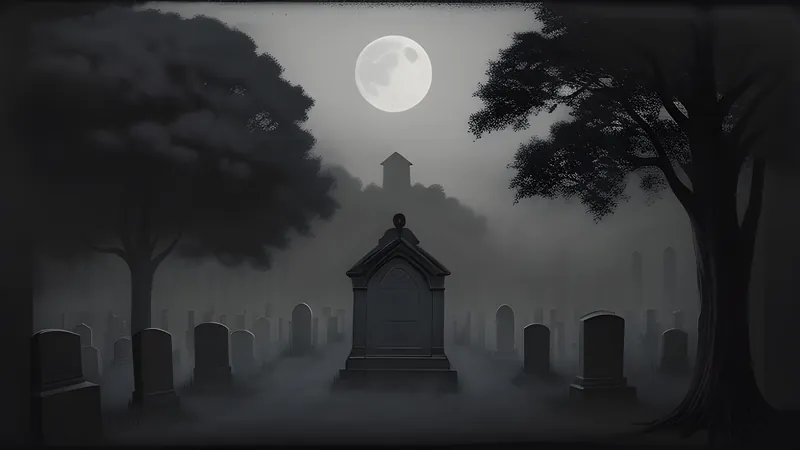
On the night of Friday, 13 March 1970, a crowd of several hundred people climbed the walls of Highgate Cemetery in north London, some carrying wooden stakes, crucifixes and garlic, hunting a vampire that a television programme had told them was loose among the tombs. Highgate is not a Transylvanian ruin. It is a thoroughly Victorian burial ground, opened in 1839 as one of London’s first great garden cemeteries, terraced up a hillside in Egyptian- and Gothic-revival stonework, and by 1970 its western half had been closed for over a decade, left to subside gently into ivy and collapsing vaults. That neglect is precisely what made it so easy to believe something had moved in. What actually happened at Highgate that winter is a case study in how a ghost story gets made, in real time, by two men who could not stand each other and a press that could not resist either of them.
What the cemetery actually looked like in 1969
By the late 1960s Highgate’s older, western section had been effectively abandoned by its cash-strapped management company, and the result was a landscape that looked, to any passer-by, exactly like the setting of a horror film that had not yet been written. Tombs slumped at angles as tree roots heaved the ground beneath them. Ivy had swallowed whole rows of headstones. Vandals and local teenagers used the overgrown paths as a shortcut and a dare. Local ghost stories had circulated around the cemetery for years before 1970 in the loose, half-serious way such stories attach to any large derelict Victorian site — a grey lady here, a figure glimpsed among the graves there — the ordinary background hum of urban legend that clings to abandoned places rather than anything organised or widely reported.
That changed once two self-styled vampire hunters started publicly competing to be the man who found what was really haunting Highgate.
The feud: Manchester versus Farrant
Sean Manchester, then in his mid-twenties and already positioning himself as an authority on the occult, and David Farrant, president of a group he called the British Psychic and Occult Society, both began independently investigating reports of a spectral figure at Highgate around 1969. The two accounts diverge sharply from there, and reconciling them is largely impossible because both men spent the following four decades contradicting each other in print, on television and eventually in court. Farrant wrote to the local paper, the Hampstead and Highgate Express, in February 1970 describing a “grey figure” he and companions claimed to have seen gliding among the graves, and invited other witnesses to come forward. Manchester, working a separate and rival track, claimed a far more elaborate history: that the cemetery’s apparition was in fact a genuine vampire, a mediaeval nobleman brought to England from Wallachia in a coffin in the eighteenth century and revived by Satanist rituals conducted at the site in the twentieth. Manchester’s version borrowed the vocabulary of Bram Stoker’s Dracula wholesale, giving London tabloids a much more marketable story than Farrant’s comparatively vague “grey figure.”
Both men were, by any reasonable reading, performing for an audience as much as investigating anything, and their rivalry over who would be recognised as Highgate’s genuine expert hardened into open personal hostility that outlasted the panic itself by decades — the two later traded libel suits, and Farrant would eventually serve a prison sentence in the mid-1970s on unrelated charges connected to interfering with graves at the cemetery, a conviction Manchester’s camp treated as vindication and Farrant always maintained was politically motivated by their feud.
The broadcast that lit the match
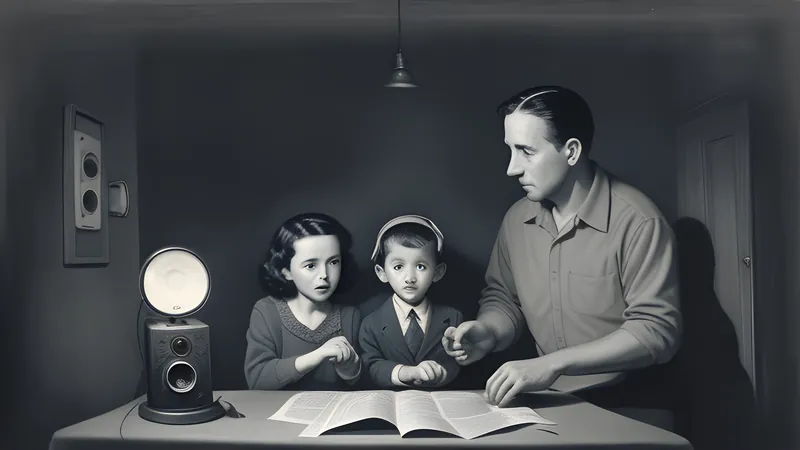
The pivotal moment was a television appearance rather than any fresh sighting. On 13 February 1970, roughly a month before the mob descended, Manchester and Farrant were separately interviewed for a segment on Thames Television’s regional news programme Today, each describing supernatural activity at Highgate Cemetery to a London-wide audience. The broadcast did what local ghost stories in a parish newsletter never could: it put the word “vampire” and the name “Highgate Cemetery” in front of hundreds of thousands of ordinary Londoners on their television sets in one evening, framed as a live, current, ongoing mystery. Local and national newspapers picked the story up within days, each retelling adding a little more colour, and the story metastasised from a regional oddity into a genuine tabloid sensation over the following four weeks.
By the time Friday the 13th arrived the following month — a date whose superstitious weight needed no further embellishment — the story had built its own momentum entirely independent of anything happening at the cemetery itself. Farrant had publicly called for a mass vigil to confront the vampire that night; whether or not he anticipated the scale of what actually showed up, several hundred people arrived, some scaling the walls after the gates were locked, and police were called to manage a crowd that press reports the following day described, with evident relish, as a chaotic scene of amateur vampire hunters trampling graves in the dark. Genuine damage was done to the cemetery in the following months — tombs broken into, remains disturbed, at least one body reportedly found removed from its coffin and burned — vandalism that both Manchester and Farrant blamed on the other’s followers, and that most sober accounts attribute simply to the panic itself outrunning anyone’s control of it.
The staking that never quite stopped the story
Manchester did not let the story rest after the March mob dispersed. In August 1970 he claimed to have located the vampire’s coffin in a vault beneath the cemetery, entered it with a small group of followers, and performed a staking of the body inside — reported at the time in the Barnet Press and other local papers, complete with Manchester’s own account of a scorched, foul-smelling corpse. No independent body, photograph or forensic record from that night has ever surfaced beyond Manchester’s own description, and Farrant disputed the entire episode as theatre from the start. A second, more public exorcism followed in 1973 at a house in nearby Hornsey Manchester connected to the same case, this time attended by press photographers he had personally invited, producing images that ran in national tabloids the next morning. Whatever actually happened inside either building, the pattern is consistent: every fresh chapter of the Highgate story arrived through Manchester’s own account, timed and staged for maximum press coverage, rather than through any independent witness with nothing to gain from the telling.
The fork: performance dressed as investigation
The point at which the Highgate story departs from anything resembling a spontaneous folk legend is precisely identifiable, which is unusual for this kind of case. Most vampire and ghost folklore accumulates slowly, through generations of retelling with no single traceable origin. Highgate’s did not: it can be traced to two specific named individuals, a specific broadcast date, and a specific newspaper letter, all within a matter of weeks in early 1970. What began as a fairly ordinary “spooky derelict cemetery” local legend was deliberately escalated, by both Manchester and Farrant, into a much more dramatic supernatural narrative — Manchester’s mediaeval Wallachian nobleman, Farrant’s occult society investigation — because each man had something to gain from being recognised as the cemetery’s resident expert. The mob of 13 March was not really responding to a monster. It was responding to a media event that two rival showmen had spent a month building, each convinced the other was a fraud and each doing everything possible to out-publicise him.
This is, in miniature, a case where the “legend” and the manufactured celebrity of its investigators are inseparable — unlike, say, the Loch Ness Monster, where a famous 1934 photograph and its 1975 debunking are at least a step removed from the wider decades of ordinary sighting reports that continued regardless. At Highgate, take Manchester and Farrant out of the story and there is very little “vampire” left — just an overgrown Victorian cemetery and the diffuse, low-grade ghost stories such places attract everywhere.
Why a mob turned up with stakes
The willingness of several hundred ordinary Londoners to climb a cemetery wall at night in search of a vampire is, on its face, a strange thing for a modern city to produce, and it repays being taken seriously rather than mocked. Britain in 1970 was only a few years removed from Hammer Film Productions’ run of enormously popular Dracula films, several shot with genuine period trappings that had trained an entire generation of cinemagoers to find the imagery of stake, crucifix and moonlit tomb both frightening and thrilling in roughly equal measure. Television had, for the first time, made a specific real cemetery feel as immediate and act-upon-able as a Hammer set. And a crowd given permission — implicit in a TV broadcast, made explicit by Farrant’s public call to action — to treat a real anxiety as a game with rules everyone already knew from the cinema will often take that permission gladly, especially on a night whose date alone was already doing half the atmospheric work.
The same basic mechanism recurs whenever a private fear gets a public, ritualised outlet: compare how the Satanic Panic of the following decade took private anxieties about childcare and repackaged them, via media amplification and self-styled experts, into a nationwide moral crusade with its own rules and rituals. Highgate is the same shape at a much smaller, more local scale — a manageable, one-night, one-cemetery version of the pattern, driven by media amplification of two competing self-appointed experts rather than by any organised institutional panic.
What outlived the mob
Manchester and Farrant kept the feud alive for the rest of their lives, each publishing his own book-length account of “the Highgate Vampire” that contradicted the other’s on nearly every point of substance, and each continuing to give interviews into the 2000s reasserting his version as the true one. Farrant died in 2019, Manchester in 2022, and neither ever conceded an inch to the other publicly. Manchester founded his own “Highgate Vampire Society” in the wake of the 1970 panic and continued to hold himself out as a bishop of an independent church and an authority on vampirism for the rest of his life; Farrant, for his part, kept giving interviews describing his original “grey figure” as a genuine, if far less theatrical, paranormal encounter, insisting to the end that Manchester’s Wallachian-nobleman elaboration had hijacked and distorted whatever he had actually witnessed. Both versions are still recounted, uncritically, on the ghost-tour circuit that now operates around Highgate’s gates most weekends of the year. Highgate Cemetery itself, meanwhile, was rescued from its 1970s dereliction by the Friends of Highgate Cemetery Trust, formed in 1975, which has spent the decades since clearing the overgrowth, restoring what could be restored and turning the western section into a managed, ticketed, carefully conserved historic site — a transformation that has done more than any debunking to end the story, since a tended, guided, gated cemetery no longer looks like anywhere a vampire could plausibly be hiding.
What Highgate offers, more than most vampire legends, is a rare view of a myth’s entire manufacturing process caught on the historical record: a derelict setting, two men competing for authority over a story neither fully controlled, a single broadcast that turned a rumour into an audience, and a date on the calendar that supplied the atmosphere for free. Strip away Manchester and Farrant’s decades of mutual accusation and what remains is not really a story about a vampire at all. It is a story about how easily ordinary fear, given a stage, a rival pair of hosts and a good enough date, can organise several hundred people into acting out a script nobody quite wrote on purpose.
Related Content