The Hessdalen Lights: Norway's Recurring Anomaly
A Norwegian valley that has been glowing for forty years, watched by scientists the whole time
Contents
Most light mysteries are stories about the past. Someone saw something, once, and by the time the investigators arrive the sky is empty and there is nothing left to study but a memory and a smudge on a photograph. The valley of Hessdalen, in central Norway, is the rare exception. The lights there did not appear once and vanish into anecdote. They came back, night after night, for years, and they kept coming back long enough that scientists had time to haul cameras, radar, magnetometers and spectrum analysers up into the snow and point them at the sky before the show began. For once, the instruments were waiting when the anomaly arrived.
That single fact makes Hessdalen unusual and worth taking seriously. This is a phenomenon that has been observed, filmed, measured and argued over by named researchers for four decades, in a sparsely populated Norwegian valley of a few hundred people, and it remains only partly explained. The temptation, of course, is to leap from “partly explained” to “alien craft,” and a great many people made exactly that leap. The more interesting story is what the record actually shows, and where the honest uncertainty ends and the wishful thinking begins.
The valley that would not stop glowing
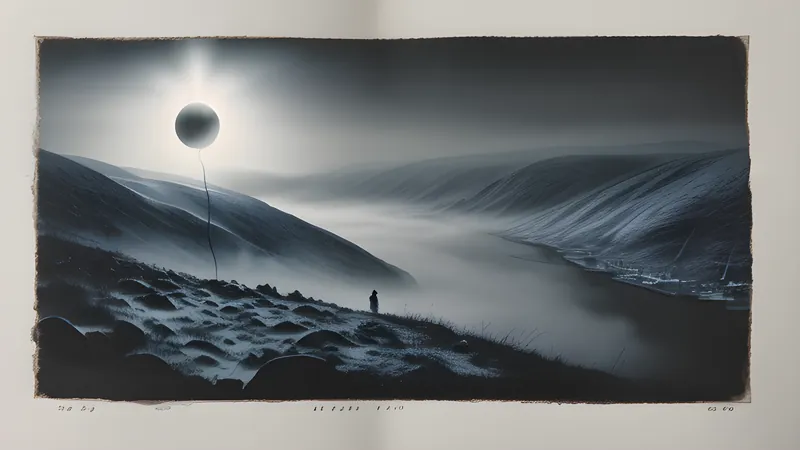
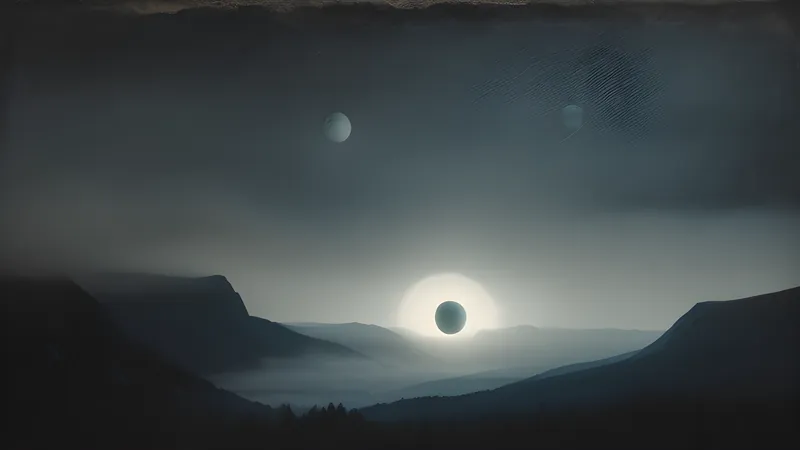
Hessdalen is a remote valley in the municipality of Holtålen, in the old county of Sør-Trøndelag, a place of forested slopes, scattered farms and long dark winters. Beginning around late 1981 and building through 1982, its residents started reporting strange lights with a frequency that turned a private oddity into a public event. At the peak, between 1982 and 1984, sightings were reported as often as fifteen or twenty times a week. The lights took several forms: brilliant white or yellow spheres, sometimes red, that might hang motionless above the valley floor for an hour, or drift slowly, or suddenly accelerate and streak across the sky. Some were described as bright enough to light up the ground beneath them.
This was not a matter of one or two excitable observers. Hundreds of sightings accumulated, reported by farmers, drivers and whole families, ordinary rural Norwegians with no particular investment in the paranormal. The sheer volume and persistence is what set Hessdalen apart from the usual pattern of a light seen once and gone. Something was genuinely happening in that valley, repeatedly, and it was happening on a schedule regular enough to be investigated.
The instruments in the snow
Here the story turns from folklore to fieldwork, and this is the part that deserves full credit. In 1983 a group of Norwegian and Swedish researchers, drawn from both scientific institutions and organised UFO study groups, launched Project Hessdalen under the direction of Erling Strand. In the winter of 1984 they mounted a serious field campaign, spending weeks in the cold valley with the best equipment they could assemble: cameras, a radar set, a seismograph, a magnetometer, an infrared viewer and instruments to analyse the spectrum of any light they caught. And they caught a great deal. Over the campaign they logged scores of observations, photographed lights, and, crucially, recorded correlations, occasions when a light seen by eye coincided with a radar return or a fluctuation on the magnetometer.
The work did not stop when the campaign ended. In 1998 Østfold University College established an automatic measurement station in the valley, a permanent, instrumented watchpost that could monitor the sky continuously without a human present. Through the 2000s the effort widened into international collaboration, notably the EMBLA project, which brought Italian researchers including the astrophysicist Massimo Teodorani into the valley. Their spectral analyses of the lights suggested the glow came from a hot, ionised gas, a plasma, rather than from any solid object or reflective surface. The valley even became a teaching ground: Østfold University College ran student field courses there, sending physics and engineering students to spend cold weeks learning to measure a real anomaly under real conditions, a rare chance to practise observational science on a target that refuses to perform on cue. This is a genuine, published, decades-long scientific engagement with an unexplained phenomenon, and it is the reason Hessdalen cannot be waved away as mass delusion. The valley really does produce lights, and instruments really do register them.
Forty years of watching
The intensity of the Hessdalen phenomenon has changed over time, and that pattern is itself part of the evidence. The frenzy of 1982 to 1984, with its fifteen or twenty sightings a week, gradually subsided, and by the 1990s the lights were being reported at a far lower rate, on the order of ten to twenty times a year. They never stopped entirely. The permanent automatic station, nicknamed the Blue Box, has logged luminous events across the intervening decades, and researchers have continued to hold field campaigns in the valley, sometimes recording lights on multiple instruments at once. The decline in frequency matters because a hoax or a fashion tends to collapse abruptly once attention moves on, whereas a natural process ebbs and flows with conditions. Something in Hessdalen rose to a peak, fell to a lower baseline, and has persisted at that baseline for a generation, which is the behaviour of a physical phenomenon rather than a rumour.
The instrumented observations have also ruled things out, which is often the quiet achievement of good fieldwork. The lights cannot be reduced to car headlights on a distant road, to aircraft, or to the moon behind cloud, the mundane explanations that dissolve most nocturnal-light reports, because the researchers have logged events that appeared on radar, registered on magnetometers, and shone from positions no road or runway could account for. Ruling out the ordinary is not the same as proving the exotic, and the Hessdalen scientists have been scrupulous about that boundary. But it does mean the residual phenomenon is real enough to survive the sceptic’s first and most powerful questions.
What the lights probably are
The leading explanations are natural, physical and, in their way, more remarkable than a spacecraft. The strongest candidates all involve the peculiar chemistry and geology of the valley itself. One influential hypothesis, developed by Italian researchers Jader Monari and Romano Serra and elaborated by the Norwegian engineer Bjørn Gitle Hauge, proposes that the valley floor acts as a vast natural battery. The rocks on one side of the valley are rich in copper and zinc, the river running through it carries sulphurous, acidic water, and the combination could, in principle, set up a natural electrochemical cell, a slow geological current capable of ionising dust and gas in the air above and making it glow.
Earth lights of this general kind have been reported from many geologically active or mineral-rich regions, and the idea that strain in rock can generate visible light in the air above has a long, contested scientific history. Other proposals point to different but related mechanisms: the ionisation of dust from radon gas, which is present in the valley’s rocks and decays radioactively; or luminous plasma generated by tectonic strain, the same broad family of processes invoked to explain other earth-light phenomena around the world. None of these has been confirmed to the exclusion of the others, and it is entirely possible that more than one is at work, or that the answer is something not yet formulated. The honest scientific position, held by the researchers themselves, is that Hessdalen is a real, recurring, natural phenomenon whose exact physics remains open. That plasmas and self-organising balls of charged air can behave in genuinely strange ways is well established; the long scientific reluctance to accept even ball lightning shows how hard the atmosphere’s rarer tricks are to pin down.
Where the story departs from the record
The fork in the Hessdalen story is the same one that appears in every earth-light case. The documented record says: recurring luminous plasma of uncertain but probably geological origin, filmed and measured over forty years. The folklore says: aliens. The leap from the first statement to the second is not supported by anything in the data, and it is worth being clear about why people make it anyway.
The lights do behave in ways that feel intentional. They hover, then dart. They seem to respond, on occasion, to observers, brightening or moving when watched, which any physicist will note is exactly what a poorly understood plasma in a turbulent, electrically active atmosphere might do without any intention at all. But “it moved when I looked at it” is a powerful experience, and the human mind is exquisitely tuned to read motion as agency. A light that changes when you attend to it feels like a light that knows you are there. From that feeling to “an intelligence is piloting it” is a very short step, and Hessdalen’s forty-year run has given people a great deal of time to take it.
The other engine of the alien interpretation is the valley’s remoteness and the researchers’ UFO-study origins. Because some of the early investigators came from ufology, the case was filed under “UFO” from the start, and that label carries its own gravity, pulling every subsequent observation toward the extraterrestrial. This is the same labelling effect that shaped how other genuine light phenomena were received, from the roadside glows of Texas explored in the Marfa Lights to the wartime glows that pilots called foo fighters, and it is remarkably hard to undo once it has set.
What the anomaly is really about
What makes Hessdalen so compelling is precisely the thing that makes it valuable: it is a real mystery, genuinely unresolved, being genuinely investigated. That combination is scarce. Most of what gets called “unexplained” is either explained on closer inspection or too thin to investigate at all. Hessdalen is neither. It offers the rare, honest spectacle of science standing in front of something it cannot yet fully account for, instruments running, hypotheses competing, and no one pretending to more certainty than they have.
The alien interpretation is best understood as an attempt to make that open question feel finished. An unexplained recurring light is unsettling in a specific way: it implies the natural world still contains processes we have not catalogued, that the sky over a quiet Norwegian valley can do things our physics does not yet cover. For some people that is exhilarating and for others it is intolerable, and the extraterrestrial hypothesis, oddly, soothes both, because it converts a genuinely open scientific problem into a familiar story with a known cast. “Aliens” is, in a sense, a way of closing the mystery, of trading the discomfort of “we don’t know” for the strange comfort of a narrative we have heard a thousand times.
The researchers who have spent four decades in that cold valley deserve the last word, because their patience is the opposite of the leap. They have filmed the lights, measured their spectra, proposed batteries and plasmas and radon, and declined, again and again, to claim more than the data allows. Hessdalen is what it looks like when curiosity is held steady over decades without being resolved into a slogan. The lights keep coming, the instruments keep watching, and the answer, when it arrives, will almost certainly be a piece of physics stranger and more specific than any spacecraft, discovered by people who were willing to stand in the snow and wait for the valley to glow again.
Related Content