The Great Sugar Cover-Up: How Fat Took the Blame
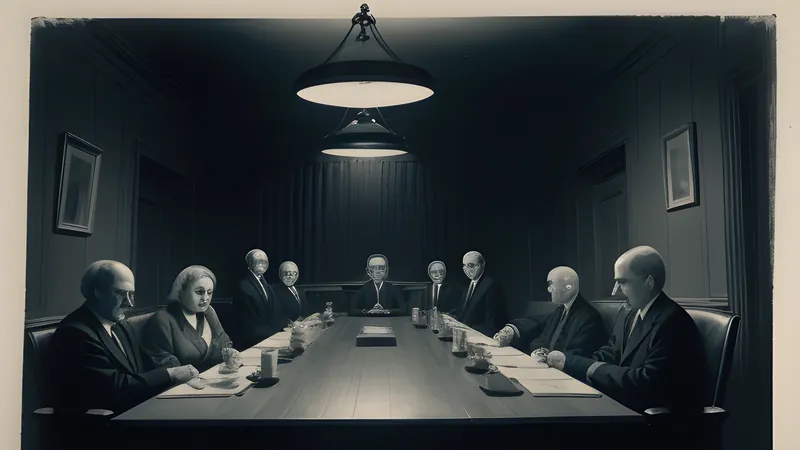
In 1967, three Harvard scientists were quietly paid to point the finger at fat.

Contents
In September 2016 a paper appeared in JAMA Internal Medicine that turned a decades-old suspicion into a documented fact. The author, a researcher named Cristin Kearns, had found a set of letters in the archives of a Boston nutritionist who had died in 2009. The letters were more than fifty years old, dry and businesslike, concerned with the funding of a scientific review. Read in sequence they told a small, precise, damning story: in the mid-1960s a sugar industry trade group had paid a group of Harvard scientists to write a review of the evidence on diet and heart disease, and the review had come out pointing the finger squarely at fat, and away from sugar. The scientists had not disclosed who paid them. The correspondence that would have revealed it had sat, unread, in a filing cabinet for half a century.
The letters in the filing cabinet
The trade group was the Sugar Research Foundation, the research and public-relations arm of the American sugar industry. In 1964 and 1965, as evidence mounted that sugar might be linked to coronary heart disease, the Foundation’s vice-president and director of research, a man named John Hickson, began looking for a way to shift the emerging consensus. His strategy, laid out in his own internal memos, was to “get [the] question of heart disease before the public” in a way that put the blame on fat and cholesterol rather than on sugar.
The instrument he chose was a literature review — a survey paper that weighs up the existing studies and tells readers what the science, taken as a whole, is really saying. Reviews are enormously influential precisely because they appear disinterested; they claim only to summarise. Hickson approached scientists at the Harvard School of Public Health: Frederick Stare, the founding chairman of its nutrition department and one of the most prominent nutrition figures in America, and two of his colleagues, D. Mark Hegsted and Robert McGandy. The project was given the internal designation Project 226.
The Foundation paid the group roughly 6,500 dollars — perhaps fifty thousand in today’s money — to produce the review. Hickson supplied the studies he wanted emphasised and made his expectations plain; in one exchange the scientists reassured him that they were aware of what the Foundation wanted and would deliver it. The resulting two-part review appeared in 1967 in the New England Journal of Medicine, then as now among the most authoritative medical journals in the world. It surveyed the evidence on diet and heart disease, treated the studies implicating sugar with pointed scepticism, and concluded that the only dietary change genuinely warranted by the evidence was cutting saturated fat and cholesterol. It did not disclose that the sugar industry had funded it, because in 1967 the New England Journal of Medicine did not require authors to declare their funding sources. The disclosure norm that would have exposed the arrangement did not yet exist.
Why it mattered who they were
The sting of the episode lies partly in the people involved. Frederick Stare was not a fringe figure; his department at Harvard was a centre of gravity for American nutrition science, and its pronouncements carried weight in the press and, indirectly, in policy. Mark Hegsted went on to a distinguished career and, in 1977, helped draft the first federal Dietary Goals for the United States — a foundational document in the country’s long campaign against dietary fat. That a scientist who had once been paid to downplay sugar later shaped national guidance emphasising fat is the detail that gives the story its charge, and it is the detail most likely to be stretched past what the record supports.
Kearns’s paper was careful about this. She did not claim that Project 226 had single-handedly redirected fifty years of nutritional science. She documented a specific, real instance of a funded conflict of interest producing a review that served its funder, and she placed it in the wider context of an industry that had spent decades doing this sort of thing — the broader machine I have traced in Big Sugar’s Playbook. The 2016 paper’s contribution was the paper trail: proof, in the industry’s own words, of intent and of payment, at a moment when the science was still genuinely open.
The 2016 paper did not arrive alone. It was accompanied in JAMA Internal Medicine by a commentary from the nutrition scientist Marion Nestle, a long-standing critic of food-industry influence on research, who used the occasion to make the wider point: that the Harvard episode was valuable less as a smoking gun than as a documented specimen of a general disease — the routine, quiet shaping of nutrition science by the industries whose products it studies. That framing is the responsible one, and it is worth holding onto, because the internet promptly discarded it in favour of something louder.
The fork: what the review did not do
Here is the point at which a real scandal grows a mythology, and it grows fast, because the real thing is so satisfying that the exaggeration slips past unnoticed.
The viral version of the story, which raced around the internet after 2016, runs like this: the sugar industry bribed Harvard, the bribe put fat in the dock for half a century, and therefore everything you were ever told about saturated fat being bad for your heart was a lie manufactured by Big Sugar. Every claim in that chain is a little larger than the evidence, and the last one is much larger.
Consider first the causal weight. A single 1967 review, however influential, did not create the postwar consensus against dietary fat. That consensus had deep and independent roots: the epidemiologist Ancel Keys and his Seven Countries Study, launched in the 1950s, had been building the fat-heart hypothesis for years before Project 226, on the basis of data that had nothing to do with the sugar lobby. The idea that saturated fat raised cholesterol and cholesterol raised heart-disease risk was the mainstream scientific position on its own momentum. The sugar-funded review pushed in a direction the field was already travelling; it did not carve the road. Historians of science and several nutrition researchers said exactly this when the 2016 paper broke — that Kearns had found a real and important document, and that treating it as the secret cause of an entire era of dietary advice was a serious overclaim.
Consider next the science itself. The claim that saturated fat is bad for the heart has not been shown to be a fabrication. It has been complicated — genuinely so, in the decades since, by better studies suggesting the picture is more nuanced than “fat bad” ever captured, that the type of fat and what replaces it matters, that refined carbohydrate and sugar deserved far more scrutiny than they got. That is real scientific revision, and sugar’s under-examination is part of the story. But “the science got more complicated” is a very different statement from “the science was a paid lie,” and the second does not follow from the 1967 letters. The tragedy of Project 226 is not that it invented a false villain out of nothing. It is that it helped keep a real second suspect out of the dock for a generation.
There is one more piece of context that the viral version tends to omit, and it complicates the villain neatly. The 1967 review was not an isolated purchase. Kearns and other researchers have since documented that the sugar industry funded a good deal of research in the 1960s and 1970s, and that some of the scientists it paid produced work that was, by the standards of the day, methodologically ordinary rather than fraudulent. Frederick Stare’s Harvard department received industry money from many quarters — sugar, but also cereal, dairy and others — a fact that was not secret at the time and that reflected how nutrition research was routinely funded in that era. This does not excuse Project 226; the specific intent and the specific suppression of disclosure are what set it apart. But it does mean the honest reading is not “one uniquely corrupt transaction poisoned the well” so much as “a whole system of funding was quietly compromising, and here is one especially clear case caught on paper.” The systemic version is less dramatic and more damning.
Distinguishing the crime from the conspiracy
It is worth being exact about what the documents prove and what they do not, because the precision is the whole point.
They prove that a trade group paid scientists to produce a review serving its interests, told them what it wanted, and got it, all without public disclosure. That is a documented conflict of interest of the clearest kind, and it exemplifies how funded bias worked in an era before disclosure rules — which is why JAMA Internal Medicine published it and why it deserves to be widely known.
They do not prove that the three scientists knowingly falsified data, that the New England Journal of Medicine was complicit, that the review was the load-bearing cause of American dietary policy, or that the anti-fat consensus was fraudulent at its foundation. Kearns’s own paper claimed none of these things. They are the accretions the story picked up as it travelled, each one making a genuine scandal into a more comforting one — comforting because a world in which one venal transaction explains all our confusion about diet is simpler than the real world, in which nutrition science is hard, funding is compromising in ways that are often invisible, and even honest scientists were wrong about important things for reasons that had nothing to do with sugar money.
What the story is really about
The reason this episode struck such a nerve in 2016, and keeps striking it, is that it lands on a real and reasonable anxiety: that the advice we build our lives around might be quietly bought. People have spent decades trimming fat from their diets on medical authority. To learn that a slice of that authority was, on one documented occasion, paid to point them in a particular direction is to feel the ground shift. The impulse to then distrust all of it is human and, in its way, rational — the same reasoning that, from the documented outrage of Tuskegee, built a wider medical mistrust that outran the evidence.
The corrective is not to dismiss the anxiety but to keep it proportionate. Funded bias is real, common, and worth being angry about; the disclosure rules that now govern medical journals exist in part because of episodes exactly like this one, which is a sign the system can learn. But the leap from “this review was bought” to “everything about fat was a lie” is the same overreach that turned the egg into a poison and then absolved it: a real scientific complication, dramatised into a simple betrayal. Three Harvard men took the sugar industry’s money and did what it wanted, and that is genuinely shameful and genuinely important. It did not, on its own, rewrite the diet of a nation. What it did was help ensure that when the nation went looking for a villain in its food, it looked at the butter and not the sugar bowl — for a good deal longer than the evidence ever justified.
Related Content