The Great Moon Hoax of 1835: The Bat-People of the Sun
How a New York newspaper populated the Moon with unicorns and winged men to sell papers
Contents
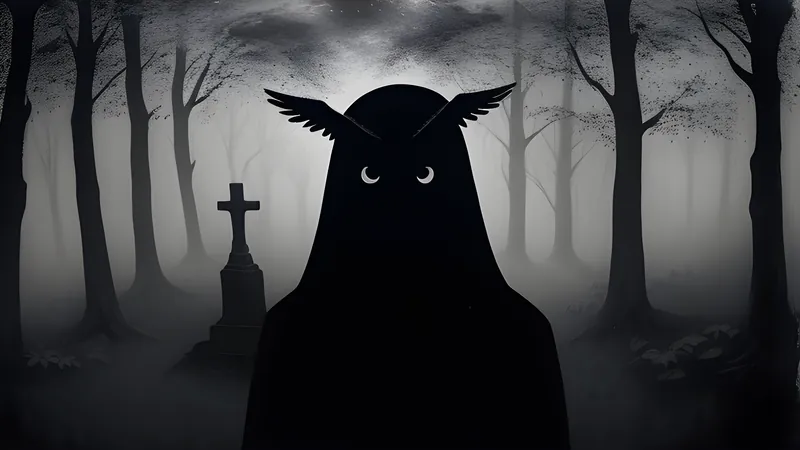
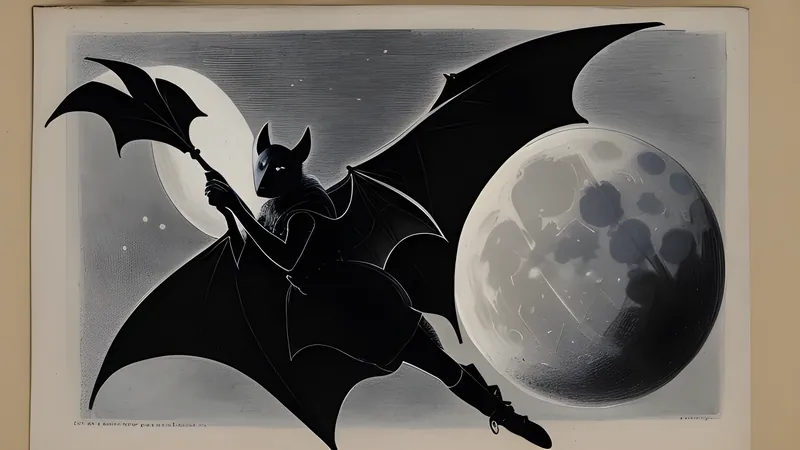
On 25 August 1835, the New York Sun began publishing a series of articles that revealed the greatest astronomical discovery in human history. Using a colossal new telescope erected at the Cape of Good Hope, the celebrated astronomer Sir John Herschel had turned his lens on the Moon and found it teeming with life. There were forests and inland seas, herds of bison, blue-grey goats, a beaver that walked upright on two legs and carried its young in its arms. There were beaches of white sand and pyramids of amethyst. And there were people — or something like people: winged humanoids, covered in copper-coloured hair, who flew across the lunar valleys and gathered on its plains. The Sun called them Vespertilio-homo, bat-man, and reported that they appeared to converse, to build, and to worship at what looked like temples of polished sapphire. New York read all six instalments, and New York, in large numbers, believed.
The story the Sun told
The series was presented with meticulous scientific dress. It claimed to be reprinted from a supplement to the Edinburgh Journal of Science, a real (though by then defunct) publication, lending it the borrowed authority of a learned periodical. It was attributed to Herschel’s fictional assistant, a “Dr Andrew Grant,” who narrated the discoveries in the sober, measured cadence of a working scientist. It opened with a long, technical, entirely plausible-sounding account of a new kind of telescope — an enormous lens, a novel method of “transfusing artificial light” through the image to magnify it — so that by the time the winged men appeared, the reader had already been walked through pages of convincing optical detail and was disposed to trust the instrument that had supposedly seen them.
The escalation was gradual and clever. The first instalment offered geology and vegetation. The second added animals. Only as the reader’s credulity was warmed up did the articles arrive at the bison, the biped beaver, and finally the flying bat-people with their temples and their evident intelligence. By pacing the wonders — mundane first, miraculous last — the hoax led its audience up a gentle slope rather than asking them to leap. Each instalment made the next a little easier to swallow.
The kernel: a real astronomer, a real telescope, a real expedition
What gave the hoax its purchase was that its scaffolding was true. Sir John Herschel was entirely real, and one of the most eminent scientists alive — the son of William Herschel, discoverer of Uranus, and a distinguished astronomer in his own right. Crucially, in 1834 he really had travelled to the Cape of Good Hope in southern Africa to catalogue the stars of the southern sky, and he really was there, thousands of miles from New York, throughout the period the Sun was reporting his lunar discoveries. He was a genuine astronomer, doing genuine astronomy, in exactly the place the articles claimed — and utterly unreachable by any means fast enough to issue a denial. A transatlantic query and reply took months. The hoax had chosen, as its supposed author, the one man whose real activities lent it perfect cover and who could not possibly respond in time.
The moment was also primed by real scientific optimism. The early nineteenth century was a period of rapid astronomical progress and genuine, respectable speculation about extraterrestrial life. The idea that other worlds might be inhabited — “the plurality of worlds” — was not a fringe notion; serious thinkers entertained it, and a Scottish clergyman-astronomer, Thomas Dick, had published widely read estimates of the populations of other planets, including the Moon. When the Sun reported lunar inhabitants, it was not contradicting the science of the day so much as delivering, in vivid detail, a thing that respectable people had already declared plausible in the abstract. The public did not have to be talked into the possibility of life on the Moon. That possibility was in the air; the hoax merely supplied the pictures.
There is also an odd literary echo worth setting down. Two months before the Sun’s series began, in June 1835, Edgar Allan Poe had published his own tale of lunar travel, “The Unparalleled Adventure of One Hans Pfaall,” in the Southern Literary Messenger — a story about a balloonist who reaches the Moon and encounters its inhabitants, dressed in the same faux-scientific detail Poe favoured. Poe believed, and said so publicly for years afterward, that Locke had taken his idea and executed it better, with a real newspaper’s reach behind it; he shelved a planned sequel because the Sun had made his own moon-voyage look, by comparison, like an unfinished draft of somebody else’s hit. Whether or not Locke had ever read Poe’s story, the two pieces sit close enough in premise that Poe’s grievance became one of the enduring footnotes to the hoax: a fabrication successful enough to eclipse the invention that may have inspired it.
The fork: where the real science ended
The break between the true scaffolding and the invented marvels is clean. Herschel’s real expedition, his real telescope, the real scientific interest in extraterrestrial life — all genuine. The bat-people, the sapphire temples, the biped beavers, the fantastical light-transfusing lens capable of magnifications no instrument of the era approached — all fabricated, and fabricated by a working journalist rather than any astronomer. The author was almost certainly Richard Adams Locke, a British-born, Cambridge-educated reporter working for the Sun, though he never fully and formally confessed in so many words. Locke was an educated man who understood exactly which scientific buttons to press, and the articles read as a knowing parody as much as a straight deception — an over-the-top extrapolation of the “plurality of worlds” enthusiasm, taken to a deliberately absurd extreme that a great many readers failed to register as satire.
That failure is the heart of it. Whatever Locke’s precise intent — pure circulation-boosting hoax, sly satire of credulous popular science, or both at once — the effect was that a large portion of the reading public took winged moon-men as established fact, reported in their newspaper under the name of the most respected astronomer of the age.
The journey: the penny press and a city that wanted to believe
To understand why the hoax landed, you have to understand the newspaper that ran it. The New York Sun was a “penny press” paper, part of a new breed founded in the early 1830s that sold for a single cent — a fraction of the cost of the established six-cent commercial papers — and reached a mass, ordinary readership through street sales rather than subscription. The penny papers lived and died by circulation, and circulation was driven by sensation, human interest and spectacle. A serialised astronomical marvel that kept readers buying the next instalment was, from a business standpoint, a triumph. By the accounts of the period, the Sun’s circulation soared during the moon series, climbing from around 15,000 copies a day to more than 19,000, and the paper boasted, for a time with real justification, of having the largest daily circulation of any newspaper on Earth.
The hoax spread the way sensations do. Rival papers reprinted or reported on the discoveries; some, caught out, claimed to have seen the original Edinburgh Journal articles themselves — a tell that they were bluffing, since no such articles existed. There is a much-repeated anecdote that a committee of scientists from Yale travelled to New York to examine the source material and were politely shuffled between the Sun’s offices and its printers until they gave up, never finding the journal that did not exist. Whether embroidered or not, the story captures the situation: the evidence was a citation to a real but unavailable publication, and in an age before instant verification, an unavailable authority was almost as good as a present one.
The unravelling was gradual and, tellingly, gentle. As weeks passed, the sheer accumulation of impossibilities and the failure of any corroborating source wore the credibility down. A rival paper, the Journal of Commerce, is generally credited with pressing the matter and effectively exposing the series as a fabrication. The Sun never issued a grovelling retraction; it more or less let the affair deflate, and — this is the part that surprises modern sensibilities — suffered little for it. Many readers were amused rather than outraged. They had got six instalments of the most entertaining reading of the year for a penny each, and a public that had half-enjoyed being fooled was not inclined to burn the paper down over it. Herschel himself, when word finally reached him at the Cape, was reportedly annoyed at first, then amused, though he grew weary of being asked about the moon-men for years afterward.
What the Moon Hoax is really about
The Great Moon Hoax is often told as a story about gullibility, and that is the shallow reading. The deeper one is about the machinery of belief in a new information age. The 1830s were the first moment when cheap print reached a genuinely mass audience at speed, and the hoax is what happens when that new machinery meets three things at once: a real scientific frontier the public did not fully understand, a genuine authority who could not be reached to confirm or deny, and a business model that rewarded wonder over accuracy. Change the technology and the same pattern recurs in every generation — a sensational claim, dressed in the borrowed authority of science, spread by a medium paid by attention, believed fastest by people already primed to want it true.
It rhymes closely with the Cardiff Giant, unearthed a generation later, where a public hungry for evidence of biblical giants paid gladly to view a carved block of gypsum. In both cases the fake did not force itself on a resistant audience; it answered a question the audience was already asking. The moon series worked because New Yorkers had been told, by respectable men, that other worlds might hold life — and here, at last, in satisfying copper-haired detail, was the life itself.
The pattern would be diagnosed again, more famously, a century later, when Orson Welles’s 1938 radio dramatisation of an alien invasion was said to have panicked its listeners. The War of the Worlds broadcast shares the moon series’ essential mechanics — a trusted medium, the sober costume of a news bulletin, a public predisposed to the possibility of other worlds — and, like the moon series, its reputation for mass hysteria has itself been inflated in the retelling. In both cases the interesting question is how a new medium, borrowing the voice of authority, briefly persuaded ordinary people that the extraordinary had arrived, and how quickly the story of their credulity grew larger than the credulity itself.
The most human note in the whole affair is how little anger there was at the end. People had been given a shared dream to inhabit for a fortnight — a Moon full of forests and temples and winged neighbours — and when the dream dissolved, a good many of them felt they had been entertained rather than robbed. That is the quiet truth the hoax exposes about all of us. We are moved less by what is true than by what is wonderful, and a story that lets a whole city look up at the same Moon and imagine someone looking back will always, for a while, outsell the emptier and more accurate sky.
Related Content