The Great Emu War and the Story Australia Kept
In 1932 the Australian army took machine guns to a flock of birds, and lost the argument
Contents
The story sounds like something a pub raconteur invented to see how much a table of tourists would swallow. In 1932 the Australian government sent soldiers armed with machine guns to make war on a flock of large flightless birds, and the birds won. It has all the hallmarks of a tall tale: the absurd mismatch, the dignified military language applied to something ridiculous, the humbling of the powerful by the humble. It is exactly the kind of yarn Australia loves to tell about itself. The remarkable thing is that it is essentially true. The Great Emu War of 1932 is a documented military operation, recorded in Hansard and in the newspapers of the day, and the version that has passed into legend departs from the record only at the edges.
To tell it properly you have to begin with the men rather than the birds, because the war was really the last chapter of a different and sadder story. It grew out of the aftermath of the First World War and the desperate condition of Australian agriculture during the Great Depression, and once you see that background, the whole strange episode stops being a random absurdity and becomes something almost poignant.
The soldier settlers and their wheat
After the First World War, Australia, like several other nations, tried to reward its returning servicemen and populate its interior at the same time through soldier settlement schemes. Ex-soldiers were granted blocks of land, often in marginal country, and set to farming it. Many were placed in the wheatbelt of Western Australia, on the dry fringe of cultivable land, and encouraged to grow wheat. It was hard, isolated, undercapitalised work at the best of times, and the early 1930s were very far from the best of times. The Depression had collapsed the price of wheat, the government’s promised support was thin, and the settlers were already close to ruin when a new problem arrived on foot.
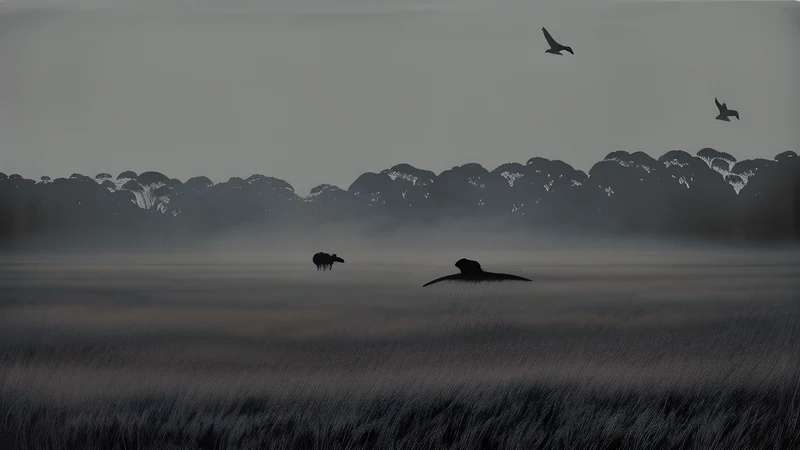
Emus are large, nomadic birds, standing up to nearly two metres, and after their breeding season they migrate inland toward the coast in search of water and food. In the spring of 1932 an estimated twenty thousand of them moved into the Campion district, in the wheatbelt east of Perth, and found there something better than the dry scrub they were used to: cleared land, dams full of water for stock, and fields of ripening wheat. The birds trampled crops, ate the grain, and flattened fences as they went, and through the gaps they left, rabbits poured in to finish the job. For farmers already on the edge, it was a catastrophe. The settlers, many of them former soldiers, did what former soldiers do: they appealed to the Minister of Defence.
The campaign that actually happened
The minister was Sir George Pearce, and he agreed to help, partly because the settlers were ex-servicemen who might reasonably expect the army’s assistance and partly, it was suggested at the time, because the exercise might make useful publicity and good machine-gun practice. The operation was placed under Major G. P. W. Meredith of the Seventh Heavy Battery of the Royal Australian Artillery. The expeditionary force consisted of Meredith, two soldiers, two Lewis light machine guns, and ten thousand rounds of ammunition. They arrived in early November 1932, and the campaign that followed reads like a comedy written by the birds.
The first engagement came on 2 November. A group of around fifty emus was sighted, and the gunners opened fire, only to find the birds scattered into small groups and ran, presenting almost impossible targets across the open ground, and the Lewis guns’ range was wasted on a dispersed and sprinting enemy. A later attempt tried to ambush a large flock near a dam. This time close to a thousand birds came within range, but after a short burst the gun jammed, and the emus fled before the crew could clear it. Meredith then tried mounting a gun on a truck to chase the flock, but the vehicle could not keep pace with the birds over rough ground, and the ride was far too rough for anyone to aim, so the experiment achieved nothing but a bruising for the gunner. The emus, it became clear, were fast, wary, dispersed, and startlingly hard to kill; a wounded bird would often keep running.
Meredith’s own reported remarks turned the frustration into legend. He is said to have observed that if the army had a division of men who could take punishment the way these birds could, it would face any force in the world, and to have compared the emus’ ability to shrug off machine-gun fire to the endurance of the toughest infantry. After about a week, having expended a large share of the ammunition for a very modest tally of dead birds, the operation was withdrawn amid growing ridicule in the press and questions in Parliament. A member asked, drily, whether a medal would be struck for the campaign, and was told any medal should go to the emus, who had won every round.
Sorting the record from the tale
This is the point at which a folklorist has to be careful, because the legend simplifies the record in a way worth correcting, and correcting it makes the truth more interesting rather than less. The tidy version says the army was defeated outright and gave up. The fuller record is a little messier. After the first withdrawal, and under continued pressure from the settlers, Meredith’s force returned to the field later in November and operated into December with somewhat better results as the gunners adapted their tactics. By the time the operation finally ended, Meredith claimed something in the order of a thousand emus killed, using around nine thousand and six hundred rounds, which even by his own generous count is roughly ten bullets per bird and a poor return for a military campaign.
So the birds were not literally invincible, and a good many died. What is true, and what the legend gets right, is that the operation failed at its actual purpose. It failed to stop the emus, failed to save the crops, and made the government look faintly ridiculous. The problem of the birds was eventually managed by more mundane means: a bounty system that paid settlers for emu culls, and, decisively, the erection of exclusion fencing to keep the birds out of the farmland altogether. The machine guns were a spectacle; the fence was the solution. The war was lost in the sense that mattered, which is why the tale of defeat rings true even though the body count was not zero.
The enemy underestimated
Part of what makes the campaign so comic is that the army arrived expecting to shoot fish in a barrel and met an opponent superbly equipped to frustrate them. Emus are among the most capable running birds on earth. An adult can sprint at close to fifty kilometres an hour and change direction sharply, which turned a standing flock into a scattering blur the instant the firing began. They are also wary, well-adapted to spotting danger across open plains, and they broke instinctively into small, fast-moving groups rather than presenting the dense mass a machine gun is designed to sweep. A weapon built to cut down advancing infantry in ordered lines was close to useless against a dispersed, sprinting, unpredictable target.
There was, too, the matter of their toughness. Contemporary accounts marvelled at how much punishment the birds seemed able to absorb, an emu carrying on after hits that should have dropped it, and while some of that was surely the exaggeration of frustrated marksmen, it fed directly into Meredith’s admiring comparison of the birds to seasoned troops. The ornithologist Dominic Serventy, who studied Western Australia’s birds and later recorded the episode, noted the machine-gunners’ dreams of a rapid slaughter dissolving as the emus adopted what looked almost like guerrilla tactics, each small band ranging over its own patch of country and melting away at the first sound of the guns. The military metaphor, applied to birds, kept fitting a little too well.
None of this was cunning, of course; it was simply an animal doing what a hundred thousand years of evolution on open ground had fitted it to do, which is to run fast, stay alert, and scatter from danger. The comedy lies in the collision between that ordinary competence and the army’s expectation of an easy victory. The soldiers brought the assumptions of human warfare to a creature that had never heard of them, and the creature won by refusing to fight the kind of battle the guns were built for.
Why the country kept the story
What makes the Emu War worth dwelling on is less the facts, remarkable as they are, than the affection with which Australia has held onto them. This is a nation with a well-developed talent for laughing at authority and for siding with the underdog, and the Emu War is almost too perfect a vehicle for both. The powerful institution, the army, with its guns and its titled minister, is comprehensively bested by a mob of gormless birds, and no one important is hurt, so the whole thing can be enjoyed as pure farce. It flatters a self-image the country is fond of: sceptical of pomp, quick to puncture grandeur, more amused than impressed by the machinery of the state.
There is a gentler reading underneath the comedy, too, and it is the reason the story has more staying power than a simple joke would. The men who called in the army were desperate, ruined farmers, many of them veterans of a real and terrible war, trying to save their livelihoods in the worst economic conditions in living memory. The absurdity of the campaign is also a portrait of people at the end of their resources, reaching for the biggest tool they could think of against a problem that no amount of firepower could solve. The comedy and the hardship sit together, and the affectionate telling holds both, which is what raises the episode above mere trivia.
Australia has a habit of turning its landscape’s strangeness into national character, and its wildlife into legend. The same impulse that keeps the Emu War alive gives the country its rich tradition of tall creatures in the bush, from the water beast of the billabongs known as the bunyip to the hairy man of the ranges, the yowie. In each case a real environment, harsh and unfamiliar and full of genuinely odd animals, becomes the raw material for stories that a people tell to make sense of the place they live in and of themselves.
What survives the retelling
The temptation with a story this good is to let the tall-tale version harden into the only version, and to lose the human ground it grew from. The truest thing about the Great Emu War is that almost nobody needs to exaggerate it. The bare facts, a minister, a major, two Lewis guns, ten thousand rounds, twenty thousand birds, and a wheatbelt of broken farmers, already contain everything the legend needs. The retelling adds only a little polish, rounding the army’s partial, grinding, inconclusive campaign into a clean comic defeat, and the birds have been happy to accept the promotion to victors.
What endures is a story a country decided to keep because it likes what the story says about the country. It records a moment when the state brought overwhelming force to bear on a problem it did not understand, and the problem simply ran away and came back. That is a lesson with a longer reach than one Australian summer, and it is delivered without a single human casualty, which is the rarest thing a war story can offer. The emus, going about their nomadic business in search of water, never knew they had fought a war, still less that they had won one. They only knew there was grain in the fields and men with loud sticks, and that the fields were worth the trouble. The war was ours to lose and ours, ever since, to enjoy.
Related Content