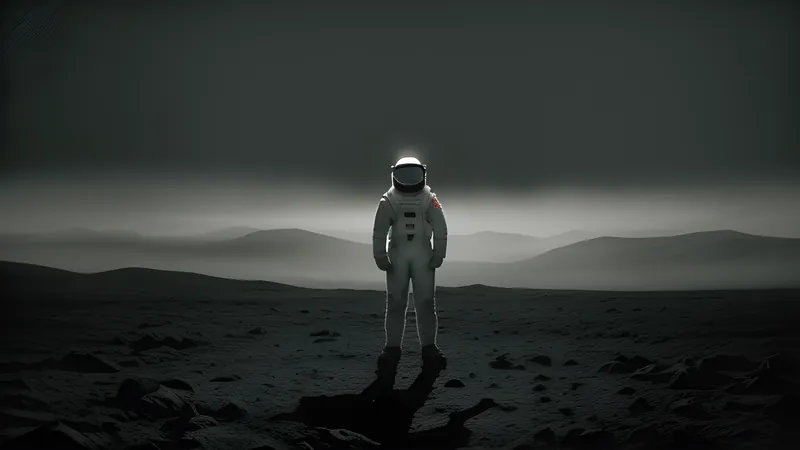
The Dyatlov Pass Incident: What the Snow Actually Did
Nine hikers, one cut tent, and seventy years of the wrong question
Contents
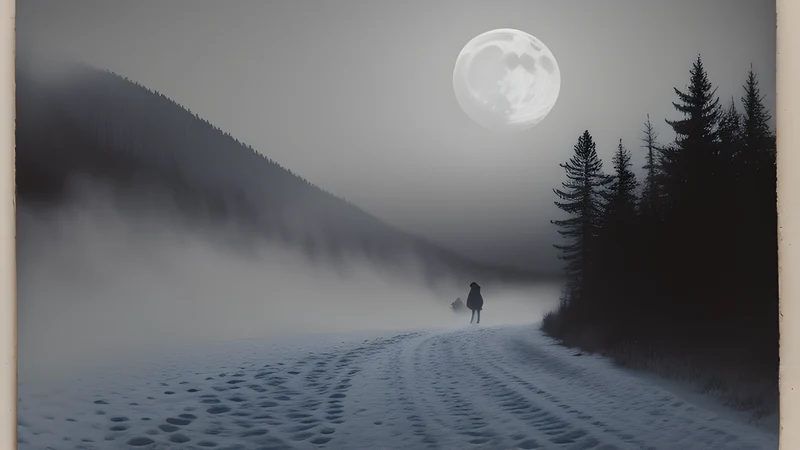
Some time in the night of 1 February 1959, on the eastern shoulder of a bald Ural mountain the local Mansi people call Kholat Syakhl — “Dead Mountain,” though the name is older than the deaths — nine experienced ski-tourists cut their way out of their own tent from the inside and walked, most of them barefoot or in socks, into a blizzard at around minus twenty-five degrees. None of them came back. When searchers reached the slope three weeks later the tent was still standing, half-collapsed and drifted over, its contents neatly stowed. The bodies were found over the following months, some at the treeline a mile and a half downhill, some higher, the last four not until May, buried in a ravine under four metres of snow.
That is the part everyone agrees on. Almost everything else about the Dyatlov Pass incident has spent seven decades being argued over by people who badly want it to mean something. It is one of the most durable mysteries of the twentieth century, and it is worth understanding why — because the story is genuinely strange, the documented facts are genuinely unsettling, and the gap between those two things is exactly where legends grow.
The night, told straight
The group was led by Igor Dyatlov, a twenty-three-year-old radio engineering student at the Ural Polytechnic Institute in Sverdlovsk. They were strong skiers on a Grade III route, the hardest category, aiming for a peak called Otorten. On 31 January they climbed toward the pass, misjudged their bearing in poor visibility, and ended up pitching camp on an open slope rather than descending to the shelter of the forest below. It was a small decision, the kind experienced people make to save an hour. It put them on exposed ground.
Then the record fractures. The tent was cut open from inside with a knife — this was established by the seamstress who examined the canvas, and it is one of the load-bearing facts of the whole case. The nine left in a hurry, inadequately dressed, and descended toward the trees. Two were found near the remains of a small fire under a large cedar, its lower branches broken off up to a height that suggested someone had climbed it. Three more, including Dyatlov, were found on the slope between the cedar and the tent, lying as if they had died trying to climb back up. The final four were in the ravine, and their injuries were the ones that launched a thousand theories: Nikolai Thibeaux-Brignolle had a fractured skull; Lyudmila Dubinina and Semyon Zolotaryov had crushed chest injuries, several ribs each broken by a force one investigator compared to a car crash. Dubinina was missing her tongue and eyes.
The Soviet inquest closed in May 1959 with a phrase that has fuelled everything since. The hikers had died, it concluded, from “a compelling natural force” that they had been unable to overcome. The case file was archived, access restricted, and the mountain closed to hikers for three years. In a closed society, a sealed file works as an invitation.
What was really there
Start with the parts that are solid, because conceding them is what separates understanding from hand-waving. The interior cut in the tent is real. The severe injuries on the last four bodies are real; the autopsies documented them plainly. The elevated radiation found on a couple of items of clothing is real, though mundane — one of the group had worked with radioluminescent paint, and the levels were unremarkable. The reddish-orange tint of some of the skin is real and is ordinary post-mortem discolouration from cold and exposure. The soft-tissue loss on Dubinina’s face, the detail that gets whispered about most, is real too, and is what happens to a body that lies for three months in running meltwater in a ravine, where scavengers and decomposition reach the softest tissue first. Grim, entirely explicable.
Now the setting. The slope where the tent stood is often described as gentle, nearly flat — the objection that recurs in every mystery documentary is “there can’t have been an avalanche, the slope wasn’t steep enough and no avalanche debris was found.” That objection sounds decisive. It is also where the story quietly departs from what the mountain is actually like.
In 2019, prompted by renewed public interest, Russian authorities reopened the case, and their conclusion — an avalanche — was widely dismissed as a shrug. But two researchers, Johan Gaume of EPFL and Alexander Puzrin of ETH Zurich, took the shrug seriously and did the physics. Their 2021 paper in Communications Earth & Environment reconstructed the slope and found that its true angle, once you account for the terrain beneath the snow, is close to twenty-eight degrees in places — well within avalanche range, just disguised by an even blanket of snowfall. The hikers had cut a level platform into that slope to pitch the tent, slicing into the snowpack above them. A katabatic wind loaded more snow onto the cut over the following hours. And the specific culprit was a slab rather than a roaring wall of powder — a cohesive plate of hardened snow that can release, slide a short distance, and stop, leaving little obvious debris to find weeks later under fresh fall.
The fork
Here is where the case forks away from the record. A slab avalanche, Gaume and Puzrin showed using models partly borrowed from crash-test animation, can deliver exactly the kind of injury the autopsies described: severe blunt trauma to the chest and skull, in people lying in sleeping bags on a hard cut platform, without breaking the skin. That answers the question that made the case feel supernatural — how do you get crushed ribs and a fractured skull with no external wounds? A heavy, slow slab pressing bodies against a rigid surface does it. The chest injuries belonged to those sleeping at the uphill edge, where the load was greatest.
The rest follows with a terrible ordinariness. Injured, in the dark, convinced the whole slope was failing, the group did the thing trained mountaineers are taught to do: get off the slab, down to the trees. They cut the tent because it was faster than digging out a snowed-over entrance. They reached the cedar, lit a fire, and then hypothermia took over. And the final, cruel signature of hypothermia is why some undressed. In the last stage of freezing, a phenomenon called paradoxical undressing makes the dying feel suddenly, unbearably hot as their body’s temperature regulation collapses, and they tear off their clothes. It is documented in freezing deaths the world over. The barefoot, half-dressed condition of the bodies, which reads as evidence of panic or attack, is a recognised medical sign of the cold itself killing them.
Who carried it, and why it grew
If the mechanism is that clean, why did the mystery not die decades ago? Because the story arrived pre-loaded with everything a good conspiracy needs, and because for thirty years nobody could check the file.
The setting was the Cold War Urals, dense with secret military installations; “the state is hiding something” was the ambient condition of Soviet life, and often correct. The file was sealed. There were reports of “orange spheres” in the sky that night, which fit the region’s rocket-launch tests neatly and UFOs seductively. There was the Mansi land, letting outsiders imagine an indigenous ambush that the evidence never supported and that mostly reveals the imaginer’s assumptions. And there were those injuries, described in early accounts without the ravine context that explains them. Every gap in the record became a socket for a theory: yetis, escaped prisoners, secret parachute-mine tests, infrasound-induced panic, a KGB clean-up.
The modern boom came later. The 1990s opening of the archives put fragments of the file into circulation. Then Donnie Eichar’s 2013 book Dead Mountain brought the story to a huge Western audience — and, to its credit, took the humanity of the nine seriously, though it landed on an infrasound theory the physics didn’t need. From there the incident became a fixture of the same online ecosystem that keeps every good unexplained event alive, the one that also nursed the Wow! signal’s six unrepeated minutes into a permanent question mark. A sealed Soviet file and a single unrepeatable radio burst are different animals, but they feed the same appetite: the thrill of a locked door.
It is worth pausing on how much of the case’s horror lives in the ordering of discovery rather than in the events themselves. The first bodies found were the least injured; the terribly injured four turned up last, in May, after months of imagination had already run wild. Had the ravine been reached first, the story might have settled into tragedy from the start. Instead the evidence arrived backwards, worst last, each new find layered onto a public already primed for something monstrous — and a myth, once it has that head start, is very hard to overtake with a slab of snow.
What it is really about
Strip the yetis away and the Dyatlov Pass incident is a story about the unbearability of arbitrary death. Nine capable, photographed, funny young people — the recovered rolls of film show them larking in the snow days before — did everything more or less right and were killed by an hour’s worth of bad luck: a platform cut in the wrong place, a wind that loaded the slope, a slab that let go while they slept. There is no villain. There is no lesson. That is precisely what the mind refuses.
A malevolent explanation, however outlandish, is in one respect more comforting than the true one, because it restores agency to the universe. If a yeti or the KGB killed them, then the world has actors and intentions and rules, however dark. If a slab of snow killed them, the world is merely indifferent, and indifference is harder to grieve than malice. The theorising is a form of mourning — the mind refusing to accept that nothing was meant.
The same reflex runs under the grander cases — the impulse to read pattern and purpose into an empty sky, which is exactly what happened when the Nazca lines got read as an alien runway rather than the work of the people standing right there. We are pattern-finding animals who find silence intolerable. A tent cut from the inside is a sentence that demands a subject.
The physics gives us one, and it is the snow. That answer will never fully win, and it is worth being honest about why: it explains the deaths without redeeming them. The nine walked into the dark because staying was worse, and they were right that staying was worse, and it killed them anyway. The mountain the Mansi named Dead Mountain kept its name by accident, and the accident is the whole of it. Understanding that is not the same as being consoled by it — and the people who keep the mystery alive are, in their way, refusing a consolation that was never really on offer.
Related Content