The Doolittle Raid Cover Story: How a Real Deception Became a Template
A president lied about where the bombers came from, and everyone agreed he was right to. That agreement is where the trouble starts.
Contents
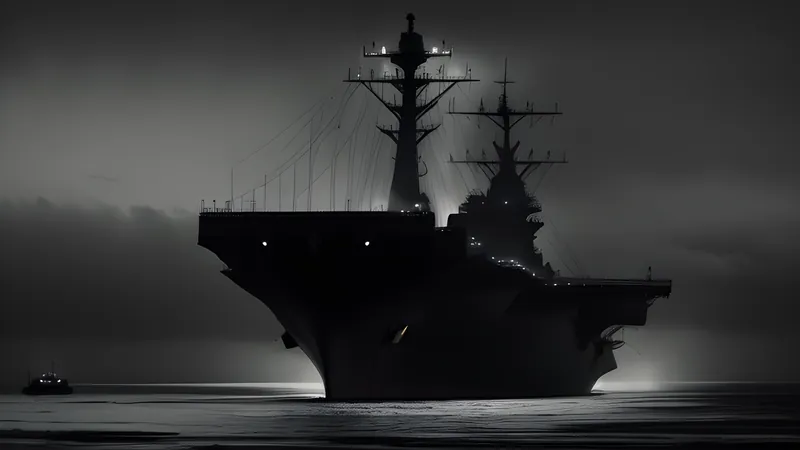
On the morning of 18 April 1942, roughly 650 miles east of Japan, sixteen twin-engined B-25 Mitchell bombers did something no one had designed them to do. One after another they lumbered off the pitching flight deck of the aircraft carrier USS Hornet — medium bombers, army planes, taking off from a navy ship they could never land on again — and turned west toward Tokyo. They had launched hours early and much further out than planned, because a Japanese picket boat, the Nitto Maru, had spotted the task force and radioed a warning before an American cruiser sank it. The extra distance meant the raiders almost certainly could not reach their landing fields in China. Their commander, Lieutenant Colonel James “Jimmy” Doolittle, a stunt pilot and aeronautical engineer with a doctorate from MIT, led the first plane off himself. Four months after Pearl Harbor, the American public was about to be told that its bombers had struck the Japanese home islands — and it was about to be told a lie about how.
The raid that mattered for the wrong reasons
Measured by explosives delivered, the Doolittle Raid did almost nothing. The sixteen bombers scattered a modest tonnage across Tokyo, Yokohama, Kobe, Nagoya and Yokosuka, killing perhaps fifty people and damaging a scatter of industrial and military sites. As a bombing campaign it was a pinprick. As a psychological event it was enormous, and on both sides of the Pacific everyone understood that psychology was the entire point.
For America the raid was oxygen. Since December 1941 the news had been an unbroken column of defeats — Pearl Harbor, the Philippines, Wake, the fall of Singapore, the Japanese sweep across the Pacific. Roosevelt needed to show that Japan could be reached, that the war would eventually be carried home to the enemy, and Doolittle’s crews gave him the image. For Japan the raid was an intolerable loss of face: the sacred home islands, and the Emperor himself, had been shown to be vulnerable. The Imperial Navy’s response was to insist on pushing its defensive perimeter outward, which led directly to the assault on Midway in June — the battle that broke the back of the Japanese carrier fleet. A militarily trivial raid helped set up the strategic turning point of the Pacific war.
The human cost fell mostly on the aircrews and on China. Fifteen of the sixteen bombers ran out of fuel over or near occupied China; the crews bailed out or crash-landed in the dark. The sixteenth flew to Vladivostok, where the Soviet Union, still neutral against Japan, interned the crew. Of the eighty raiders, three were executed by the Japanese after capture, one died in captivity, and several Chinese communities that sheltered downed airmen were subjected to brutal reprisals in which tens of thousands of civilians died. Doolittle, who had watched his entire force scatter and crash, sat on a Chinese hillside convinced he would be court-martialled. Instead he was promoted to brigadier general and given the Medal of Honor.
Shangri-La
Then came the cover story, and it is the reason this piece exists. When reporters pressed Roosevelt at a press conference on where the raid had been launched from, he smiled and said the planes had come from Shangri-La — the hidden Himalayan utopia invented by the novelist James Hilton in Lost Horizon, a place that did not exist anywhere on any map.
It was a lie, and it was a deliberate, considered, entirely justified one. The truth — that army bombers had flown from a navy carrier — was exactly the operational fact the United States most needed to keep from Tokyo. If the Japanese learned that carriers could deliver medium bombers to within striking range of the home islands, they would recalculate their entire coastal defence. The Hornet and the tactic had to stay secret. So the President of the United States stood in front of the press and, with a literary joke, told the public and the enemy something he knew to be false.
Almost nobody objected, then or since. The deception protected sailors and airmen, revealed nothing the public had a right to know in the middle of a shooting war, and did no injury to anyone except a Japanese intelligence officer’s certainty. It is close to the cleanest example available of a government lying to its own people for reasons a fair-minded citizen would endorse. The lie was so beloved that in 1944 the US Navy commissioned a fleet carrier and named it USS Shangri-La — a warship named after a cover story, the joke made steel.
The template underneath the joke
Here is the fork, and it is a subtle one, because nothing in the Doolittle story is a scandal. The departure from the record is not that Roosevelt did something secretly wicked. He did not. The problem is the template the episode helped normalise — the principle, established in the noblest possible circumstances, that the government may knowingly tell the public a false story when it judges that national security requires it, and that the public should applaud.
Framed around Shangri-La, that principle looks obviously right. The danger is that “national security requires it” is a judgement made inside the institution doing the lying, with no one outside able to check the working. The same sentence that justifies concealing a carrier can be spoken by a government concealing a coup, a covert war, or an assassination plot — and it will sound exactly as reasonable in the mouth of the liar, because it is the same sentence. The Doolittle cover story taught a generation of officials, and a generation of citizens, that a wartime lie is a patriotic act. It did not, and could not, teach anyone how to tell the necessary lie from the corrosive one, because from the outside they are indistinguishable.
The Second World War normalised the practice on an industrial scale, and it did so for reasons almost everyone still endorses. Churchill’s remark that in wartime the truth is “so precious that she should always be attended by a bodyguard of lies” was not cynicism; it described a genuine and successful strategy. The Allied deception apparatus that protected the D-Day landings — Operation Fortitude, with its inflatable tanks and phantom armies invented to convince Berlin the blow would fall at Calais — saved thousands of real lives by feeding the enemy an elaborate falsehood. The British double-cross system turned captured German agents into channels for lies. All of it worked, all of it was justified, and all of it trained a generation of officials in the habit and the vocabulary of state deception. The wartime lie was not merely permitted; it was decorated. When the war ended, the men who had run those operations did not unlearn the skill, and the intelligence agencies that grew out of the war carried the habit into peacetime, where the enemy was murkier and the justifications harder to check.
You can trace the template forward into far darker rooms. In the early 1960s the US Joint Chiefs of Staff drew up Operation Northwoods, a genuine, signed proposal to stage fake attacks — including simulated terrorism against Americans — to manufacture a pretext for war with Cuba. It was rejected, but it existed, on paper, approved by the men at the top of the armed forces. A few years later the Gulf of Tonkin incident supplied a real pretext built on a second engagement that very probably never occurred, and an administration that presented ambiguous sonar readings to Congress as a clear enemy attack. The distance from “Shangri-La” to those rooms is not a straight line, and it would be dishonest to pretend the raid caused them. But they run on the identical premise: that officials may decide, alone and in secret, what the public will be permitted to believe.
What the story became
Shangri-La entered American folklore as an affectionate detail, the wit of a wartime president, and it stayed there. That is part of why it is so useful to think about. Nobody files the Doolittle cover story under “government deception,” because it was on the right side and it worked. The lies we remember as betrayals are the ones aimed at us; the lies we remember as cleverness are the ones aimed, in our name, at someone else. The line between the two is drawn by the outcome and by whose side you were on, and it is drawn after the fact, which is precisely no help to a citizen trying to decide in the moment whether to believe what the podium is telling them.
This is the quiet mechanism underneath a great deal of conspiracy thinking, and it deserves to be taken seriously rather than mocked. People who assume the government is lying to them are not, as a class, paranoid fantasists. They are frequently people who have absorbed the real historical lesson — that the state does deceive the public, has done so within living memory, and has been applauded for it — and who have simply lost the ability to sort the Shangri-La lie from the Northwoods lie. Having learned that officials will look them in the eye and say something false for reasons they consider sufficient, they extend the finding to everything. The over-generalisation is a mistake. The starting observation is correct, and the government taught it to them.
The uncomfortable inheritance
What makes the Doolittle cover story worth pausing on is that it resists the two easy conclusions. It is not a scandal to be exposed; the deception was decent and the men who told it were on the side you would want to be on. And it is not innocent, because it is the friendliest possible instance of a habit that turns lethal in other hands, and it helped make that habit respectable.
The raiders themselves earned their place in memory. They flew a mission most of them expected not to survive, off a deck their aircraft were not built for, toward fields they could not reach, and a number of them paid for it in a Japanese prison or on a Chinese hillside. For decades the surviving raiders held a private reunion each year, with a set of silver goblets engraved with their names; as each man died his goblet was inverted, until only a handful remained upright, and then none. Nothing here diminishes them. The thing worth holding on to is smaller and harder: that the same act — a leader knowingly telling the public a falsehood in the name of protecting them — can be, on Tuesday, an act of wartime decency, and on Thursday the first move in a manufactured war, and that the podium looks identical on both days. Roosevelt’s Shangri-La was the good version. The reason so many people no longer trust the good version is that they have learned, correctly, how often it has been the bad one.
Related Content