The Deepwater Horizon Reports: What BP Knew Before the Rig Exploded
Eleven men, a failed pressure test, and a chain of warnings overruled in the days before the blowout
Contents
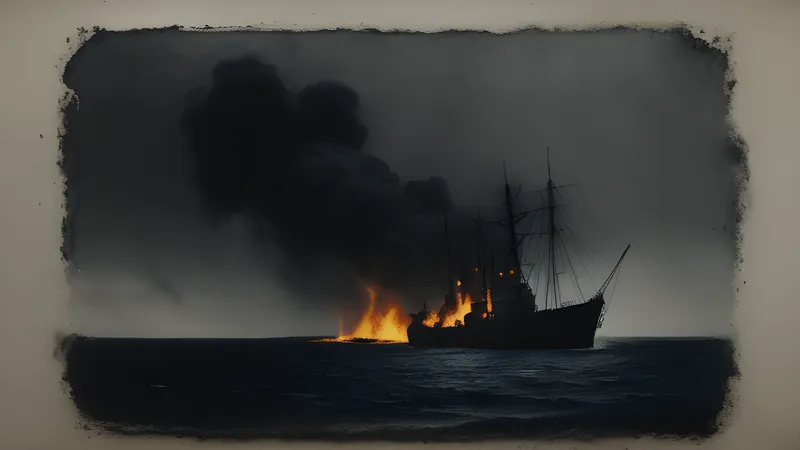
At 9:49 in the evening of 20 April 2010, natural gas that had climbed unnoticed up a mile of steel from the seabed reached the deck of the Deepwater Horizon, forty miles off the Louisiana coast, and found an ignition source. The drilling rig — a floating platform the size of a football pitch, working the Macondo well in the Gulf of Mexico — became a fireball. Eleven men never got off. The rig burned for two days and sank, tearing the pipe below it, and for eighty-seven days oil rose from the wounded well into the Gulf: something like four million barrels, the largest marine oil spill in history. In the years that followed, four separate major investigations — a presidential commission, a joint inquiry by the Coast Guard and the offshore regulator, a study by the National Academy of Engineering, and the discovery process of a federal trial in New Orleans — took the disaster apart, decision by decision, in the hours and days before it happened. What they found was not a freak of nature. It was a series of choices, each defensible in isolation, each shaded toward speed and cost, that a rig behind schedule and over budget made in the days before the well killed the people drilling it.
A well that was “behind and over”
To understand the reports, you have to understand the pressure the rig was under, in both senses of the word. Macondo was a difficult well in deep water, and by April 2010 it was badly behind schedule and running far over budget — reportedly tens of millions of dollars over, with costs mounting by roughly a million dollars a day. In the oil industry there is a grim phrase for such a well: it had become “the well from hell.” Everyone aboard knew it. The commercial pressure to finish and move the expensive rig to its next job was enormous, and it forms the backdrop to every technical decision the investigators later scrutinised.
BP was the operator and leaseholder; Transocean owned the rig and employed most of the crew; Halliburton had done the cement work meant to seal the well. That division of responsibility matters, because much of what followed happened in the seams between companies. But BP, as the operator, made or approved the key engineering calls, and the reports return to a handful of them again and again.
The presidential commission — formally the National Commission on the BP Deepwater Horizon Oil Spill and Offshore Drilling, which reported in January 2011 — was blunt about the pattern. The blowout, it concluded, was not caused by a single mistake or a single rogue actor. It resulted from “a series of identifiable mistakes made by BP, Halliburton, and Transocean that reveal such systematic failures in risk management that they place in doubt the safety culture of the entire industry.” The disaster was, in the commission’s phrase, “both foreseeable and preventable.” Those are careful words from a body that had subpoena power and access to the internal record.
The warnings in the paperwork
Here is where the phrase “what BP knew” earns its weight, because the investigators did not have to speculate about a state of mind. They had the emails, the well plans, the engineering reviews and the real-time data logs, and the warnings were written down before the fire.
Consider the well’s design. To line the final section, BP chose a “long string” casing — a single length of pipe running from the seabed down to the reservoir — over an alternative design that would have provided more barriers against gas escaping up the outside of the pipe. An internal BP engineering document acknowledged trade-offs, and one BP engineer, in an email later made public, referred to Macondo as a “nightmare well.” The chosen design was cheaper and faster. It was also, the reviews found, more vulnerable to exactly the kind of upward gas flow that occurred.
Consider the centralisers — devices that hold the casing in the centre of the hole so cement can seal evenly around it. Halliburton’s own modelling recommended twenty-one centralisers for a good cement job. BP used six. A Halliburton employee’s internal note warned that with too few centralisers the well could have a “SEVERE gas flow problem.” A BP email captured the reasoning for going ahead anyway with a candour the plaintiffs would later relish: “who cares, it’s done, end of story, will probably be fine.” The cement job that followed failed to seal the well.
Consider the cement itself. Halliburton used a nitrogen-foamed cement slurry, and its own laboratory tests — some conducted before the job, some the investigators reconstructed afterward — suggested the formulation was unstable. The presidential commission and the National Academy both identified the failed cement seal as the physical starting point of the blowout: it did not hold back the hydrocarbons it was there to contain.
The test they explained away
If the design decisions were slow-motion gambles, the final hours contained the sharpest single failure, and it is the part of the reports that is hardest to read, because the men who got it wrong paid for it with their lives.
On the evening of the disaster, the crew ran a negative-pressure test — a standard procedure to check whether the well was properly sealed by reducing the pressure inside and watching for any inflow of gas or oil from below. The test did not come back clean. Pressure readings that should have stayed flat kept building on one of the gauges, a textbook signal that hydrocarbons were pushing into the well. This was the well trying to warn them. The crew discussed the anomaly. And they talked themselves into an explanation — a theory, sometimes referred to on rigs as the “bladder effect,” that had no sound basis in physics — that let them read the failed test as a pass. They accepted the reassuring interpretation and proceeded to displace the heavy drilling mud that had been holding the well down, removing the last thing standing between the reservoir and the surface.
The joint Coast Guard and Bureau of Ocean Energy Management report dwelt on this moment, because it is where a manageable warning became an unstoppable event. It was not that no data existed. The data was there, on the screens, being watched by experienced people. The failure was one of interpretation under pressure — the human tendency, when a test result threatens to cost you time and money you cannot spare, to find the reading that lets you keep going. Once the mud was gone, the gas came up the pipe fast, and the alarms that might have given the crew a few more seconds had, in some cases, been inhibited to avoid waking the crew with false alerts in the night.
The last line of defence was the blowout preventer, a five-hundred-tonne stack of valves on the seafloor designed to shear through the pipe and seal the well in exactly this emergency. It failed too. Forensic examination later found that the drill pipe had buckled under pressure and was off-centre when the shearing ram fired, so the blades did not fully cut and seal. A critical component had a wiring fault. The device meant to be the automatic last resort could not do its one job.
The shape of a corporate cover-up
The investigations settled the engineering. What lifted Deepwater Horizon from an accident into a scandal was what came after, and how it rhymed with a pattern the public had learned to recognise from other cases on this desk.
In the immediate aftermath, BP publicly minimised the spill’s size. The company’s early flow-rate estimates — around a thousand barrels a day, then five thousand — were a small fraction of the government’s eventual figure of roughly sixty thousand barrels a day at its worst. Internal BP documents released to Congress showed the company’s own engineers had privately modelled far larger flow rates than it was stating in public. The gap between the private estimate and the public reassurance is the signature move of the manufactured-doubt strategy documented in the Exxon climate research files and, before that, in the tobacco industry’s hidden research: keep the frightening number in the boardroom and give the public the comfortable one for as long as the difference is legally survivable.
The legal reckoning was, unusually, severe. In 2014, a federal judge, Carl Barbier, ruled in the civil trial that BP’s conduct had been “grossly negligent” and marked by “reckless” and “wilful” behaviour, a finding that vastly increased its liability. BP eventually agreed to pay more than 20 billion dollars in the largest environmental settlement in US history, on top of billions more in cleanup and criminal penalties, and it pleaded guilty to criminal charges including manslaughter for the eleven deaths. The paper trail did not stay in the drawer. It became the spine of the judgment.
What the well was really telling us
There is a temptation, reading the reports, to reduce Deepwater Horizon to greed — a wicked corporation that traded eleven lives for a faster schedule. There is truth in that, yet it is too small a story, and it lets the rest of us off a hook we share.
Read closely, the disaster is less a story of a single villain than of a system in which the incentives all pointed the same way, and no individual decision felt like the one that would kill anyone. The engineer who chose six centralisers instead of twenty-one was not trying to destroy the Gulf. The crew who explained away the pressure test were not suicidal; they were tired, behind schedule, and reaching, as people do, for the interpretation that let the nightmare well finally be over. Each choice shaved a little safety margin for a little time or money, and the margins were invisible until the moment they all ran out at once. That is how most engineered catastrophes actually happen: through a thousand small deferrals of a risk that stays abstract right up until it isn’t, no conspiracy to cause harm required.
What makes people distrust the companies afterward is not paranoia. It is the entirely reasonable observation, confirmed by four investigations and a federal judge, that the warnings existed, in writing, and were overruled by the same commercial pressure that will exist on the next rig, and the next. The value of the Deepwater Horizon reports is not that they let us assign blame and move on. It is that they preserve, in exact detail, the ordinary human machinery by which a room full of competent people, none of them monsters, can watch a well try to warn them for hours and decide, together, to believe the reading that lets them keep going. The eleven names on the memorial are the cost of finding out how convincing that reading can be.