The Bunyip: Australia's Water Beast
A booming voice in the billabong, a museum skull, and a warning older than settlement
Contents
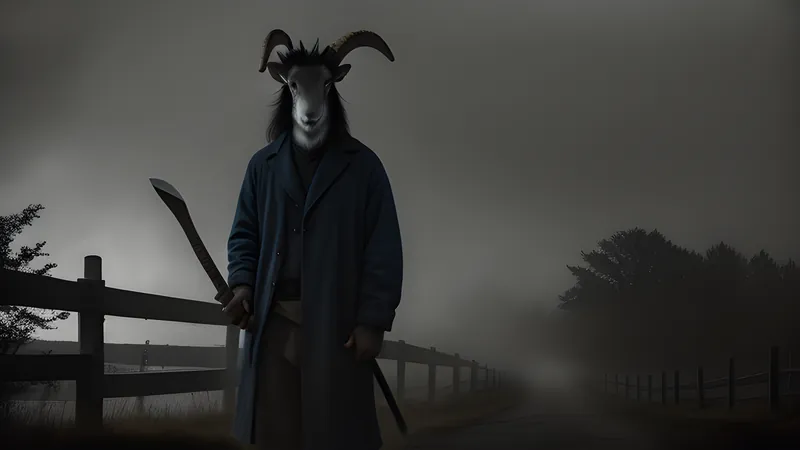
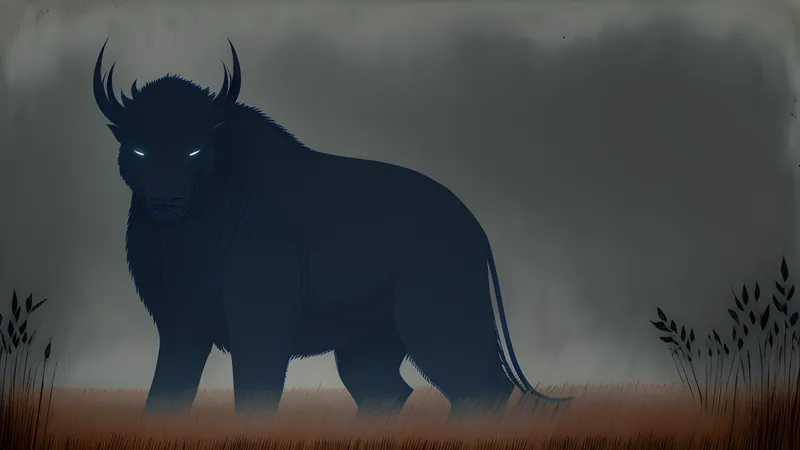
Somewhere out on the still black water of a billabong at night, something bellows. It is a deep, booming roar that carries across the reeds and raises the hair on the neck, and everyone who lives near that water knows what it is. The bunyip is in the waterhole. Keep the children back from the edge. The creature that makes the sound has been described in a hundred contradictory ways: dog-faced and dark-furred, or scaled and finned; the size of a calf or the size of a bullock; tusked like a walrus, maned like a horse, feathered like a bird; with flippers, or a long neck, or a tail like an eel. What every version agrees on is that it lives in the water, it roars in the dark, and it drags the unwary down.
The bunyip is Australia’s most famous water monster, and it is a genuinely rich subject, because it sits at the meeting point of two very different ways of knowing the land. It is, first and most importantly, a being of Aboriginal Australia, woven into the beliefs and the Dreaming of many peoples long before Europeans arrived. It then became something else again in the hands of colonial settlers, who seized on it, feared it, dug for its bones, and eventually turned its name into a byword for a fraud. Following those two journeys reveals how a single creature can be at once a sacred warning, a scientific puzzle and a national joke.
The being in the water
Among the Aboriginal peoples of southeastern Australia, the bunyip was a real and dangerous inhabitant of the swamps, creeks, waterholes and billabongs. The name itself is generally traced to the Wemba-Wemba or Wergaia languages of the Murray River region, and is often glossed as meaning something like devil or evil spirit. Accounts of its appearance vary enormously from nation to nation and story to story, which is itself telling: the bunyip was less a fixed zoological animal than a presence, the malevolence of deep and dangerous water given a body that could shift to suit the teller and the place.
Its behaviour, by contrast, was consistent. The bunyip haunted the water, especially at night. It was heard more often than seen, announcing itself with a terrible booming cry. And it was a predator of people, with a particular reputation for taking women and children who strayed too close to the water’s edge after dark. That consistency of behaviour, against such wild variety of form, is the first clue to what the bunyip really is and does, because the behaviour points straight at the danger the story was built to describe.
The kernel: real water, real bones, real sounds
Several strands of solid reality feed the bunyip, and they are worth laying out, because each one is genuine. The first is the water itself. Australia’s waterholes and rivers are dangerous places, prone to sudden depth, hidden currents, submerged snags and, in the north, crocodiles. Drowning was and remains a real risk, especially for children. A monster that lives in the water and takes the careless is, at its most practical level, an entirely accurate description of what that water can do.
The second strand is sound. The most persuasive natural candidate for the bunyip’s dreadful bellow is the Australasian bittern, a secretive wetland bird whose booming mating call carries far across still water at night and sounds uncannily like a large animal roaring from the reeds. Where the call comes from an unseen source in dangerous marshland, the imagination does the rest. The third strand is bones. Australia was once home to a spectacular array of giant marsupial megafauna, including the rhinoceros-sized Diprotodon, which survived until relatively recent times and whose fossil remains turn up in exactly the kind of watery, sedimentary ground where the bunyip was said to live. Some scholars have suggested that ancestral encounters with such creatures, or with their bones weathering out of a riverbank, could have contributed to the tradition. Seals and fur seals, which occasionally travel far up rivers and would be startling and unfamiliar inland, are another plausible ingredient.
The fork: the colonial hunt for a body
The point where the settler story branches away from the Aboriginal one can be watched in the early nineteenth century, as Europeans encountered the bunyip and tried to fit it into their own framework, recasting a spirit of Country as an undiscovered animal awaiting scientific description. The escaped convict William Buckley, who lived with the Wathaurong people for some thirty-two years before rejoining colonial society, described in his 1852 account a creature he associated with the bunyip in Lake Modewarre, which he said was covered in feathers, though he never saw the whole of it.
The colonial appetite for a specimen reached its height in 1846, when a strange skull was recovered near the Murrumbidgee River and put on display at the Australian Museum in Sydney as the skull of a bunyip. Crowds came to see it, newspapers debated it, and for a moment it seemed the creature might be flesh and bone after all. Expert examination deflated the excitement: the skull was almost certainly that of a deformed horse or calf, an ordinary animal misread through the lens of a thrilling legend. Earlier, fossil discoveries at sites such as the Wellington Caves had already tangled extinct megafauna into the bunyip conversation. The settler bunyip was a creature of museums, newspapers and fossil beds, chased with calipers and reward notices, and it kept slipping through the collectors’ hands because it had never been that kind of animal to begin with.
The journey: from monster to insult
The bunyip’s most peculiar mutation is linguistic, and it is unique among the world’s water monsters. Having entered colonial Australian English as the name of the mysterious beast, the word “bunyip” took on a second life as a term for an impostor or a humbug, someone or something pretending to be what it was not. In 1853 the politician and writer Daniel Deniehy delivered a celebrated speech mocking a proposal to create a colonial hereditary peerage, ridiculing the idea of a “bunyip aristocracy”, a fake nobility as improbable as the monster. The phrase stuck, and “bunyip” became Australian shorthand for pretentious fraud.
That the same word could name both a terrifying spirit of the deep water and a pompous pretender says a great deal about the settler culture that borrowed it. The bunyip was the emblem of everything strange, unclassifiable and slightly absurd about the new land, a place where the animals laid eggs and carried their young in pouches and where the rules of the familiar world seemed suspended. To call something a bunyip was to call it a creature of the antipodean uncanny, real enough to frighten and unreal enough to laugh at. The monster became a mascot for colonial self-mockery even as it remained, for Aboriginal Australians, a genuine and serious presence.
The bunyip mania of the mid-century
The colonial excitement over the bunyip was a recurring fever that ran through the 1840s and 1850s rather than a single episode, and it left a rich paper trail in the young colony’s newspapers. Reports of bunyip sightings and bunyip bones circulated from the Murray to the Murrumbidgee, each one debated with a mixture of credulity and sport. Settlers reported hearing the fearful cry across the water, finding unfamiliar tracks in the mud of a lagoon, or losing stock to something in a swamp. Learned men wrote letters proposing that the creature might be a surviving relic of the ancient world, a giant amphibian or an unknown mammal that science had simply not yet caught.
That the colony could sustain such a fever tells us how thin the line still was between the known and the unknown in early Australia. The continent’s interior was largely unmapped by Europeans, its fauna was still being catalogued, and genuinely astonishing animals kept turning up, the platypus most famously of all, an egg-laying, duck-billed mammal so improbable that early naturalists in Britain suspected a hoax. In a land that had already produced the platypus, a booming water-beast did not seem beyond reason. The bunyip rode that uncertainty, and every real zoological surprise the continent delivered made the monster a little easier to believe.
Meanwhile the Aboriginal accounts that the settlers were drawing on, and often garbling, described a being far more coherent than the colonial confusion suggested. Different nations across the southeast held their own detailed knowledge of the creature and its haunts, tied to specific waters and specific stretches of Country. What reached the colonial newspapers was that knowledge stripped of its context and flattened into a specimen hunt, so that a spirit precisely located in a people’s landscape became, in translation, a vague monster that no one could quite pin down. The incoherence of the settler bunyip was partly a measure of how much had been lost in the borrowing.
What the billabong is really carrying
Return to the Aboriginal bunyip and its purpose comes clear. A story that keeps children away from deep, treacherous water, that fills the night-time waterhole with a named and hungry danger, is doing something profoundly useful: it is a survival lesson encoded as terror, passed down in a form no child forgets. The endless variability of the bunyip’s shape is a feature of that function, because the point was never to describe a specific animal but to invest all dangerous water with dread. Wherever the water could kill, the bunyip could live, and take whatever form the teller needed.
This is the same deep logic that animates water-spirits across the world, the drowning-monster that guards a real hazard, and it places the bunyip alongside the practical bogeys of every culture that ever lived beside dangerous water. For Aboriginal peoples the creature was, and is, more than a safety device; it belongs to the spiritual fabric of Country, part of a way of understanding the land that long predates and outlasts the colonial museum’s attempt to pin it to a skull. The settler bunyip, hunting for a specimen, was asking the wrong question of it entirely, treating a spirit as a zoology problem.
The settler fascination, though, had its own honesty. Europeans dropped into a continent whose plants and animals broke every rule they knew were genuinely disoriented, and the bunyip gave that disorientation a shape. It expressed the truth that the newcomers did not understand this land, that its deep water held things they could not name, and that the confident categories of the old world did not apply here. Chasing the bunyip was a way of admitting how little they knew, even as they laughed at the word.
So the bunyip still bellows from the reeds of the Australian imagination, in children’s books and place names and the deep memory of the waterholes, sustained by real drowning water, a booming bird, buried giants, and a warning older than the nation that borrowed it. Its power lies in how much it can hold at once: a genuine hazard rendered unforgettable, a people’s sacred knowledge of their Country, and a settler culture’s uneasy laughter at a land it never truly understood. To meet it, you need only stand by dark water at night and hear something roar. For other beasts drawn from the same continent and the same fear of its wild spaces, see the Yowie, the antipodean Bigfoot, and the Min Min light of the outback; and for a monster the sea really did supply, how a real squid became the Kraken.
Related Content