The Bell Witch: Tennessee's Talking Haunting
A frontier family, a disembodied voice that quoted scripture and gossiped, and a book written seventy years later that gave the legend most of what we know
Contents
Most hauntings keep their mouths shut. They knock, they move furniture, they chill a room and darken a doorway, and they leave the interpreting to the living. The thing that settled on John Bell’s farm in Robertson County, Tennessee, between 1817 and 1821 did something far rarer and far stranger. It talked. It began as scratching at the walls and gnawing at the bedposts, then found a whisper, then a full voice, and before long it was holding conversations with the whole household — quoting scripture word for word, singing hymns, repeating sermons it claimed to have heard preached miles away, gossiping about the neighbours, and swearing, over and over, that it would not rest until it had killed old John Bell.
When Bell died in December 1820, a small vial of dark liquid was said to have been found nearby, and the voice reportedly crowed that it had poisoned him. This is America’s most famous haunting, the only one in which the ghost is remembered chiefly for what it said. It is also a case where almost everything we think we know arrives through a single book written more than seventy years after the events, by a man who was not there, drawing on a family diary that no one else has ever seen.
A voice in the Bell house
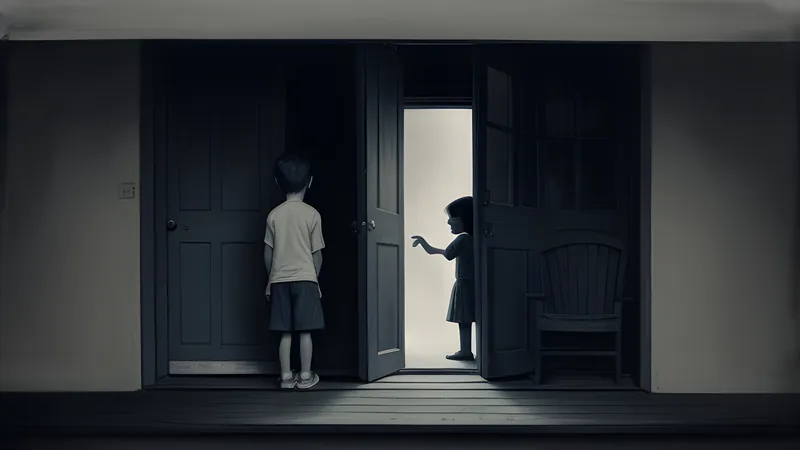
Take the legend at its fullest, the way it is told on the tours and in the paperbacks. John Bell was a prosperous farmer who had brought his family from North Carolina to the Red River settlement near Adams, in Robertson County, in the early years of the nineteenth century. Around 1817 the trouble started outside: Bell reported seeing a strange animal in a field, part dog, part rabbit, and shot at it, and it vanished. Then the noises came into the house. Knocking on the doors and walls after dark. The sound of something scratching and gnawing. Bedclothes pulled from the beds. The Bell children, especially the young daughter Betsy, were slapped, pinched and dragged by their hair by something no one could see, and Betsy suffered fits and faintings.
Then the presence learned to speak. At first a faint whisper, then a voice that grew clear and loud and tireless. It identified itself in different ways at different times, but the version that stuck was that it was the spirit of Kate Batts, a living neighbour with whom John Bell had quarrelled bitterly over a land or property dealing, so that the entity came to be called “Kate,” or simply “the Bell Witch.” Kate held court in that farmhouse for years. She recited long passages of the Bible flawlessly. She reported, accurately, on things happening far from the house. She tormented John Bell with declining health and open threats. She took a violent dislike to Betsy’s engagement to a local young man, Joshua Gardner, and hounded the courtship until the couple broke it off. And in the winter of 1820 John Bell sickened and died, with the voice claiming the victory.
The most celebrated flourish came later: the story that Andrew Jackson, the future president, hearing of the haunting, travelled out to the Bell farm to see for himself, and left declaring that he would rather face the entire British army than spend another night with the Bell Witch. It is a wonderful line, and there is no contemporary evidence Jackson ever said it, or went.
The kernel: a real family on a real frontier
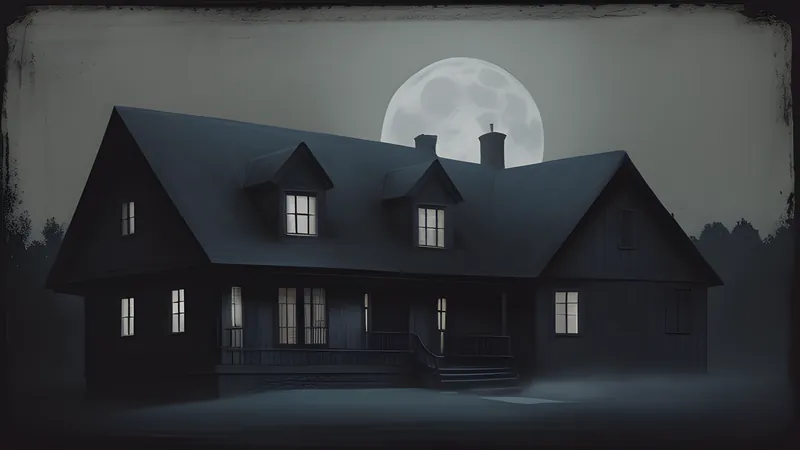
Strip the voice away and there is solid ground underneath, which is what makes the legend durable rather than merely silly. John Bell was a genuine person. A farmer of that name did live and farm in the Red River area of Robertson County in the early nineteenth century, and he did die around December 1820. The Bell family was real, the neighbours named in the story lived in that community, and Kate Batts appears to have been an actual local woman. The tensions the legend hangs on — disputes over land, over the sale of an enslaved person, over money and reputation in a small, church-centred frontier settlement — are exactly the sort of frictions that filled such communities. Adams, Tennessee, is a real place; the Bell farmstead was a real farmstead; the Red River Baptist congregation the family belonged to was a real congregation.
That is the honest core: a real, moderately prosperous frontier family, a real death, and a web of real neighbourly quarrels in a tight rural community around 1820. Everything else — the talking, the poison, the scripture-quoting spirit called Kate — floats above that core without a single piece of contemporary documentation to anchor it. And here the case becomes genuinely interesting, because the gap between the small documented kernel and the enormous elaborated legend is not a vague fog. It has a shape, and a date, and an author.
The fork: a book, and a diary no one has seen
The Bell Witch as we know it was largely made in 1894, by a Robertson County newspaperman named Martin Van Buren Ingram. His book, An Authenticated History of the Bell Witch of Tennessee, is the source from which nearly every later telling descends — the voice, the poisoning, the Jackson visit, the scripture recitations, the years of nightly torment, all of it in rich narrative detail. Ingram was born after the events; he did not witness anything he described. The word “Authenticated” in his title is doing an enormous amount of work.
The spine of Ingram’s claim to authenticity is a document he presents as the diary of Richard Williams Bell, one of John Bell’s sons, a manuscript called Our Family Trouble, supposedly written in the 1840s recalling the childhood haunting. Ingram quotes it at length. The difficulty is that no independent scholar has ever seen this manuscript; it survives only inside Ingram’s book, in Ingram’s framing, in Ingram’s words. A source that exists only as quoted by the man who needs it to be true is the sort of thing a patient investigator learns to hold at arm’s length. It is the same problem that shadows a great deal of nineteenth-century sensational history: the confirming document that only ever appears filtered through the author who benefits from it.
Trace backward from Ingram and the trail thins to almost nothing. There is a brief printed account of the haunting in a Tennessee historical sketch and in the Saturday Evening Post around the middle of the century, decades after the events; there is a mention in a county history in the 1880s. Before that, for the years 1817 to 1821 themselves, when the voice was supposedly filling a farmhouse night after night and drawing visitors from across the district, there is no contemporary newspaper report, no letter, no diary anyone can produce, no church record of the sensation. A talking spirit that tormented a family for four years and killed the head of the household left no mark on the paper of its own time, and then acquired hundreds of pages of vivid detail seventy years later. That is the fork: the documented death of a real farmer in 1820, and a legend that received most of its body in 1894.
The journey: how the frontier kept a ghost
A story does not survive eighty years of oral retelling and then flower into a book unless it is doing work for the people who carry it, and the Bell Witch was doing several jobs at once. On the frontier a haunting was entertainment, moral instruction and neighbourhood politics folded together. A voice that quoted scripture and punished a proud man reinforced the values of a hard, devout, Baptist farming community. A spirit that took the name and grievance of a living neighbour, Kate Batts, gave shape to the ordinary venom of small-town feuds; to say the Bells were tormented by “Kate” was to say something pointed about a real quarrel without saying it outright.
Ingram’s 1894 book then fixed the fluid oral tale into a single canonical text at the exact moment such things were being fixed all across America, as local legends were written down, sold and turned into regional identity. In the twentieth century the Bell Witch became Tennessee’s signature ghost story, feeding a “Bell Witch Cave” tourist attraction near Adams, a stream of books, and eventually films. Each retelling added polish and lost caveats, until the tentative, unsourced, seventy-years-late account hardened into “the best-documented haunting in American history,” a phrase the case cannot actually support but which it wears comfortably.
What the farmhouse was really carrying
Look at where the disturbances centred and a familiar human pattern emerges. The violence of the haunting, in every telling, gathered around the adolescent daughter, Betsy Bell. She was the one slapped and pinched and thrown into fits; the spirit’s fiercest campaign was against her engagement to Joshua Gardner. This is the recurring signature of the poltergeist story across cultures and centuries: the phenomena concentrate on a young person, usually a girl, at a moment of strain — approaching adulthood, a contested courtship, a household under pressure. Whatever the true mixture of a distressed teenager, a family’s real fears, the ordinary noises of a timber farmhouse at night, and the community’s appetite for a marvel, the legend organised itself, as these legends reliably do, around the person with the least power and the most turmoil in the house.
That places the Bell Witch in clear company. It sits beside the disturbances that gathered around two girls in a council house in the Enfield Poltergeist, where a child’s voice again became the centre of the whole affair, and beside the way a community’s quarrels and fears could be turned outward and given a shape in the Salem Witch Trials, where accusation ran, as at the Bell farm, along the fault lines of real local grudges. The word “witch” in the Bell story is doing the same job it did in Salem: taking a knot of ordinary human resentment and calling it something supernatural, so it can be spoken aloud.
The ghost that talked
There is no need to decide, from this distance, whether a single frightened night in 1817 was real, or whether Betsy Bell suffered something no one in that house could name, or whether the whole thing grew in the retelling the way a good frontier yarn always does. Those questions cannot be settled with the evidence that survives, and pretending otherwise would be its own kind of dishonesty. What can be seen clearly is the machinery: a real family, a real death, a web of real feuds, and then a long silence, and then a book that arrived seventy years later and gave the silence a voice — a voice that quoted scripture, named its enemy, and has been talking ever since.
That is the quietly astonishing thing about the Bell Witch. Most ghosts are remembered for a cold presence and a slammed door. This one is remembered for what it said, and almost everything it is remembered as saying was written down by a man born too late to have heard it, working from a diary that only he could see. The haunting that talked is, in the end, a story about how a community talks — how it turns its dead, its quarrels and its frightened daughters into a single voice in the dark, and keeps that voice speaking long after everyone who first heard it has gone quiet.
Related Content