The Beast of Bodmin Moor
Cornwall's phantom cat, a government report, and a skull in the river
Contents
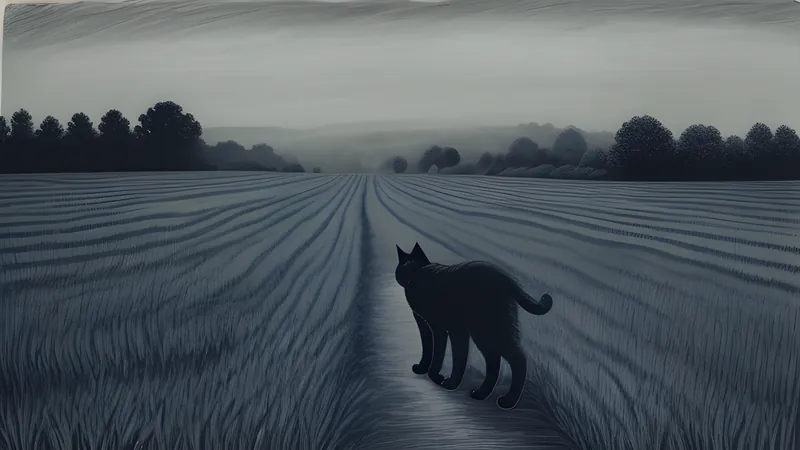
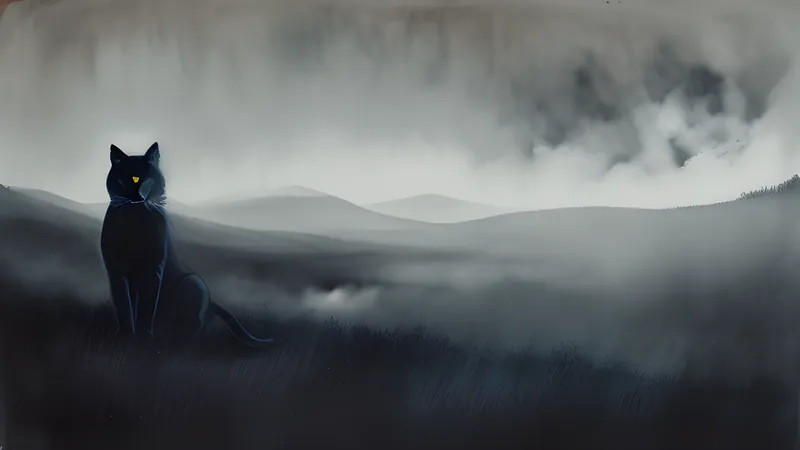
A farmer walks out at first light onto Bodmin Moor and finds a ewe dead in the bracken, the throat opened, the carcass half-eaten and dragged. There are no gunshots, no signs of a dog worrying the flock into a fence. Something took it cleanly and fed. Over the years the reports pile up: a large dark cat crossing a lane at dusk, amber eyes caught in headlights, a low cough carried across the granite tors, paw prints too broad for any fox. The moor, all bog and standing stone and abandoned tin workings, is exactly the kind of country that could hide a leopard, and the people who farm it are not fools or fantasists. That is what makes the Beast of Bodmin Moor one of the most durable legends in modern Britain.
Told straight, it is genuinely unsettling. A big cat loose in the West Country is not physically impossible, the witnesses are often sober and sceptical, and the dead livestock are real. To dismiss the whole thing as hysteria would be to miss how reasonable the belief looks from a Cornish farm gate. The interesting work is tracing where the story came from, which real events fed it, and why it took the particular shape it did.
A wave that swept the whole country
The Beast of Bodmin belongs to a much larger phenomenon that folklorists and zoologists call the British “alien big cats”, or ABCs, a nationwide pattern of sightings of large, usually black, panther-like animals in the countryside. Cornwall’s beast is the most famous, but it has cousins across the map: the Surrey Puma of the 1960s, the Fen Tiger of East Anglia, the Beast of Exmoor, and dozens of local phantoms. The reports cluster and fade in waves, and each region tends to name its own. The Bodmin wave built through the 1980s and peaked in the 1990s, when Cornish newspapers, and then the national press, could reliably run a big-cat story any slow week.
By the mid-1990s the sightings had become a genuine local problem. Farmers reported losing sheep, worried about their livelihoods, and demanded action, while the moor’s tourist trade quietly enjoyed the notoriety. In 1995 the pressure reached Whitehall, and the Ministry of Agriculture, Fisheries and Food commissioned an official investigation into whether a big cat was preying on livestock on Bodmin Moor. It is not every legend that gets its own government report.
What the record actually supports
The kernel of the Bodmin story is more solid than sceptics sometimes allow, and it starts with a piece of legislation. In 1976 Parliament passed the Dangerous Wild Animals Act, which for the first time required owners of exotic pets, including the leopards, pumas and other cats that had been fashionable status symbols in the permissive years before, to hold a licence, meet strict welfare and safety conditions, and pay for the privilege. Overnight, keeping a private panther became expensive and legally fraught.
There is credible evidence that some owners responded by quietly releasing their animals into the countryside rather than comply or pay for them to be put down. Documented cases exist of exotic cats being kept, and occasionally escaping, in Britain across the twentieth century; a puma known as Felicity was captured alive in Scotland in 1980 and lived out her days in a wildlife park. It is entirely plausible that a handful of leopards and pumas were loose in rural Britain in the late 1970s and early 1980s. What is far harder to sustain is the idea of a breeding population surviving undetected for decades, leaving no reliably identifiable carcass, no roadkill, no unambiguous photograph, across some of the most walked and farmed landscape in Europe. The real history gives the legend a genuine seed; the legend grows a forest from it.
Zoologists have never dismissed the whole question out of hand, which is part of why it endures. Scotland produced the Kellas cat, a genuinely real black felid, initially treated as a myth, that turned out to be a hybrid of wildcat and domestic cat; its existence proved that a folk animal could occasionally have flesh on it. Occasional escapes and captures of exotic cats are matters of record. What the science withholds is the one thing the legend needs: a sustained, reproducing population leaving the ordinary traces such an animal must leave. The honest zoological position sits in an uncomfortable middle, conceding the odd loose leopard while doubting the enduring Beast, and that middle is precisely the ground on which folklore flourishes.
The fork: the report and the skull
The moment where the record and the myth part company came in the summer of 1995, and it played out almost like theatre. In July, the MAFF investigation published its findings. The report concluded that there was no verifiable evidence of a big cat living wild on Bodmin Moor, and that the livestock injuries examined were consistent with more ordinary causes such as native scavengers and dogs. Crucially, and this is the sentence the believers held onto, it added that the absence of evidence did not amount to proof that no big cat was present. A cautious scientific caveat became, in retelling, an official refusal to rule the Beast out.
Then, within days of the report, a boy walking beside the River Fowey found a large cat skull in the water. Here, it seemed, was the physical proof at last. The skull was sent to the Natural History Museum in London for examination, and the museum’s verdict is one of the most instructive episodes in the whole saga. The skull was indeed that of a leopard, a real one, but it had never hunted on Bodmin Moor. The bone showed cut marks consistent with the animal having been skinned and mounted; the back of the skull had been cleanly removed in the manner used to prepare a leopard-skin rug; and inside was found the egg case of a tropical cockroach, an insect that could only have arrived with an imported hide. The skull was a fragment of a rug, most likely brought back from abroad, and it had entered the river long after the leopard’s death in some warmer country. The timing, so soon after the sceptical report, gave the find a dramatic charge it could not sustain once the science came in.
Who carried the story, and how it grew
Legends like this are carried by an ecosystem of people, most of them entirely sincere. Farmers with dead stock need an explanation, and a predator that no one can quite catch is a serviceable one, especially when the alternative is admitting that a neighbour’s dog is loose or that the losses are simply the ordinary attrition of hill farming. Local newspapers learned that big-cat stories sold, and a photograph of a blurry dark shape on a distant slope, however inconclusive, was always worth a front page. Amateur investigators, some careful and some credulous, built networks to log sightings, plaster-cast prints and compare notes across counties, lending the phenomenon a documentary weight.
Onto this the natural world obligingly supplied raw material. At dusk, across broken ground, a domestic cat gone feral, a large black dog, a melanistic escapee, or simply a fox in the wrong light can all read as something bigger and stranger, particularly to an eye already primed by the local legend. Deer and native scavengers can leave a savaged carcass that looks, to a distressed farmer, like the work of a great cat. Each sighting made the next more likely, because everyone now knew what they might see. The Bodmin Beast, in this sense, behaves exactly like the phantom big cats reported across Britain, and like the Surrey Puma that set off Britain’s first great big-cat flap a generation earlier.
The sightings that fixed the image
A handful of specific episodes gave the Beast its public face. The Cornish reports gathered pace through the 1980s, and by the time the national press adopted the story the moor had become shorthand for the whole British big-cat phenomenon. In 1998 a farmer at Bolventor, near the middle of the moor, filmed roughly twenty seconds of footage showing a black animal moving along a field edge, footage that ran on national news and was pored over by enthusiasts and sceptics alike. As with almost every piece of ABC film, the problem was scale: with no fixed reference object in frame, a large cat some distance away and an ordinary domestic cat much closer look identical on tape. The video convinced those already convinced and settled nothing for anyone else, which is the fate of nearly all such evidence.
That pattern is worth dwelling on, because it is the engine of the legend. Big-cat sightings are almost always brief, at distance, in poor light, and unrepeatable. They generate exactly the kind of evidence that cannot close the question in either direction: too suggestive to dismiss, too thin to confirm. A phenomenon that can never be resolved is a phenomenon that can never die, and the Beast has drawn its longevity from precisely this ambiguity. Every inconclusive photograph is read by believers as another near-miss and by sceptics as another non-event, and both camps come away more certain than before.
What the moor is really carrying
To understand why the Beast holds, look at the land it haunts. Bodmin Moor is a high, boggy granite upland stitched with prehistoric monuments, Bronze Age hut circles, standing stones and the ruins of a tin and copper industry that collapsed and left the moor emptier than it had been for centuries. It is genuinely lonely country, prone to sudden mist, and it sits in a Cornwall that has spent decades watching its old industries die and its young people leave. A landscape like that has always attracted its beasts. The moor already carried older legends of spectral hounds and the Devil’s own pack; the big cat is the modern heir to that tradition, a wildness restored to a place that feels, to those who live there, both emptied out and quietly menacing.
There is something almost consoling in a nameable predator. Hill farming is a long argument with forces that offer no villain to blame: falling prices, foot-and-mouth, weather, the slow economic bleed of the rural West. A great cat on the moor gives the losses a face and a shape, an adversary that could in principle be tracked, photographed, even shot. It restores agency to people who have very little of it against the real pressures on their livelihoods. The Beast is, among other things, a way of insisting that the wild has not been entirely tamed, that the ancient moor still holds something the modern world cannot license, count or explain away, which after the emptying of Cornwall is a strangely comforting thing to believe.
The story also flatters the teller. To have seen the Beast, or to farm the ground it prowls, is to hold a piece of local knowledge that outsiders and officials lack. When a government report and a museum can be arrayed on one side and a lifetime of walking the moor at dawn on the other, the moor tends to win the loyalty of the people who know it best. That loyalty is a form of belonging, not credulity.
So the Beast of Bodmin Moor pads on, refreshed every few years by a fresh photograph or a savaged ewe, sustained by a real change in the law, a genuine handful of escaped cats, and a landscape purpose-built for legend. What it offers is really a way of reading a hard and beautiful place rather than an animal at all: a granite wilderness that keeps its own counsel, a farming life pressed on every side, and the deep human wish for the map to still have a wild corner with something breathing in it. For a very different beast that grew from the same soil of moorland dread, see how Black Shuck became the ghost dog of the East Anglian coast, and for the continental ancestor of the man-eating legend, the Beast of Gévaudan and the wolf that ate a legend.
Related Content