The Beast of Bodmin: Britain's Phantom Big Cats
A government investigation, a leopard-skin rug and thirty years of paw prints in the Cornish gorse.
Contents
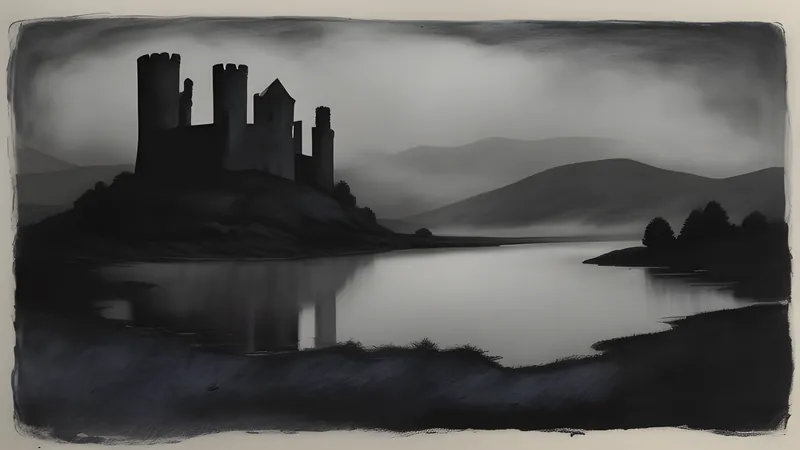
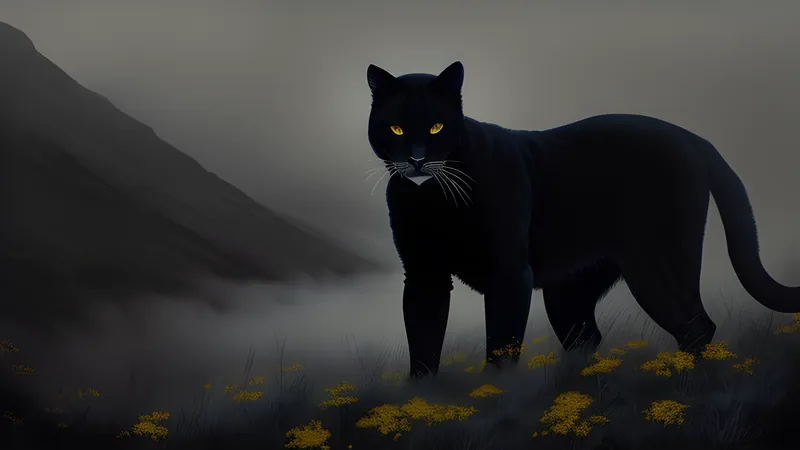
Bodmin Moor is thirty square miles of granite tor, gorse and standing stone in the middle of Cornwall, the sort of landscape where a mile of walking can put three farms, a Bronze Age burial cairn and a working sheep flock between you and the nearest road. In the summer of 1983 a farmer there found sixteen of his sheep dead, their throats torn in a way he had never seen a fox or a dog manage, and told a local newspaper he believed something bigger had done it. Within a few years “the Beast of Bodmin” had a name, a silhouette — low, black, cat-shaped, moving at a lope through the bracken — and a following of people who had seen it with their own eyes: dog walkers, farmers checking fences at dusk, a police officer on patrol who filed an official sighting report. Britain, it turned out, was not short of phantom big cats. Bodmin’s was simply the one that got famous enough to make the Ministry of Agriculture send someone to look.
What the government actually found
By 1995 the sightings around Bodmin Moor had built up over more than a decade — farmers reporting livestock deaths, walkers describing a large black cat at a distance, the odd grainy photograph — and enough public and press pressure had accumulated that the Ministry of Agriculture, Fisheries and Food commissioned a formal investigation. Six weeks of fieldwork followed: officials interviewed witnesses, examined the moor for tracks and scat, and reviewed veterinary reports on the “mutilated” livestock. The resulting report, published that July, concluded there was no verifiable evidence of a big cat living wild on Bodmin Moor. The sheep deaths, on veterinary examination, were consistent with normal predation by foxes and domestic dogs, or with natural causes followed by scavenging — nothing required a leopard’s jaw. No confirmed track, no scat that tested positive for a large felid, no carcass, no clean photograph.
The report did not, however, dismiss the witnesses as unreliable or the moor as empty of anything unusual. It noted, almost as an aside, that the topography and low population density of Bodmin Moor could not rule out an animal passing through occasionally, and left the door very slightly open — a hedge that has been quoted by believers ever since as evidence the government itself thinks something is out there. What MAFF actually delivered was a null result with a diplomatic footnote, which is a less satisfying headline than either “Beast Confirmed” or “Beast Debunked,” and the story kept moving regardless.
The skull that almost sealed it
Three years later the evidence took a turn that looked, briefly, decisive. In 1998 a dog walker found a skull half-buried near the River Fowey, not far from the moor, and it went straight to the Natural History Museum for identification. The verdict: a genuine leopard skull, from an animal that had definitely once been alive and definitely was a big cat. For a news cycle it looked like proof. Then the detail work caught up with the headline. The skull showed evidence of having been mounted or otherwise processed — a hole drilled through the cranium consistent with preparation as a trophy or rug mount — and its condition and the surrounding soil chemistry were inconsistent with an animal that had died and decomposed on the moor over years. The more mundane explanation fit better: the skull was almost certainly a remnant of an imported leopard-skin item, a rug or a taxidermy piece, that had been discarded or lost rather than the remains of a living wild leopard stalking Cornish sheep. It became known locally as the “Bodmin skull,” and it is now one of the tidiest illustrations in British cryptozoology of how a single physical artefact can look like a smoking gun and turn out to be a museum piece that fell off the back of an estate sale.
Where a real predator could plausibly have come from
The story does have a genuine, well-documented mechanism behind it, which is what keeps serious naturalists from dismissing the whole phenomenon outright. Until the Dangerous Wild Animals Act 1976 came into force, keeping an exotic animal — a puma, a lynx, a leopard — in a private British garden required no special licence at all. Anyone with the money and the inclination could own one. The Act changed that overnight, requiring an expensive licence, secure enclosures and regular inspection, and the practical effect was that a number of private owners of big cats faced a choice between an unaffordable compliance bill and getting rid of the animal. Some almost certainly went to zoos or approved sanctuaries. Rescue organisations and wildlife officials have long suspected that others were simply released into the countryside, quietly, rather than surrendered or destroyed — a pattern with no paper trail by design, since releasing an exotic predator into the wild has always been illegal and nobody was going to volunteer a confession.
If even a handful of pumas or small leopards were turned loose across rural Britain in the late 1970s, a mystery like Bodmin’s becomes far less mysterious. A large cat is a solitary, mostly nocturnal, highly territorial animal that avoids humans by instinct; a single released puma, or even a small breeding population descended from a released pair, could plausibly survive undetected in remote moorland for decades, glimpsed occasionally at dusk and never quite photographed. British naturalists and even some police wildlife liaison officers have treated an “escaped menagerie” as the most parsimonious explanation on offer, considerably more parsimonious than an unrecorded native British big cat somehow surviving since the Ice Age, which nobody serious proposes. It does not require Bodmin’s beast to be one continuous animal, either — a rotating cast of a handful of escapees and their descendants, moving through similar terrain over forty years, would produce exactly the pattern of intermittent, geographically clustered sightings the record shows.
Britain’s own fossil and archaeological record makes the underlying biology plausible too. The Eurasian lynx was a native British predator until it was hunted to extinction sometime in the early medieval period, and wildcats — smaller, but genuinely wild and genuinely dangerous to handle — still cling on in the Scottish Highlands today in small, carefully monitored numbers. The landscape has clearly supported mid-sized wild felids before; the terrain’s capacity to hide a predator was never really in question. What changed after the 1970s was the sudden, legally forced turnover of a private exotic-pet population that had never existed at that scale until the licensing law arrived to disrupt it.
Why a fence at two hundred yards fools everyone
Even setting the escaped-menagerie theory aside, there is a mundane perceptual problem that inflates ordinary animals into beasts on open moorland, and it is worth taking seriously because it applies whether or not a single puma was ever actually released. Bodmin Moor is famously short of reference points — no trees for long stretches, no buildings, no fences close enough to judge scale against — and psychologists who study eyewitness misidentification have long noted that humans are poor at estimating the size of an unfamiliar animal against featureless terrain, especially at dusk, when colour vision degrades and the eye relies on rod cells that are good at detecting motion but bad at resolving detail. A domestic cat crossing open moorland two hundred yards away, silhouetted against the sky with no scale reference nearby, reads to the eye as considerably larger than a cat. A large dog off its lead, moving low and fast through waist-high bracken, can look for a fraction of a second exactly like the low, loping profile every Bodmin witness describes. None of this requires anyone to be lying, or careless, or foolish — it requires only ordinary human vision doing its ordinary job under conditions it was never well suited to, on a landscape practically designed to remove every clue that would normally correct the mistake.
A moor that learned to sell its beast
The sightings also arrived at a moment when Cornwall’s tourist economy had every incentive to let the story run. By the 1990s the county’s fishing and mining industries were in long decline, and a mysterious predator prowling a wild, ancient moor was, whatever else it was, excellent copy for a region increasingly dependent on visitors drawn by exactly that kind of atmosphere. Local newspapers covered each fresh sighting at length; a pub near the moor renamed itself in the beast’s honour; walking guides began marketing “beast trails” alongside the standard tor-and-stone-circle routes. None of this proves the sightings were invented for profit — the earliest reports predate any commercial angle, and farmers reporting dead sheep in 1983 had nothing obvious to gain from it — but it does explain why the story, once it existed, was never allowed to quietly fade the way most local rumours do. Every economic incentive pointed toward keeping the beast alive in print, and print is exactly what keeps a rumour circulating long after the original sightings that started it.
A sighting culture that outlived the sheep deaths
What is notable about the Beast of Bodmin, compared with a cryptid like Bigfoot, is how unglamorous the actual sightings tend to be. Nobody reports Bodmin’s cat doing anything spectacular. It is glimpsed loping across a field at two hundred yards, or crossing a lane in headlights, or leaving tracks a farmer photographs on a phone before the rain gets to them. That mundanity is, if anything, what makes the reports collectively credible as something — dozens of independent witnesses over decades describing a consistent, boring, physically plausible animal, rather than a monster escalating in drama with each retelling the way the Loch Ness Monster’s photographic record did across the twentieth century. It shares that low-key, almost bureaucratic quality with Mothman, another cryptid whose original reports were strikingly restrained compared with the mythology that grew up around them afterwards.
It also helps that Bodmin was never alone. Britain has an entire minor genre of “beast” place names — the Beast of Exmoor, the Fen Tiger of East Anglia, the Surrey Puma of the 1960s, the Beast of Buchan in Aberdeenshire — each with its own decades-long sighting log and its own local believers, and each susceptible to exactly the same escaped-menagerie logic. None of them has ever produced a body. What they have produced, reliably, is livestock deaths that farmers want explained by something more dramatic than an unusually large fox, and a landscape — moor, fen, forest edge — genuinely empty and quiet enough that an ordinary predator passing through at dusk could go unphotographed for a human lifetime.
Why the sighting never stops
The Beast of Bodmin persists because the conditions that produce it never really go away. Sheep still die of causes a stressed farmer would rather accept as dramatic than mundane. Walkers on empty moorland at dusk still see a low dark shape move fast through gorse and vanish before a phone comes out, and the brain, primed by forty years of local newspaper stories with the word “Beast” in the headline, reaches for the shape it already has a name for — a large dog, a deer at a bad angle, a shadow moving with the wind through bracken, all quietly relabelled by expectation. A single, real, well-documented legal change in 1976 quietly created the conditions for a population of large, secretive predators to exist in the British countryside for a generation, and a single misidentified skull in 1998 nearly closed the case in the wrong direction before the forensic work caught up with the headline. Between those two facts sits four decades of a Cornish moor doing what empty, half-wild land has always done for the people who walk it: giving their fear a shape just plausible enough that going home before dark stops feeling silly.
Related Content