The Balloon Boy Hoax: A Family, a Mylar Saucer, and a Watching Nation
For two hours in 2009, an entire country followed an empty balloon across the Colorado sky

Contents
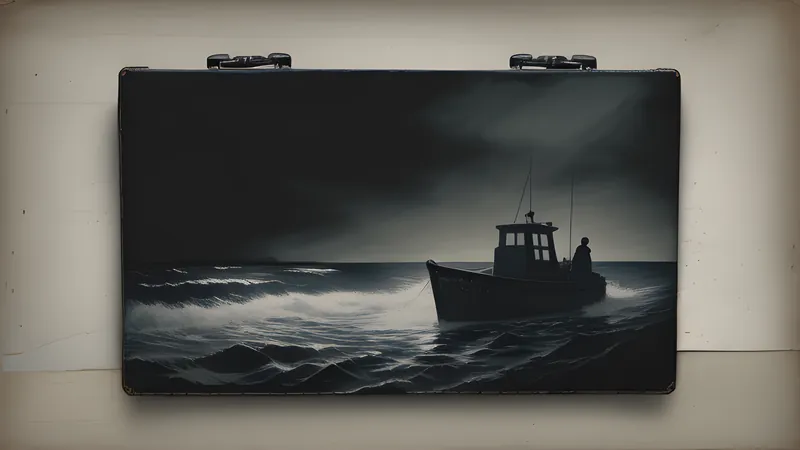
At around 11:30 on the morning of 15 October 2009, a large silver disc rose out of a backyard in Fort Collins, Colorado, and drifted east on the wind at roughly seven thousand feet. It was homemade, a helium balloon shaped like a flying saucer, about twenty feet across, and within the hour a family had told the authorities that their six-year-old son, Falcon Heene, had climbed into a compartment underneath it before it slipped its tether and floated away. Local news helicopters found the balloon over open country and stayed with it. The national networks cut in. For close to two hours, a very large share of the American population watched a shining object move across the sky and quietly did the arithmetic on how long a small boy could survive up there, and what would be left to find when it came down.
The afternoon the country held its breath
The spectacle was total in a way that is difficult to reconstruct now. Denver International Airport briefly halted departures. The National Guard scrambled a helicopter. Cable news abandoned everything else and gave the balloon the full apparatus of breaking-news coverage — the running chyron, the aviation experts, the retired first responders speculating on the phone about wind shear and altitude. Because the object was genuinely airborne and genuinely uncontrolled, and because the claim attached to it was genuinely unbearable, there was no editorial mechanism to slow any of it down. The story was moving faster than anyone could check it, and it was checking every box a newsroom is built to respond to: a child, in immediate mortal danger, live, with pictures.
The balloon finally came down in a field near Denver International at about 1:35 in the afternoon. Rescuers reached it and found the compartment empty. For a stretch of perhaps an hour after that, the coverage curdled into something worse than the balloon itself, because now the working assumption was that Falcon had fallen out somewhere along the flight path, and helicopters and ground crews began retracing the route looking for a body in the fields of Weld County. Then, a little after four o’clock, the boy was found at the family home in Fort Collins. He had been hiding the entire time in a cardboard box in the rafters of the garage attic, having been frightened, he said, of getting into trouble.
The interview that broke it open
The Heene family — Richard, Mayumi, and their three sons — gave interviews that same evening, and it was during one of them, on CNN with Wolf Blitzer, that the story quietly detached from its moorings. Richard was asked, on camera, why Falcon had stayed hidden, and he put the question to the boy directly. Falcon looked at his father and said, “You guys said that we did this for the show.” The pause that followed is the whole story in a single second of television. Richard tried to talk over it; Mayumi looked away; and a very large number of viewers understood, all at once and together, that they had spent an afternoon being frightened on purpose.
What the phrase pointed at was not incidental. The Heenes were not private people who had wandered into the news. They were, by inclination and recent history, performers. Richard Heene was an amateur storm chaser and self-styled scientist with a long-running ambition to land a reality television series about the family; they had already appeared twice on the ABC show Wife Swap, and Richard had been shopping a programme concept around production companies. The balloon, the sheriff’s investigators would come to argue, was built and released as an audition — a spectacle designed to be too big to ignore, produced by a family who had already learnt that being watched was a currency and were trying to earn more of it.
The unravelling in the sheriff’s office
Larimer County Sheriff Jim Alderden, who had spent the first day publicly treating the family as victims of a terrifying accident, spent the following days doing what the live coverage never had time to do: checking. The physics were the first problem. Engineers and balloon experts calculated that the craft, as built, could not have lifted the weight of a fifty-pound child, and probably not much weight at all. Falcon’s own account kept shifting. And there were the interviews, plural, in which one child or another said a little more than the story could absorb. On 18 October, three days after the flight, Alderden announced that the whole thing had been, in his words, “a hoax,” and that charges were coming.
There was also the matter of the emergency itself, which had been real in its cost even though its subject was invented. The search had scrambled aircraft, halted an international airport’s departures, pulled in the National Guard and county rescue crews, and consumed the attention of agencies whose resources are finite and whose next genuine emergency had to wait its turn. Mayumi Heene, in her statement to investigators, admitted the family had known Falcon was hiding at home and had gone ahead with the account regardless. That admission is what converted a family’s bad judgement into a criminal case.
There was, too, a detail from before the flight that investigators seized on. Robert Thomas, a research assistant who had worked with Richard Heene on other projects, told authorities and the press that Heene had spoken to him weeks earlier about a balloon-and-hoax idea explicitly framed as a way to draw media attention, and that Heene had been meticulously conscious of timing and coverage. The Heenes’ own history supplied the corroboration: the family had been building homemade research contraptions in the yard for months, had filmed themselves constantly, and had a documented appetite for the camera that stretched back through their two Wife Swap appearances. When Alderden’s investigators pieced the timeline together, the balloon stopped looking like a device that had failed and started looking like a device that had done exactly what it was built to do, which was to fly off on cue with the whole apparatus of local and national news already alerted.
They came. Richard Heene pleaded guilty to attempting to influence a public servant, a felony; Mayumi pleaded guilty to a misdemeanour of false reporting. Richard served ninety days, some of it on work release, and the couple were ordered to pay around $36,000 in restitution to the agencies that had launched the search. Prosecutors said openly that the motive was publicity, a hoped-for reality show and the money that would come with it. Years later, in December 2020, the outgoing Colorado governor pardoned both parents, saying the boys — who had been children directed by adults — deserved to move on, and that the couple had “paid the price.”
The family the cameras had already found
To understand why the stunt took the shape it did, it helps to know who the Heenes were before that morning. Richard Heene was a building contractor and self-taught storm chaser with a genuine, restless obsession with weather and invention; he styled himself a scientist, tinkered with contraptions in the yard, and had a real appetite for the camera. The family had appeared twice on ABC’s Wife Swap in 2008 and 2009, and had been memorable enough to be invited back — a rare thing — which told the Heenes something important about their own marketability. Richard had been actively pitching a reality series, sometimes described under the working idea of a science-adventure show for the family, and had shopped concepts around production companies without a bite. The balloon, investigators came to believe, was an escalation of exactly that campaign: a spectacle grand enough that the networks would have to come to him.
The timing sharpened the point. The autumn of 2009 sat near the peak of the American family-reality boom — the era of Jon & Kate Plus 8 and 18 Kids and Counting, when ordinary households with enough children and enough drama were being converted into franchises. A man watching that landscape from Fort Collins could reasonably conclude that the distance between his living room and a television contract was a matter of producing a big enough event. He was wrong about the method and the morality, and right about the underlying economics, which is what makes the episode so uncomfortable to examine.
Why the empty balloon still means something
It is easy, and not entirely wrong, to file Balloon Boy under bad-taste stunt and move along. But the reason the phrase still surfaces, sixteen years later, is that the afternoon exposed a machinery that had nothing to do with the Heenes and everything to do with the rest of us. The hoax worked because it was engineered to exploit exactly the reflexes that make a live newsroom function: the object was real and visible, the stakes were a child’s life, and the story arrived faster than verification could travel. Every incentive in the system pointed toward airing it and none pointed toward pausing. The Heenes did not fool the networks so much as they read the manual and pressed the buttons in the correct order.
There is a folkloric shape here that predates cable news by centuries — the false alarm, the cry of wolf, the community mustered by a danger that turns out to be staged. What was new in 2009 was the scale and the speed, and the specific fuel the era had added: the sense, widely shared by then, that ordinary life could be converted into broadcast if you made it dramatic enough, and that a family with the nerve to manufacture a big enough emergency might be rewarded with a series of their own. The Heenes believed that, and they were not being paranoid to believe it. That was, at the time, roughly how people became famous. The stunt’s cruelty and its logic came from the same source.
What we were really watching
Ask the more interesting question — why did it hold us — and the answer is uncomfortable. It held the country because the country was, by 2009, extremely practised at watching real families in engineered situations and feeling real emotion about them. The apparatus of reality television had taught tens of millions of people to invest genuine dread and hope in staged jeopardy, and Balloon Boy simply removed the studio and put the same product in the open sky, where the emotions could be summoned without any of the usual signals that this was a show. The audience supplied the fear itself; the family supplied only the balloon.
The boy in the attic, hiding in a cardboard box because he thought he was in trouble, was the one person in the whole affair behaving honestly. Everyone above him in the structure — the parents staging it, the networks amplifying it, the audience consuming it — was performing a role in a spectacle whose subject was a danger that did not exist. That is the durable thing here, and it is why the story keeps its grip. It is a small, clean example of how a media culture can generate an enormous quantity of authentic feeling around a completely hollow centre, and how rarely, in the moment, anyone is positioned to notice the centre is hollow.
For related studies in staged spectacle and the audience’s part in it, see the Berners Street hoax, a Regency prank that turned an entire London street into an unwitting cast, and the Cardiff Giant, where the public kept paying to see a fake long after it had been exposed, because the shared experience of being fooled had become the point.
Related Content