The Babysitter and the Man Upstairs: A Legend's Long Phone Line
The calls are coming from inside the house, and a warning about a girl left alone that keeps finding new technology to travel down.
Contents
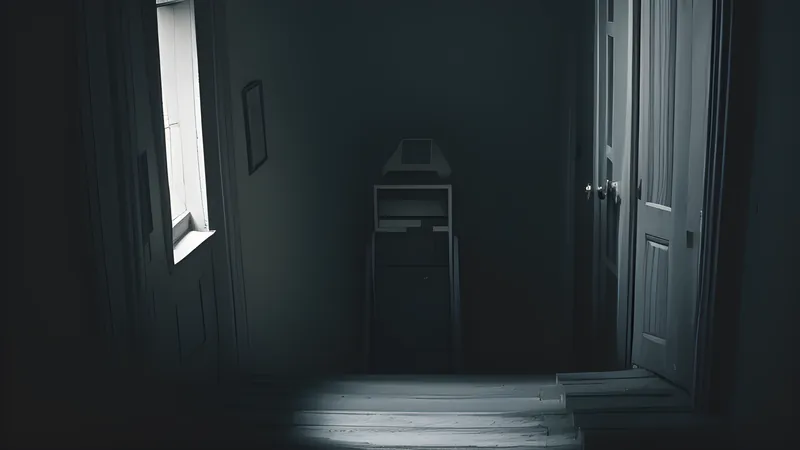
A teenage girl is babysitting in a large house she does not know well. The parents are out for the evening, the children are asleep upstairs, and she is alone in an unfamiliar living room when the phone rings. A man’s voice asks, softly, whether she has checked the children. She hangs up. It rings again, and again, the same question growing more menacing each time. Frightened, she calls the operator, or in later versions the police, and asks them to trace the calls. They call her back with an instruction that has become one of the most quoted lines in all of American folklore: get out of the house now, because the calls are coming from inside the house. He has been upstairs the whole time.
The shape of the fright
Almost everyone in the English-speaking world knows some form of this story, and the reason is engineering. The babysitter legend is built with the precision of a good short story, and every element is load-bearing. The girl is alone and responsible for children who are not hers. The house is unfamiliar, so she does not know its sounds or its rooms. The threat arrives through the one device that is supposed to connect her to safety, the telephone, which turns out to be the instrument of her terror. And the horrifying revelation is not that a stranger is approaching from outside, which is the fear she has spent the whole story managing, but that the danger has been above her head, inside the supposed safety of the walls, the entire time. The call to trace the line is a request for reassurance that instead delivers the worst possible news.
That final inversion is the whole machine. Horror scholars sometimes call this the “the threat is already inside” structure, and it recurs across the genre because it defeats every precaution the victim has taken. She locked the doors; he was already in. She called for help; the help only told her how close she had always been to death. There is no action she could have taken earlier that would have saved her, because the premise of the fear is that safety was an illusion from the first ring. A story built to that specification does not need embellishment. It only needs to be told in the dark, slowly, with the phone-trace line held back until the end.
Where it comes from
Unlike some legends, the babysitter story has a reasonably traceable emergence in the mid-twentieth century, and it belongs to the same postwar family as the Hook Man. Folklorists collecting American teenage lore from the 1960s onward found it circulating widely, and it clearly answered to a specific new social arrangement. The institution of the teenage babysitter, a young girl paid to supervise other people’s children alone in their home, was itself a product of postwar prosperity, suburban sprawl, and parents with the money and the inclination to go out for an evening. The babysitter was a new kind of figure: young, female, alone, and placed in temporary authority inside a house that was not her own.
Every element of that arrangement carried an anxiety, and the legend gathers them all. There was the parents’ anxiety about entrusting their sleeping children to a teenager. There was the babysitter’s own anxiety about being a young woman alone in a strange house after dark. And underneath both lay the broader postwar unease about the home as a fortress that might be breached, the fear that the locked suburban door was thinner than it looked. The story pins all of this to a telephone, the household object that most concretely represented the link between the isolated home and the outside world. When the operator traces the call, the legend delivers its verdict on all these anxieties at once: the fortress was compromised, the link to the outside was useless, and the babysitter was never as safe as the tidy suburban living room made her feel.
The real case underneath
There is one strand of genuine history braided into this legend, and it is worth handling carefully, because the babysitter story is unusual in having a plausible real antecedent. In March 1950 in Columbia, Missouri, a thirteen-year-old babysitter named Janett Christman was murdered while looking after a three-year-old child in the home of a family called the Romacks. She was found to have been assaulted and strangled, and there was evidence she had tried to telephone for help; the police believed she had attempted a call that never completed. The case was never definitively solved, though a suspect was long considered, and it received wide coverage.
Whether the Christman murder directly seeded the legend is impossible to prove, and folklorists are properly cautious about it. Legends rarely descend from a single origin in a clean line; they accrete from many sources and fears. But the resemblance is striking: a young babysitter, alone in a house with a small child, a threat that arrives while she is trying to reach the outside world by phone, a killing that shattered a community’s sense that a suburban evening was safe. It is entirely possible that a real, terrible, unsolved crime supplied a grain of fact around which the fear could crystallise, and that the “calls from inside the house” flourish was the folk imagination’s addition, the twist that turned a tragedy into a story that could be told and retold. The kernel, if it is one, is the disappearance of safety in a familiar-seeming home. Everything genuinely uncanny about the legend, the calls, the trace, the man upstairs, appears to be later invention.
A story that keeps changing phones
What makes the babysitter legend an unusually good specimen for a folklorist is that you can watch it upgrade its technology in real time, decade by decade, without ever changing its heart. In the earliest tellings the call is placed through a human operator, who traces it manually, a detail that dates the story precisely to the era of switchboard telephony. As direct dialling replaced operators, the trace migrated to the police, who in the tellings acquired an ability to locate a call almost instantly. When When a Stranger Calls, the 1979 film built entirely around this legend, put the story on screen, it fixed the phone-trace version in the popular mind for a generation, and its opening twenty minutes became a template that later horror films, including the opening of Scream in 1996, would echo and rework.
Then the mobile phone arrived and threatened to break the story, because a girl with a phone in her pocket is not dependent on the household line and cannot be trapped by a call to it. But the legend simply adapted. Newer versions move the threat to the babysitter’s own mobile, or to the discovery that the intruder has been watching through a laptop camera, or to a message that reveals he is already in the house. The specific device is interchangeable. What survives every upgrade is the structure, the young woman alone with children, the communication technology that promises safety and delivers dread, and the revelation that the danger was inside all along. A legend that can change its phone every twenty years and lose nothing is a legend built on something deeper than any phone.
What it is really warning
Strip away the telephone and the man upstairs, and the babysitter legend is a story about a particular vulnerability that has never gone away: a young woman placed alone, in charge, in a space she does not control, responsible for the safety of others while unable to guarantee her own. The parents in the story are absent, off enjoying their evening, having handed a teenager a burden of responsibility with no corresponding power to meet a real threat. The children she is protecting are asleep and useless to her. The house that looks like shelter is a trap. And the institutions she turns to for help, the operator, the police, arrive only in time to tell her how doomed she already was. That is a bleak portrait, and it is aimed at a real feature of the arrangement it describes.
Like the Cropsey legend, the babysitter story fastens a diffuse and legitimate fear onto a single vivid villain, and in doing so it makes that fear bearable enough to enjoy. Teenage girls have told this story to one another for seventy years, and they have told it with pleasure, precisely because it takes the genuine unease of the babysitting job, an unease many of them actually felt, sitting alone in a stranger’s living room listening to a house settle in the dark, and packages it into something with a shape and an ending. The fear is real. The man upstairs is the form it takes so that the girls telling it can hold the fear in their hands, pass it around, and then turn on the lights and go home. The phone keeps changing. The reason the story is told does not.
The babysitter and the final girl
The babysitter legend did not stay in the oral tradition. It walked directly into the horror film and became one of the founding templates of the American slasher, and tracing that migration shows how a piece of teenage folklore can quietly shape a whole genre. When a Stranger Calls opened with the legend more or less intact. Halloween, released in 1978, made its heroine Laurie Strode a babysitter stalked through a suburban neighbourhood on the one night the adults were away, and the film’s enormous success cemented the babysitter as the archetypal victim-survivor of the form. The literary critic Carol Clover, in her influential 1992 study of the slasher film, named the figure who lives to the end of these stories the “final girl,” the resourceful young woman who outlasts the killer, and the babysitter of the legend is one of that figure’s clearest ancestors.
What the films borrowed was the moral architecture as much as the plot. The babysitter is watched, tested, and menaced in a space that should be safe, and her survival, when she survives at all, comes from her own alertness rather than from any adult or institution arriving to save her. That is the same lesson the oral legend teaches, and it is why the story translated so cleanly to the screen. The audience already knew, from the version their older sister had told them, that the call would come from inside the house. The film only had to show them.
There is a reason this particular fright, rather than a hundred other campfire tales, became a cinematic engine. It offers a heroine the audience identifies with, a domestic setting every viewer recognises, and a threat that defeats every ordinary precaution. It scales from a whispered story at a sleepover to a feature film without losing a single one of its working parts. Folklorists like to say that a legend proves its strength by how well it survives being retold in a new medium, and by that measure the babysitter and the man upstairs is among the strongest stories the twentieth century produced. It jumped from the switchboard to the smartphone and from the sleepover to the cinema, and it is still, on some level, the same warning it always was: you are alone in a house that is not yours, and safety was never quite what it looked like.
Related Content