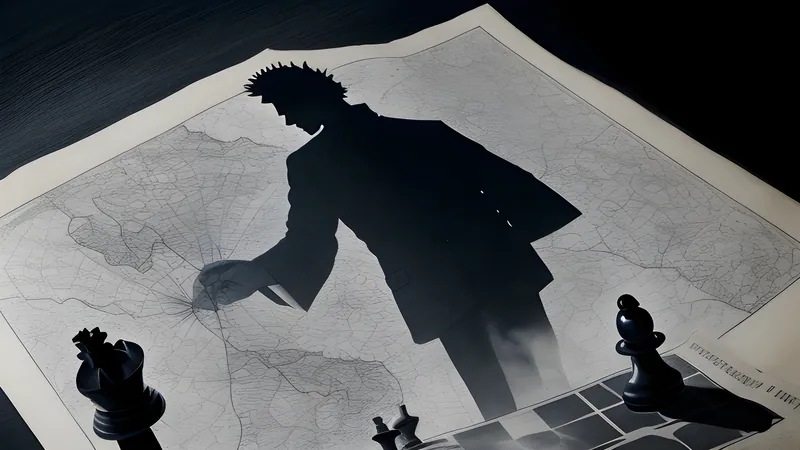
The 1MDB Scandal: How a Sovereign Fund Became a Global Fraud Case
A development bank meant to build a nation, hollowed out to buy a yacht and a Hollywood film about greed

Contents
In the summer of 2015, a Malaysian civil servant opened a bank statement and found something that should not have been there. Roughly 2.6 billion ringgit — close to 700 million US dollars — had moved into personal accounts belonging to the sitting prime minister, Najib Razak. The money had travelled a long, laundered road, but a paper trail existed, and once it surfaced in the pages of the Wall Street Journal and Malaysia’s own Sarawak Report, the fiction that had held for five years began to come apart. The fund at the centre of it, 1Malaysia Development Berhad, had been sold to the public as an engine of national progress. It turned out to be one of the largest kleptocracy cases the world has ever documented.
A fund built to build a country
1MDB was born in 2009, months after Najib became prime minister. On paper it was a state investment vehicle, a sovereign development fund modelled loosely on the successful ones in Singapore and the Gulf. Its stated purpose was patriotic and dull in the way good public finance is meant to be: attract foreign capital, invest in energy and real estate, generate returns that would flow back into Malaysian development. Najib chaired its advisory board. The government guaranteed its debt. The whole edifice carried the implicit weight of the Malaysian state.
The reality diverged from the prospectus almost immediately. Within its first years, 1MDB raised billions through bond issues arranged by Goldman Sachs — three bond sales in 2012 and 2013 that brought in around 6.5 billion dollars. Goldman earned roughly 600 million dollars in fees on those deals, an extraordinary margin for underwriting government-linked debt, and that fee alone should have prompted harder questions than it did. The money was supposed to fund power plants and joint ventures. A great deal of it went somewhere else entirely.
The person steering it there was not a minister or a banker of record. He was a young Penang-born financier named Low Taek Jho, known to everyone as Jho Low, who held no formal executive position at the fund at all. He was, in the language of the later prosecutions, the architect. Low had cultivated relationships across the Malaysian political elite and the Gulf’s sovereign funds, and he had a gift for making enormous sums of money appear to be doing legitimate work while they were quietly being drained.
Where the money actually went
The mechanics were baroque, and that was the point. Complexity is the natural camouflage of large-scale theft. Investigators in the United States, Singapore, Switzerland and Malaysia eventually reconstructed a system of shell companies with names engineered to sound like legitimate counterparties — an entity called Aabar Investments PJS Limited, for instance, was set up to be mistaken for the genuine Abu Dhabi fund Aabar Investments PJS. Money raised for development purposes was routed into these look-alike vehicles and then dispersed.
What it bought reads like an inventory of a certain kind of appetite. There were paintings by Monet and Basquiat and Van Gogh. There was a 250-million-dollar superyacht, the Equanimity. There was a stake in EMI music publishing, luxury property in New York, London and Beverly Hills, jewellery, a private jet, and gambling sprees in Las Vegas. And there was, with an irony almost too neat to be real, the financing of a Hollywood film — The Wolf of Wall Street, Martin Scorsese’s 2013 study of a stock swindler’s excess, was produced by Red Granite Pictures, co-founded by Najib’s stepson Riza Aziz, using funds the US Department of Justice later traced back to 1MDB. Stolen money, laundered through a movie about stolen money.
The US Justice Department’s civil forfeiture complaints, filed from 2016 onward, put the total misappropriated at around 4.5 billion dollars, drawn from a fund that had been leveraged with government-guaranteed debt. It was the largest single action the department’s Kleptocracy Asset Recovery Initiative had ever brought.
How the secret held, and how it broke
The interesting question is rarely whether the theft happened. In this case it plainly did; courts on three continents have said so. The interesting question is how a fraud on this scale stayed viable for years inside a functioning state with newspapers, an opposition, an auditor-general and international banks all in a position to notice.
Part of the answer is that many of them did notice, and were managed. Malaysia’s auditor-general prepared a report on 1MDB; it was classified under the Official Secrets Act, placing criminal penalties on anyone who discussed it. When the attorney-general, Abdul Gani Patail, began assembling a case, he was abruptly removed from office in July 2015 on grounds of health. A parliamentary committee investigating the fund saw its work stall when members were promoted into the cabinet. The deputy prime minister, Muhyiddin Yassin, was sacked after raising questions. The machinery of accountability was not absent. It was disassembled piece by piece as it approached the truth.
What the machinery could not reach was the foreign paper trail. This is the recurring lesson of modern financial scandal: money that crosses borders leaves records in jurisdictions the home government cannot classify. Swiss prosecutors opened proceedings. Singapore’s monetary authority shut down two banks — BSI and Falcon — over their handling of 1MDB flows, a rare and severe sanction. The US Justice Department, acting because the laundered money had passed through the American financial system and bought American assets, could subpoena what Kuala Lumpur had sealed. The wall around the secret was built to Malaysian specifications, and the money had simply walked outside it.
The final break was electoral. In May 2018, against nearly every prediction, Najib’s coalition — which had governed Malaysia in one form or another since independence in 1957 — lost the general election. The scandal was one cause among several, and the phrase that anti-government voters chanted, the missing billions, had become a national shorthand for a governing class that had stopped pretending to serve. Within weeks, police were carting away boxes from properties linked to Najib: 12,000 pieces of jewellery, 567 handbags, 423 watches, cash in 26 currencies. In 2020 a Malaysian court convicted Najib on seven counts of abuse of power, criminal breach of trust and money laundering, and sentenced him to twelve years. He began serving that sentence in 2022. Goldman Sachs, in 2020, agreed to pay billions in penalties across multiple jurisdictions and, through a subsidiary, pleaded guilty in the United States.
The fork: what the retelling gets slightly wrong
For a case this thoroughly documented, there is less mythologising than usual — but there is some, and it clusters around the figure of Jho Low. In the popular telling, Low is a criminal mastermind, a lone genius who conjured the whole scheme and vanished. He remains a fugitive, last reliably associated with China, and his disappearance has given him an almost folkloric quality: the trickster who beat every system and got away.
The record complicates that portrait in two directions. Low was extraordinarily capable at moving and hiding money, and the DOJ named him as the central orchestrator. But the scheme did not run on his brilliance alone. It ran on the willingness of licensed, regulated institutions — a major investment bank, private banks in Switzerland and Singapore, auditors, law firms — to process transactions they had every professional reason to question. The mastermind narrative flatters everyone else in the chain, because it locates all the cunning in one exotic figure and leaves the respectable participants looking merely fooled. They were not simply fooled. Some were paid.
The second embellishment is subtler. It is tempting to describe 1MDB as money that simply “vanished”. It did not vanish; it was spent, and much of it has been physically recovered — the Equanimity yacht was seized and sold, artworks were surrendered, hundreds of millions returned to Malaysia through DOJ settlements. The distinction matters because “vanished” implies a black hole beyond any accounting, and the truth is that the money left an unusually detailed footprint. That footprint is exactly why the case could be prosecuted at all.
What the case was really about
Strip away the yacht and the handbags and 1MDB is a story about trust, and specifically about the gap between the language of public institutions and their use. A sovereign development fund is one of the most trusting instruments a society can build. It asks citizens to accept that money borrowed in their name, guaranteed by their taxes, will be managed for their benefit by people they will never meet, according to rules they will never read. It runs entirely on the assumption that the custodians mean what the prospectus says.
When that assumption is betrayed, the damage outlasts the missing sum. Every future development fund, every state investment vehicle, every appeal to national patriotism as a reason to hand over capital, now carries the memory of 1MDB. This is the true and lasting cost of financial crime committed in public institutions: past the billions themselves, the corrosion of the belief that made the institution possible. It is the same corrosion that runs through the Panama Papers, where the machinery of offshore secrecy turned out to be exactly as widespread as the cynics had always claimed, and through the Danske Bank Estonia scandal, where a respectable European bank waved through sums that defied any honest explanation.
There is a reason conspiracy theories about hidden global finance find such willing audiences, and it is not that people are gullible. It is that cases like 1MDB keep proving the underlying suspicion correct. When a young dealmaker with no official post can drain billions from a national fund while banks collect their fees and auditors’ reports are stamped secret, the person who assumes the rich operate under different rules is not being paranoid. They are reading the case file.
The uncomfortable residue
What lingers about 1MDB is how ordinary its enabling conditions were. There was no supervillain’s lair, no forged reality. There were meetings, wire transfers, term sheets, and a great many professionals who did their small part of a large crime and told themselves the parts were separate. The fraud worked because it was distributed across enough respectable hands that no single hand felt responsible for the whole.
The recovery worked for the opposite reason. It required prosecutors in several countries to treat the fragments as one picture, and voters in one country to decide they had finally seen enough. Najib is in prison. Low is still at large. And the fund that was meant to build a nation is remembered instead as the proof that the most dangerous place to hide money is inside the language of the public good — because when someone finally reads the fine print, it turns out to have been signed in everyone’s name.
Related Content