Spring-Heeled Jack: Victorian London's First Urban Legend
A leaping figure with blue flame and clawed hands terrorised the imagination of a city learning to read
Contents
On the evening of 28 February 1838, an eighteen-year-old named Jane Alsop answered a violent knocking at her father’s house in Bearbinder Lane, in the East End village of Bow. A man at the gate called out that he was a policeman and that they had caught Spring-Heeled Jack in the lane. She fetched a candle and brought it to him. In the light he threw off his cloak, and by her sworn account he vomited blue and white flame from his mouth, fixed her with eyes like two red balls of fire, and seized her with hands that felt like cold iron claws, tearing at her dress and her neck until her sister dragged her back inside. He was described as tall, wearing a tight-fitting white oilskin and a large helmet. He bounded off into the dark. He was never caught, and by the time Jane Alsop gave her evidence to the Lambeth Street magistrates, half of London already knew his name.
The winter he became real
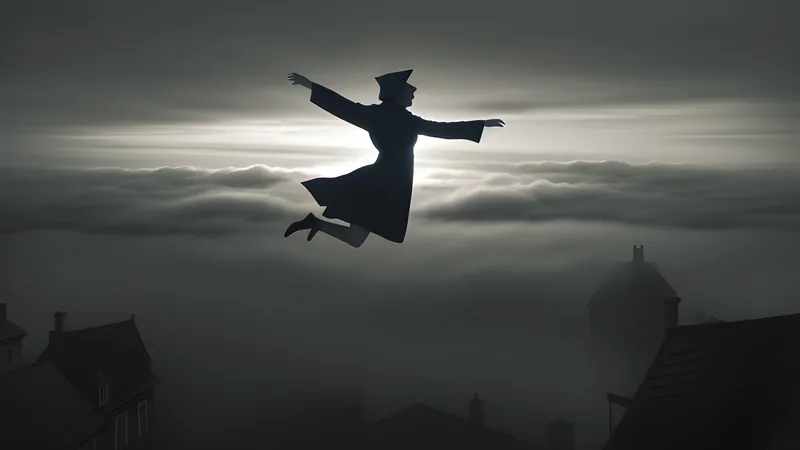
The story had been gathering for months before it found Jane Alsop. Through the autumn and winter of 1837, reports had circulated across the villages then ringing London — Clapham, Camberwell, Peckham, Kentish Town — of a figure who accosted people in the dark, usually women, sometimes in the guise of a bear or a ghost or a devil, and who escaped by leaping over walls and hedges with impossible ease. The leaping gave him his name. In a city where garden walls and iron railings marked every boundary, a man who could clear them in a single spring seemed to obey different laws than everyone else.
The panic became official in January 1838, when the Lord Mayor of London, Sir John Cowan, read out at the Mansion House a letter from a resident of Peckham. The correspondent complained that a gang of well-to-do young men had made a wager, “in the higher ranks of life”, that one of them would disguise himself as a ghost, a bear and a devil and terrify the suburbs, and that several women had already been frightened into fits, some of them out of their senses. The Lord Mayor was sceptical, but he published the letter, and the newspapers seized on it. Within days the correspondence columns of the London press were full of Spring-Heeled Jack, and the sightings multiplied as fast as the coverage.
The kernel, such as it was
There almost certainly was something real at the bottom of it, though it is now impossible to say quite what. Assaults on women in dark lanes needed no supernatural explanation; London had them in ordinary quantity. A prankster or two in costume, exploiting the terror of the moment, is entirely plausible — the Alsop attack has the flavour of a real and frightening assault by a real and disturbed man, whatever the fire-breathing embellishments. The trouble is that the legend arrived before most of the evidence, so that by the time anyone tried to investigate a sighting, the witness already knew exactly what she was supposed to have seen.
A few days after the Alsop attack, another young woman, Lucy Scales, was accosted near Limehouse as she walked home with her sister from visiting their brother, a butcher. Her account matched: a tall, cloaked figure who breathed blue flame into her face and left her in violent fits. The similarity was taken as proof of a single culprit, though it is equally the signature of a story that every witness now knew by heart. The magistrates did make an arrest. A plasterer named Thomas Millbank, overheard boasting in a Bow public house that he was Spring-Heeled Jack, was hauled before the court over the Alsop attack. He escaped conviction only because Jane Alsop insisted her attacker had breathed real fire, and Millbank, who had merely been drunk, plainly could not manage it. The legend had, in effect, handed its own suspect an alibi: no ordinary man could do what Jack was now said to do, so no ordinary man could be convicted of being him.
Contemporary suspicion settled instead on Henry de la Poer Beresford, the third Marquess of Waterford, a wealthy Anglo-Irish aristocrat with a documented taste for cruel practical jokes, drunken vandalism and street brawling; it was he and his friends who once painted a Leicestershire town’s doors crimson on a riotous night, an escapade often credited with the phrase about painting the town red. He was in and around London in the relevant years, he was said to hold women in contempt, and he had the money and the temperament to treat the terrorising of shopgirls as sport. He remains the classic candidate, and he may well have been responsible for some early incident that lit the fuse. But the marquess married in 1842 and retired to his estates in Ireland, dying in a riding accident in 1859, while Spring-Heeled Jack went on leaping for decades afterwards. Whatever real man or men started the thing, the thing quickly stopped needing them.
The fork into folklore
This is the point where the historian must hand over to the folklorist, because after 1838 Spring-Heeled Jack detaches from any particular assault and becomes a free-floating character, available to be sighted anywhere and by anyone. He was reported at the Aldershot army barracks in 1877, where sentries claimed a leaping figure in a tight suit slapped their faces with icy hands and sprang away over their heads; a soldier was said to have fired at him with no effect, which only deepened the legend. The geography of the reports tells its own story: he was most often seen in the raw, half-built suburbs, the growing edge where fields were becoming streets and nobody yet knew their neighbours. A district in the middle of becoming a city is exactly where a boundary-jumping phantom would flourish. He surfaced again in Everton, in Liverpool, as late as 1904, seen bounding along the rooftops of William Henry Street by a gathered crowd. The descriptions drifted with each retelling, gaining and shedding the flames, the claws, the glowing eyes and the thirty-foot leaps according to what each community most feared and most enjoyed.
The penny press turned him from a rumour into a franchise. From 1863 onward, Spring-Heeled Jack starred in penny dreadfuls, the cheap serialised fiction that a newly literate working class devoured by candlelight. In these he mutated again, sometimes a demon, sometimes a wronged aristocrat in a bat-winged costume avenging himself on a corrupt society, an ancestor of the masked avengers who would fill comic books a century later. The commercial storytellers took the folk figure and standardised him, fixing the cloak and the springs and the fiendish laugh, then handed the polished version back to the streets, where fresh witnesses obligingly saw exactly the Jack the penny dreadfuls had drawn. Even the question of how he leaped acquired its own pseudo-science: pamphleteers speculated about concealed springs in his boot heels, the detail that had named him, as though the mechanism could be reverse-engineered from the effect.
What the leaping man was for
Why did this particular figure catch, when so many street rumours die in a week? Part of the answer is the machinery that carried him. London in the 1830s was the first city with a genuinely mass readership and a cheap, competitive, sensational press to feed it — the same conditions that would later manufacture other durable terrors, in the way a magazine feature could conjure a sea that swallowed ships out of ordinary maritime losses. A frightening story printed in one paper became a challenge to every rival paper to find a fresher fright, and readers who had just been told to fear a leaping devil went out into genuinely dark and dangerous streets primed to see one. The legend and its audience fed each other in a loop that no single prankster could have sustained.
The deeper appeal is in what the figure let people say. The 1830s were a decade of enormous, frightening change in and around London: the villages were being swallowed by the growing city, gaslight was pushing back a darkness that had always been total, and the old certainties about who lived where and behaved how were dissolving. Spring-Heeled Jack embodied a very specific anxiety — that the boundaries meant to keep people safe, the walls and railings and the ranks of society themselves, could be cleared in a single bound by something that did not respect them. The Peckham letter blamed young aristocrats precisely because the terror of the poor was that the rich could do as they liked and leap away laughing. He was a monster shaped like a class grievance, and he wore an oilskin.
The respectable press played a double game with all this. Editors printed lofty leaders dismissing the whole affair as the delusion of hysterical servant girls, then filled the next column with the very sightings they were mocking, because the sightings sold papers. A reader could be told in one paragraph that Spring-Heeled Jack was nonsense and be given, in the next, a vivid new account of his latest leap over a Kentish Town wall. The scepticism and the sensation travelled together, each lending the other a kind of credibility, and between them they kept the figure alive long after any real prankster had gone home.
The first of his kind
Folklorists who have traced him carefully, most exhaustively the historian Mike Dash in his 1996 survey of the whole affair, tend to conclude that Spring-Heeled Jack marks a genuine turning point: the first urban legend of the modern kind, born in the fast, printed, metropolitan culture that produced the twentieth century rather than in an oral village tradition handed down over generations. He is the ancestor of every phantom that travels by mass media, from the clawed slasher of the lovers’ lane to the winged omens that later communities would see over their own bridges and back roads, kin to the way a whole town convinced itself of a winged figure and a collapsing bridge. What Jack shares with all of them is that he needed no single author and admitted no final witness. Each new sighting confirmed the last, and the total never had to add up. Modern folklorists reading the Aldershot and Liverpool waves recognise a familiar pattern of collective fright: a shared expectation, an ambiguous stimulus in the dark, and a name ready to hand for whatever the frightened brain assembles out of the two. A sentry on a lonely night watch who has heard the barracks talk of Spring-Heeled Jack does not need a real assailant to see one; a bounding shadow, a chill on the skin, a startled comrade, and the story completes itself. The witnesses were describing something they genuinely experienced. What they experienced was largely the legend, met halfway.
There is something almost tender in the persistence of it. For the best part of seventy years, across a city and then a country, ordinary people out in the dark saw a leaping figure and gave it the same name, because the name gave a shape to a fear that would otherwise have had none. A woman walking home alone through unlit lanes, past walls too high to see over, carrying with her everything the newspapers had told her to dread, required no real aristocrat in a costume to feel watched. She had Spring-Heeled Jack, and he would do the leaping for her imagination the moment a shadow moved. That the figure never resolved into a single arrested man is, in the end, the most revealing thing about him. He was the shape the city’s own darkness took once a frightened, newly literate public finally had the words to describe it, and having been described, he could never quite be caught, because there was nothing solid there to hold.
Related Content