Sleep Paralysis and the Abduction Narrative
How a neurological glitch got a cast of visitors
Contents
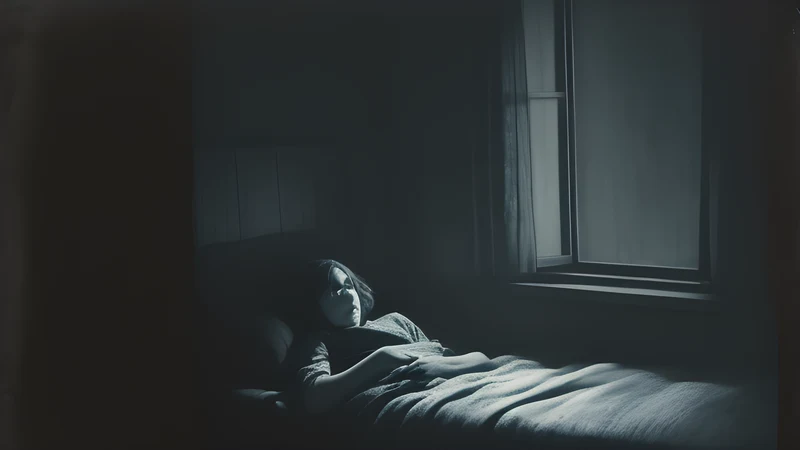
You wake, and you cannot move. The room is your room, the hour is somewhere in the dead of the night, and there is weight on your chest. Something is in the doorway, or already at the foot of the bed. You try to shout and produce nothing. You feel watched, examined, chosen. Then, after a stretch that feels like minutes and measures as seconds, your body releases and you sit up gasping into an ordinary dark.
Millions of people have had exactly this experience, and a good many of them are certain they were visited. The visitor’s costume changes with the century — a demon squatting on the ribcage, a hag riding the sleeper, a dead relative, a burglar, a grey-skinned figure with enormous black eyes. The experience underneath stays remarkably stable. That stability is the thing worth studying, because it shows how a single piece of human wiring can be dressed by whatever a culture has lying around.
The event itself
Sleep paralysis is a well-mapped feature of the sleeping brain. During REM sleep, the phase where most vivid dreaming happens, the body switches off voluntary muscle control — a state called REM atonia — so that you do not physically act out your dreams. Ordinarily you never notice, because you are unconscious while it happens. Sleep paralysis is the fault line where the timing slips: consciousness returns while the atonia is still running. You are awake, aware of the real room, and unable to move a limb or draw a full breath, because the system that pins the body during dreaming has not yet let go.
Onto that frozen wakefulness the brain layers hypnagogic and hypnopompic imagery — the drifting hallucinations that belong to the border between sleep and waking. Sleep researchers who study the state consistently find the same components: a felt presence in the room, pressure on the chest, a sense of suffocation, sometimes a hovering or floating sensation, and often intense fear. Because the atonia includes the muscles of the ribcage, breathing is genuinely shallow, which the frightened mind reads as a weight holding it down. Because the threat-detection circuitry is fully awake while the body is helpless, the presence feels malevolent and specific.
None of this is exotic. Surveys put the lifetime prevalence somewhere near a fifth to a third of the population having at least one episode, with higher rates among students, shift workers, and people with disrupted sleep or post-traumatic stress. It is common, it is benign in itself, and it is terrifying in a way that plain description never quite conveys.
The oldest costume
Before there were aliens, there was the hag. The folklorist David Hufford spent years in Newfoundland collecting accounts of what locals called being “hagged” or having “the Old Hag” — waking, paralysed, with a malign figure pressing down. His 1982 book, The Terror That Comes in the Night, made an argument that reoriented the whole field: the experience came first, and the interpretation came after. People were describing a real, structured perceptual event with consistent features, and then reaching for the nearest cultural label to explain it.
The labels are everywhere, once you look. In Japan the experience is kanashibari, “bound in metal”, once attributed to vengeful spirits or a temple curse. In Brazil it is the pisadeira, a crone with long nails who crouches on the chests of those who sleep on a full stomach. The word nightmare itself carries the old sense — the mare was a supernatural being that rode or crushed sleepers, cousin to the Germanic mahr and the incubus of medieval Europe, the demon that pressed itself upon the dreaming body. Henry Fuseli painted the scene in 1781: a woman sprawled backwards, a squat imp perched on her sternum, a horse’s head pushing through the curtain. Every element in that painting is a sleep-paralysis report rendered in oil.
The costume changes; the fitting is identical. Chest pressure becomes a demon’s weight. The felt presence becomes a witch, a ghost, a djinn. The inability to cry out becomes a spell. What each culture supplies is a character to hang on the sensations, drawn from whatever populates its imagination of the dark.
The new costume arrives
The modern visitor was assembled over roughly three decades. The seed is usually traced to September 1961, when Betty and Barney Hill, a couple in New Hampshire, came to believe under hypnosis that a night-time drive had included a lost stretch of time and an examination aboard a craft. Their account, published in 1966 as The Interrupted Journey, introduced the template of missing time, medical procedures, and small humanoid examiners. The Betty and Barney Hill case built the abduction genre almost single-handedly, supplying a script that later experiencers would draw on without knowing it.
The grey — the slight body, the oversized cranium, the vast lidless black eyes — was standardised later, and popular culture did much of the standardising. It circulated through the 1970s, hardened in the artwork surrounding Whitley Strieber’s 1987 memoir Communion, whose cover image sold millions and gave the world a single agreed face, and was reinforced by The X-Files in the 1990s. Investigators such as Budd Hopkins and the Harvard psychiatrist John Mack collected hundreds of accounts, often using hypnotic regression to recover them, and treated the consistency across witnesses as evidence that something real was being reported.
The consistency is real. The explanation for it is the interesting part.
Watching the machinery work
Set the sleep-paralysis report beside the classic abduction and the overlap is close to total. Paralysis: the abductee cannot move, held by an unseen force. A felt presence: the beings are in the room. Chest pressure and breathing difficulty: probing, examination, a device on the body. Floating: the levitation up to the craft. Bright light and buzzing: hypnagogic sensory noise, now read as the ship. Terror and helplessness: the raw affect of the state, needing a cause large enough to justify it.
The Harvard psychologist Richard McNally and his colleague Susan Clancy studied this directly, recruiting people who reported abductions and examining them in the laboratory. Clancy’s 2005 book Abducted laid out the pattern. Her subjects were, by and large, sincere, intelligent, and untroubled by other delusions. Many had a history of sleep paralysis. What distinguished them was a search for meaning: they had undergone a frightening, genuinely inexplicable experience, and the abduction narrative — supplied ready-made by films, talk shows, and books — was the explanation available in their culture that fit the sensations best.
Two more mechanisms finish the job. The first is agency detection. The human threat system is tuned to over-attribute intention — a rustle in the grass is cheaply treated as a predator, because the cost of a false alarm is small and the cost of a miss is death. A felt presence in a dark room, arriving with the full force of fear, is precisely the input that circuitry evolved to flag as someone is here, and they mean it. The second is proportionality bias, the same intuition that makes people distrust the flat, unsatisfying account of the moon-landing photographs: an experience this overwhelming seems to demand a cause of matching size. “A glitch in REM timing” feels far too small for what the body just went through. “Beings from another world selected me” is proportionate to the terror. The mind reaches for the larger frame because the larger frame feels honest to the size of the feeling.
Where the memory comes from
The sharpest detail is that many abductees do not recall the experience directly at all. The full narrative — the table, the instruments, the communication — frequently emerges only later, under hypnosis, in the office of an investigator who already believes abductions are real. Hypnosis is a state of heightened suggestibility in which confident, coherent, entirely false memories can be constructed and then felt as genuine; it pulls no buried footage into the light because there is none to pull. Clancy and McNally also found that abductees scored higher on standard measures of false-memory proneness, recalling words that were never on a list because those words fit the theme. The regression sessions were, in effect, collaborative authorship, with the investigator’s expectations shaping the story that came out.
This is the same false-memory machinery that produces whole populations sincerely misremembering the same fact — a demonstration that certainty and vividness are poor guides to whether a memory corresponds to an event. The abductee’s conviction is real. The experience that seeded it is real. The craft is assembled afterwards, from the ambient stock of images, by a mind doing exactly what minds do with a frightening blank.
The fear is not imaginary
One finding from the Harvard work deserves to be sat with, because it is often used to argue the opposite of what it shows. McNally brought abductees into the laboratory and recorded their bodies while they listened to audiotaped scripts of their own remembered encounters. The physiological response — heart rate, sweat-gland activity, facial muscle tension — was as large as, and in some cases larger than, the response measured in combat veterans and assault survivors recalling their traumas. Their bodies were not performing. The distress was completely genuine.
This is exactly what the model predicts, and it is why the experiences resist argument. The underlying event — the paralysis, the crushing presence, the certainty of a hostile intelligence at close range — really did happen, and the body filed it as a genuine trauma. Recounting it reactivates the fear because the fear was real the first time. What was constructed afterwards was the identity of the attacker; the attack itself had been real. Tell someone their heart-pounding terror was fictional and you are contradicting something their own nervous system knows to be false, which is a poor way to be believed.
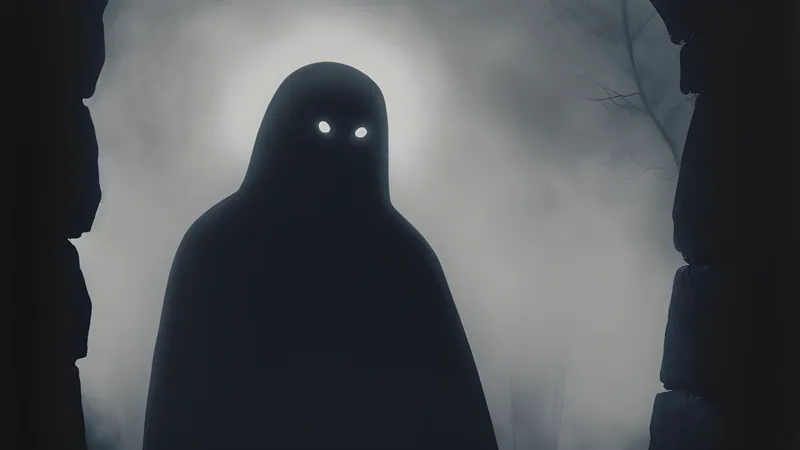
The state has other costumes still in circulation. “Shadow people” — featureless dark humanoid figures, often a “hat man” standing in the corner or advancing on the bed — are a staple of contemporary sleep-paralysis reports, and have spawned their own online communities and folklore quite separate from the alien framing. The historical incubus and succubus carried a sexual dimension that mapped onto the felt bodily contact of the state and, in less forgiving eras, onto anxieties about nocturnal arousal and sin. The intruder-burglar interpretation is common among people with no supernatural leanings at all: they simply conclude, reasonably, that someone broke in, because a hostile presence was unmistakably in the room. Each interpretation is a rational read of the same sensory report, filtered through what the interpreter finds plausible.
The empathy is the point
It would be easy, and wrong, to file all this under gullibility. The people who report these encounters are not, in the main, credulous or unwell. They have had an authentic, structured, physiologically real experience that arrives with more conviction than almost anything else in waking life — a sense of presence and threat so total that, in the moment, doubting it is not available. Told afterwards that it was “just a dream”, they know it was nothing like a dream, and they are correct. It was a distinct and specific state, and it demands a distinct and specific explanation.
Every culture that has met this experience has done the same work: named the visitor, gave it a shape, made the terror legible. The medieval sleeper met a demon because demons were what the dark contained. The Newfoundland fisherman met the Old Hag because she was in the local grammar of night. The late-twentieth-century sleeper met a grey with black eyes because that was the figure the surrounding culture had, by then, made available and made frightening. The machinery underneath — the frozen body, the watched feeling, the searching mind — has not changed since Fuseli’s imp, or before him. What each age offers is a face to give the presence, so that the person who woke unable to move can say, at last, who it was that came.
Related Content