Skull and Bones: The Tomb on the Yale Campus
A windowless brownstone, three generations of Bushes, and a rumour about Geronimo's skull. What the legend gets right about power, and wrong.
Contents
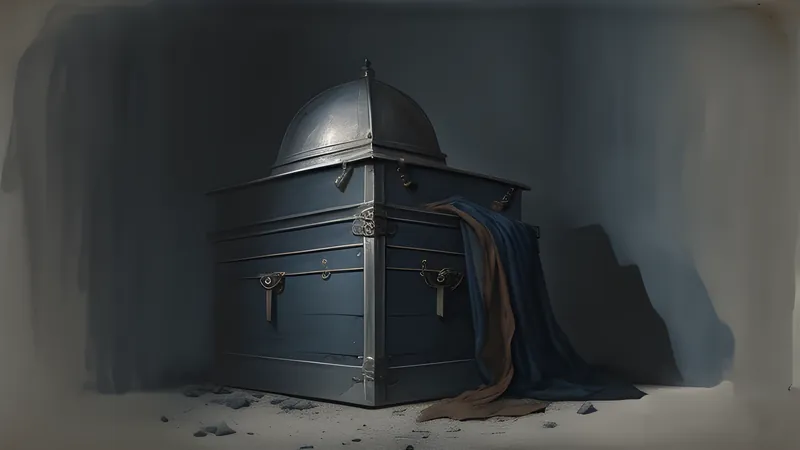
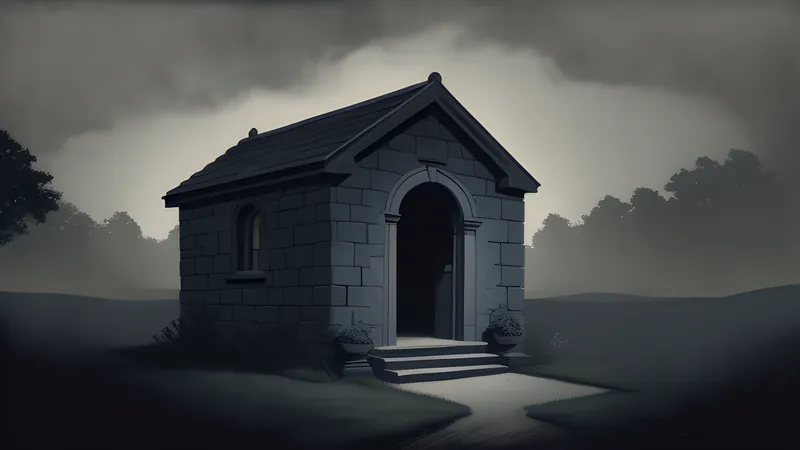
On High Street in New Haven, Connecticut, there is a building with no windows. It is a heavy brownstone box, vaguely Egyptian, vaguely Greek, its doors iron, its walls blank to the street. Students at Yale University have walked past it for well over a century and a half, and generations of them have called it, simply, the Tomb. Inside meets a society whose members are forbidden to speak of it, whose emblem is a skull above two crossed bones and the number 322, and whose alumni include a startling density of American power: a president who fathered a president, senators, spymasters, Supreme Court justices, the founders of law firms and banks whose names you would recognise. It is called Skull and Bones, and around that faceless building has grown one of the most enduring conspiracy theories in American life — that the men who pass through the Tomb are being inducted into a hidden order that runs the country from behind the curtain.
The theory has a satisfying architecture. Here is a genuinely secret society; here are genuinely powerful members; here is a windowless crypt where they do who-knows-what. Draw the obvious line between those points and you have a shadow government with an initiation ritual. But the line is where the folklore lives, and to see why the story took the shape it did you have to look first at the perfectly real, perfectly documented thing at its centre, and then at what the blank walls of the Tomb invite people to paint on them.
What is actually in the ledger
Skull and Bones was founded at Yale in 1832 by William Huntington Russell and Alphonso Taft, reportedly after a dispute in the college’s debating culture, and it took as its model the fraternal orders then fashionable in the German universities where American students went to study. It is a “senior society” — each spring, fifteen members of the outgoing senior class “tap” fifteen juniors to succeed them, a tight cohort renewed one year at a time. The Tomb on High Street was built in 1856. The society owns a retreat on an island in the St Lawrence River. Its internal culture runs on secrecy, ritual, and lifelong loyalty, and it has been, for most of its existence, an engine for placing well-connected young men into the upper reaches of American institutions.
Even the society’s iconography feeds the mystery, and its most cited emblem — the number 322 that sits beneath the skull — has no settled explanation, which is exactly the condition under which folklore breeds. The favoured guesses inside Bones circles are that 322 marks 322 BC, the year the Athenian orator Demosthenes died, casting the society as heir to a classical tradition of eloquence; or that it records the founding of Skull and Bones as the American “chapter” of an older German student order, “chapter 322.” Outsiders have read the same three digits as everything from a biblical citation to a coded reference to a secret hierarchy. Nobody outside the Tomb knows, and the not-knowing is generative: an unexplained number engraved on a windowless building is an invitation the conspiratorial imagination cannot decline.
The membership list is the part that makes the theory feel less like paranoia. Alphonso Taft’s son William Howard Taft became president and then Chief Justice. Averell Harriman, the diplomat and governor, was a Bonesman; so was Henry Stimson, Secretary of War through the Second World War; so was McGeorge Bundy, national security adviser during Vietnam. Most conspicuously, three generations of one family passed through the Tomb: Prescott Bush, senator from Connecticut; his son George H. W. Bush, director of the CIA and then president; and his grandson George W. Bush, president in turn. In the 2004 election both major-party nominees — George W. Bush and John Kerry — were Bonesmen, and when a television host asked each of them about it, both gave the same non-answer: they couldn’t talk about it, it was a secret. Two men competing for the most powerful office on Earth, both bound by the same college oath of silence. If you wanted a single image to launch a thousand theories, it would be hard to improve on that.
The rituals, and what we know of them
Because the society is secretive, most of what circulates about its rites is second-hand, but not all of it. The journalist Alexandra Robbins, herself a Yale graduate and a member of a different campus society, published Secrets of the Tomb in 2002 after interviewing dozens of members who broke their silence. The picture she assembled is strange and human. Initiates are given a Tomb nickname. The rituals lean on the iconography of death — coffins, bones, robes, a good deal of theatrical mortality. New members reportedly recount their sexual histories to the group in an exercise of enforced intimacy, a bonding-through-confession that sounds less like devil worship and more like a fraternity’s idea of forging trust by making everyone vulnerable at once.
Yale, it should be said, is thick with such bodies — Scroll and Key and Wolf’s Head are old and prestigious in their own right — and the senior-society system as a whole is a machine for turning classmates into a lifelong cohort. Bones simply became the most storied of them, partly through the fame of its members and partly through the sheer photogenic strangeness of the Tomb. The society decamps each summer to a retreat it owns on Deer Island in the St Lawrence River, where the bond is renewed away from any prying eye, and where, one imagines, the same rituals of confession and belonging are performed among adults who have gone on to run banks and departments of state.
That is the register of the real thing: adolescent solemnity, borrowed occult furniture, a serious apparatus of loyalty wrapped around what is fundamentally a networking club for the sons — and, since 1992, the daughters — of the American establishment. The skulls are props. The point of the props is to make the bond feel weightier than a handshake, so that it holds for fifty years across boardrooms and cabinet rooms. This is a recurring feature of the societies that attract conspiracy theories: the theatre of secrecy is the mechanism, and the theatre is easy to mistake for the substance.
The skull that supposedly wasn’t a prop
One legend deserves its own account, because it sits on a real, painful piece of history. The story goes that in 1918, while stationed at Fort Sill, Oklahoma, a group of Bonesmen including Prescott Bush dug up the grave of the Apache leader Geronimo and stole his skull to display in the Tomb. The claim is not pure invention. A letter written in 1918 by a Bones member named Winter Mead does exist, boasting that “the skull of the worthy Geronimo the Terrible” had been taken and sat “together with his well worn femurs” inside the Tomb. In 2009 descendants of Geronimo sued Skull and Bones, Yale, and the federal government to recover the remains.
Historians who have examined it are sceptical that the skull is genuinely Geronimo’s — the letter may record a boast or an initiation prank, and Geronimo’s marked grave was not where the story places the theft. What matters for our purposes is how the legend functions. Whether or not a real skull was taken, the tale expresses a true relationship: an order of America’s ruling class, treating the bones of a conquered Native leader as a trophy for a college crypt. The story is believed because it feels like the kind of thing that world would do, and the documented arrogance of the 1918 letter gives that feeling a foothold. Folklore does not need a verified skull. It needs a plausible one.
From club to cabal
The leap from “elite networking society” to “secret rulers of the world” has an author, or at least a chief amplifier. In 1983 the economist Antony C. Sutton published America’s Secret Establishment: An Introduction to the Order of Skull & Bones, arguing that the society was the American node of a hidden power structure that had, across the twentieth century, deliberately funded both the Nazis and the Soviets in order to engineer conflict and consolidate control. Sutton took the real density of Bonesmen in banking and government and read it as design — every overlap became a lever, every coincidence a plan. The number 322 was decoded as a founding date or a link to a German secret order; the death imagery was recast as genuine occultism; the confidentiality became evidence of crimes worth hiding.
This is the machinery of the conspiratorial reading, and it is the same machinery that turns Bilderberg — a private conference of politicians and financiers — into a world cabinet, and the Illuminati — a Bavarian debating club dissolved in the 1780s — into an immortal hidden hand. Real elite coordination is documented and, frankly, undemocratic enough to be worth criticising. The conspiratorial version takes that legitimate unease and inflates it into something total, secret, and unfalsifiable, which conveniently absolves the critic of having to explain the ordinary, boring, legal mechanisms by which privilege actually reproduces itself.
There is a further hazard, and it should be stated directly. Theories of a secret ruling brotherhood have a long habit of sliding toward a named villain, and across the last century that named villain has repeatedly been “the Jews” — the fantasy of a hidden tribe pulling the strings of finance and government, the fantasy manufactured in the forged Protocols of the Elders of Zion and folded into the broader New World Order mythology. Skull and Bones theorising is not inherently antisemitic, and much of it isn’t, but it shares the same skeleton, and it can serve as a gateway to the uglier stuff. That lineage deserves to be recognised and refused.
What the blank walls are really about
Consider the true thing the legend is straining to express. Two men ran for president in 2004 and both belonged to the same fifteen-person-a-year college society. That is not evidence of a satanic plot. It is evidence of something more mundane and, in its way, more damning: the pipeline to American power is narrow, hereditary, and self-selecting, and a windowless building on a single street in New Haven has fed it for a hundred and seventy years. The Tomb is a symbol of a real inequality — the way a small class educates itself together, marries together, hires together, and hands the country back and forth among a few thousand families. You do not need a hidden agenda to be troubled by that. You need only look at the ledger.
The conspiracy theory, oddly, lets the establishment off the hook. If the answer is a secret order with occult rituals, then the problem is exotic, sinister, and separate from the normal workings of democracy — something to be exposed and defeated. If the answer is that privilege compounds quietly through legal institutions, feeder schools, and old friendships, then the problem is us, and our arrangements, and it cannot be exposed because it was never hidden. The blank walls of the Tomb are an almost perfect screen. People look at that faceless building and, sensing correctly that power is concentrated behind such walls, project onto it a story wilder and more comforting than the truth. The truth is standing in plain sight on High Street, and it does not need a skull to be alarming.
Related Content