Operation Gladio: The Secret Armies Left Behind
NATO really did hide weapons across Europe. What they were for is the harder question.
Contents
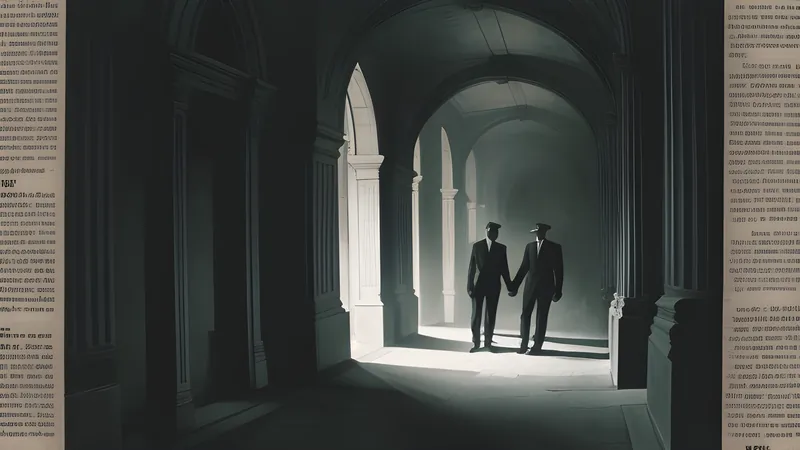
On 24 October 1990, the Italian Prime Minister Giulio Andreotti stood before parliament and confirmed a thing that, said in a bar the week before, would have got you a pitying look. There existed, he acknowledged, a secret armed network inside Italy, set up after the Second World War with the knowledge of NATO and the assistance of Allied intelligence, its purpose to fight on behind the lines should the Soviet Union ever overrun the country. It had a codename out of Roman antiquity: Gladio, the short stabbing sword of the legions. There were hidden caches of weapons buried across the landscape. There were sleeper cells of trained men. The whole thing had been kept from the public, and in large part from parliament, for four decades.
That admission is the bedrock of this story, and it is genuinely astonishing: a sitting head of government confessing that a covert paramilitary structure had existed on national soil, unseen, for the length of the Cold War. But the admission is also where the real difficulty begins, because Gladio is the rare case where the documented skeleton and the theory draped over it need to be pulled carefully apart. The skeleton is solid. The theory — that these secret armies were the hidden hand behind a decade of terrorist bombings — ranges from partially evidenced to wholly unproven, and it varies enormously from country to country. Getting Gladio right means holding on to both facts at once: that something real and alarming was concealed, and that the maximal story built upon it outruns what can be shown.
The skeleton, which is real
Take first what is beyond dispute, because it is remarkable enough on its own.
After 1945, Western planners faced a plausible nightmare: a Soviet armoured thrust across the plains of Europe that might, in a few weeks, overrun countries the Western allies could not immediately defend. The response, coordinated over the following years with the CIA and Britain’s MI6 and eventually folded into NATO’s clandestine structures, was to prepare in advance for occupation. Across Western Europe — in Italy, France, Belgium, the Netherlands, West Germany, and beyond — networks of “stay-behind” units were quietly established. The idea was that if the Soviets came and conventional forces fell back, these cells would remain in place behind enemy lines to gather intelligence, run escape routes, and conduct sabotage and guerrilla resistance.
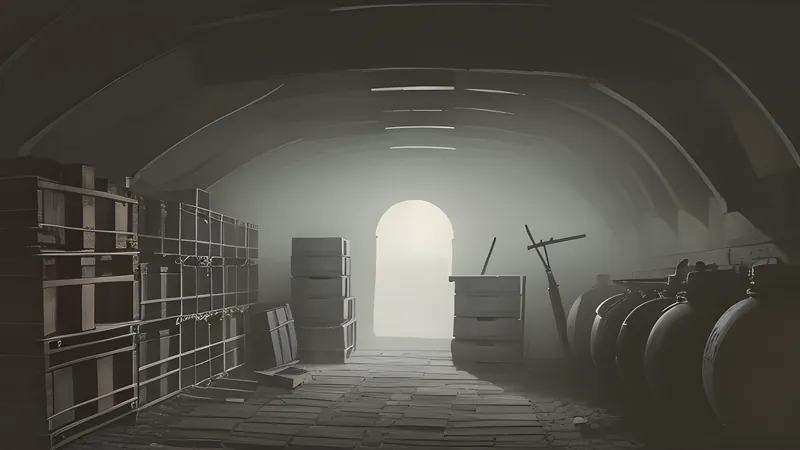
To make that possible, arms were cached. Across Italy the Gladio network buried scores of hidden weapons dumps — the Italians called them nasco — containing rifles, explosives, radios and ammunition, salted away in the countryside against the day of invasion. Men were recruited and trained. The structure sat inside the Italian military intelligence service and was linked upward to a NATO coordinating body. None of this is theory. It comes from Andreotti’s own disclosure, from the parliamentary inquiry that followed in Italy, and from parallel confirmations across Europe. When some of the caches were later located and dug up, the crates and the oiled rifles were there in the ground.
The scale of the response elsewhere matched Italy’s. In the weeks after Andreotti spoke, one government after another was forced to confirm its own version. The European Parliament passed a resolution in November 1990 condemning the existence of these clandestine networks and demanding full investigation. So the base fact is not merely an Italian curiosity. NATO countries really did build secret standing paramilitary structures on their own territory and hide them from their own citizens for a generation. A person who had asserted that in 1985 would have been a conspiracy theorist. By late 1990 they were simply describing the record.
The leap, and where it lands
Now the harder part. Italy did not spend the Cold War in peace. From the late 1960s into the early 1980s — the anni di piombo, the Years of Lead — the country was torn by political terrorism from both the far left and the far right. Bombs killed civilians in public places. The Piazza Fontana bombing in Milan in December 1969 killed sixteen. The bombing of the Bologna railway station on 2 August 1980 killed eighty-five people and wounded more than two hundred, one of the worst terrorist atrocities in postwar European history.
The maximal Gladio theory fuses these two facts — the secret network and the campaign of terror — into a single machine. In its strongest form the claim is that Gladio, or elements working through and around it, deliberately carried out or enabled right-wing terrorist attacks as part of a strategia della tensione, a “strategy of tension”: false-flag violence designed to be blamed on the left, to frighten the public towards authoritarian order and away from the rising communist vote. In this telling the secret army was not a dormant insurance policy against a Soviet invasion that never came; it was an active instrument turned against the Italian people themselves.
This is where care becomes everything, because the claim is neither pure fantasy nor established fact — it is a spectrum, and different points on it carry very different weights of evidence.
One figure sits close to the well-supported end and is worth naming, because he is often quoted on both sides. Vincenzo Vinciguerra, a neofascist convicted for the 1972 car bombing at Peteano that killed three Carabinieri, gave testimony from prison in which he described a milieu of right-wing militants who believed they were protected by, and working in parallel with, elements of the state’s anti-communist security structures. His account is real and documented, and Italian investigators took it seriously. But it is also the testimony of a convicted terrorist describing what he understood of a shadowy world, and it establishes a climate of collusion and protection more firmly than it establishes a single directing hand issuing orders through Gladio. Even the strongest witness for the state-collusion thesis points to something looser and more atmospheric than the tidy chain of command the maximal theory requires.
At the well-supported end sit some genuinely disturbing findings. Italian judicial investigations, over many years and many trials, did establish that neofascist militants were responsible for several of the era’s atrocities, and did uncover troubling links between elements of the Italian secret services and the far-right underworld — protection, tip-offs, obstructed inquiries, evidence that went missing. The murky world of the P2 masonic lodge under Licio Gelli, which entangled military officers, intelligence officials and financiers, was real and was itself the subject of a parliamentary inquiry. That parts of the Italian state colluded with, or shielded, right-wing terror at various moments is not a conspiracy theory; it is, in specific cases, a matter of court record.
At the unsupported end sits the totalising version: that a single coordinated NATO structure directed the whole campaign of bombings as a deliberate strategy from above. For that, the firm evidence is not there. The strategy of tension, as a grand unified operation run through Gladio, remains contested, partial, and unproven — and, crucially, it does not travel. Gladio-type networks existed across Western Europe, but Belgium’s terrorist mysteries, West Germany’s, and France’s each have their own tangled histories, and there is no single master-thread that ties every unsolved bombing on the continent back to one hidden hand. The evidence is national, uneven, and full of holes; the maximal theory is continental, uniform, and seamless. That mismatch is the tell.
The historian in the middle of the argument
No account of Gladio is honest without naming the book that did most to popularise the maximal reading, and the scholars who pushed back on it. The Swiss historian Daniele Ganser’s NATO’s Secret Armies, published in 2005, gathered the stay-behind story across Europe into a single sweeping narrative and leaned hard towards the strategy-of-tension interpretation, treating the networks as deeply implicated in terror.
The book brought Gladio to a wide English-speaking audience, and it drew serious criticism from Cold War historians — among them Olav Riste, Peer Henrik Hansen and Leopoldo Nuti — who faulted its handling of sources. A recurring complaint concerned Ganser’s use of a document known as Field Manual 30-31B, purportedly a US Army guide describing exactly this kind of false-flag terrorism to be blamed on the left. Many specialists regard FM 30-31B as a Soviet-bloc forgery, a piece of Cold War disinformation crafted to discredit the United States — and a case that relies on it inherits the forgery’s weakness. Critics argued more broadly that Ganser drew too readily on secondary and unreliable material and read the evidence towards its most sinister possible meaning where a cooler reading was available.
None of this means the caches were imaginary or the state-collusion cases were invented — they were not. It means the interpretive frame around the confirmed skeleton is exactly the part that professional historians dispute, on methodological grounds, and that a reader is owed that dispute rather than a tidy story that hides it.
Keeping the two things apart
Here is the discipline Gladio demands, and it is the whole point of writing about it. There is a documented skeleton: secret NATO stay-behind networks, real weapons caches, real cells, hidden from the public for forty years and confessed by a prime minister on the floor of parliament. There is, separately, a maximalist theory: that this skeleton secretly directed a continent’s worth of terrorism in a coordinated strategy of tension. The first is proven. The second is a spectrum running from a handful of evidenced state-collusion cases at one end to an unproven grand design at the other. Collapsing the two — letting the certainty of the caches lend its authority to the speculation about the bombings — is the single most common error made about Gladio, and it is made in both directions.
The debunker who is so keen to dismiss the strategy-of-tension theory that they wave away the confirmed network makes the mistake one way; there really were secret armies, and denying it is its own falsification. The believer who treats the confessed existence of Gladio as if it also confirmed that Gladio bombed Bologna makes the mistake the other way; the caches being real does not make the maximal theory real. The honest position holds a firm line between them and admits, without embarrassment, that on the contested middle ground the record is genuinely incomplete — that some collusion is proven, some is plausible and unproven, and the totalising version is unsupported.
That is an unsatisfying place to end, and its being unsatisfying is precisely why Gladio is such fertile soil for theory. The public was handed, in 1990, a real and shocking secret — enough to prove that its governments had hidden an armed network and had lied about it. Once that much is conceded, every adjacent suspicion gains a borrowed credibility, and the confirmed lie underwrites a hundred unconfirmed ones. This is the same trust-damage that a proven conspiracy always does, the pattern visible in the pardons that followed Iran-Contra and in the way a genuine institutional deception curdled the whole record of the Gulf of Tonkin. Gladio proves the caches. It does not prove the strategy. Learning to feel the weight of that sentence — to accept a confirmed secret without letting it license every unproven one — is about the most useful thing a reader can carry out of the Cold War’s buried arsenals.
Related Content