Mothman: Point Pleasant's Winged Omen and the Bridge That Fell
How a bird, a bunker and a bridge collapse eight years apart became, in hindsight, a single prophecy
Contents
On the night of 15 November 1966, two young couples from Point Pleasant, West Virginia, drove out past the edge of town to the old TNT area — a stretch of abandoned Second World War munitions bunkers sunk into scrub woodland along the Ohio River — looking, as local teenagers did most weekends, for somewhere quiet to park. What they found instead, they told the Mason County sheriff before the night was over, was a shape none of them had a word for: grey, roughly the height of a man but taller, wings folded along its back, and two round eyes that caught their headlights and threw the light straight back as a hot, glowing red. It did not lumber after their car. It followed, gliding rather than flapping, silent, at speeds the driver swore touched 100 miles an hour. By the time Roger and Linda Scarberry and Steve and Mary Mallette reached the police station, the officers who took their statements came away convinced the four of them were too shaken to be lying.
That account, filed with Point Pleasant police in the small hours, is the true beginning of the story. Everything the wider world now associates with Mothman — the statue, the festival, the Richard Gere film, the sense that the creature was somehow warning the town of what was coming — was built on top of it, mostly after the fact, by people who were not there in November 1966. To see how that happened, it helps to separate the year Point Pleasant actually lived through from the thirteen months later turned into a prophecy.
A town with a bird problem, or worse
Word of the Scarberry–Mallette sighting reached Mary Hyre, a stringer for the Athens Messenger who covered Mason County out of a small office on Main Street, within days, and Hyre kept reporting on it, almost weekly, for the next year. Her coverage is the closest thing the case has to a contemporary record, and it shows something the later legend tends to flatten: dozens of people, independently and without an obvious way to have coordinated a story, described the same grey shape and the same red eyes over a genuinely wide window, from November 1966 into the following autumn. Local papers reached for a name almost immediately and, within days, had settled on “Mothman” — a nod, reporters at the time said, to the flamboyant villain names then fashionable on the ABC Batman television series, applied half as a joke to a description nobody could otherwise categorise.
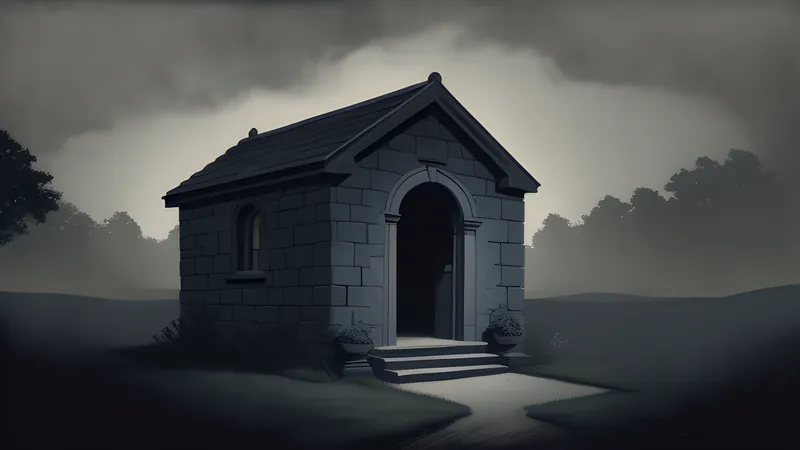
The TNT area itself supplies a plausible, unglamorous kernel. Built in 1942 as the West Virginia Ordnance Works, it once manufactured and stored explosives in more than a hundred concrete igloo bunkers connected by tunnels; abandoned after the war, it had by the 1960s reverted to the kind of overgrown, half-wild land — now the McClintic Wildlife Management Area — where large, uncommon birds turn up. The investigator Joe Nickell has argued for decades that the physical description matches a sandhill crane about as well as any cryptid ever matches a mundane animal: a bird that stands close to five feet tall, has a six-and-a-half-foot wingspan, flies with a slow, gliding wingbeat, and whose eyes throw back a startling red shine in headlights. Sandhill cranes are not supposed to winter in West Virginia. They are also, by the record of regional birdwatchers, occasionally exactly where they are not supposed to be, blown or drawn off their migratory path down the Mississippi flyway. A misidentified crane, glimpsed at night by a nervous teenager in a place already associated with wartime secrecy, does not answer every report Hyre filed that year. It is enough to explain how a strange bird season became a monster season.
The bridge
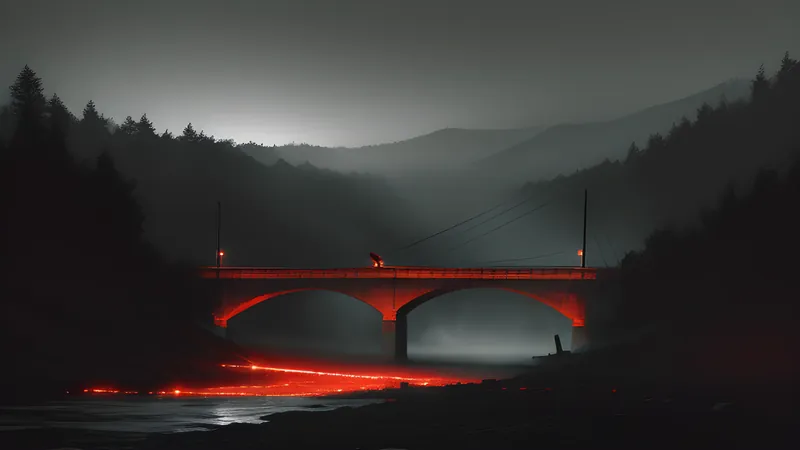
None of that would have outlasted 1967 as more than a strange local memory if not for what happened on 15 December of that year, at the tail end of the evening rush. The Silver Bridge, a 1928 eyebar-chain suspension bridge carrying US Route 35 across the Ohio River between Point Pleasant and Kanauga, Ohio, was carrying its usual load of homeward and Christmas-shopping traffic when the entire structure gave way and dropped dozens of vehicles into the river. Forty-six people died. A federal investigation, concluded some years later, traced the collapse to a single failed eyebar in the suspension chain: a small manufacturing flaw, invisible to the inspection methods of the day, that had spent decades slowly growing into a crack under stress corrosion until the metal simply parted. It was a structural failure with a precise metallurgical cause — the kind of disaster that is almost worse for being so mechanically explicable and so completely without warning.
Point Pleasant in 1967 had a population of around 4,500. A death toll of 46 in a single evening, drawn from people who knew each other by name, is nearly everyone’s neighbour, cousin, or regular customer at once in a town that size. There was no siren, no crack anyone heard beforehand, no chance to get out of the way. The bridge had carried that same traffic every evening for thirty-nine years.
Where the myth forks from the record
Here is the fork, and it is worth being precise about it, because the honest version of this story is stranger than the simplified one. Contemporary coverage of the Mothman sightings, filed by Hyre and others through 1966 and 1967, does not describe residents predicting a bridge collapse. The sightings had, by most tallies, already tapered off well before December 1967; whatever was being seen at the TNT area was not, in the town’s own reporting at the time, connected to Route 35 or to any structure at all. The link between the creature and the disaster was drawn afterwards, and drawn by one man in particular: John Keel, a New York journalist who had spent stretches of 1966 and 1967 in Point Pleasant collecting witness accounts for the UFO- and paranormal-research circuit he wrote for. Keel’s notebooks from that year are a genuine and valuable record of everything the town was reporting: Mothman, strange lights, poltergeist trouble in local homes, and visits from sinister, ill-fitting-suited strangers ufologists had already started calling Men in Black.
In 1975, eight years after the bridge fell, Keel published The Mothman Prophecies, a book that gathered every strand he had collected — the creature, the lights, the Men in Black, and the collapse — into a single continuous narrative: an intelligence, manifesting as Mothman, that had been trying, in its own oblique way, to warn Point Pleasant, or perhaps simply to announce a catastrophe it already knew was coming. That is the moment the omen was built. It is a retrospective structure, assembled by a skilled writer with eight years of hindsight and a genuine gift for narrative, laid over a sequence of events Point Pleasant itself had experienced as two separate, unrelated ordeals: a frightening year of unexplained sightings, and then, much later, an unthinkable evening on the bridge.
From a bunker in Mason County to a national omen
Keel’s book found an audience well beyond West Virginia and stayed in print long enough to become the primary lens through which anyone outside Point Pleasant now encounters the story. The 2002 film loosely adapted from it, starring Richard Gere as a version of Keel investigating a fictionalised version of the case, introduced Mothman to a generation who had never heard of the Silver Bridge, and cemented the creature as a general-purpose harbinger of disaster, detached almost entirely from the specific bird, bunkers, and bridge that produced it. Point Pleasant made its peace with the story on its own terms: a twelve-foot stainless-steel Mothman statue, sculpted by Bob Roach, was unveiled in the town’s riverfront park in September 2003, and an annual Mothman Festival, running since 2002, now draws visitors from well outside the county for a weekend built around the very creature Hyre once covered as a local curiosity.
What the town needed the sighting to mean
It is worth sitting with why the prophecy version took hold so completely, because it says more about grief than about ornithology. A structural failure caused by a hairline crack in a single steel eyebar is a true account of why the Silver Bridge fell, and an almost unbearable one to live inside, because it offers no warning, no responsible party to be angry at in any satisfying way, and no reason the disaster happened on that particular evening rather than any other in the bridge’s thirty-nine years of service. A town that had already spent a year seeing something strange in the woods had, without asking for it, a far more legible story on hand: something had been there, watching, before the disaster, and somebody should have listened. It reads, retrospectively, like the kind of warning tragedies are supposed to come with and almost never do.
The same appetite shaped how people revisited the Betty and Barney Hill abduction a few years earlier, another case where a frightening, disjointed set of personal experiences was later organised, under hypnosis and in hindsight, into a narrative far tidier than anything either witness reported at the time. It is a close cousin, too, of the older pattern behind Bigfoot: a watcher at the edge of the map, glimpsed by frightened people, who turns out on inspection to be carrying far more meaning than evidence.
The eyes that gave back what people brought to them
Mothman was never disproved in any way that mattered to the people who saw it. The Scarberry–Mallette account, and Hyre’s dozens of follow-ups, remain what they always were: a genuinely strange run of sightings in a specific, explicable landscape, most plausibly a large, disoriented bird doing what large, disoriented birds occasionally do, magnified by a place already primed by wartime secrecy and abandoned tunnels to expect something hidden. The bridge fell for reasons that had nothing to do with the TNT area, months later and eleven miles downstream, in a different kind of failure altogether. What joined them was written afterwards, by a writer working in good faith with real material, at the exact distance from the disaster where a town’s grief and a stranger’s narrative gift could finally meet. Point Pleasant did not need Mothman to explain a crane in the bunkers. It needed him, later, to explain the evening the bridge simply stopped being there, and gave him the job because the alternative — that nothing in the sky or the woods had known anything at all — was the harder story to carry.
Related Content