La Llorona: The Weeping Woman Who Crossed Centuries
The drowned children, the river at night, and how one weeping ghost carried five hundred years of history
Contents
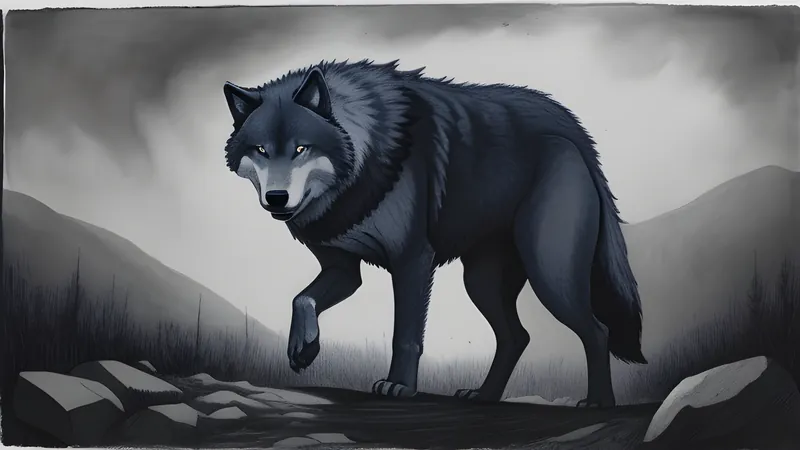
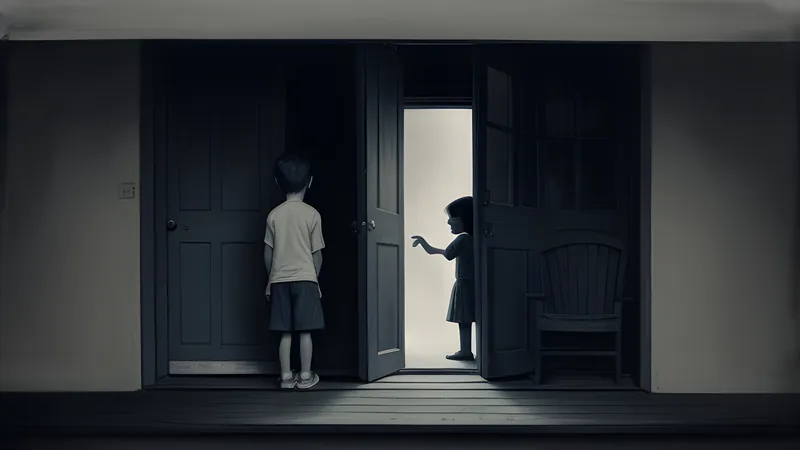
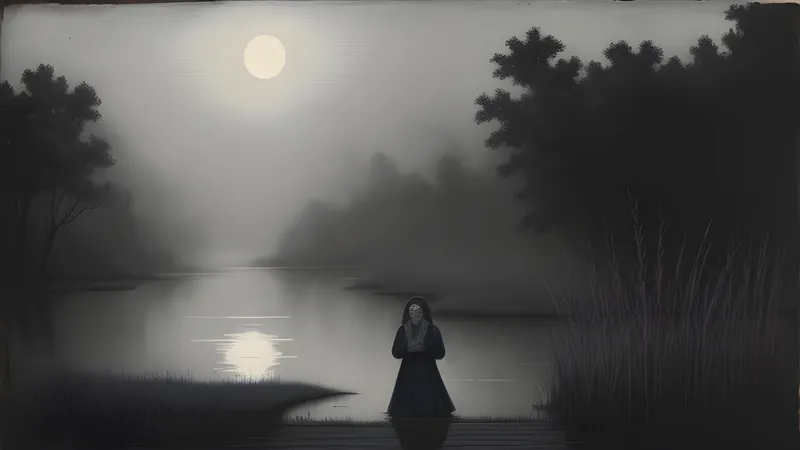
Near the water, after dark, you may hear a woman crying. She wears white, or she wears black; her long hair hangs loose; her face, when she turns it toward you, is sometimes lovely and sometimes a blank of shadow. She is looking for her children, whom she drowned in the river in a fit of grief or rage or madness, and for whom she is condemned to search forever. ¡Ay, mis hijos! — Oh, my children. Do not let her find you near the water. She takes the children she comes across, mistaking them for her own, or simply because they are there, and she pulls them under.
La Llorona, the Weeping Woman, is one of the most widely known ghosts in the Americas — told across Mexico, throughout the American Southwest, and down through Central and South America, wherever Spanish is spoken and a river runs past a town. She is used to keep children from the water at night and to keep them home after dark, a functional bogey with a job to do. But she is far older and far stranger than a bedtime warning, and if you follow her weeping back upstream, she carries you into the single most traumatic event in the history of the continent.
The story as it is told
Begin with the folktale in its most common shape, the version a grandmother in Mexico or New Mexico might tell.
There was once a beautiful woman — often named María in the tellings — poor but proud of her looks. A wealthy or high-born man courted her; they married, or he took her as his lover, and she bore him two children. In time he tired of her, or returned to a woman of his own class, or simply left. In her anguish and fury at the abandonment — and, in the harshest versions, so that nothing of him would remain to tie her down — she took the children to the river and drowned them. Then, understanding what she had done, she was consumed by grief and either drowned herself or wasted away weeping on the bank. When she reached the gates of heaven she was turned back and asked where her children were. She could not answer. And so she was sent to wander the earth, by the water, weeping, searching for them until she can produce them again — which she never can.
The details shift from village to village, which is the mark of a legend genuinely alive in the mouths of its tellers rather than fixed in a book. Sometimes she is a warning specifically against vanity or against loving above your station. Sometimes she is simply a river-hazard given a face, a way to make small children afraid of the arroyo that fills lethally in a flash flood. Her cry is famously deceptive: it sounds close when she is far and far when she is close, so that a child following the sound is drawn toward the water rather than away. Every element earns its keep. She is a story built to protect children by frightening them, and she has done that job across an enormous territory for a very long time.
The kernel: two mothers before the conquest
But La Llorona did not begin as a warning about arroyos, and here the history opens up beneath her like deep water. Her roots reach back to before the Spanish arrived, into the mythology of the Mexica — the Aztecs — and into the moment their world ended.
Aztec cosmology already contained weeping women of exactly this shape. There was Cihuacóatl, “Snake Woman,” a fierce mother-goddess associated with childbirth and with the women who died bearing children; she was said to wander at night, weeping and wailing, sometimes leaving an empty cradle in the marketplace, an omen of death. There were the Cihuateteo, the spirits of women who had died in childbirth, dangerous and roaming, who could steal or harm children at crossroads. The image of a supernatural woman crying in the night for the young was native to the Valley of Mexico long before any galleon appeared on the horizon.
And then there is the account, recorded by the Franciscan chronicler Bernardino de Sahagún and other early sources, of the omens said to have preceded the fall of Tenochtitlan. Among the portents the Mexica remembered before the Spanish conquest was the sixth omen: a woman heard weeping in the night, crying out to her children. In one rendering she cries, “My children, we must flee far away from this city!” and in another, “My children, where shall I take you?” This is roughly a decade before Hernán Cortés landed in 1519 and before the city fell in 1521. Whether the omen was genuinely pre-conquest or was shaped afterward by a people making sense of catastrophe, the record places a weeping woman mourning her children at the very threshold of the conquest — a supernatural mother grieving in advance for a world about to be destroyed.
The fork: where a goddess becomes a murderess
Follow the story across the conquest and you can see the moment it forks — the point where an indigenous grieving goddess is refashioned into the guilt-ridden infanticidal mother of the colonial legend.
The transformation runs alongside another figure, a real historical woman: La Malinche. She was the Nahua woman, also called Malintzin or Doña Marina, who became Cortés’s interpreter, guide and the mother of his son — one of the first mestizo children, a child of the conqueror and the conquered. In the folk memory of Mexico, La Malinche became a deeply ambivalent symbol: the mother of a new mixed people, and, in the harsher reading, the woman who betrayed her own to the invader and was then discarded by him. The legend of La Llorona absorbs this figure. The abandoned woman who bore a powerful foreign man’s children and was cast aside, who is left with children of a father who has gone, maps precisely onto the story of the indigenous woman used by the conquistador and abandoned. In many readings La Llorona is a folk memory of La Malinche, and the drowned children are the mestizo children of the conquest — the terrible birth of a new people out of violence and abandonment.
That is the fork. Before the conquest, the weeping woman is a goddess or an omen, mourning her people. After it, she is a mortal woman, seduced and abandoned by a man of a higher and often foreign class, who destroys her own children — and is damned for it. The grief stays constant across the divide; what changes is the guilt. The colonial legend takes a figure of divine mourning and makes her a murderess, and then punishes her forever. A folklorist cannot read that shift as innocent. Something happened to how the story understood its weeping woman, and what happened, in the largest terms, was the conquest itself.
What the river carries
So what is La Llorona really about, once you have followed her back to the fall of Tenochtitlan and forward through five centuries of retelling? She is doing several kinds of work at once, and they are worth separating.
At the surface, she is a practical guardian, one of the many bogeys cultures place at the boundary of danger to keep the young alive. Rivers and arroyos genuinely kill children, quickly and every year, and a ghost who drowns wandering children is a memorably effective fence around the water. In this she is kin to every threshold-monster that patrols the edge of the safe world, from the slit-mouthed woman who waits on the walk home in Japan to the roadside phantom fixed to a specific dangerous stretch of Chicago tarmac. The bogey is real folklore doing real protective work, and it should not be sneered at.
Beneath that, she is a vessel for a grief so large it needed a supernatural container. The conquest of Mexico was a demographic catastrophe almost beyond comprehension — a population devastated by warfare and, above all, by imported disease, a whole cosmology and social order shattered inside a generation. There is no adequate individual response to loss on that scale. La Llorona gives it a single figure and a single sound: a mother by the river, weeping for children she cannot get back, forever. She is the grief of the conquered made into a person you can hear crying in the dark. The drowned children are, at the deepest level, everything that was lost — the world before, the children of a violated people, the future that the conquest drowned.
And she carries something harder still, which is the reason the guilt attached itself so firmly. The mestizo identity that emerged from the conquest was born, in the folk imagination, of exactly the union the legend describes — the indigenous mother and the foreign father, the child of both violence and love, belonging fully to neither. La Llorona weeping for her drowned children is, read this way, a culture mourning and reckoning with its own origin: the pain of being descended from both the conqueror and the conquered, of a self that began in an abandonment. She is not only grieving the loss. She is grieving the terrible, generative wound the whole people came from. That is a great deal for one ghost to carry, and it is why she has never been laid to rest.
Why she still walks the water
La Llorona is more present now than she has been in centuries — carried into films and songs, into Halloween and Día de los Muertos, into a Hollywood horror franchise, told and retold by a Latino diaspora across the United States and beyond. It would be easy to treat that as the flattening of a deep myth into a commodity, and some of it is. But the older function is still visibly at work underneath the merchandise. She remains a way of talking about mothers and children and loss, about women blamed and abandoned, about a people’s origin in conquest, about all the things that are too big to say plainly and so must be said as a story about a woman crying by a river.
Follow her weeping upstream and it does not end at an arroyo in New Mexico or a village in Jalisco. It runs back to Cihuacóatl leaving an empty cradle in the market, to the sixth omen crying in the night before the Spanish came, to Malintzin and her mestizo son, to the fall of a city and the drowning of a world. She has crossed five hundred years because the grief that made her has never fully drained away, and a story is how a people carries what it cannot put down. When the children by the river are told not to go near the water after dark because the Weeping Woman will take them, they are being handed something far older than a warning. They are being handed the oldest sorrow on the continent, in the only form small enough to hold: a woman, in white, by the water, calling for the children she lost, who could be any child, who were once everyone.
Related Content