Göbekli Tepe and the Lost-Civilisation Argument
A hilltop in Turkey really did rewrite prehistory. It just didn't do what the lost-civilisation crowd needs it to do.
Contents
In 1963, a survey team walked a limestone hilltop near Şanlıurfa in south-eastern Turkey, noted some broken slabs poking out of the ground, filed the mound under “probably a medieval cemetery,” and moved on. It took another three decades and a German archaeologist named Klaus Schmidt to look at the same stones and understand that the surveyors had misread something on the scale of the pyramids. What came out of that hillside after 1994 didn’t just add a site to the map. It moved the starting line of civilisation itself, and it did so with such force that a whole cottage industry of lost-civilisation theorising grew up in its shadow. The theorising deserves a fair hearing before it gets a fair rebuttal, because the honest version of this story is stranger and better than the myth.
The strongest case, stated properly
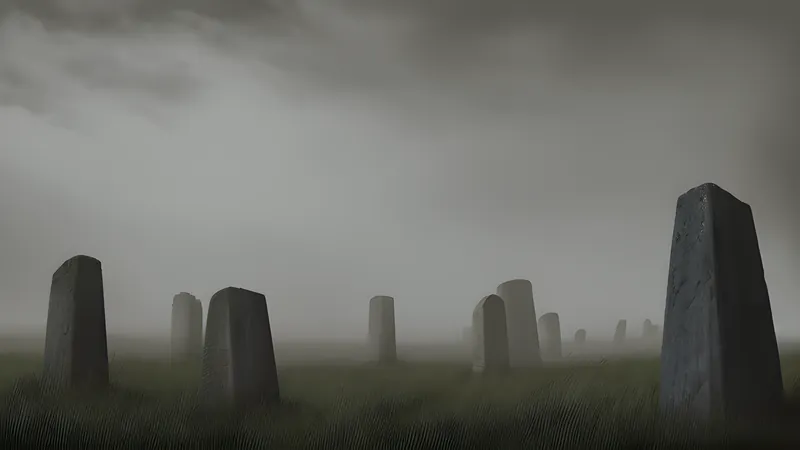
Schmidt’s excavation found rings of T-shaped limestone pillars, some standing over five metres tall and weighing many tons, arranged around larger central pillars and carved in relief with foxes, boars, snakes, scorpions, vultures and cranes. Some pillars carry stylised arms and hands, as though the stone itself is a body — an ancestor, a spirit, something with a presence rather than a picture. Radiocarbon dates for the oldest phase, Layer III, land at roughly 9600 BCE. That is something like six thousand years before Stonehenge, and it falls squarely in the Pre-Pottery Neolithic — before pottery, before metal tools, before writing, and, by the timeline every archaeology textbook taught until Schmidt’s dig, before settled agriculture existed anywhere on Earth.
That timeline was not a minor footnote. It was load-bearing. The assumption ran: humans farm, farming produces surplus, surplus produces settlements, settlements eventually produce enough organisational slack to build temples and support priests. Religion and monumental architecture were supposed to be a late luxury, something societies earned after they’d solved the problem of food. Göbekli Tepe has no evidence of agriculture in its earliest layers. It was raised by mobile hunter-gatherers. Schmidt’s own reading, published across his career until his death in 2014, was blunt about what that meant: “temples before farming.” He proposed that the immense communal labour needed to quarry, carve and raise these pillars was organised specifically for ritual purposes, and that the discipline and settlement pressure of running that ritual life may have been part of what pushed the surrounding Fertile Crescent toward domesticating plants and animals — cause and effect the other way round from what everyone had assumed.
That is a genuine, textbook-rewriting result, arrived at through ordinary archaeological method: stratigraphy, radiocarbon dating, careful excavation, publication, peer scrutiny. It deserves to be marvelled at on its own terms. If you want a case for humanity’s story being older and stranger than the received version, Göbekli Tepe already is one. You don’t need to add anything to it.
What the stones actually are — and aren’t
Here is where the steelman has to get specific, because specificity is what separates a real mystery from a manufactured one. The Göbekli Tepe pillars were worked with flint and stone tools — no metal implements have been found at the site, at any level. There is no writing. There is no wheel, no evidence of load-bearing devices beyond ropes, levers, sledges and a very great deal of coordinated human muscle. Later fieldwork through the 2010s and 2020s, led by Schmidt’s successors including Lee Clare and expanded through the wider “Taş Tepeler” project covering nearby sites such as Karahan Tepe, has found grinding stones, cisterns and other signs of longer-term or even year-round occupation. That evidence has complicated Schmidt’s original picture of a purely ceremonial site with no resident population, folding in a domestic, lived-in dimension alongside the ritual one — a genuine adjustment to the theory, though one that leaves the dating and the scale of the construction untouched.
The builders, in other words, were sophisticated, symbolically rich, ritually organised Stone Age hunter-gatherers, gradually settling into something closer to permanent life around their own monument. Every material trace at the site is consistent with what a large, motivated, patient Neolithic population could achieve with generations of communal effort: quarrying pits sit close by with half-finished pillars still in them, showing ordinary stone-age tool marks the whole way through the process. The site was also deliberately buried by its own builders at some point in its history — an intentional closing-up rather than a slow collapse into rubble — which is a large part of why so much of it survived intact enough for Schmidt to recognise what he’d found. Archaeologists still debate exactly why a community would bury a monument it had spent generations raising; the leading guesses involve decommissioning older pillars to make way for new ones, or marking the end of a ritual cycle. Either way, the burial is a fascinating practice in its own right, and a fully human one — it doesn’t point past itself toward anything else.
Where the leap happens
The lost-civilisation argument, most prominently made by the writer Graham Hancock in Fingerprints of the Gods (1995), Magicians of the Gods (2015), and the 2022 Netflix series Ancient Apocalypse, takes Göbekli Tepe’s genuine strangeness and reads it as a signal rather than an achievement. The claim is that hunter-gatherers didn’t work this out themselves — that the sophistication at Göbekli Tepe is a faint echo of knowledge transmitted from a hypothetical advanced global civilisation, one wiped out in a cataclysm at the end of the last Ice Age.
The cataclysm usually invoked is the Younger Dryas impact hypothesis: a proposed comet impact or airburst around 10,900 BCE, a genuinely debated but minority position within actual planetary science, disputed for its evidence base but at least argued through normal scientific channels. Hancock’s version goes further, treating specific carvings as coded memory of the event. The most cited example is Pillar 43, nicknamed the “Vulture Stone,” which engineer and independent researcher Martin Sweatman and co-author Dilaylan Tsikritsis interpreted in a 2017 paper as an astronomical record encoding a comet strike — animal figures read as zodiacal constellations, arranged to mark a date.
It’s worth sitting with why this leap is seductive rather than simply dismissing it. Göbekli Tepe really did demolish a confident scholarly assumption. If the textbooks could be that wrong about when organised religion and monumental building began, a reader can be forgiven for wondering what else the textbooks might have wrong. The site’s own history — misread in 1963, correctly read in 1994 — is a real story about institutional blind spots. Hancock’s narrative borrows that story’s credibility and stretches it further than the evidence goes.
Where it breaks
The trouble is not that the idea is outlandish. Archaeology has absorbed outlandish-sounding revisions before, Göbekli Tepe among them. The trouble is that a lost advanced civilisation, unlike a hunter-gatherer ritual complex, needs to leave physical evidence, and none has ever turned up — not at Göbekli Tepe, not at any other Ice Age site, not anywhere. No advanced tools. No metal alloys. No written records predating every known writing system. No architectural technique beyond quarrying, carving and lever-and-sledge transport. Schmidt himself rejected the lost-civilisation framing outright while he was alive, and his successors have maintained that rejection since. The astronomical-encoding readings of Pillar 43 and similar carvings are considered speculative by the excavation team and by mainstream archaeoastronomers, who point out that with enough animal figures and enough candidate star patterns, some coincidental match is close to guaranteed — the carvings can be made to fit almost any story a researcher arrives with.
This is the same failure mode that undid the Piltdown Man affair, though the mechanism there was fabrication rather than over-reading: a discipline eager for a particular kind of missing link found patterns that confirmed what it wanted to believe, and it took decades of scrutiny to unwind the damage. Archaeology’s actual defence against that failure mode is tedious by design — publication, replication, independent dating, peer review that doesn’t care how good the story is. That process is precisely what surfaced Göbekli Tepe’s real significance in the first place. It’s also what has kept finding nothing where a donor civilisation is supposed to be.
The comparison that clarifies this best might be Atlantis. Plato’s account has survived twenty-four centuries because it borrows real texture — real geography, real-sounding catastrophe, the shape of an actual lost Bronze Age power — and readers have been searching for the literal island ever since, because a story with that much specificity feels like it must be pointing at something. Göbekli Tepe supplies the lost-civilisation narrative with exactly that kind of borrowed texture: a real site, a real revolution in the timeline, a real archaeologist’s real astonishment. The temptation is to assume the astonishment must be evidence of something even bigger sitting just out of reach, the way generations of Atlantis-hunters have assumed Plato’s specificity must be pointing at a real coastline. In both cases the specificity is real. The extra civilisation is not.
What the wonder is actually about
It’s worth asking why “hunter-gatherers achieved something remarkable” isn’t a satisfying enough story on its own for some readers, when it was clearly astonishing enough to end Klaus Schmidt’s career-long fascination with a single hillside. Part of the answer is that a lost global civilisation offers something a hunter-gatherer achievement doesn’t: a hidden connective thread, a sense that scattered wonders around the world — Göbekli Tepe, the pyramids, Nazca, Baalbek — are chapters of one buried story rather than independent human inventions arrived at separately, in different times and places, by different peoples solving different problems with the tools they had. A world with one hidden ur-civilisation is a world with an author. A world where hunter-gatherers in different corners of the globe kept independently discovering that stone, patience and enough hands could make something sacred and permanent is a world that’s merely full of people — no less remarkable, just less tidy, and with no secret to eventually reveal.
There’s also a quieter appeal: the idea that expertise itself has been getting the big picture wrong, and that the truth is available to anyone willing to look past the credentialed consensus. That instinct isn’t irrational on its face — Göbekli Tepe is proof that consensus can be spectacularly overturned. What it misses is that the overturning came from inside the discipline, through the same slow evidentiary grind that now says no to the donor civilisation. The tool that found the real revolution is the same tool declining to find the imagined one.
Göbekli Tepe doesn’t need a lost civilisation standing behind it to matter. What it actually shows — a Stone Age population with no writing, no metal and no agriculture organising itself across generations to raise five-metre pillars for reasons that look entirely symbolic — is a more interesting fact about human beings than any hidden predecessor could be. It says that the drive to build something sacred and lasting is not a late invention that arrived after the hard work of survival was finished. It might be older than farming itself, older than settlement, maybe close to as old as the species that keeps doing it.
Related Content