Denmark's UFO Files: What the Declassified Folder Held
The Danish military really did keep a UFO archive and really did release it. The disappointment was the whole point.
Contents
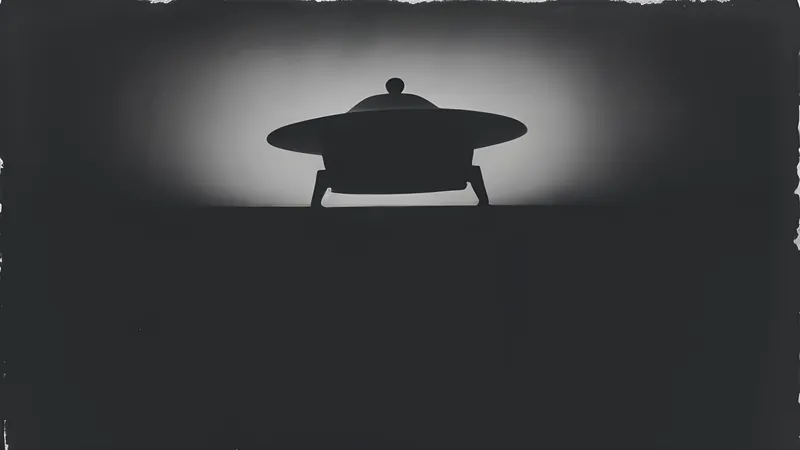
For decades the phrase did most of the work on its own. The military keeps a secret UFO file. You did not need to know what was in it; the fact of its existence was the payload. A government that bothered to open a folder, assign it a classification, and lock it in a cabinet was a government that had seen something worth hiding. Across the Western world, through the Cold War and long after, this was an article of quiet faith among people who watched the sky — that behind the official denials sat a drawer of proof, and that one day, if enough pressure were applied, the drawer would be opened and the truth would fall out. In January 2009 one of those drawers was opened. The Danish Defence Command released its collected UFO material to the public, and for a few days the country’s newspapers ran the story that the secret file was secret no longer.
Then people read it, and the air went out of the room. What Denmark’s military had been keeping was real. It had genuinely gathered reports over decades, genuinely filed them, genuinely held them out of general circulation. Every part of the premise checked out except the part everyone cared about. The folder, opened at last, held a modest stack of ordinary sightings — lights, shapes, a scatter of the unexplained-because-uninvestigated — and nothing that could not be read, by a sober eye, as aircraft and planets and the ordinary confusions of people looking up at a dark sky. The disappointment of that reveal is the real subject here, because the disappointment was not a failure of the story. It was the answer.
The kernel: yes, there was a file, and yes, they opened it
Give the believer his due, because on the facts of the matter he was substantially right, and it is only fair to say so plainly.
Denmark’s armed forces did collect UFO reports. When a member of the public, or more often a pilot or a soldier or a police officer, phoned in to say they had seen something inexplicable in the sky, the report could make its way to the defence establishment, and over the years those reports accumulated into an archive. It was held by the Defence Command, it was not routinely public, and getting at it required going through official channels. In the strict sense that matters to a conspiracy theory, this was a secret government UFO file, and it existed exactly as advertised.
And in January 2009 the Danish military released it. The Defence Command made its UFO archive available following public and press interest, and the Danish UFO organisation SUFOI — Skandinavisk UFO Information, a serious civilian research group founded in 1957 and still going — helped bring the material into the open, later making the scanned files accessible online so that anyone curious could read the actual pages rather than a journalist’s summary of them. This was a genuine act of transparency by a NATO defence ministry. The drawer really was opened. The believer who had spent years insisting that such a file existed and demanding its release was vindicated on both counts. He had the existence right and he had the secrecy right.
He was, it turned out, wrong only about the one thing he had built everything else upon: what would be inside.
What was actually in it
The Danish release was, by the standards of the expectation, thin. It was not a warehouse of alien technology or a vault of suppressed photographs. It was a folder — a manageable stack of typed and handwritten reports, drawings, the occasional blurry photograph, and the terse notes of officers logging what a caller had described.
The contents were the ordinary furniture of UFO archives everywhere. Bright lights that moved across the sky and were, on the face of it, consistent with aircraft, satellites passing overhead, or the planet Venus, which is the single most reported “UFO” in the history of the phenomenon because it is genuinely astonishing when you do not know what you are looking at. There were slow-moving glows that matched weather balloons and, in later years, the drifting orange lanterns that became a mass source of sightings once they grew popular at parties and weddings. There were shapes seen for a few seconds and never again. And there was a residue — a handful of reports that were never resolved, marked unexplained in the plain administrative sense that nobody with authority ever chased them to a conclusion. A great many of the cases were never seriously investigated at all, because the defence establishment’s actual interest in them was close to nil.
That last point is the quiet heart of the Danish files, and it undoes the whole cover-up premise from the inside. The military had not assembled this archive because it was gripped by the mystery. It had assembled it the way any large bureaucracy accumulates the odd correspondence that reaches its desk: it wrote the report down, filed it, and moved on to the work it actually cared about, which was air defence against known and terrestrial adversaries. The folder was not the tip of a hidden investigation. It was a low-priority in-tray that had been quietly filling up for years because nobody had a reason to empty it and no rule required them to publish it.
The fork: secrecy is not evidence
Here is the precise place where the reasonable reading and the conspiratorial one split, and it is a single false step, repeated so often it has come to feel like common sense.
The step is this: if it was secret, it must have been worth hiding. It is an intuitive rule and it is wrong, because it mistakes the ordinary behaviour of bureaucracies for guilty concealment. Governments classify and withhold enormous quantities of material for reasons that have nothing to do with the content being explosive. A file might be closed because releasing it would expose radar capabilities, or air-defence procedures, or the identity of the pilot who filed it, or simply because no official ever bothered to declassify a folder that no rule compelled them to open. Absence of publication is the default state of most government paper. It carries no information about whether the contents are extraordinary. The Danish file was withheld for years and then contained almost nothing of note, which is precisely what most withheld files are like when you finally see them.
This is the same misreading that governs every famous UFO case, and Denmark is a clean, small illustration of it. It is the exact error at the centre of Roswell, where a genuinely secret military project — the classified Project Mogul balloon programme — was real, and really hidden, and the secrecy was read as proof of a saucer when it was proof only of a balloon the Air Force did not want to discuss. It is the mechanism that kept the Rendlesham Forest incident alive for decades: a real military memo, a real official file, credible airmen, and an inconvenient gap in the explanation, all of it treated as though the existence of paperwork were the same as the existence of a craft. In every case the drawer is real. In every case the theory forks off at the moment someone decides that a locked drawer must contain what they hope, rather than what the record, when opened, plainly shows.
Denmark is unusually useful precisely because the experiment was actually run. The drawer was opened. The prediction that it held proof was tested against the contents, and the contents were mundane. Most conspiracy theories are protected forever from that test, because the file stays closed and the believer can go on imagining what is inside. Here, for once, we got to look. And the folder was ordinary — which is the outcome the cover-up model can least easily survive, and the one it is best at explaining away.
The journey: how the folder was explained away
Because a released file that turns out to be dull is a serious problem for the theory, the theory has a well-worn answer ready, and it is worth watching it deploy, because the move is the same everywhere.
The answer is that the real file was never released. What Denmark opened, the reasoning goes, was the sanitised version, the decoy folder, the material cleared for public consumption precisely because it was harmless. The genuine evidence — the good photographs, the recovered material, the serious cases — remains in a deeper vault, and its very absence from the release proves how carefully it is being guarded. You can see the elegance of the manoeuvre. It converts the letdown into fresh confirmation. The disappointing folder does not weaken the belief; it becomes evidence of a second, better-hidden folder, which cannot be examined and therefore cannot disappoint. The theory has quietly made itself unfalsifiable, retreating one cabinet deeper every time a cabinet is opened.
This is the general shape of the durable cover-up story, and the same reflex appears wherever a promised disclosure fails to deliver — the goalposts slide from there is a secret file to there is a deeper secret file, indefinitely. It is the same protective architecture that lets a movement absorb an official document that confesses far less than hoped, or a released archive that turns out to be tedious, without ever conceding a thing. The mundane release does not close the case. It relocates it, always to somewhere that happens to lie just beyond the reach of the latest evidence.
There is a genuine irony buried in the Danish story, and it deserves to be said. The one thing the file did document, plainly and abundantly, was the sincerity of the witnesses. Pilots, police, ordinary people had seen things that genuinely puzzled and sometimes frightened them, and had taken the trouble to report them to their armed forces. The archive is a real record of honest human confusion in the presence of a dark and ambiguous sky. That is a true and rather moving thing, and it is completely compatible with there being no craft at all. People do not have to be lying, and they were not, for the lights to have mundane causes. The file proves the sightings were real experiences. It says nothing about their being real spaceships, and it was never going to.
What it is really about
The Danish files are, in the end, a small parable about what secrecy does to the imagination, and it is a gentler lesson than the sneering version usually allows.
The person who waited years for the drawer to open was not foolish. He was reasoning from a real and defensible fact — that governments do keep things from their citizens, that classification is genuine, that official denials are sometimes lies. That much is simply true, and a healthy society needs people willing to push on locked cabinets. His mistake was narrower and more human than the mockers admit. He assumed that behind the secrecy lay something proportionate to the effort of imagining it — that a hidden file must hide a wonder, because a wonder is what he needed to be there. The hunger came first; the theory about the folder was built to feed it. And when the folder was opened and held only the ordinary weather of a nation looking up at the sky, the hunger did what hungers do. It went looking for the next closed drawer.
That is the thing the Danish release actually teaches, if you sit with it. The universe of government paper is enormous and mostly boring, and the boredom is not a cover. Most secrets are small, procedural, and disappointing when finally exposed, because most of what states hide they hide out of habit and inertia rather than because it would astonish you. The measure of maturity is being able to open a long-sealed folder, find it dull, and let it be dull — to accept that the answer to what were they hiding can honestly be not very much, and that the sky, for all its lights, may simply be the sky. Denmark opened its drawer. The letdown was the truth arriving on schedule, wearing exactly the plain clothes that truth usually does, and asking, quietly, to be believed.
Related Content