Cracking Knuckles Causes Arthritis: One Doctor's 60-Year Experiment
A Californian physician cracked one hand for six decades to spite his mother, and settled a folk warning
Contents
Almost everyone has been warned about it, usually by a parent, usually in childhood, usually in the tone reserved for prophecies: stop cracking your knuckles, you’ll give yourself arthritis. It is one of the great household admonitions, passed down with the authority of settled fact, and it has the satisfying logic of a punishment fitting a crime — a habit that produces an unpleasant grinding sound must surely be grinding something inside the joint, wearing it away, storing up trouble for old age. The warning is nearly universal, and it is, as far as the evidence goes, false. We can say this with unusual confidence, and the reason we can is one of the most delightful stories in the history of self-experimentation: a doctor in California who was told this exact thing by his mother, and who decided to test it on his own hands over the course of sixty years.
The sound, and what actually makes it
Before the experiment, the mechanism, because understanding what the crack is disposes of half the fear on its own. The joints of your fingers are synovial joints, wrapped in a capsule containing synovial fluid, a viscous lubricant that keeps the surfaces gliding smoothly. Dissolved in that fluid are gases, including carbon dioxide and nitrogen. When you crack a knuckle, you pull the joint surfaces apart — bending or tugging the finger stretches the capsule and suddenly increases the volume inside it. That sudden increase in volume drops the pressure, and in the low-pressure space a gas-filled cavity rapidly forms in the fluid, a process related to cavitation. The pop is the acoustic signature of that cavity forming. This is why you cannot immediately crack the same knuckle twice: it takes roughly twenty minutes for the gas to redissolve into the fluid and for the joint to be “reloadable.”
For years the precise physics were debated — whether the sound came from the bubble forming or from a bubble collapsing — and the question was still live enough that in 2015 a team used real-time MRI to film a knuckle cracking as it happened, and again in 2018 a group published a mathematical model of the process. The details are still argued at the edges, but the central point relevant to the myth is not in dispute: the crack is a gas-cavity event in the joint fluid, a fluid-dynamics phenomenon. It is a gas cavity forming in lubricant, with no bone grinding on bone, no cartilage tearing, no damage to the joint at all. Whatever else it is, the sound itself carries no harm. That already makes the arthritis warning suspect, because the warning’s intuitive force comes entirely from the assumption that a bad noise means a bad thing is happening.
The doctor who tested it on himself
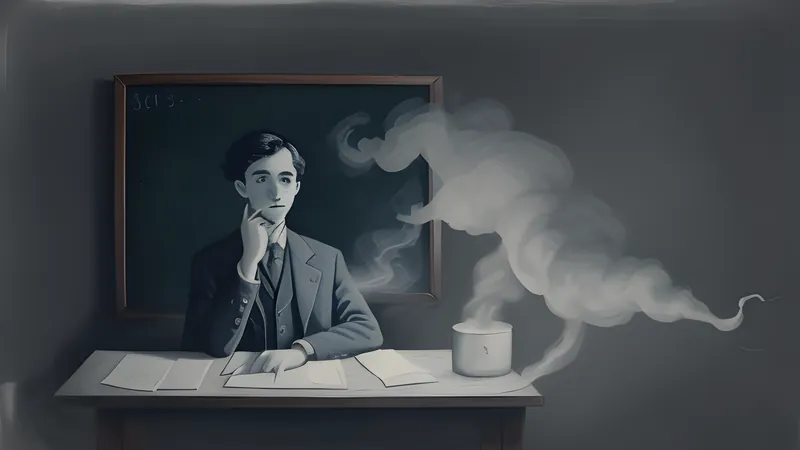
Now the experiment, which is beautiful precisely because of its stubbornness and its scale. Donald L. Unger was a physician in Thousand Oaks, California, and as a boy he had been told repeatedly by his mother — and, he later said, by assorted aunts — that cracking his knuckles would give him arthritis. Rather than simply doubt it, Unger designed a controlled trial with a sample size of one and a duration measured in decades. For more than sixty years, he cracked the knuckles of his left hand at least twice a day, while deliberately leaving the knuckles of his right hand uncracked as a control. By his own careful accounting, this amounted to cracking the left hand something on the order of at least thirty-six thousand times over the span of the study, while the right hand went essentially uncracked throughout.
At the end of this remarkable act of spite-driven science, Unger examined the results: the two hands were the same. There was no arthritis in the heavily cracked left hand, none in the uncracked right, and no detectable difference between them. He wrote the findings up and, in 2009, published them in the medical journal Arthritis & Rheumatism — a genuine, if wry, peer-reviewed letter — under a title reporting the effect of knuckle cracking on the development of arthritis of the fingers. His stated conclusion noted there was no apparent relationship between cracking one’s knuckles and developing arthritis, and he closed, with the deadpan that makes the whole thing sing, by wondering aloud whether his mother had been wrong about other things too. The same year, the study earned him an Ig Nobel Prize, the award for research that first makes you laugh and then makes you think — which is exactly the right response to a man who cracked one hand for six decades to win an argument with his mother.
What the larger evidence says
A single obsessive doctor, however charming, is one data point, and the honest thing is to check whether the broader research agrees with him. It does. Several formal studies have looked for a link between habitual knuckle cracking and arthritis of the hand and failed to find one. A frequently cited 1990 study in the Annals of the Rheumatic Diseases, by Castellanos and Axelrod, examined a group of people and compared habitual crackers with non-crackers; it found no increased prevalence of osteoarthritis in the hands of the crackers. It did report some other associations — the habitual crackers in that sample were more likely to show hand swelling and, by one measure, reduced grip strength — though those findings have not been strongly replicated and the causal direction is unclear. An earlier survey by the physician Robert Swezey looked at elderly patients and likewise found no connection between a lifetime of knuckle cracking and arthritis in later life. The picture that emerges across the literature is consistent with Unger’s hand: cracking your knuckles is not a route to arthritis.
This does not mean knuckle cracking is impossible to overdo or that every joint sound is benign — a crack accompanied by pain, swelling or loss of function is a reason to see a doctor, because that is a different signal entirely. But the specific, universal childhood warning — that the ordinary painless habit will corrode your joints and deliver arthritis — has no support. Arthritis, in its common osteoarthritic form, is driven mainly by age, genetics, prior joint injury, body weight and wear over a lifetime. The pop of a knuckle is not on the list.
A place in the tradition of self-experiment
Unger’s hand belongs to a long and slightly eccentric medical lineage, and setting it there gives it more weight than the joke first suggests. Doctors have a history of using their own bodies as laboratories when a question nagged and a proper trial was impractical. Barry Marshall famously swallowed a broth of Helicobacter pylori in 1984 to prove the bacterium caused stomach ulcers, gave himself gastritis, and eventually shared a Nobel Prize. The nineteenth century is littered with physicians who dosed, infected or instrumented themselves to settle a dispute. Self-experimentation has obvious limits — a sample of one proves little on its own, and the experimenter’s bias is baked in — but it has one great virtue: sustained, patient, honest observation of a single case over a long time, which is precisely what a slow question about a lifelong habit needs.
The knuckle study is a small, comic entry in that tradition, but it is a real one. Unger did the two things a good experiment requires: he held a genuine control constant (the untouched right hand) and he ran the exposure across six full decades, long enough for a disease of slow accumulation to declare itself. Arthritis is a disease of accumulation, so a short test would have proved nothing; only a study measured in the same units as a human life could actually answer the question folk wisdom had posed. That is why his hand is more persuasive than intuition deserves to be dismissed by. He met the claim on its own timescale and outlasted it.
Why the warning felt so obviously true
Here is the more interesting question, the one the debunk exists to reach. If the claim is false, why has practically every culture with a word for it warned against knuckle cracking with such conviction? The answer is that the myth is built out of two very persuasive ingredients, and neither of them is evidence.
The first is the sound. Human beings are deeply, instinctively wary of the noises our bodies make, and a loud crack from inside a joint sounds like damage. Our intuition equates unpleasant sound with harm — a snapping branch, a cracking bone — and applies that equation to the knuckle without pausing to ask what is actually cracking. The noise is a false witness. It testifies to injury that is not occurring, and it testifies so vividly that most people never think to cross-examine it.
The second is that the warning is doing a job that has nothing to do with joints. “Stop cracking your knuckles, you’ll get arthritis” is very often not really a health claim; it is a request to stop making an irritating noise, dressed in the borrowed authority of medicine. A parent annoyed by the repetitive popping needs a reason weightier than “it bothers me,” so the habit gets attached to a dreaded consequence, and the threat of future disease is a far more effective deterrent for a child than an appeal to the parent’s comfort. The myth is a discipline tool wearing a lab coat. Once you see that, its universality makes sense: the irritation is universal, so the useful lie spread everywhere the irritation did.
The shape of a harmless myth
This one belongs to the same gentle family as the belief that Einstein failed maths — a claim that survives because it serves a small human purpose rather than because anyone checked it, in this case ending an annoying sound rather than comforting a discouraged child. It travels the way the bull’s supposed hatred of red travels: on an intuitive misreading of a vivid sensory cue, sustained by a phrase too handy to retire. Nobody is much harmed by believing it, which is exactly why it has never been under enough pressure to die.
And yet it did meet, at last, a man willing to put it to the test in his own two hands — one cracked and one spared, no grant and no cohort, just a stubborn doctor holding them up side by side after sixty years as the neatest possible refutation. Donald Unger’s mother told him a thing that everyone’s mother told them, and he spent most of a lifetime quietly, cheerfully proving her wrong, one pop at a time. The knuckles of his left hand, still sound after tens of thousands of cracks, are as good an answer as folklore has ever received.
Related Content