Birds Aren't Real: The Parody That Fooled Everyone on Purpose
A young man made up a surveillance-drone conspiracy to survive the real ones.
Contents
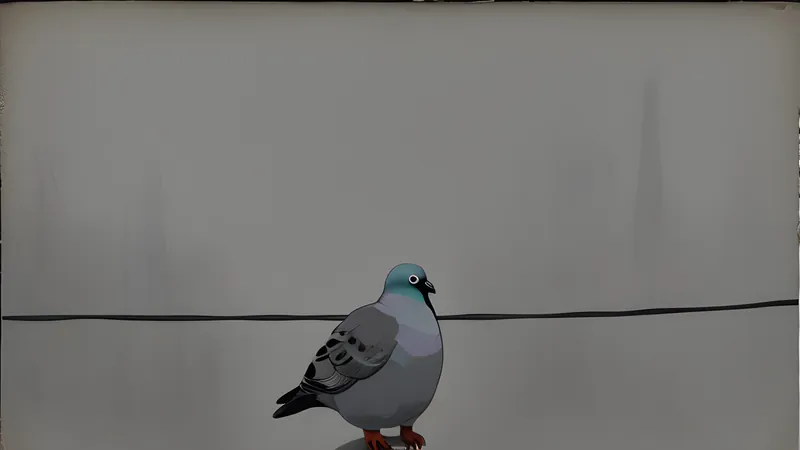
At rallies across the United States in the late 2010s, crowds of mostly young people gathered under a slogan printed on banners, hoodies and the side of a battered van: BIRDS AREN’T REAL. They chanted it. They handed out leaflets explaining that every bird in America is in fact a surveillance drone, that the federal government exterminated the country’s real birds between 1959 and 2001 and replaced them with robotic replicas, and that the pigeons lined up on the power lines outside your window are recharging their batteries while they watch you. A billboard in Memphis announced it to passing traffic. A spokesman in a suit gave impassioned, straight-faced interviews to bewildered local news anchors. Everything about it had the texture of a genuine movement of true believers, right down to the merchandise.
It was all a performance, and that was the point. Birds Aren’t Real is a conspiracy theory built by someone who did not believe it, staged for years in unbroken character, and revealed at last to be an elaborate piece of satire — a hoax designed to be a mirror. What makes it worth taking seriously, and treating with real tenderness, is that it was not made for a laugh alone. It was made by a young man who had grown up surrounded by the real thing, and who found in parody the only tool that let him hold it at arm’s length.
The movement, exactly as it presents itself
Approach it first the way a passer-by would. The Birds Aren’t Real story is internally complete, which is part of the joke — it has the density of the genuine article. The claim is that the Central Intelligence Agency, disturbed that real birds were defecating on government cars, seized the opportunity to solve two problems at once: eliminate the birds and put a self-charging surveillance device in every tree in America. Over four decades, the story goes, the government poisoned or shot some twelve billion birds and floated drone replicas up to take their place. The drones perch on wires to recharge. They track citizens and report their movements. “If it flies, it spies.” When a bird relieves itself on your windscreen, that is a targeting mechanism marking your vehicle.
The movement supplied all the furniture of belief. It had a founder-prophet who spoke of the truth as a burden. It had lore, an origin date, a body count, a villain. It had documents and defector “witnesses” and a merchandise table. It had a van that toured the country. Confronted with a heckler pointing out that birds obviously exist, a Birds Aren’t Real organiser would meet the objection with the same unshakeable calm as any true believer, folding the denial into the conspiracy. For a while, plenty of onlookers could not tell whether the people holding the signs were sincere. That uncertainty was engineered, and it was the whole experiment.
The kernel: a sign made up on the spot
The origin is precise and human. In January 2017, a nineteen-year-old named Peter McIndoe was in Memphis, Tennessee, during the weekend of the nationwide Women’s March. Counter-protesters had gathered, and the atmosphere was tense and absurd in the way such stand-offs often are. On an impulse, McIndoe tore a slogan off the top of his head, wrote BIRDS AREN’T REAL on a sign, and began marching with it — improvising, playing a character, satirising the confident nonsense on display around him. Someone filmed him. The clip spread. And McIndoe, rather than explain the joke, decided to inhabit it.
For the next several years he stayed in character in public without ever breaking. He built out the mythology, adopted the persona of a true-believing movement leader, and let the thing grow into a genuine subculture of young people who understood the game and wanted to play it too. The commitment to the bit — the total refusal to wink — was the craft of it. In the language of professional wrestling, McIndoe maintained kayfabe: the fiction was performed as though real, unbroken, for as long as the performance could hold.
The kernel of truth here is not a fact about birds. It is a fact about McIndoe. He grew up, by his own account, in a deeply religious and conservative environment, homeschooled, immersed from childhood in communities where earnest belief in hidden plots and coming apocalypses was ordinary and unquestioned. He had watched, from the inside, what it looks like when people organise their whole picture of reality around a conspiracy — how it binds a group together, how it explains a frightening world, how sincerely it is held. Birds Aren’t Real was, in a real sense, autobiography. He built a fake version of the thing that had surrounded his childhood, so that he could examine it safely.
The fork: a hoax that keeps its own confession in its pocket
The line that separates Birds Aren’t Real from an ordinary conspiracy theory is the one it draws itself. In 2021, McIndoe stepped partway out of character in a widely read New York Times interview and, later, in a segment on the CBS programme 60 Minutes, and explained plainly what the project was: a parody of misinformation, a coping mechanism for a generation raised amid conspiracy theories, and a way of processing an information environment that had come to feel unhinged. The movement, he said, was a mirror held up to the people who spread real theories — a chance to feel, from the inside and in a harmless key, how it works and why it is seductive.
This is the fork, and it runs in the opposite direction from every genuine conspiracy. A real theory conceals the fact that it is a fiction; its whole survival depends on the believer never seeing the seams. Birds Aren’t Real carries its own confession folded into its pocket and produces it deliberately, so that the reveal is part of the design rather than a defeat. The satire only completes itself when you learn it was satire. That is the reverse of what happened with the swapped-pop-star legend, where a Brazilian blog’s demonstration that Avril Lavigne could be “proven” dead escaped its own confession and got mistaken for the real thing. McIndoe kept a firmer grip. He wanted the frame to survive the journey.
Even so, the frame is fragile, and McIndoe knew it. A clip of a Birds Aren’t Real rally, shared without context, looks exactly like footage of true believers, because it was made to. The risk that a parody of misinformation becomes indistinguishable from misinformation is real, and it is the same failure mode that let a Reddit family in-joke about how Finland doesn’t exist reach people who received the punchline as a claim. The safeguards Birds Aren’t Real built — the merchandise, the obvious absurdity of the premise, the eventual public reveal — were an attempt to keep the joke legible as a joke while still letting it do its work.
The journey: why the young built it and carried it
Birds Aren’t Real grew fastest among people in their teens and twenties, and the reason is not that young people are credulous. It is close to the opposite. This is a generation that grew up online, marinated from childhood in a firehose of claims, hoaxes, viral rumours and outright fabrications, watching adults around them fall for things and argue past each other about what was even real. To have your formative years soaked in misinformation is to develop either despair or a very particular kind of humour, and Birds Aren’t Real offered the humour. It let its participants say, through absurdity, everything they felt about the actual conspiracies churning through their feeds: this is ridiculous, this is exhausting, and the only sane response left is to build a fake one so obviously false that laughing at it becomes a way of laughing at all of them.
It also gave them the thing real movements give: belonging. A rally is a rally, a chant is a chant, a shared secret is a shared secret, whether the secret is sincere or a bit. The young people under the BIRDS AREN’T REAL banner got the community, the in-group warmth, the pleasure of being on the inside of a joke that outsiders did not get. The movement worked as satire partly because it worked as a genuine social bond first, which is a quietly profound observation about how the real theories recruit — they, too, sell belonging long before they sell belief.
The movement grew sophisticated in ways that deepened the parody rather than diluting it. McIndoe and his collaborators produced polished promotional videos, staged a rally outside the headquarters of a social-media company demanding it change its bird logo, and eventually took the project into publishing and merchandise, all while maintaining the deadpan. The genius of these stunts was that each one imitated the real infrastructure of a movement — the press office, the protest, the branded shop — so faithfully that the imitation itself became the commentary. A satire of conspiracy culture that had stayed a lone man with a sign would have been a joke; a satire that built a whole apparatus and toured it across the country in a van showed you, at scale, how much of a “movement” is theatre and merchandise and the will to keep the show running. The elaborateness was the argument.
What it’s really about
The deepest thing Birds Aren’t Real understood is that a conspiracy theory is a feeling before it is a set of claims, and that the feeling can be reproduced and examined without the harm. Strip the movement down and it is a controlled demonstration of the emotional machinery: the delicious sense of knowing what the sleeping public does not, the belonging of the initiated, the way every objection can be folded back into the story, the comfort of a world made legible by a single hidden cause. McIndoe let people feel all of that in a laboratory where the cost of being wrong was nothing, because the birds were never in danger and neither was anyone else.
There is something generous in that, and something a little sad. A young man raised inside sincere conspiracy belief found that the only way he could metabolise it was to build a fake one and wear it in public for years. The joke was his defence and his commentary at once — a way of saying, to a generation drowning in bad information, I see it too, and here is a version we can survive. Birds Aren’t Real does not debunk any particular theory. It does something rarer. It teaches the shape of the thing from the inside, in a register that leaves the student laughing instead of afraid, and it trusts that a person who has felt how the machine works will recognise it the next time the machine is running for real, and pointed at something that matters. The pigeons on the wire were watching us the whole time, the movement insisted — and in the only sense that was ever true, it was right. We were the ones being observed, and gently, deliberately, shown to ourselves.
Related Content